
Winterizing an Irrigation System: Blowout, Drain Valves, and the Freeze Damage That Shows Up in April
Before the first hard freeze, shut off your irrigation water supply and controller, insulate above-ground parts, and drain the system using either drain valves or the blowout method. Miss this step and you may not see the damage until spring, when freeze-cracked pipes and busted backflow preventers leak water and money.
September 18, 2026
By Diego Navarro
What steps actually matter for winterizing an irrigation system?
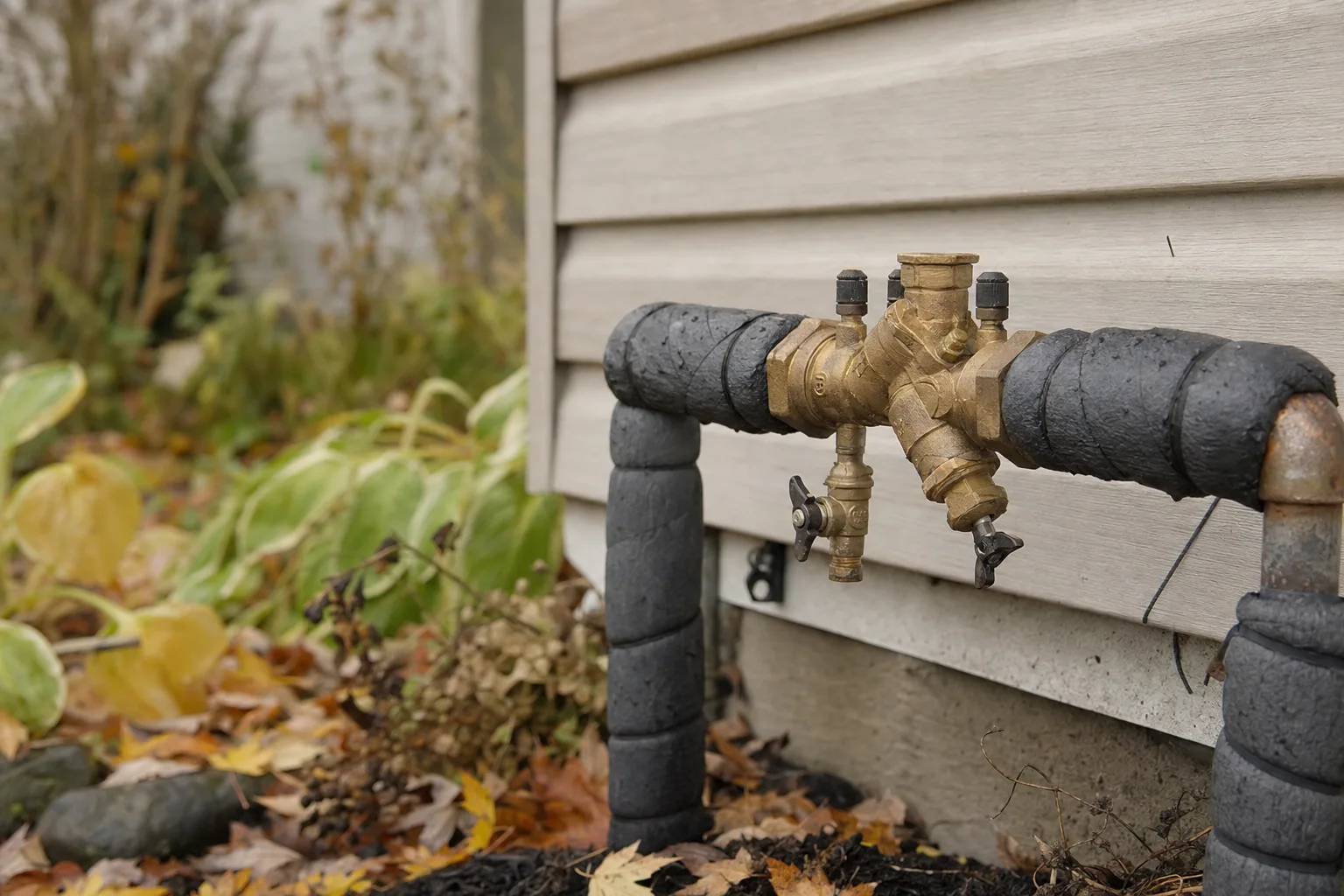
Shut off the irrigation controller, close the water supply with the isolation valve, insulate above-ground pipes and backflow preventers, and drain the system before the first hard freeze. Use manual or automatic drain valves, or a blowout with a compressor, working zone by zone until only air comes out of each sprinkler. Insulate what’s left exposed above ground.
Which method should I use: drain valves or blowout?
If your system has manual or automatic drain valves, use them to empty the lines. If not, or if you want to be certain, use the blowout method with a compressor set to 80 to 100 psi for PVC, 40 to 60 psi for polyethylene. The blowout method is more reliable, but you have to use the right pressure or risk damaging the system (Hunter Irrigation).
| Method | How It Works | Best For | Honest Downside |
|---|---|---|---|
| Manual Drain | Open valves, water drains by gravity | Older/simple systems | May leave water in low spots |
| Automatic Drain | Valves open when pressure drops | Some modern systems | Can clog or fail, need annual check |
| Blowout | Air compressor blows water out | Any system, full clear | Too much pressure can break parts |
What happens if I don’t winterize, or I miss a zone?
If water stays trapped in pipes or backflow preventers, it expands when it freezes, cracking PVC, splitting poly pipe, or bursting brass fittings. You may not see the problem until spring, when you turn the system back on and find leaks, soggy spots, low pressure, or entire zones not working (Oregon City).
How do I protect above-ground pipes, backflow preventers, and valves?
Wrap every exposed pipe, valve, and backflow preventer with foam insulation or insulating tape. Don’t block air vents or drain outlets on backflow preventers. If you skip this step, a single hard freeze can crack the brass or plastic body, and you’ll be replacing it next year (Rainbird).
Who needs to winterize their irrigation system, and who can skip it?
Anyone with an irrigation system in Central Texas, or anywhere you see the occasional freeze, needs to winterize each fall. If your pipes are all buried a foot deep and you have no above-ground fittings, rare here, and you never see a freeze, you can skip it. For everyone else, especially with exposed backflow preventers, it’s not optional.
How do I check for freeze damage in April?
Turn the water back on, run each zone at low pressure, and watch for leaks, puddles, or heads that don’t pop up. Check for cracked PVC, split poly pipe, broken brass bodies on the backflow preventer, and leaking valves. Fix what’s broken before you crank up the run time for summer.
What are the most common mistakes to avoid when winterizing?
Don’t skip a zone, don’t use too much air pressure in a blowout, and don’t forget to insulate above-ground parts. Missing any of these can leave water behind or expose pipes and fittings to freeze damage, which will show up as a leak or a broken system when you least need the headache (Midwest Lawn & Garden).
Where can I find plant- and climate-specific advice for my landscape?
If you want to check which plants in your yard actually need irrigation year-round, our plant database has climate and water use details for Central Texas. If you're thinking about changing your irrigation layout or want a new design that fits your yard, you can get a concept for your yard for free.
Frequently Asked Questions
What pressure should I use for the blowout method?
Use 80 to 100 psi for PVC pipe and 40 to 60 psi for polyethylene pipe. Too much pressure can damage pipes, valves, or sprinkler heads, so check your system’s specs before you start. Always wear ANSI-approved eye protection and never stand over a sprinkler during blowout.
How do I drain my irrigation system with manual drain valves?
Turn off the water supply and controller, then open each manual drain valve. Let the water drain out completely from each section. Check all zones to make sure no water is trapped in low spots or dead ends.
What parts of my irrigation system need insulation?
Insulate any above-ground pipes, backflow preventers, and valves with foam insulation or tape. If any brass or PVC is exposed to the air, it’s at risk of freeze cracking and expensive repair. Don’t insulate over air vents or drain ports.
Can I skip winterizing if we only get one or two freezes a year?
Even a single hard freeze can crack exposed pipes or fittings. Winterizing is cheap insurance against repairs that cost hundreds in spring. In Central Texas, don’t bet on a mild winter; prepare every year, even if it feels like overkill.
How do I know if I have freeze damage in spring?
Turn the irrigation system on zone by zone at low pressure. Look for leaks, puddles, broken heads, or water where it shouldn’t be. Spotting damage early lets you fix it before you waste water or damage your landscape.
Who should do a professional blowout versus DIY?
If you’re not comfortable with air compressors, have a complex system, or want to guarantee every line is clear, hire a pro. Mistakes with pressure can do more harm than good. If you have a simple system and the right tools, DIY is possible, just follow all safety steps.
Want a plan for your own yard?
Tell us the space and we will put a planting plan together for it. Start at get my concept, or browse what actually grows where you are over on plants.
Frequently asked questions
What pressure should I use for the blowout method?
Use 80 to 100 psi for PVC pipe and 40 to 60 psi for polyethylene pipe. Too much pressure can damage pipes, valves, or sprinkler heads, so check your system’s specs before you start. Always wear ANSI-approved eye protection and never stand over a sprinkler during blowout.
How do I drain my irrigation system with manual drain valves?
Turn off the water supply and controller, then open each manual drain valve. Let the water drain out completely from each section. Check all zones to make sure no water is trapped in low spots or dead ends.
What parts of my irrigation system need insulation?
Insulate any above-ground pipes, backflow preventers, and valves with foam insulation or tape. If any brass or PVC is exposed to the air, it’s at risk of freeze cracking and expensive repair. Don’t insulate over air vents or drain ports.
Can I skip winterizing if we only get one or two freezes a year?
Even a single hard freeze can crack exposed pipes or fittings. Winterizing is cheap insurance against repairs that cost hundreds in spring. In Central Texas, don’t bet on a mild winter; prepare every year, even if it feels like overkill.
How do I know if I have freeze damage in spring?
Turn the irrigation system on zone by zone at low pressure. Look for leaks, puddles, broken heads, or water where it shouldn’t be. Spotting damage early lets you fix it before you waste water or damage your landscape.
Who should do a professional blowout versus DIY?
If you’re not comfortable with air compressors, have a complex system, or want to guarantee every line is clear, hire a pro. Mistakes with pressure can do more harm than good. If you have a simple system and the right tools, DIY is possible, just follow all safety steps.
Free, no obligation
Ready to design your dream landscape? Start here.
Tell us where you are and we will start a free profile for you, with plants that actually survive your climate and a real sense of what the build would cost.