
Why Your Grapevine Grows Like Mad and Fruits Like Nothing
A grapevine with endless shoots and no grapes is usually being pruned too lightly and fed too generously. Here is how to correct it this fall and prepare for fruit next season.
September 21, 2026
By Diego Navarro
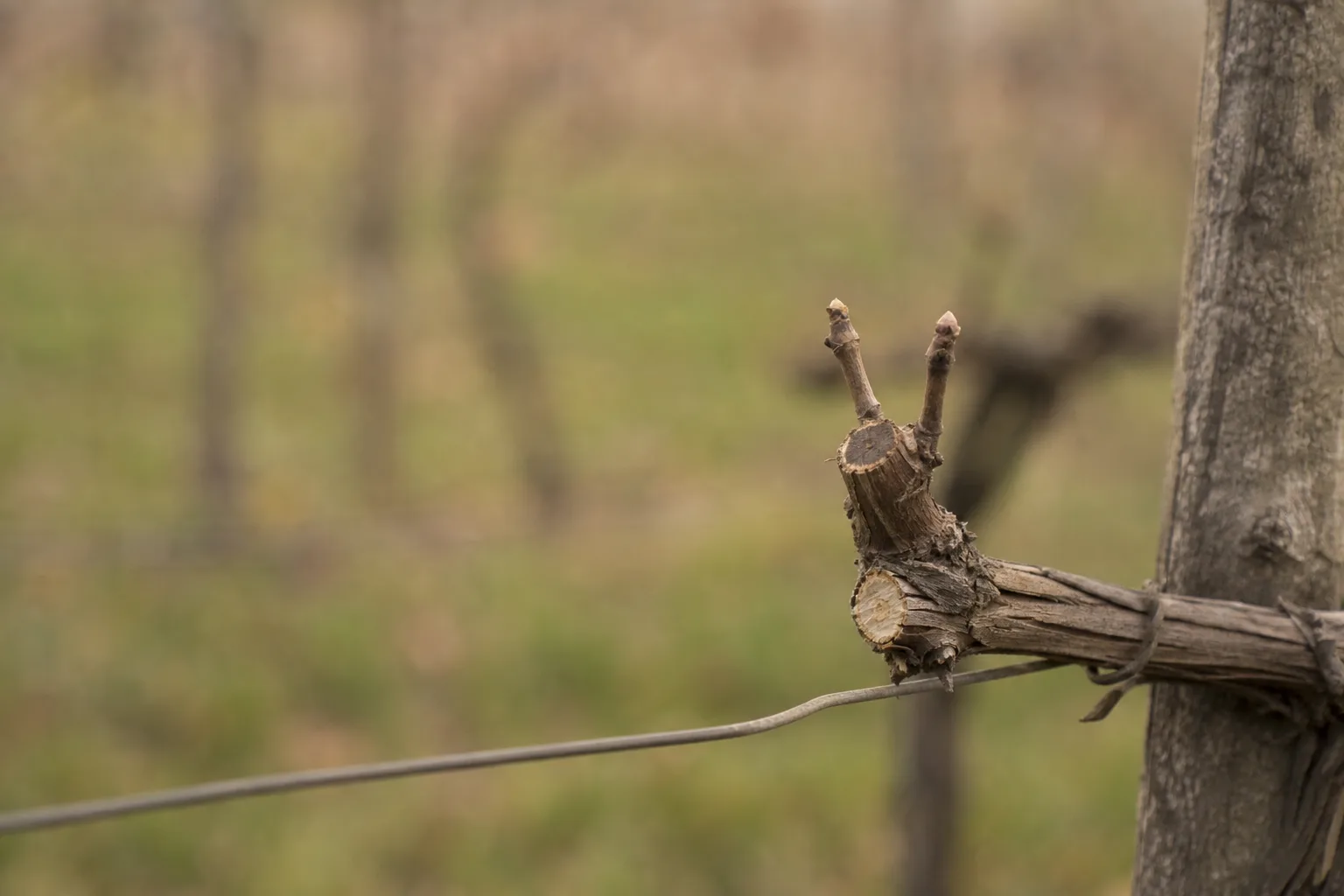
Your grapevine grows leaves instead of grapes because it has too many buds left to support and too much nitrogen available to push green growth. Prune it hard while dormant, stop nitrogen-heavy feeding, and train a smaller canopy so the vine can put energy into flowers and fruit.
Why does my grapevine grow wildly but produce no grapes?
A grapevine that makes long shoots and broad leaves but few flowers is usually under-pruned and over-fed. Too many buds divide the vine's stored energy across too many shoots, while excess nitrogen keeps pushing leafy growth, delays bud break, reduces flower formation, and weakens fruit set. That is the problem, not a mysterious grape curse.
Everyone says a big vine should make more grapes. In practice, a big unmanaged vine often makes more shade, more tangled runners, and fewer useful fruiting buds because the plant is distributing its resources too widely.
I have seen this exact mistake in Central Texas yards where a vine gets compost in spring, manure in summer, and a grateful homeowner wonders why September brings a green wall and no harvest. The vine is not lazy. You gave it the wrong assignment.
A VSP trellis, or vertical shoot positioning trellis, is one established way to spread shoots into a narrow fruiting zone, and a grape-growing overview from the San Diego Union-Tribune shows how that structure is used. Its downside is that it needs regular tying and trimming, not just one heroic afternoon with wire.
What should I do to this grapevine in fall?
In fall, stop feeding the vine, keep watering consistently until its leaves drop, and wait for full dormancy before making the major cuts. Remove broken or diseased wood now, but save the main pruning for winter, after leaf drop and before new buds swell, because fall pruning can encourage tender regrowth or expose fresh cuts to cold injury.
For an Austin-area vine, I would watch the weather through November and December, then make the main cuts in January or February if the plant is fully dormant. The exact week shifts with the winter, so the buds are a better signal than the calendar.
Do not dump a fresh layer of nitrogen-rich compost or manure around the crown because the vine looks tired. It is not tired. A late nitrogen flush can make soft growth that faces winter poorly and still does nothing for next year's fruit.
Clear fallen leaves and pruned wood away from the base, especially if they show disease or insect damage. Do not burn or compost questionable material in a small home pile, because you can spread problems back into the same planting.
If the soil is dry, water deeply enough to wet the root zone, then let the surface begin to dry before watering again. In Central Texas, black clay can stay wet below the surface long after the top looks dusty, so a shallow daily sprinkle is mostly theater.
How hard should I prune a grapevine for more grapes?
Prune a dormant grapevine back to a small number of productive buds instead of leaving every cane in place. For spur pruning, reduce each short cane to one or two strong buds; for cane-pruned vines, keep selected canes with two to four buds where the variety and training system call for it. Fewer buds mean fewer shoots competing for fruit.
Start by removing dead, weak, crossing, and pencil-thin wood. Then choose the strongest healthy framework that sits on the trellis, and cut away the rest. The trade-off is obvious: hard pruning looks severe and removes possible shoots, but light pruning is the reason your vine is behaving like a leafy octopus.
A practical home rule is to leave only the number of spurs or canes your trellis can carry with sunlight reaching each shoot. If a vine has filled a ten-foot run with a dense curtain, I would rather leave a clean structure with empty wire than preserve every old runner and recreate the same mess.
Use clean, sharp pruners and make cuts just above a healthy bud. Very old, thick wood may need a lopper or saw, but large cuts heal slowly and create more entry points for trouble, so do not turn every pruning session into tree removal.
I learned this lesson before Central Texas, in my father's twelve-foot strip of clay along the driveway in New Jersey, where every plant had to earn its space before the first hard frost. Down here the freeze may arrive late, but the arithmetic is the same. Too many growing points still make too little fruit.
Should I stop feeding a grapevine with high-nitrogen fertilizer?
Yes, stop high-nitrogen fertilizer and manure after bloom, and avoid feeding in fall. If the vine needs fertilizer, apply a balanced or slightly phosphorus-rich product such as 10-20-20 only in early spring, then stop by midsummer; the trade-off is slower-looking growth, but that is preferable to a jungle of shoots with poor flowering and fruit set.
Nitrogen is not bad by itself. Excess nitrogen is the problem. It pushes the vine toward leaves and stems, can delay bud break, reduces flower formation, and leaves less of the plant's effort available for berry development.
Do not choose a fertilizer simply because the first number is large. A product labeled 24-4-8 may make a weak, green vine look impressive for several weeks, but the bill arrives as more pruning, more shade, and fewer grapes.
A 10-20-20 fertilizer is a useful example of a more restrained approach, not a guarantee that every soil needs the same formula. Its downside is that phosphorus-rich feeding can be wasteful if your soil already has enough phosphorus, so a soil test is better than guessing with a whole bag.
Compost improves soil structure, but compost is not automatically harmless. Rich compost or manure applied after bloom can keep feeding nitrogen when the vine should be shifting toward fruit maturity, and heavy applications can also hold too much moisture around roots in clay.
How do sunlight, water, and training affect grape production?
A grapevine needs a trellis or V-shaped training system that spreads shoots apart, keeps leaves from forming a solid wall, and lets sunlight and air reach the fruiting zone. Water consistently during active growth, but do not over-irrigate; wet roots, dense shade, and tangled shoots create a poor setting for fruit even when the vine looks vigorous.
Aim for a canopy where you can see some daylight through the leaves instead of a continuous curtain. Thin weak or overly vigorous shoots during the growing season, and remove growth that crosses into the center of the plant.
Use drip irrigation on a timer if hand watering is inconsistent. A low-flow line is less glamorous than a hose, and it will not forgive a broken emitter, but it delivers water to the root zone without wetting the canopy.
After fruit clusters are about marble-sized, thin them to 8 to 12 grapes per vine according to the supplied growing guidance. That number is remarkably severe for a large established vine, but the purpose is concentration, and leaving every cluster defeats the whole pruning correction.
Fruit held off the ground has less contact with slugs and damp soil, a point also noted in this West Coast Seeds growing guidance. The trade-off is that a trellis adds posts, wire, and maintenance, but ground-hugging vines are harder to inspect and protect.
Who is this grapevine correction for, and who should ignore it?
This correction suits a home grapevine with vigorous green growth, few flowers, little fruit, and a homeowner willing to prune in winter and monitor shoots through spring. Ignore the quick-fix approach if the vine is newly planted, severely diseased, badly rooted, or growing in permanent shade, because pruning alone cannot repair those failures.
It also suits a vine on a sturdy trellis with at least several hours of direct sun. If the trunk is unsupported or the planting is buried in a narrow, wet bed, fix the structure and drainage before chasing fertilizer ratios.
You should be especially cautious with a young vine in its first year. Building a strong trunk and framework can matter more than harvesting a few clusters, and removing too much too early can delay the structure you need later.
A mature vine that has been allowed to run for years may need correction over two seasons rather than one dramatic cut. I would still prune firmly, but I would preserve a sound trunk and framework instead of removing everything above the soil and hoping for a miracle.
Ask yourself a blunt question: can you reach the fruiting wood, see through the canopy, and water the root zone without guessing? If the answer is no, the design is part of the harvest problem.
Which grapevine fix should you use this fall and winter?
For a vigorous home vine with poor fruiting, I would choose dormant structural pruning, restrained early-spring fertilizer, and trellis training over adding more compost or simply watering harder. The right option depends on the cause, but feeding a leafy vine more nitrogen is the option I would reject first because it reinforces the exact growth pattern you are trying to correct.
| Option | Best use | Main action | Honest downside |
|---|---|---|---|
| Dormant spur pruning | A trained vine with short fruiting spurs | Cut each spur to one or two strong buds | It removes excess buds and can look brutally bare |
| Dormant cane pruning | A vine that fruits on selected canes | Keep chosen canes with two to four buds | It requires knowing which canes are healthy and well placed |
| High-nitrogen feeding | A vine with a proven nitrogen deficiency | Add nitrogen only when testing supports it | It commonly produces leaves and shoots instead of fruit |
| VSP or V-shaped trellis training | A dense vine with tangled growth | Spread shoots through a defined fruiting zone | It needs tying, pruning, and sound posts |
| Early-spring 10-20-20 feeding | A vine that needs measured seasonal nutrition | Apply once in early spring and stop by midsummer | It can waste phosphorus if the soil already has enough |
The table is not a menu where you select everything. Start with pruning and structure, then decide whether feeding is needed. A fertilizer bag cannot compensate for twelve extra feet of untrained canopy.
If you want to map the vine before cutting, use our plant database to check the plant type and likely training style. If the structure is the bigger problem, you can also get a concept for your yard before buying posts and wire.
What are the most common questions about a grapevine with no grapes?
A grapevine with no grapes usually needs fewer buds, less nitrogen, better sunlight, and steadier water rather than more fertilizer. The answers below separate the fall work from the winter pruning and spring management, because cutting at the wrong time is another way to turn a fix into a delay.
Why does my grapevine grow wildly but produce no grapes?
Your grapevine grows wildly but produces no grapes because too many buds are producing shoots, while excess nitrogen encourages leaves instead of flowers and fruit. Prune the dormant vine to a limited number of strong buds, stop nitrogen-heavy feeding after bloom, and open the canopy so sunlight reaches the fruiting wood.
Should I prune my grapevine in fall or winter?
You should do the major pruning in winter after the leaves have dropped and the vine is fully dormant, usually January or February in Central Texas. In fall, remove broken or diseased wood, stop feeding, and water during dry weather, but avoid cutting the main framework while the vine may still produce tender new growth.
How many buds should I leave on a grapevine?
Leave one to two strong buds per spur on a spur-pruned vine, or two to four buds on selected canes for a cane-pruned vine. The correct number depends on the training system and variety, but leaving every bud on a vigorous home vine spreads energy too thinly and recreates the no-fruit problem.
Should I use 10-20-20 fertilizer on a grapevine?
Use 10-20-20 only in early spring and only when the vine needs measured feeding, then stop by midsummer. Its slightly phosphorus-rich balance is preferable to heavy nitrogen for a leafy, unproductive vine, but a soil test is wiser than applying phosphorus automatically where the soil already contains enough.
How much should I water a grapevine in fall?
Water a grapevine consistently in fall when the root zone is dry, but do not keep the soil saturated. Deep watering is better than shallow daily sprinkling, especially in Central Texas black clay, which can remain wet below the surface after the top looks dry and can suffocate roots if irrigation continues without checking.
Should I thin grape clusters on a vigorous vine?
Thin clusters after the grapes reach about marble size, using the supplied target of 8 to 12 grapes per vine for a heavily vigorous home vine. The severe thinning reduces competition among developing fruit, though it also reduces the total harvest, which is the honest price of asking the plant to finish what it starts.
Want a plan for your own yard?
Tell us the space and we will put a planting plan together for it. Start at get my concept, or browse what actually grows where you are over on plants.
Frequently asked questions
Why does my grapevine grow wildly but produce no grapes?
Your grapevine grows wildly but produces no grapes because too many buds are producing shoots, while excess nitrogen encourages leaves instead of flowers and fruit. Prune the dormant vine to a limited number of strong buds, stop nitrogen-heavy feeding after bloom, and open the canopy so sunlight reaches the fruiting wood.
Should I prune my grapevine in fall or winter?
You should do the major pruning in winter after the leaves have dropped and the vine is fully dormant, usually January or February in Central Texas. In fall, remove broken or diseased wood, stop feeding, and water during dry weather, but avoid cutting the main framework while the vine may still produce tender new growth.
How many buds should I leave on a grapevine?
Leave one to two strong buds per spur on a spur-pruned vine, or two to four buds on selected canes for a cane-pruned vine. The correct number depends on the training system and variety, but leaving every bud on a vigorous home vine spreads energy too thinly and recreates the no-fruit problem.
Should I use 10-20-20 fertilizer on a grapevine?
Use 10-20-20 only in early spring and only when the vine needs measured feeding, then stop by midsummer. Its slightly phosphorus-rich balance is preferable to heavy nitrogen for a leafy, unproductive vine, but a soil test is wiser than applying phosphorus automatically where the soil already contains enough.
How much should I water a grapevine in fall?
Water a grapevine consistently in fall when the root zone is dry, but do not keep the soil saturated. Deep watering is better than shallow daily sprinkling, especially in Central Texas black clay, which can remain wet below the surface after the top looks dry and can suffocate roots if irrigation continues without checking.
Should I thin grape clusters on a vigorous vine?
Thin clusters after the grapes reach about marble size, using the supplied target of 8 to 12 grapes per vine for a heavily vigorous home vine. The severe thinning reduces competition among developing fruit, though it also reduces the total harvest, which is the honest price of asking the plant to finish what it starts.
Free, no obligation
Ready to design your dream landscape? Start here.
Tell us where you are and we will start a free profile for you, with plants that actually survive your climate and a real sense of what the build would cost.