
When to Pick Persimmons: Astringent Versus Non-Astringent
A Fuyu can be picked firm and crisp. An astringent persimmon needs to become soft, dark, and almost too far gone before it is pleasant to eat.
October 2, 2026
By Diego Navarro
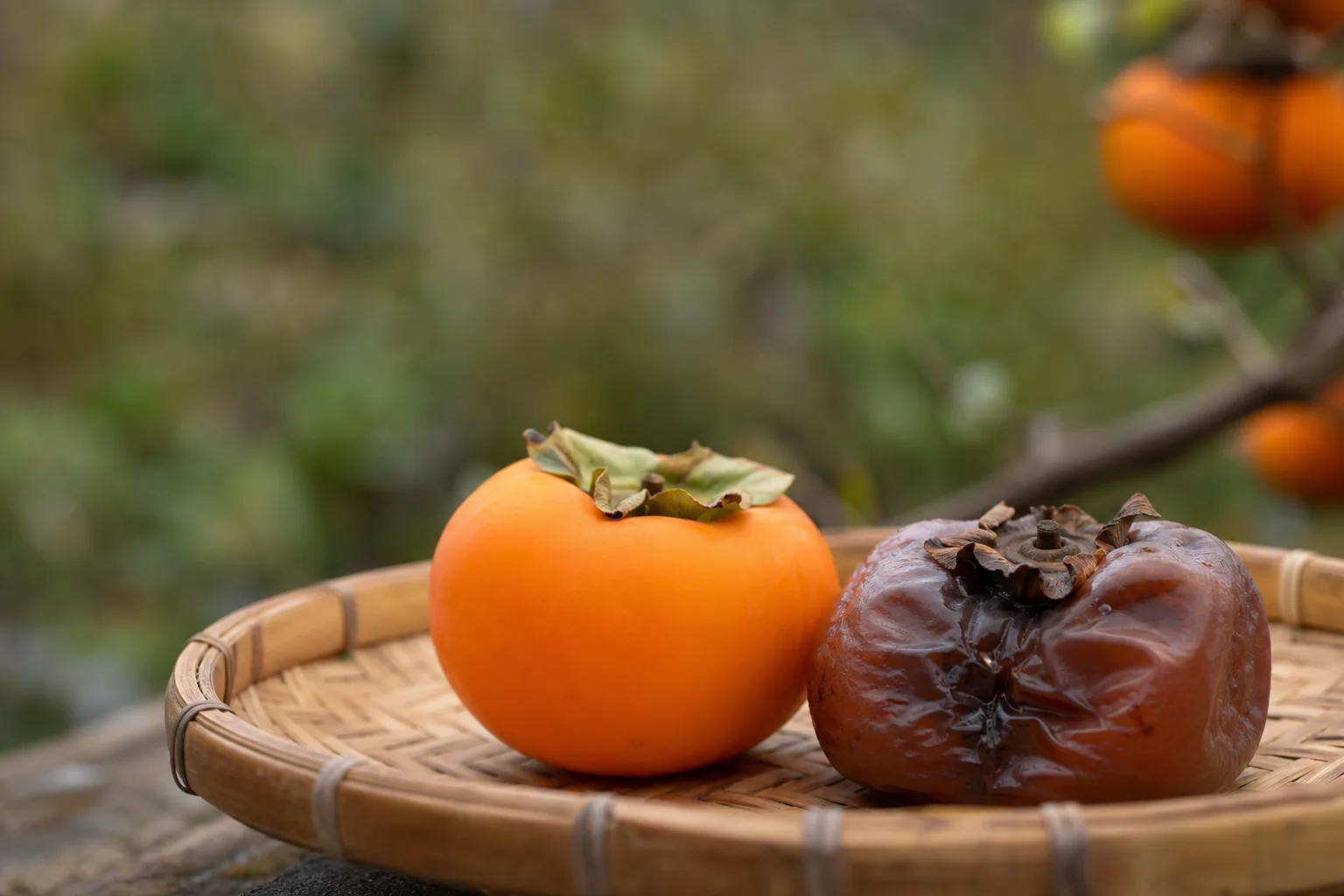
The short answer is simple: non-astringent persimmons are ready while they are still firm, but astringent persimmons are ready only after they become very soft. Fuyu and Ichikikijiro are non-astringent examples that ripen in late fall, generally October through November, while the supplied research does not identify a precise visual test for astringent fruit.
Which persimmon harvest rule applies to my tree?
Your first job is to identify whether the tree carries a non-astringent variety or an astringent one, because the two groups have opposite harvest signals. Fuyu and Ichikikijiro are non-astringent varieties, described as sweet and firm, while the research supplied here confirms that astringent varieties exist but does not name a definitive readiness test for them.
If the nursery tag says Fuyu, you are looking for a firm orange fruit in late fall. The Fuyu source describes that variety as firm and honey-sweet.
If the tag says Ichikikijiro, the same firm-fruit approach makes sense. The variety is described as non-astringent, sweet, and crisp, and another source places its usual ripening period in October through November at Ty Ty Nursery.
A tag that only says “persimmon” is not enough. Do not make the whole harvest decision from the color of one fruit, because color tells you less than the variety name does.
Can I pick a Fuyu persimmon while it is still hard?
Yes, a Fuyu can be picked while it is firm, because Fuyu is a non-astringent persimmon valued for firm texture and honey-sweet flavor. The supplied source does not give a precise pressure test or color threshold, so use the variety identity, late-fall timing, and a fruit that has developed its mature orange appearance rather than waiting for collapse.
The Fuyu fruit should feel solid in your hand, not soft like a ripe peach. That firmness is not a failure. It is the point of this type.
Fuyu’s trade-off is that a firm fruit can be less forgiving if you harvest it before the tree has finished its late-fall ripening period. In practical terms, do not strip green or obviously immature fruit simply because a freeze is in the forecast.
You can use the plant database to check the variety name before you decide how much softness to tolerate. A tree label is worth more than a confident guess made under a kitchen light.
When are Ichikikijiro persimmons ready to harvest?
Ichikikijiro persimmons are generally harvested in late fall, typically October through November, and the variety is described as sweet, non-astringent, and crisp. That means you can pick mature fruit while it remains firm rather than waiting for it to become pudding-soft, though the supplied source does not give a specific firmness measurement.
Look at the tree in October and November, then judge each fruit individually. A late fruit may still need more time while another on the same tree is ready to come off.
Ichikikijiro’s trade-off is its name, which is not exactly a gift to a tired homeowner trying to remember what was planted three years ago. Write the variety on a weatherproof tag or keep the nursery receipt with your garden records.
For a small yard, this variety is also described as a dwarf option, but dwarf does not mean maintenance-free. You still need room for the canopy, access for picking, and a plan for fruit that ripens across more than one day.
How soft should an astringent persimmon be before I eat it?
An astringent persimmon should be allowed to become very soft before eating, close to the point where it looks overripe, because its harvest rule is the opposite of a firm non-astringent persimmon. The supplied research confirms that astringent persimmons exist but does not provide a definitive softness test, so treat this as the practical distinction, not a source-established measurement.
This is the part that catches people. A fruit that seems ruined can be the one that is finally pleasant, while a handsome, firm astringent persimmon can be a miserable mouthful.
Do not use the Fuyu rule on an astringent tree. Picking hard fruit because it looks clean and sturdy is the wrong instinct for that category.
Because the research provided does not identify a specific astringent variety or give a measured softness standard, test one fruit before harvesting the whole tree. That is cheaper than discovering twenty persimmons all need more time after you have already carried them inside.
What does a ready persimmon look like in fall?
A ready non-astringent persimmon should have mature orange color, a firm body, and the late-fall timing associated with varieties such as Fuyu and Ichikikijiro. A ready astringent persimmon should be judged by extreme softness instead, but the supplied sources do not establish a reliable color, skin, or pressure test for that group.
The safest visual clue from the research is the calendar. Fuyu is described as a firm, honey-sweet fruit, and Ichikikijiro is listed as ripening in October through November.
Color alone is a weak judge. Autumn foliage may look brilliant on a persimmon tree, but leaves changing color do not give you a harvest measurement. The fruit is the thing you are picking.
If you are standing under the tree right now, choose one representative fruit and cut it open. Note its texture, flavor, and firmness, then decide whether the rest should come off in stages.
How should I pick persimmons without damaging the tree?
Pick persimmons by supporting the fruit and using a clean, sharp hand pruner if the stem resists, rather than twisting hard against the branch. Leave a short piece of stem attached when possible, and place firm non-astringent fruit gently in a shallow container because bruising can turn a good harvest into a soft mess.
The research supplied here explains ripening type and season, not harvest-tool technique, so this is a conservative garden practice rather than a claim from those sources. The point is to remove fruit without tearing a spur or snapping a small branch.
For Fuyu or Ichikikijiro, sort fruit into firm and damaged groups immediately. Firm fruit can be handled more easily, while bruised fruit should not be buried under the clean harvest where it can be forgotten.
For an astringent tree, pick only fruit that has reached the soft stage you are using as your test. The trade-off is obvious: soft fruit is harder to carry, so harvest directly into a bowl or padded basket instead of a deep bucket.
Should I harvest every persimmon on the tree at once?
No, harvest in stages unless every fruit has reached the same condition. Non-astringent Fuyu and Ichikikijiro fruit can be picked firm during their late-fall window, generally October through November, while astringent fruit should stay on the tree or be held aside until it becomes very soft, and the supplied research does not establish one universal date for every variety.
Everyone says to wait for one perfect harvest day. In practice, trees do not read the calendar, and fruit on the sunny outside of the canopy may differ from fruit tucked against the trunk.
Check the tree every three or four days during the fall harvest window. That interval is a working schedule, not a source-backed rule, but it keeps a firm-fruited variety from becoming a pile of fallen fruit while you are waiting for one stubborn specimen.
If you need a design plan for the tree’s placement, you can get a concept for your yard before planting another one. A persimmon is a long-term piece of the garden, not a decorative pot you move when the patio gets crowded.
Who is this persimmon harvest advice for, and who should ignore it?
This advice suits a homeowner harvesting a known Fuyu or Ichikikijiro tree in October or November, or someone who can test one fruit before picking the rest. Ignore the firm-fruit rule if the tree is astringent, and pause entirely if the variety is unknown and you cannot verify it, because the two fruit types require opposite judgments.
It fits a garden where you can visit the tree every few days and bring delicate fruit indoors without stacking it under heavy produce. It is less useful if you need one commercial-style harvest on one morning.
Here is the clean comparison:
| Persimmon type | Pick when | Eating texture | Honest downside |
|---|---|---|---|
| Non-astringent, such as Fuyu or Ichikikijiro | Firm, in late fall, usually October to November | Firm and crisp | Picking too early can leave fruit that has not reached its best flavor |
| Astringent | Very soft, close to looking overripe | Soft and tender | Soft fruit bruises easily, and the supplied research does not give a definitive readiness test |
In my own yard work around Austin, I trust the label before I trust the appearance. The ground can argue with a shovel for two hours, but a wrong variety label can argue with your mouth for one bite.
What are the answers to common persimmon harvest questions?
The useful answer is to separate the two fruit types before you touch the pruners. Non-astringent persimmons, including Fuyu and Ichikikijiro, can be harvested firm in late fall, while astringent persimmons need to become very soft; for astringent fruit, the supplied research does not provide a definitive visual or measured readiness test.
Can I pick Fuyu persimmons while they are still firm?
Yes, you can pick Fuyu persimmons while they are still firm because Fuyu is a non-astringent variety described as firm and honey-sweet. The supplied source does not state an exact firmness measurement, so harvest during the late-fall period after the fruit has developed mature orange color instead of waiting for the fruit to become soft.
When do Ichikikijiro persimmons ripen?
Ichikikijiro persimmons ripen in late fall, typically from October through November. The variety is described as sweet, non-astringent, and crisp, so it belongs to the firm-fruit harvest group rather than the group that must become very soft before eating.
How soft should an astringent persimmon be?
An astringent persimmon should be very soft before eating, close to the point where it looks overripe, because its harvest rule is opposite to that of a Fuyu or Ichikikijiro. The supplied research confirms that astringent persimmons exist but does not provide a definitive softness measurement or visual test.
What if I do not know whether my persimmon is astringent?
If you do not know whether your persimmon is astringent, identify the variety before harvesting the whole tree and test one fruit first. Do not assume that every persimmon follows the Fuyu rule, because the supplied research distinguishes non-astringent varieties from astringent ones but does not identify every tree by appearance.
Should I pick all my persimmons on one day?
You should not pick all your persimmons on one day unless the fruit has reached the same harvest condition. Pick mature Fuyu or Ichikikijiro fruit in stages while it remains firm, and leave astringent fruit until it becomes very soft, since the two types mature by opposite practical rules.
Are Fuyu and Ichikikijiro the same kind of persimmon?
Fuyu and Ichikikijiro are both non-astringent persimmons, and both are described as sweet varieties suitable for firm eating. They are not the same named variety, however, so keep the tree label and purchase record; the supplied sources describe Ichikikijiro as crisp and late-fall ripening and Fuyu as firm and honey-sweet.
The rule I would use today is plain: if the label says Fuyu or Ichikikijiro, pick a mature fruit while it is firm. If the tree is astringent, wait until the fruit looks like it has lost the argument. That is the harvest.
Want a plan for your own yard?
Tell us the space and we will put a planting plan together for it. Start at get my concept, or browse what actually grows where you are over on plants.
Frequently asked questions
Can I pick Fuyu persimmons while they are still firm?
Yes, you can pick Fuyu persimmons while they are still firm because Fuyu is a non-astringent variety described as firm and honey-sweet. The supplied source does not state an exact firmness measurement, so harvest during the late-fall period after the fruit has developed mature orange color instead of waiting for the fruit to become soft.
When do Ichikikijiro persimmons ripen?
Ichikikijiro persimmons ripen in late fall, typically from October through November. The variety is described as sweet, non-astringent, and crisp, so it belongs to the firm-fruit harvest group rather than the group that must become very soft before eating.
How soft should an astringent persimmon be?
An astringent persimmon should be very soft before eating, close to the point where it looks overripe, because its harvest rule is opposite to that of a Fuyu or Ichikikijiro. The supplied research confirms that astringent persimmons exist but does not provide a definitive softness measurement or visual test.
What if I do not know whether my persimmon is astringent?
If you do not know whether your persimmon is astringent, identify the variety before harvesting the whole tree and test one fruit first. Do not assume that every persimmon follows the Fuyu rule, because the supplied research distinguishes non-astringent varieties from astringent ones but does not identify every tree by appearance.
Should I pick all my persimmons on one day?
You should not pick all your persimmons on one day unless the fruit has reached the same harvest condition. Pick mature Fuyu or Ichikikijiro fruit in stages while it remains firm, and leave astringent fruit until it becomes very soft, since the two types mature by opposite practical rules.
Are Fuyu and Ichikikijiro the same kind of persimmon?
Fuyu and Ichikikijiro are both non-astringent persimmons, and both are described as sweet varieties suitable for firm eating. They are not the same named variety, however, so keep the tree label and purchase record; the supplied sources describe Ichikikijiro as crisp and late-fall ripening and Fuyu as firm and honey-sweet.
Free, no obligation
Ready to design your dream landscape? Start here.
Tell us where you are and we will start a free profile for you, with plants that actually survive your climate and a real sense of what the build would cost.