
When Should You Pick Peppers: Green, Color Break, or Full Color?
Pick peppers green for the most total fruit, at color break for a useful compromise, or fully colored for the sweetest, hottest flavor. Here is how to choose while you are standing in the fall garden.
September 30, 2026
By Valeria Navarro
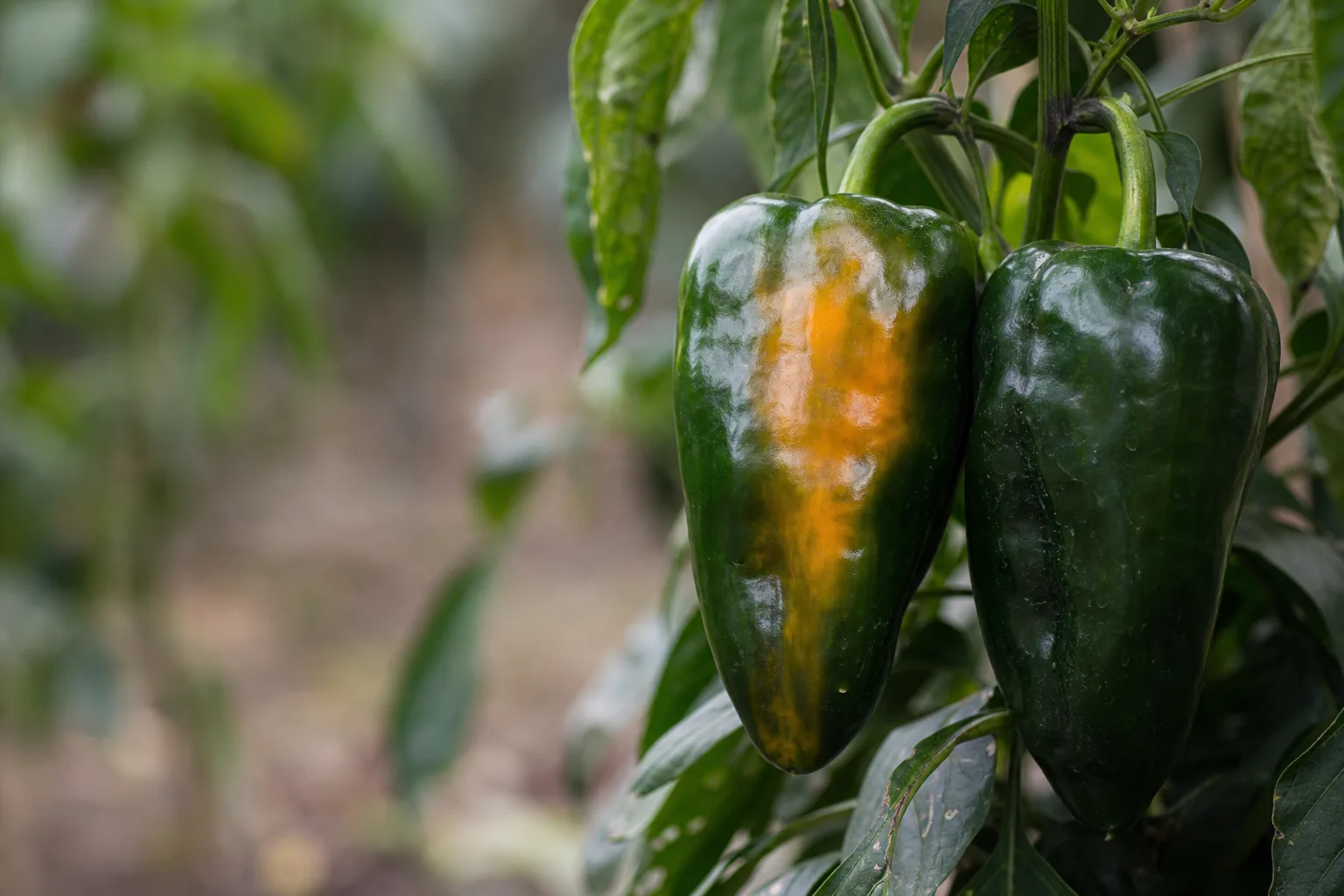
Pick your pepper according to the meal you want and the harvest you want afterward. Green gives you the firmest fruit and usually the best chance at more peppers, color break gives you more sweetness and heat without waiting all the way, and full color gives you the richest mature flavor at the cost of later production.
Should I pick my pepper green, at color break, or fully colored?
Pick a poblano green when it has reached its expected size, feels firm, and has full shoulders. Pick at color break for a little more sweetness and heat while freeing the branch sooner. Let it turn fully red only when mature flavor, ancho use, or drying matters more to you than the next round of fruit, as Oregon State’s guidance summarized here explains.
In my Austin garden, I use green harvest as the default. A full-size poblano is commonly about 3 to 4 inches wide and 4 to 7 inches long, though your seed packet is the better judge for a named cultivar.
Green fruit is firm. That makes it the right stage for roasting or stuffing, but those uses trade some sweetness for structure. Color break is my compromise when I am cooking later in the week. Full red is the luxury setting. Delicious, yes. Efficient, no.
How do I know a green pepper is ready to pick?
A green poblano is ready when it has reached the cultivar’s expected size, feels firm, and has full shoulders rather than narrow, underdeveloped ends. For many poblanos, that means roughly 3 to 4 inches wide and 4 to 7 inches long. Size alone is not enough because a small, soft fruit is not harvest-ready just because it is green.
Run your fingers over the pepper. It should feel firm, not rubbery or collapsed. Look at the shoulders near the stem. They should look filled out instead of pinched inward.
The seed packet beats a generic measurement every time. One variety may be ready at a different size than another, and a pepper that is still growing can look impressive before it has finished filling out.
Do not wait for green to become enormous. That is how a nice pepper turns into a branch burden while the plant keeps spending energy on one fruit. If you want to compare likely mature sizes before planting next year, the plant database can help you check the variety first.
Does a pepper get sweeter and hotter after it starts changing color?
Yes, a pepper generally gains sweetness and heat as it moves beyond solid green toward mature color, but the plant pays for that extra flavor with more time invested in one fruit. Color break is the useful middle stage: you get some mature character while removing the pepper early enough to make room for later production, based on the harvest guidance from Oregon State’s research summary.
Everyone says green peppers are simply unripe and red peppers are better. In practice, “better” depends on the plate and the plant. Green wins for firmness and total harvest. Red wins for deeper mature flavor. Color break keeps you from making a dramatic choice while dinner is still undecided.
The change does not happen in one neat minute. You may see a yellow, orange, or red patch while most of the fruit remains green. That is your signal that the pepper has entered color break, not a sign that you missed the harvest.
I learned this the hard way after growing up with sandy Miami pots that drained before I finished watering, then gardening in Austin clay that holds water and sets like a brick. I left a few peppers hanging because I wanted the prettiest color. Pretty they were. Productive they were not.
Should I pick peppers at color break and let them finish indoors?
Pick a pepper at color break if you want it to continue ripening off the plant while freeing the branch for later fruit. This choice sacrifices some immediate plant time and may not deliver exactly the same finish as leaving the pepper attached, but it gives you more control over harvest timing and protects the plant’s productive capacity.
Choose a pepper that has already begun turning yellow, orange, or red. A completely green, undersized pepper is not the same thing as a fruit already entering maturity.
Keep the color-break fruit clean and out of direct cooking heat while it finishes. Check it daily. If it softens, leaks, or develops a bad spot, use it promptly rather than waiting for a perfect color.
This is especially handy in a fall garden when several fruits are changing at once. You can bring in the ones showing color and leave full-size green peppers on the plant for a firmer harvest, instead of asking every fruit to reach the same stage on the same day.
Does leaving a pepper on the plant reduce my total harvest?
Yes, leaving a pepper until it fully matures can reduce total yield because the plant continues investing energy in that fruit instead of producing more flowers and fruit. Removing fruit before it is fully mature encourages the plant to try again, so green or color-break harvest is the better choice when your main goal is the greatest number of peppers, according to NC State Extension.
This is the trade-off people skip. A full-red pepper can taste more developed, but it occupies the plant longer. The cost is not just one late harvest. It is the possible next fruit that never gets the plant’s attention.
If you are growing one plant with only a few fruits, I would let one pepper reach full color and pick the rest green or at color break. That gives you a mature sample without turning the whole plant into a waiting room.
You can also stagger the decision by fruit. Pick the largest firm green pepper today. Leave another with a red patch. Let one more go fully red if you specifically want to compare flavors. Garden experiments are cheaper than guessing, and they taste better too.
Which harvest stage is best for roasting, stuffing, or drying?
Green peppers are best when you need firm walls for roasting or stuffing, color-break peppers suit a sweeter, hotter middle ground, and fully red peppers are the choice for mature flavor, ancho use, or drying. The trade-off is simple: green holds its shape, while full color gives up plant productivity for deeper flavor and a longer, less efficient harvest window.
Roasting rewards a firm green poblano because the fruit can handle heat without feeling soft before you are ready to serve it. The downside is less mature sweetness. If you want the pepper to taste more developed, choose color break instead.
Stuffing also favors green fruit because firmness matters. The downside is that an early green harvest can taste sharper and less sweet than a mature one.
For ancho use or drying, wait for full red. The cost is time on the plant, and the fruit may be softer by the time you remove it. That is not a flaw. It is the price of choosing maturity over maximum turnover.
| Harvest stage | Best use | Honest downside |
|---|---|---|
| Full-size green | Roasting, stuffing, maximum total yield | Less sweetness and mature flavor |
| Color break | A balance of sweetness, heat, and continued production | The fruit may not finish exactly like one left attached |
| Full red | Mature flavor, ancho use, drying | Longer time on the plant can reduce later fruit production |
Who should pick peppers green, and who should wait for full color?
Pick green if you are cooking this week, need firm fruit, or want the plant to keep producing. Pick at color break if you want more sweetness and heat but still care about later peppers. Wait for full color if you are deliberately making ancho peppers, drying them, or choosing mature flavor over total yield. If you have only a few fruits, split the harvest stages.
This advice suits a fall gardener standing beside a productive plant with full-size fruit and no need for every pepper to match. It also suits anyone trying to stretch a harvest from a small bed, patio pot, or one stubborn plant.
Ignore the idea that every pepper must turn red before it counts. That is a waste of time if your goal is firm green fruit or the most peppers overall. Also ignore green harvest if your only goal is mature flavor. You cannot ask one pepper to be both youngest and oldest at once.
Ask yourself one real question: do you want the best pepper today, or more peppers later? My answer in a small home garden is usually both, so I split the plant by stage instead of making the whole harvest wait.
How often should I check peppers during fall harvest?
Check fall peppers every two to three days once the fruit reaches full size or begins showing color. That interval lets you catch the firm green stage, notice color break early, and remove fully colored fruit before it sits longer than your cooking plan requires. More frequent checking matters because color can advance quickly during warm weather.
Use the same route each time. Start at the stem, check the shoulders, then look along the fruit for the first yellow, orange, or red patch. Keep a small bowl nearby so you are not tempted to tug at the branch or leave the fruit another week.
Cut or remove fruit carefully enough that you do not damage nearby flowers or small peppers. The research supports removing fruit before full maturity to encourage more production, but it does not give a magic harvest day for every variety.
In Austin, fall can feel generous one afternoon and stingy the next. I do not build my whole plan around a perfect red harvest. I take the good green peppers, rescue the color-break ones, and reserve full color for the fruit I have chosen on purpose.
What should I do with peppers I pick today?
Use full-size green peppers promptly for roasting or stuffing, use color-break peppers when you want a balance of firm texture and mature flavor, and reserve fully red peppers for mature-flavor dishes, ancho use, or drying. The trade-off is storage time and texture: the longer a pepper has matured, the less useful it may be when you need a crisp, firm wall.
Sort the harvest by stage instead of tossing everything into one bowl. Green fruit goes to the meal that needs structure. Color-break fruit goes to the meal where sweetness matters. Red fruit gets the job that justified leaving it on the plant.
If you are planning next season rather than cooking tonight, note the day each stage appeared. A pepper needs at least 45 to 55 days from pollination to a harvestable fruit under good conditions, according to the research summarized by Know The Pepper. Your notes will help you plan better than a vague label like “late summer.”
For a new bed or a more deliberate harvest plan, use get a concept for your yard to think through where the peppers will grow and how you will reach them. A beautiful bed that makes harvesting awkward is still a design mistake, cariño.
Is green, color break, or full color the best choice for my plant?
Green is the best default choice for most home gardeners because it preserves firmness and gives the plant a chance to produce more fruit. Color break is the best compromise when you want extra sweetness and heat without waiting as long. Full color is best only when mature flavor, ancho use, or drying is worth the lost production time.
The plant does not care about your color preference. It responds to whether fruit remains immature or reaches maturity, and removing fruit before full maturity can prompt another attempt at flowers and fruit.
My vote is clear. Pick most full-size poblanos green, take a few at color break, and let only the chosen few become fully red. That is how you get dinner tonight, a little mature flavor, and a better chance of another harvest instead of one gorgeous pepper holding the whole plant hostage.
How do I know a green pepper is ready to pick?
A green pepper is ready when it has reached the expected size for its cultivar, feels firm, and has full shoulders. For many poblanos, that is about 3 to 4 inches wide and 4 to 7 inches long, but the seed packet is the better reference. A small, soft fruit is not ready simply because it is green.
Does a pepper get sweeter and hotter after it starts changing color?
Yes, a pepper generally gains sweetness and heat as it moves from solid green toward mature color. Color break gives you some of that mature character while freeing the branch sooner than full red, so it is a practical compromise when you want flavor without giving up as much later production.
Should I pick peppers at color break and let them finish indoors?
Yes, you can pick a pepper at color break and let it finish ripening off the plant. Choose fruit already showing yellow, orange, or red, because a completely green, undersized pepper is not at the same stage. The trade-off is that off-plant finishing may not match the exact result of leaving the fruit attached.
Does leaving a pepper on the plant reduce my total harvest?
Yes, leaving a pepper until full maturity can reduce total harvest because the plant keeps investing energy in that fruit. Removing fruit before it fully matures encourages the plant to produce more flowers and fruit, so green or color-break picking is the stronger choice when quantity matters most.
Which harvest stage is best for roasting, stuffing, or drying?
Green peppers are best for firm roasting or stuffing, while fully red peppers are best for mature flavor, ancho use, or drying. Color break sits between them. Green fruit sacrifices sweetness, and red fruit sacrifices time that could have supported later production, so choose the stage by the job you need done.
How often should I check peppers during fall harvest?
Check fall peppers every two to three days once they reach full size or begin changing color. That schedule helps you catch the firm green stage, harvest at color break, and remove fully colored fruit deliberately instead of discovering it after it has sat on the plant longer than you wanted.
Want a plan for your own yard?
Tell us the space and we will put a planting plan together for it. Start at get my concept, or browse what actually grows where you are over on plants.
Frequently asked questions
How do I know a green pepper is ready to pick?
A green pepper is ready when it has reached the expected size for its cultivar, feels firm, and has full shoulders. For many poblanos, that is about 3 to 4 inches wide and 4 to 7 inches long, but the seed packet is the better reference. A small, soft fruit is not ready simply because it is green.
Does a pepper get sweeter and hotter after it starts changing color?
Yes, a pepper generally gains sweetness and heat as it moves from solid green toward mature color. Color break gives you some of that mature character while freeing the branch sooner than full red, so it is a practical compromise when you want flavor without giving up as much later production.
Should I pick peppers at color break and let them finish indoors?
Yes, you can pick a pepper at color break and let it finish ripening off the plant. Choose fruit already showing yellow, orange, or red, because a completely green, undersized pepper is not at the same stage. The trade-off is that off-plant finishing may not match the exact result of leaving the fruit attached.
Does leaving a pepper on the plant reduce my total harvest?
Yes, leaving a pepper until full maturity can reduce total harvest because the plant keeps investing energy in that fruit. Removing fruit before it fully matures encourages the plant to produce more flowers and fruit, so green or color-break picking is the stronger choice when quantity matters most.
Which harvest stage is best for roasting, stuffing, or drying?
Green peppers are best for firm roasting or stuffing, while fully red peppers are best for mature flavor, ancho use, or drying. Color break sits between them. Green fruit sacrifices sweetness, and red fruit sacrifices time that could have supported later production, so choose the stage by the job you need done.
How often should I check peppers during fall harvest?
Check fall peppers every two to three days once they reach full size or begin changing color. That schedule helps you catch the firm green stage, harvest at color break, and remove fully colored fruit deliberately instead of discovering it after it has sat on the plant longer than you wanted.
Free, no obligation
Ready to design your dream landscape? Start here.
Tell us where you are and we will start a free profile for you, with plants that actually survive your climate and a real sense of what the build would cost.