
When to Pick Figs, and Why a Firm Fig Never Ripens
A firm fig is not waiting patiently on your kitchen counter. Learn how the soft neck and drooping shape tell you a fig is ready to pick, plus what to do with hard green fruit in the fall garden.
September 18, 2026
By Valeria Navarro
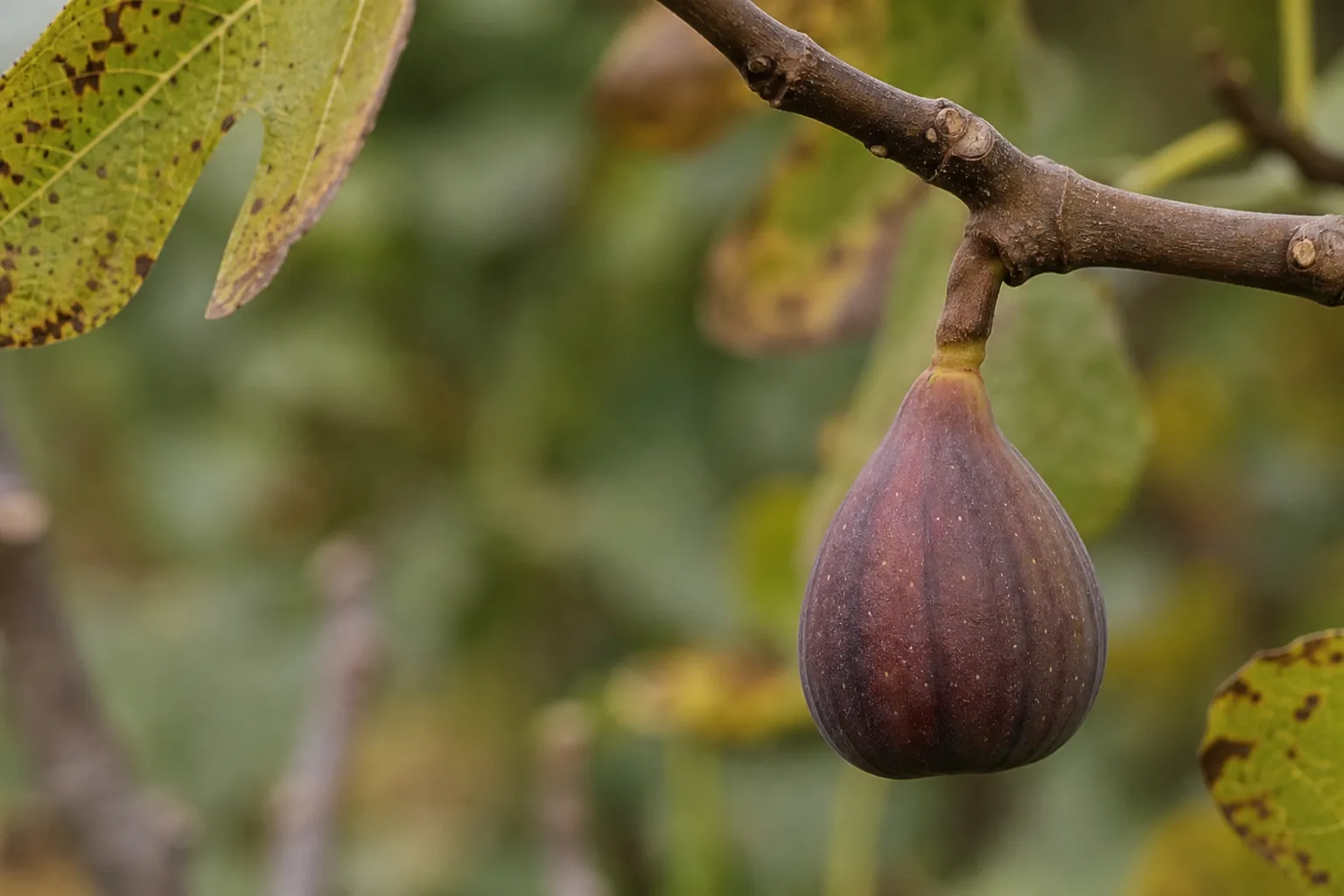
Pick the fig when the narrow neck feels soft and the fruit has started to droop or hang straight down. A firm fig will not become sweet on your counter because figs stop developing after harvest, so cutting one early gives you a sour, green lump instead of a rescue project.
When should I pick figs from the tree?
Pick figs when the neck, where the fruit attaches to the branch, yields gently and the fruit is beginning to droop. The fig may show deeper color, a fuller shape, or a little cracking too, but the soft neck is the deciding sign because ripening moves upward from the bottom.
Stand beside the tree and look at the attachment point, not only the fat bottom of the fruit. A ripe fig often hangs straight down. If the whole fruit is still pointing upward and the neck feels hard, leave it attached.
Check the tree every day or two during the fall harvest window. A fig can move from almost ready to split and sour surprisingly fast, especially after rain. That narrow window is the trade-off for tree-ripened sweetness.
The fig harvest guidance from Fig Boss makes the useful distinction clearly: color, size, and cracking help, but growers should learn how the neck feels on their own varieties. That is the part I trust most in my Austin garden.
Why does a firm fig never ripen after picking?
A firm, hard fig will not ripen properly after you cut it because sugar accumulation and the reduction of white latex happen on the tree. Figs stop developing at harvest, so an early-picked fruit stays green, sour, and disappointing instead of becoming the soft, jammy fruit you wanted.
Everyone says to pick fruit before it gets too soft and let the counter finish the job. In practice, that rule fails with figs because they are not like fruit that continues its ripening off the plant. The tree is doing the final work.
You can leave a hard fig in a bowl for several days, but time does not replace the tree. It may wrinkle or dry. It will not gain the sweetness it would have built while attached.
The Clemson Home and Garden Information Center also states that green figs will not ripen off the tree and notes that figs can take up to two months from fruit formation to reach full ripeness. Patience belongs in the garden, not in the fruit bowl.
How does the fig neck tell me it is ripe?
The soft neck tells you that ripening has progressed upward through the fig. The bottom ripens first and contains less white latex, so when the narrow top section finally yields to gentle pressure, the fruit is usually ready to pick even if its color is not perfectly uniform.
Press the neck lightly with one finger. Think ripe avocado, not a squeeze toy. You want a clear little give, not a collapsed stem or a mushy fruit.
Do not press the bottom and assume you have your answer. The bottom can feel soft while the neck remains firm, and that is exactly the stage that tricks new fig growers. The attachment point is the useful checkpoint.
This is a variety-specific skill. One fig may have a purple skin when ripe, another may stay green, and both can be ready when their necks soften. Your tree will teach you faster than a color chart if you check it every afternoon for a week.
Can color, size, and cracking confirm a ripe fig?
Color, larger size, a fuller shape, and slight skin cracking can support a harvest decision, but none is as reliable as a soft neck with a drooping fruit. Use appearance to find candidates, then use gentle pressure at the neck before you pick.
A deeper skin color is helpful. So is a fig that has filled out instead of looking tight and angular. Small cracks can signal advanced ripeness, but cracking alone is not permission to harvest every fruit nearby.
The problem with visual guessing is that varieties mature in different colors. A green-skinned fig can be ready while a dark-skinned fig on the same tree still needs time. Size also misleads because a large, hard fig is still a large, hard fig.
Here is the order I use in fall: look for color change, fullness, or a little crack; watch for drooping; then test the neck. If the signs disagree, trust the neck and give the fruit another day.
| Fig condition | What to do | Honest downside |
|---|---|---|
| Soft neck and drooping fruit | Pick and eat it soon | The harvest window is short, so birds or rain may beat you to it |
| Full-colored but firm neck | Leave it on the tree and check again tomorrow | Waiting risks splitting or wildlife damage |
| Hard, green, upright fruit | Leave it attached | It may need weeks more, and late-season fruit may never finish before cold weather |
| Very soft, split, or leaking fruit | Remove it promptly | It may be overripe, messy, or already damaged inside |
How do I pick a ripe fig without damaging it?
Pick a ripe fig by supporting the fruit and removing it only after the soft neck confirms readiness. Handle it gently because a ripe fig bruises and breaks more easily than a firm one, and picking too early costs sweetness that the fruit cannot recover later.
Use your fingertips around the fruit, not a hard pinch at the skin. Lift or twist gently until it releases. If you feel a strong tug at the branch, stop. That fig is probably not ready, and forcing it is a good way to damage both fruit and shoot.
Put harvested figs in a shallow container rather than piling them deeply. This is not a storage miracle. It simply reduces the pressure that turns ripe fruit into a sticky bottom layer.
Eat them soon after picking. A fully ripe fig is a short-lived pleasure, which is why I pick only what we can eat that day or the next. The diva behavior is real, but the flavor is why we put up with it.
What should I do if birds, squirrels, or rain are reaching the figs first?
If wildlife or rain is taking every ripe fig, harvest as soon as the neck softens and the fruit begins to droop, even if the skin has not cracked. Do not pick hard green figs as a general solution, because they will remain sour and undeveloped after harvest.
Check the tree early in the day and again before dinner during the busiest harvest stretch. Pick the fruit that has passed the neck test. Leave the hard fruit alone, even when it is tempting to clear the tree before the birds do.
Rain can push an almost-ripe fig into splitting. A split fruit should be handled carefully and eaten promptly if it is clean and sound, while fruit that is leaking, moldy, or damaged should be removed rather than left among the others.
My abuela taught me to look closely before reaching, and that habit followed me from hot Miami patios into Central Texas. In Miami, sandy fill drained before I finished watering. Here in Austin, clay can hold water, the weather can turn, and a fig can go from perfect to spoiled while I am inside making lunch.
Who is this fig harvest advice for, and who should ignore it?
This advice suits homeowners with fruit still attached to a living fig tree, especially people harvesting a fall crop and deciding which fruit is ready today. Ignore advice that tells you to pick every hard fig for indoor ripening, because that shortcut costs sweetness and leaves you with fruit that cannot finish developing.
Use this method if you can inspect the tree every day or two. It is practical for a backyard tree, a patio tree in a large container, or a small edible garden where you can touch each promising fig.
Be more cautious if your tree is producing late fruit after severe winter damage or if the cultivar is known to mature late. Cold winter temperatures, fruit growing on new shoots, hot dry weather, inadequate irrigation, low fertility, and insufficient sunlight can all affect the timing of fruit formation and ripening, according to Clemson’s fig guidance.
If you are choosing a fig tree for next year, start with the plant database to compare plants for your conditions. Every tree brings a trade-off. A generous crop still asks for sun, water during dry weather, and several weeks of attention at harvest.
Why are my figs still hard in fall?
Figs can remain hard in fall because the fruit is not mature yet, the cultivar ripens late, the plant suffered winter damage, or growing conditions limited development. Fruit may take up to two months from formation to ripen, so a hard fig needs time on the tree unless cold weather ends the season first.
Look at the whole tree before blaming the fruit. Did the plant lose branches in a severe winter? Are the figs growing on new shoots? Has the soil been too dry, too infertile, or too shaded? These conditions can shift or slow the crop.
Do not punish a slow fig by watering heavily in one dramatic episode. Keep moisture consistent instead of swinging from dry soil to saturated soil. The goal is steady growth, not a panic bath for a fruit that still needs weeks.
If you are planning a new edible layout, get a concept for your yard so the tree has a sunny place with room for checking and harvesting. I would rather give one fig tree enough light and access than cram three trees into a corner nobody can reach.
What are the most common questions about picking figs?
The answer is simple: use the neck as your harvest test, not wishful thinking. A fig that droops and gives gently at the attachment point is ready, while a hard, upright fig belongs on the tree for more time. The questions below cover the mistakes I see most often in fall gardens.
When should I pick a fig?
Pick a fig when its neck feels soft and the fruit begins to droop or hang straight down. Deeper color, a fuller shape, and slight cracking can support the decision, but they are secondary signs. If the neck is still hard, leave the fig attached and check it again tomorrow.
Will a firm green fig ripen on the counter?
No, a firm green fig will not properly ripen on the counter because figs stop developing once harvested. It may wrinkle or dry, but it will not complete the tree-based sugar accumulation that makes a ripe fig sweet. Leave hard fruit on the tree until its neck yields gently.
Should I judge a fig by its color?
No, judge color as a supporting clue rather than the final test. Different fig varieties can mature with different skin colors, while the soft neck and drooping shape are more reliable signs. A dark fig can still be firm, and a green fig can be ripe if its neck gives.
Why is my fig soft at the bottom but hard at the top?
Your fig is soft at the bottom but hard at the top because figs ripen from the bottom upward. The neck is the useful checkpoint, so wait until that narrow section yields gently. Testing only the bottom can make you pick early, leaving a sour fruit with more latex than sweetness.
Can I pick figs before birds eat them?
Yes, pick figs as soon as the neck softens and the fruit starts to droop, even if the skin has not cracked. That is the earliest useful harvest point. Picking while the fig is still hard will not protect its quality, because it cannot finish ripening after it leaves the tree.
How long can figs take to ripen?
Figs can take up to two months from fruit formation to reach optimal ripeness. The timing can stretch with late-maturing cultivars, winter damage, hot dry weather, inadequate irrigation, low fertility, or insufficient sunlight. Keep checking the neck instead of relying only on a calendar date.
I have killed enough plants to respect a simple harvest test. Feel the neck, watch the droop, and let the tree finish the work before you bring the fig into the kitchen.
Want a plan for your own yard?
Tell us the space and we will put a planting plan together for it. Start at get my concept, or browse what actually grows where you are over on plants.
Frequently asked questions
When should I pick a fig?
Pick a fig when its neck feels soft and the fruit begins to droop or hang straight down. Deeper color, a fuller shape, and slight cracking can support the decision, but they are secondary signs. If the neck is still hard, leave the fig attached and check it again tomorrow.
Will a firm green fig ripen on the counter?
No, a firm green fig will not properly ripen on the counter because figs stop developing once harvested. It may wrinkle or dry, but it will not complete the tree-based sugar accumulation that makes a ripe fig sweet. Leave hard fruit on the tree until its neck yields gently.
Should I judge a fig by its color?
No, judge color as a supporting clue rather than the final test. Different fig varieties can mature with different skin colors, while the soft neck and drooping shape are more reliable signs. A dark fig can still be firm, and a green fig can be ripe if its neck gives.
Why is my fig soft at the bottom but hard at the top?
Your fig is soft at the bottom but hard at the top because figs ripen from the bottom upward. The neck is the useful checkpoint, so wait until that narrow section yields gently. Testing only the bottom can make you pick early, leaving a sour fruit with more latex than sweetness.
Can I pick figs before birds eat them?
Yes, pick figs as soon as the neck softens and the fruit starts to droop, even if the skin has not cracked. That is the earliest useful harvest point. Picking while the fig is still hard will not protect its quality, because it cannot finish ripening after it leaves the tree.
How long can figs take to ripen?
Figs can take up to two months from fruit formation to reach optimal ripeness. The timing can stretch with late-maturing cultivars, winter damage, hot dry weather, inadequate irrigation, low fertility, or insufficient sunlight. Keep checking the neck instead of relying only on a calendar date.
Free, no obligation
Ready to design your dream landscape? Start here.
Tell us where you are and we will start a free profile for you, with plants that actually survive your climate and a real sense of what the build would cost.