
When to Harvest Sweet Potatoes Before the First Frost
Harvest sweet potatoes before a hard frost freezes the soil. Here is how to read the vines, choose the right digging day, handle the roots without bruising them, and cure them for storage.
September 26, 2026
By Diego Navarro
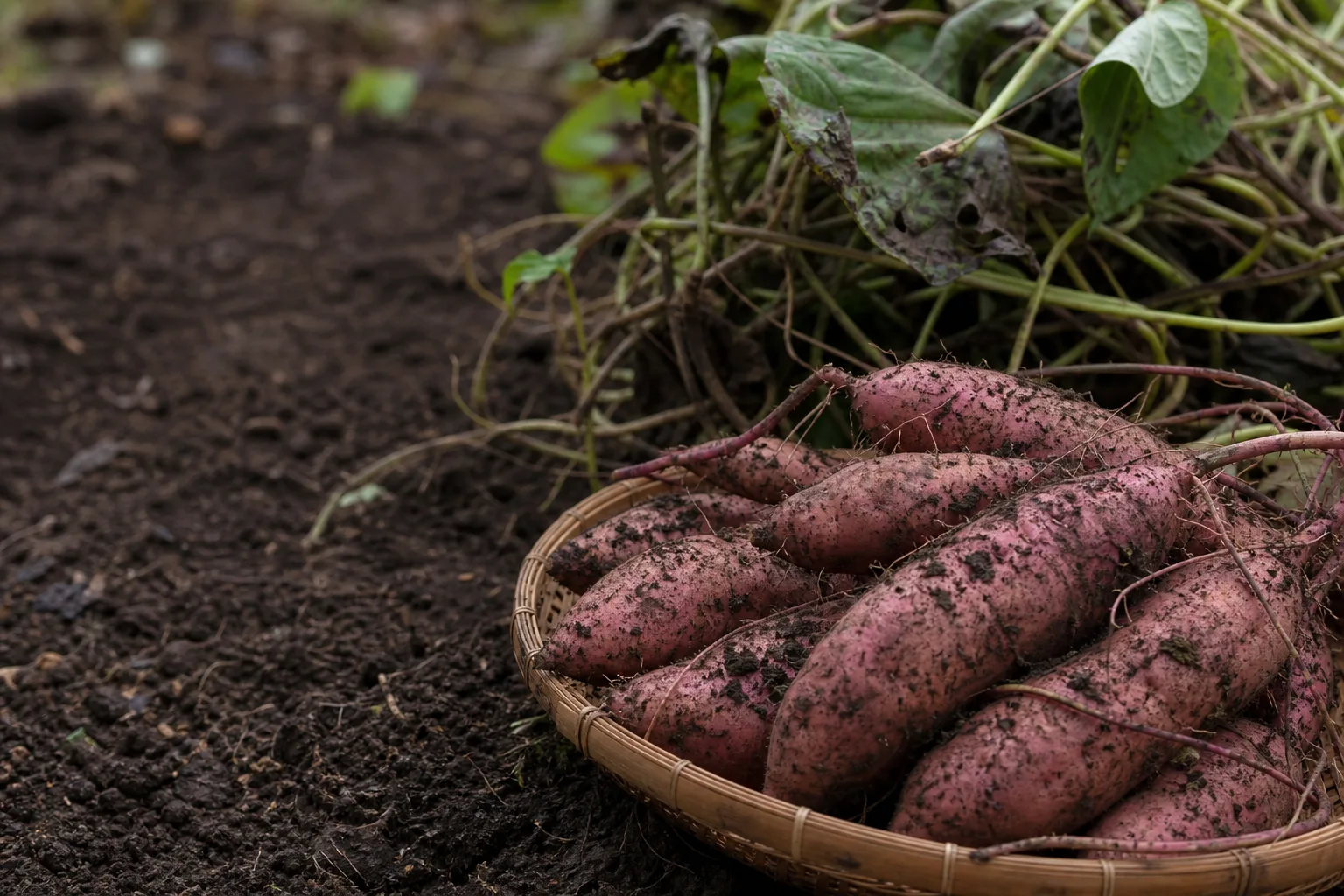
Harvest sweet potatoes 90 to 120 days after planting, ideally when the vines begin yellowing and nighttime temperatures are still above 50°F. Do not wait for a hard frost, because frost on the vines can lead to damaged roots underground, and damaged roots may rot in storage.
When should you harvest sweet potatoes before frost?
You should harvest sweet potatoes before the first hard frost, usually 90 to 120 days after planting, when vine tips begin to yellow or die back and nighttime temperatures remain above about 50°F. A light frost may improve sweetness, but waiting for freezing soil risks injuring the roots and starting rot below ground. Plot My Garden gives a similar 100 to 120 day harvest window.
If you are standing in the garden now, check three things: the planting date, the vines, and the forecast. The calendar tells you whether the roots have had enough time. The vines tell you the plant is slowing down. The forecast tells you whether you are about to lose the crop by trying to squeeze out another week.
Everyone says to wait for the first frost because cold weather can sweeten the roots. In practice, I would rather harvest before a hard frost, because a little extra sweetness is not worth a storage bin full of roots that soften and rot.
In Central Texas, the first cold snap can arrive after a long warm fall, and then the forecast changes quickly. Up north, I planned around the first hard frost. Here, I watch for the first night near 50°F and make the digging plan before the weather gets dramatic.
How can you tell if sweet potatoes are ready to dig?
Sweet potatoes are ready to dig when 90 to 120 days have passed since planting, vine tips start yellowing or dying back, and the roots have had a long warm season to enlarge. You can also gently expose one shoulder near the plant to check size, but digging a test root can bruise the skin and reduce that plant's harvest.
Start with the date you planted the slips. If you planted on July 1, begin checking around September 29, since 90 days have passed, and plan to finish by October 29, which is 120 days. That is a working window, not a commandment carved into a shovel.
Yellowing leaves are useful, but they are not a perfect signal. Drought, disease, insect damage, or a cold night can also make foliage look tired. If the leaves look rough but the roots have only had six weeks, do not assume the crop is mature.
Sweet potatoes can remain in the ground after reaching harvest size, and the roots do not deteriorate simply because they become large, according to the Kansas Garden Guide. The risk is not size. The risk is cold injury and rough handling.
Should you wait for a light frost to make sweet potatoes sweeter?
You may allow a light frost to pass if the soil will not freeze and you can harvest immediately afterward, because some growers report improved sweetness after light frost. I do not recommend making that your main plan. A hard frost can injure sweet potatoes, and frozen or chilled roots are more likely to rot during storage.
The distinction matters. A light frost on the leaves is not the same as frozen ground around the roots. The research supports harvesting before a hard frost, while also noting that a light frost may enhance sweetness. Those facts can both be true, but the safer choice for a home garden is still to dig before freezing weather.
Ask yourself a plain question: would you rather gain a little sweetness or protect the crop you already grew? I choose the crop. Sweet potatoes are tropical plants, and they do not become tougher because the calendar says fall.
If a light frost already happened last night, do not panic and do not leave the roots in the ground for another week. Check the forecast, keep the soil from freezing, and harvest as soon as conditions are dry enough to work without smearing the beds into mud.
Who should harvest sweet potatoes now, and who can wait?
Harvest now if your sweet potatoes were planted at least 90 days ago, the vines are yellowing, nighttime temperatures are near or below 50°F, or freezing weather is forecast. You can wait if the crop is younger than 90 days, the vines are vigorous, and the next two weeks remain safely above freezing. Do not wait simply because the roots might grow larger.
This advice suits a homeowner with mature plants, a forecast showing cold nights, or soil that becomes difficult to dig after rain. It also suits anyone who needs the roots cured before Thanksgiving, since curing takes another one to two weeks.
You can wait a little longer in a mild fall if the vines remain green and the nighttime forecast stays comfortably above 50°F. Mark a harvest date anyway. Otherwise, the weather will make the decision for you, and weather has poor manners.
If your plants were set out only 60 or 70 days ago, harvest will give you smaller roots, but that may still be better than leaving them through a freeze. In that situation, protect the bed from cold if possible, but do not count on frost protection to make tropical roots enjoy winter.
Should you cut sweet potato vines before digging?
Cut or chop the sweet potato vines a few days before digging to clear the bed and make the roots easier to lift. This method saves time around sprawling stems, but it leaves the roots exposed to weather if you delay harvest, so cut the foliage only when you are ready to dig within several days.
I would cut the vines two or three days before harvest, leaving the roots in the ground while the foliage is removed. The bed becomes easier to read, and you are less likely to drag a vine across several roots and snap their thin skins.
Use pruners, loppers, or a sharp knife that can handle thick stems. The tradeoff is simple: cutting makes digging cleaner, but it removes the foliage that gives you a visible reminder of which plants are still in the bed. Mark rows before you start if the vines have crossed together.
Do not pile wet vines directly over the harvest area. Move them aside so the soil can dry and so you can see where each crown begins. The goal is not a perfect haircut. It is fewer roots stabbed by your tool.
How do you dig sweet potatoes without damaging them?
Dig sweet potatoes gently on a dry day by loosening the soil at least 12 inches from the plant crown, then lifting the roots with your hands or a broad fork. Avoid stabbing straight down beside the stem, because sweet potatoes spread from the crown and their thin skins bruise, puncture, and scuff easily.
Start farther away than feels necessary. I usually loosen a circle 12 to 18 inches across, then work inward. In black clay, wait until the soil is workable rather than sticky. Soil that clings to the tool also clings to the roots, and every tug becomes a bruise.
A digging fork is safer than a narrow shovel if you place it outside the main root zone and lift slowly. The fork can still puncture a root, so use it to loosen soil, not to spear the harvest. Finish the last few inches with your hands.
Lift the plant crown only after the surrounding soil is loose. Break the roots from the vine instead of yanking the vine upward. Set each root into a basket or box rather than dropping it into a bucket, because tender skin damage becomes storage rot later.
I learned this kind of patience from my father's twelve foot strip of clay along our New Jersey driveway, though that soil at least admitted what it was doing. Central Texas caliche stops a shovel eight inches down and asks for a rock bar. The root still wants a gentle hand.
What should you do with sweet potatoes immediately after digging?
After digging, leave sweet potatoes in a shaded, airy place for several hours so the surface can dry and the skin can toughen, then move them into a warm, humid place for curing. Keep them out of direct sun and handle them as little as possible, because freshly dug skins are thin and easily injured.
Air drying is not the same as curing. Air drying removes surface moisture for a few hours. Curing takes one to two weeks at roughly 80 to 85°F with humidity, allowing the skin to toughen and minor scrapes to seal.
The tradeoff with air drying is that it is easy and cheap, but it does not prepare roots for long storage by itself. A shaded porch may work for the first few hours. It is not a curing room, especially if the afternoon temperature falls below the target range.
A warm pantry, enclosed cabinet, or controlled indoor space can work if it holds the temperature and does not trap dripping moisture. Do not wash the roots before curing. Brushing off loose soil is enough, and water left in scratches gives rot an invitation.
How should you cure and store sweet potatoes after harvest?
Cure sweet potatoes for one to two weeks at 80 to 85°F in a humid, well-ventilated place, then store them in darkness below 40°F for long-term use. The roots must stay dry on the surface and free of bruises. Cold storage can extend keeping time, but temperatures below 40°F may damage quality if the roots are held there too soon.
Place the roots in a single layer if you can, or stack them loosely so air can move around them. Check them after seven days and again at fourteen days. A root that is cut, wet, or soft should be used first or discarded rather than mixed with the sound harvest.
The tradeoff of curing is time. You cannot cook the whole crop the same day and also expect maximum storage life. The tradeoff of long storage is space and inspection. A dark cabinet below 40°F protects the harvest, but it does not excuse you from checking for rot every week.
Do not seal warm roots in an airtight plastic bag. Condensation collects against the skin, and one damaged root can spread trouble through the container. A crate, cardboard box, or ventilated basket is a better practical choice, though each still needs a dry location.
For varieties, planting dates, and other root crops, use the plant database. It helps you compare the expected harvest window before next season, which is easier than arguing with a forecast in October.
What are the best harvest choices if frost is close?
If frost is close, harvest mature sweet potatoes before the cold arrives rather than gambling on extra growth. The main choices are digging now, waiting for a light frost, or waiting several more days for size, and each has a different risk. For most home gardens, I choose digging now when vines are yellowing and nights approach 50°F.
| Harvest choice | Best use | Honest downside |
|---|---|---|
| Dig before a hard frost | Mature plants with yellowing vines and cold nights ahead | Roots may be slightly less sweet than roots left through a light frost |
| Wait through a light frost | Mild forecast with no risk of frozen soil | Forecasts can shift, and a second colder night may damage the crop |
| Wait for larger roots | Young crop with more warm weather available | Cold or wet soil can cause more damage than extra growth is worth |
In a small bed, digging early is manageable and the roots can cure indoors. In a large field, timing takes more planning, but the same rule holds: freezing weather is a bigger threat than oversized roots.
If the forecast says 34°F for one night and 24°F for the next, do not treat those nights as equal. The second forecast is the one that should move your harvest date. The roots are underground, but they are not wearing winter coats.
If you want help laying out next year's beds, spacing, and harvest access, you can get a concept for your yard before the vines cover every path. Leave yourself room to dig. Future you will appreciate the rare favor.
What are common sweet potato harvest mistakes?
The most common sweet potato harvest mistakes are waiting for a hard frost, digging too close to the crown, washing roots before curing, and storing bruised roots with sound ones. Each mistake raises the chance of rot or short storage life. Harvest on time, loosen soil widely, dry roots briefly, cure them properly, and inspect them.
Waiting for a hard frost is the costly mistake. You may gain a little sweetness, but freezing damage can turn an otherwise good harvest into soft roots within weeks. Harvesting before the hard frost is the position I would defend in any home garden.
Digging too close is the next one. A root with a narrow shovel cut may look fine on harvest day, then develop a soft spot during curing. Use a broad loosening circle and your hands near the crown.
Washing is also oversold as tidiness. Clean roots look nice in a basket, but wet skins and scratches are a bad combination. Let the soil dry, brush off what falls away, and cure the roots before storage.
The final mistake is treating every root alike. Sound roots can be cured and stored. Damaged roots should be used first, because the storage bin is not a rehabilitation center.
When should you harvest sweet potatoes before frost?
Harvest sweet potatoes before the first hard frost, usually 90 to 120 days after planting, when vine tips yellow or die back and nighttime temperatures approach 50°F. A light frost may improve sweetness, but freezing soil can damage the roots and encourage rot. Cut the vines, dig gently, air dry for several hours, and cure the roots for one to two weeks.
Can a light frost make sweet potatoes sweeter?
Yes, a light frost may improve sweet potato sweetness, but it is not worth risking a hard freeze. If the forecast shows mild conditions and no frozen soil, you may wait briefly, but harvest immediately afterward. The safer home garden choice is to dig mature roots before a hard frost.
How long after planting are sweet potatoes ready to harvest?
Sweet potatoes are generally ready 90 to 120 days after planting, although variety and weather affect the exact date. Begin checking at 90 days for yellowing vine tips and root size. If freezing weather is approaching, harvest mature plants rather than waiting for the full 120 days.
Should you cut sweet potato vines before digging?
Yes, cut or chop sweet potato vines two or three days before digging to clear the bed and make the roots easier to find. Do not cut them weeks ahead, because the exposed bed still needs protection from cold and wet weather. Mark the plants first if the vines have tangled together.
How do you cure sweet potatoes after harvest?
Cure sweet potatoes for one to two weeks at about 80 to 85°F in a warm, humid, ventilated space after air drying them for several hours out of direct sun. Handle them gently, avoid washing, and keep damaged roots separate. Curing toughens the skin and improves storage life.
Can you store sweet potatoes in the refrigerator after curing?
You should not use a refrigerator as the main storage place for cured sweet potatoes, because long-term storage is best in a dark location below 40°F and refrigerator conditions can damage quality. Keep cured roots dry and ventilated, inspect them weekly, and use bruised or cut roots first.
Want a plan for your own yard?
Tell us the space and we will put a planting plan together for it. Start at get my concept, or browse what actually grows where you are over on plants.
Frequently asked questions
When should you harvest sweet potatoes before frost?
Harvest sweet potatoes before the first hard frost, usually 90 to 120 days after planting, when vine tips yellow or die back and nighttime temperatures approach 50°F. A light frost may improve sweetness, but freezing soil can damage the roots and encourage rot. Cut the vines, dig gently, air dry for several hours, and cure the roots for one to two weeks.
Can a light frost make sweet potatoes sweeter?
Yes, a light frost may improve sweet potato sweetness, but it is not worth risking a hard freeze. If the forecast shows mild conditions and no frozen soil, you may wait briefly, but harvest immediately afterward. The safer home garden choice is to dig mature roots before a hard frost.
How long after planting are sweet potatoes ready to harvest?
Sweet potatoes are generally ready 90 to 120 days after planting, although variety and weather affect the exact date. Begin checking at 90 days for yellowing vine tips and root size. If freezing weather is approaching, harvest mature plants rather than waiting for the full 120 days.
Should you cut sweet potato vines before digging?
Yes, cut or chop sweet potato vines two or three days before digging to clear the bed and make the roots easier to find. Do not cut them weeks ahead, because the exposed bed still needs protection from cold and wet weather. Mark the plants first if the vines have tangled together.
How do you cure sweet potatoes after harvest?
Cure sweet potatoes for one to two weeks at about 80 to 85°F in a warm, humid, ventilated space after air drying them for several hours out of direct sun. Handle them gently, avoid washing, and keep damaged roots separate. Curing toughens the skin and improves storage life.
Can you store sweet potatoes in the refrigerator after curing?
You should not use a refrigerator as the main storage place for cured sweet potatoes, because long-term storage is best in a dark location below 40°F and refrigerator conditions can damage quality. Keep cured roots dry and ventilated, inspect them weekly, and use bruised or cut roots first.
Free, no obligation
Ready to design your dream landscape? Start here.
Tell us where you are and we will start a free profile for you, with plants that actually survive your climate and a real sense of what the build would cost.