
When to Harvest Pomegranates Before They Split
Harvest pomegranates as soon as they are fully colored, heavy, and showing a slight angular crack at the crown, especially if rain is forecast. A ripe pomegranate can split after one wet night, so do not wait for every fruit to look perfect or for the whole tree to ripen evenly.
October 1, 2026
By Diego Navarro
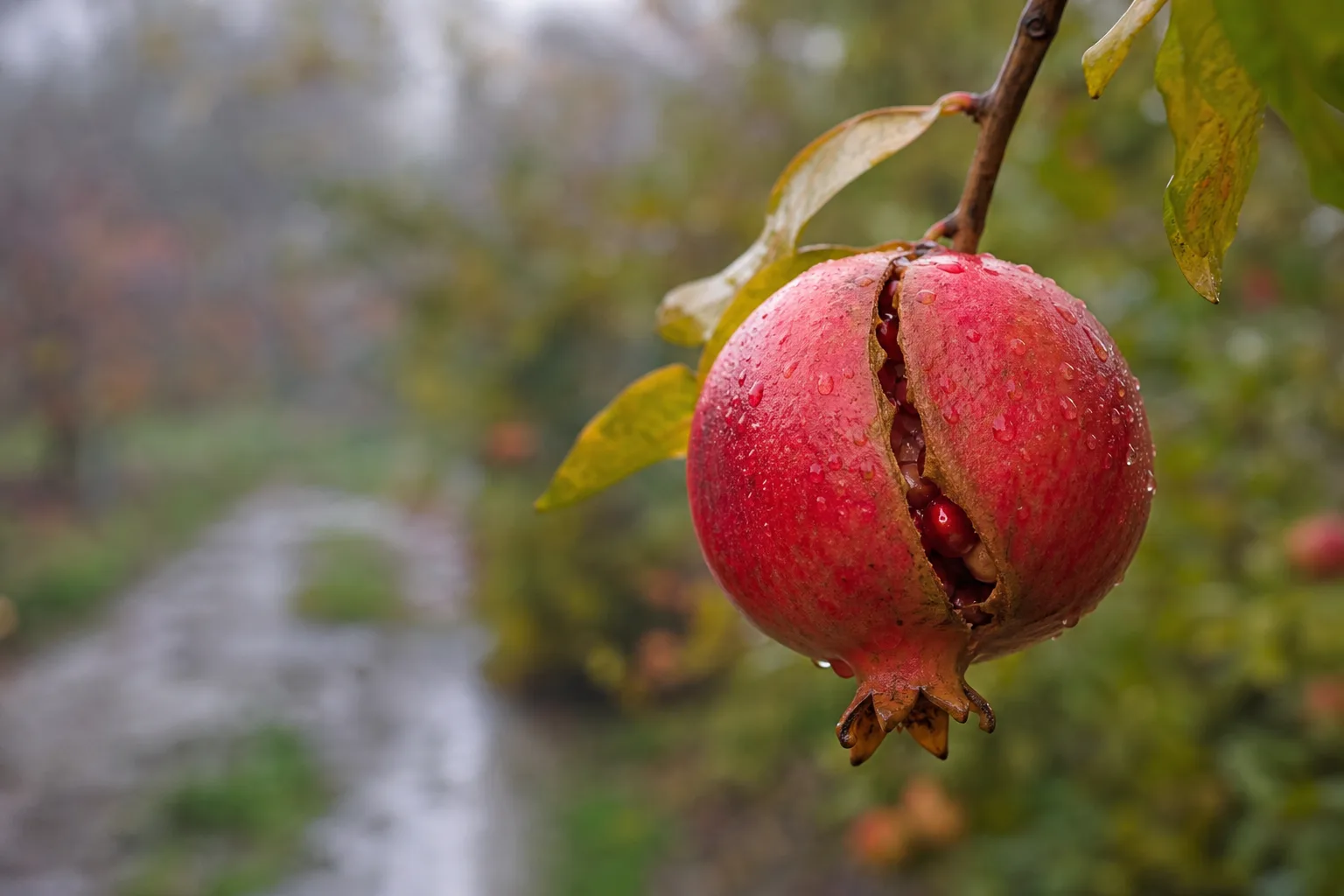
When should you harvest pomegranates before fall rain?
Harvest pomegranates when the fruit has full variety-specific color, feels heavy, and has reached the size you expect, then pick before a soaking fall rain. A ripe fruit can split overnight after sudden water uptake, so I would rather harvest a little early than lose the crop on the branch.
The research supplied for this question does not give a dependable calendar date or a tested color chart. One of the available produce notes does connect rain with reduced harvest, which supports the basic risk, but it does not tell us exactly when a fruit is ripe ARTfarm harvest note.
My rule in Central Texas is simple: if the fruit is fully colored, heavy, and the weather forecast shows a soaking rain within 24 to 48 hours, start cutting. Do not wait for every fruit to split open. That is not a harvest signal. That is the invoice.
Pick the largest and most colored fruit first, then inspect the shaded side of the tree. In fall, I check the tree every two or three days because ripeness will not arrive evenly across branches.
How can you tell if a pomegranate is ripe enough to pick?
A pomegranate is ready to pick when it has full color, feels dense and heavy for its size, and has a firm, angular shape rather than a round green appearance. Tap it and listen for a tight, slightly metallic sound, then check several fruits because one fruit cannot set the harvest date for the whole tree.
Color is useful, but it is not enough. Some varieties stay pale, pink, or yellow when ripe, so judge the fruit against other fruit from the same tree rather than against a supermarket pomegranate. A fruit that is still mostly green and light usually needs more time unless rain is about to arrive.
Look at the crown, the little crown-shaped end opposite the stem. A mature fruit may show a slight split or a dried, darkened crown, but a deep opening with exposed arils means the fruit has already gone too far for weather protection.
Size also depends on the variety and the tree's water supply. The available produce podcast material describes pomegranates as a crop with different varieties and growing regions, so one universal size or color test would be false precision Produce Pair Podcast.
Should you pick pomegranates before rain even if they are not perfectly ripe?
Yes, pick mature-looking pomegranates before a heavy rain if they are already fully colored and close to their normal size, even when a few fruits are not perfect. Rain may save a less mature fruit from drying, but a ripe fruit that splits on the tree is exposed to rot, insects, and wasted arils.
This is a judgment call, not a magic number. If the forecast calls for a brief sprinkle, leave fruit that is clearly green and undersized. If a slow storm is expected to wet the soil for hours, take the mature fruit first and accept that the smallest fruit may need another week.
Everyone says to leave pomegranates until they crack naturally. In practice, that rule loses fruit because the natural crack can open during the same weather event you were waiting for. I use the forecast as part of the harvest test, not as an afterthought.
The supplied research does not prove an exact rain-to-splitting timeline. It does document rain reducing a harvest, so I treat a fall rain as a real crop risk rather than pretending the sources support a precise overnight percentage ARTfarm harvest note.
How many days before rain should you harvest pomegranates?
Harvest the mature portion of the crop 24 to 48 hours before a forecast soaking rain, with the closest attention on fruit already fully colored and heavy. That window gives you time to cut cleanly and move fruit under cover without waiting until the storm is on the roof.
A light shower is not the same as a long rain. If the soil is already dry and the forecast changes from a tenth of an inch to several hours of steady rain, move the harvest forward. Fruit responds to the whole tree's water status, not just the drops sitting on its skin.
I would not strip a tree of small green fruit three days before every possible shower. That costs you flavor and usable size for no good reason. Harvest the ready fruit, mark the branches mentally, and return after the weather passes.
In Austin, September and October can still bring hot afternoons followed by wet ground. The tree does not read the calendar. It reads the water.
How should you cut pomegranates so they do not split after harvest?
Cut pomegranates with clean hand pruners, leaving about 1 inch of stem, and support the fruit with your other hand as it comes free. Do not yank or twist the fruit because a torn stem can bruise the skin and open a weak spot that worsens during storage.
I make the cut just above the fruit's stem collar, not through the fruit shoulder. If the stem is stiff, make a second small cut rather than forcing the branch sideways. Bent branches are a small problem; split fruit is the larger one.
Clean pruners between visibly damaged fruits with a household disinfecting wipe or a solution labeled for tool sanitation. The tradeoff is time. It takes a few extra minutes, but dragging wet rot from one fruit to the next is a poor bargain.
Place fruit in a shallow crate or single layer on a towel. A deep bucket saves space and creates bruises, especially if you are carrying it across a rocky yard where the path has opinions.
Can you ripen pomegranates after picking them?
Pomegranates can soften after picking, but they do not reliably become sweeter the way a peach does, so harvest only fruit that is already mature enough to have full color, weight, and developed arils. Picking a hard green fruit before rain avoids a split, but it does not manufacture good flavor later.
That is why I separate mature fruit from immature fruit after a weather-driven harvest. Use the mature-looking fruit first, and keep the greenest fruit under observation rather than assuming a warm windowsill will fix it.
Store harvested fruit in a cool, dry place with air around each fruit. Do not wash it before storage. Water left in cracks or around the crown only makes a bad opening more useful to decay.
The podcast source emphasizes that pomegranates vary by variety and growing region, which is another reason not to promise one universal post-pick schedule Produce Pair Podcast. Your own tree's taste and seed development are better evidence than a label promising perfection.
What should you do with pomegranates that have already split?
Pick split pomegranates immediately, discard any fruit with sour odor or spreading soft rot, and use sound exposed arils the same day after removing damaged tissue. A split fruit should not remain hanging through another wet night because the open skin gives moisture and insects an easy entrance.
If the crack is shallow and the arils are clean, cut the fruit open on a washable surface and inspect the inside. Brown, slimy, fermented, or foul-smelling sections belong in the compost or trash, not in your bowl. The tradeoff with salvaging is labor, but it beats pretending a damaged fruit is intact.
Do not seal wet, questionable fruit in a plastic bag. That traps moisture and turns one split into a small private weather system.
For the next harvest, note which side of the tree split first and whether that side was shaded, crowded, or near a sprinkler. A plant database can help you compare variety traits, but your own tree's harvest notes matter more than a generic chart.
Which harvest method suits your situation, and who should ignore it?
Cutting mature fruit before a forecast rain suits homeowners who have a small tree, can inspect it every two or three days, and care more about saving usable fruit than displaying a perfectly untouched crop. Ignore this approach if the fruit is still green and undersized, or if you cannot provide a dry place for harvested fruit.
| Harvest approach | Best use | Honest downside |
|---|---|---|
| Pick mature fruit 24 to 48 hours before soaking rain | Small home trees with a storm forecast | Some fruit may be slightly less mature than the last fruit left on the tree |
| Wait for natural cracking | Dry weather and frequent daily inspection | Ripe fruit can split, stain, rot, or attract insects before you pick it |
| Strip the whole tree early | A storm is imminent and the crop is already mostly colored | Small green fruit will not reliably sweeten after picking |
For a church garden in Round Rock with one tree, I would use the first option. For a Del Valle yard with six trees and no storage space, I would still pick in waves, beginning with the heaviest fruit on the most exposed branches.
The method is less suitable when you are harvesting green fruit just because rain is possible. It is also a poor fit if you plan to leave fruit in a hot car or sealed container. Harvest timing only solves the first problem.
If you are deciding between protecting the tree and redesigning the surrounding space, you can get a concept for your yard before adding paths, drainage, or a new planting bed. Water that sits near the tree changes the next harvest too.
What should you do today if rain is forecast for tonight?
If rain is forecast tonight, pick every pomegranate that is fully colored, heavy, and close to the tree's normal mature size, then leave clearly green fruit for a later inspection. Cut with about 1 inch of stem, keep fruit dry and shallow, and check the tree again after the storm.
Start with fruit showing a crown crack, skin split, soft patch, or heavy branch bend. Those are not reasons to panic, but they are reasons to stop making the fruit wait for your perfect schedule.
Next, inspect the shaded interior and lower branches. Fruit hidden from the afternoon sun may color later, while exposed fruit may already be ready even if the tree still carries green fruit elsewhere.
I learned the habit from my father's twelve foot strip of New Jersey clay, where we harvested tomatoes before the first hard frost because waiting for one more perfect day was how the cold got paid. Central Texas changes the threat from frost to a fifth week over a hundred and then a wet fall night. Same lesson.
What color should a ripe pomegranate be before harvest?
A ripe pomegranate should have the full color expected for its variety, but color alone is not enough to set the harvest date. Check color with weight, size, firmness, crown condition, and a comparison with other fruit on the same tree because varieties can mature in different colors.
The available research discusses different pomegranate varieties and growing regions rather than one universal color standard Produce Pair Podcast. If your fruit is full-sized, heavy, and fully colored, harvest it before a soaking rain.
Can pomegranates split overnight after rain?
Yes, a mature pomegranate can split overnight after a soaking rain, especially when the fruit is already full-sized and close to its natural opening point. The supplied sources do not establish an exact number of hours, so use the practical warning sign of a ripe crop plus a wet forecast rather than waiting for a guaranteed timeline.
Inspect fruit before sunset, pick the mature portion, and keep it dry after cutting. A rain-related split is not certain on every tree, but losing ripe fruit is common enough to change the harvest decision.
Should I harvest pomegranates when the crown starts to crack?
Harvest a pomegranate when the crown starts to crack if the fruit is also fully colored, heavy, and mature-sized, especially before rain. A crown crack is a useful warning that the fruit is at risk, but it should not be your only test because an immature fruit can have damage without good flavor.
Cut the fruit instead of pulling it, inspect the inside, and use any clean, sound arils promptly. Leave no cracked fruit hanging through a wet night if you can reach it safely.
How long do pomegranates last after harvest?
Pomegranates last longest after harvest when they are dry, unwashed, unbruised, and stored with air circulation in a cool place. The supplied research does not provide a verified storage duration, so I will not invent a number of weeks and present it as a guarantee.
Check stored fruit every few days for soft spots, leaking juice, or sour odor. Use damaged fruit first and keep sound fruit away from anything already rotting. A shallow crate beats a sealed plastic bag.
Can I pick pomegranates before they are fully red?
You can pick a pomegranate before it is fully red to avoid imminent rain damage, but only if it is close to its normal mature size and has begun its expected variety color. A hard, small, mostly green fruit is unlikely to improve enough after picking to replace the flavor it would have developed on the tree.
Pick the mature fruit first and leave the clearly immature fruit when the forecast allows. If a long storm is arriving, saving usable fruit may be the better choice, but it is still a compromise.
How often should I check pomegranates in fall?
Check pomegranates every two or three days in fall, and inspect them daily when the fruit is fully colored or rain is forecast within 48 hours. Frequent checks let you harvest in waves instead of stripping the tree early or discovering a split crop after the storm.
Walk around the whole tree, including the shaded center and lower branches. Write down the first date you harvest and which fruit split, because that record will improve next year's decision more than a generic calendar date.
Want a plan for your own yard?
Tell us the space and we will put a planting plan together for it. Start at get my concept, or browse what actually grows where you are over on plants.
Frequently asked questions
What color should a ripe pomegranate be before harvest?
A ripe pomegranate should have the full color expected for its variety, but color alone is not enough to set the harvest date. Check color with weight, size, firmness, crown condition, and a comparison with other fruit on the same tree because varieties can mature in different colors.
Can pomegranates split overnight after rain?
Yes, a mature pomegranate can split overnight after a soaking rain, especially when the fruit is already full-sized and close to its natural opening point. The supplied sources do not establish an exact number of hours, so use the practical warning sign of a ripe crop plus a wet forecast rather than waiting for a guaranteed timeline.
Should I harvest pomegranates when the crown starts to crack?
Harvest a pomegranate when the crown starts to crack if the fruit is also fully colored, heavy, and mature-sized, especially before rain. A crown crack is a useful warning that the fruit is at risk, but it should not be your only test because an immature fruit can have damage without good flavor.
How long do pomegranates last after harvest?
Pomegranates last longest after harvest when they are dry, unwashed, unbruised, and stored with air circulation in a cool place. The supplied research does not provide a verified storage duration, so I will not invent a number of weeks and present it as a guarantee.
Can I pick pomegranates before they are fully red?
You can pick a pomegranate before it is fully red to avoid imminent rain damage, but only if it is close to its normal mature size and has begun its expected variety color. A hard, small, mostly green fruit is unlikely to improve enough after picking to replace the flavor it would have developed on the tree.
How often should I check pomegranates in fall?
Check pomegranates every two or three days in fall, and inspect them daily when the fruit is fully colored or rain is forecast within 48 hours. Frequent checks let you harvest in waves instead of stripping the tree early or discovering a split crop after the storm.
Free, no obligation
Ready to design your dream landscape? Start here.
Tell us where you are and we will start a free profile for you, with plants that actually survive your climate and a real sense of what the build would cost.