
When to Dig Potatoes: New Potatoes Versus Storage Crop
Dig potatoes early for tender new potatoes, or wait for full vine death and skin set if you want a crop that lasts through winter. Here is how to tell which harvest you have in the ground now.
September 25, 2026
By Valeria Navarro
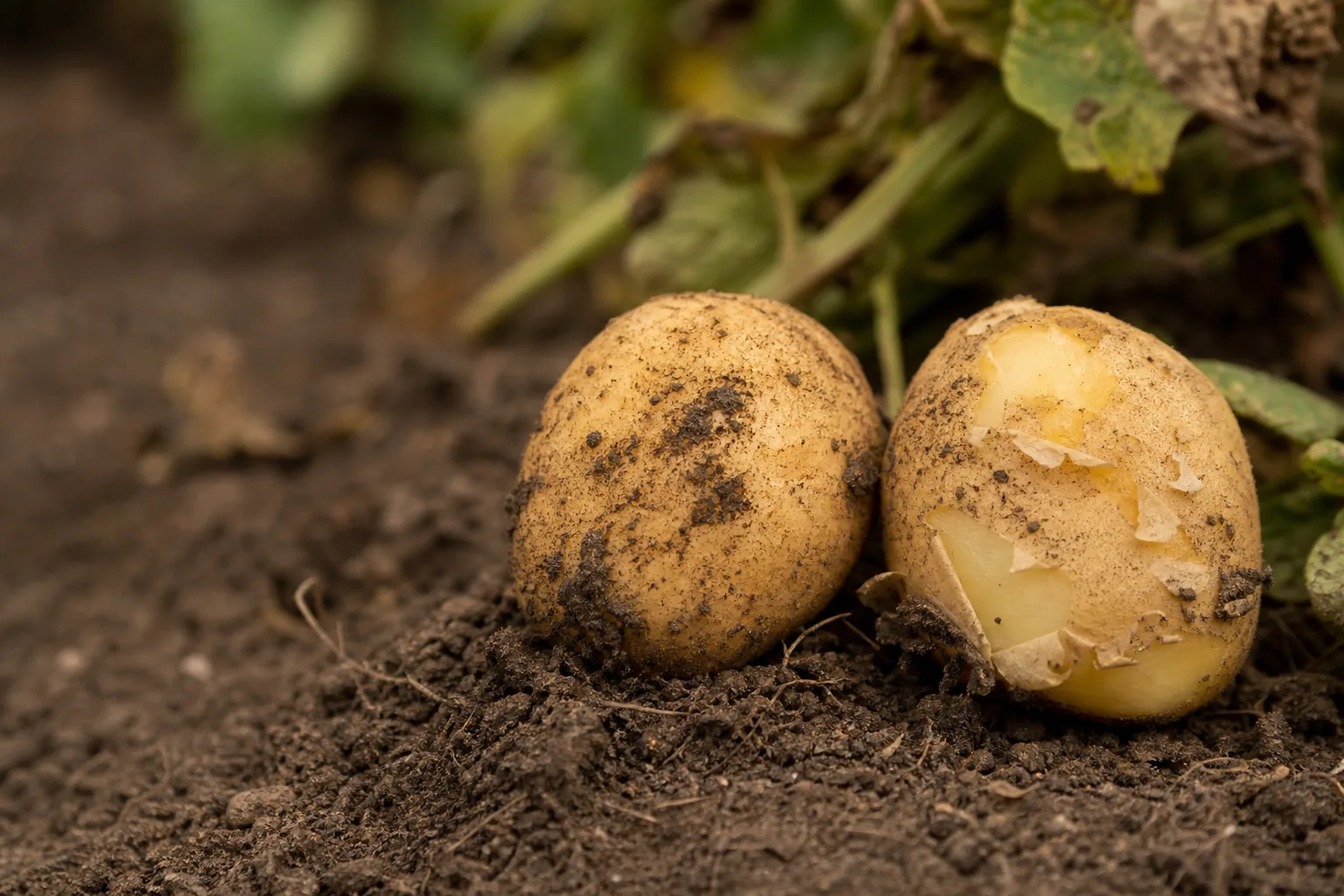
Digging potatoes is not about size alone. It is about the skin. New potatoes can be ready while the vines are still partly green, but a storage crop needs fully dead foliage and a firm skin that does not rub away when you handle it. That is the line between a tender garden treat and a keeper that can sit quietly for months.
I have learned this the mildly annoying way. In Miami, sandy fill drained before I finished watering, but Austin clay holds water and then sets like a brick, so I do not tug at a potato crop just because the calendar says it is ready. Fall is your decision point. Dig one plant, rub one tuber, and let the skin tell you what to do.
When should you dig new potatoes?
Dig new potatoes when the plants begin flowering and the vines start to yellow, usually 60 to 70 days after planting for early varieties. Their skins will still be thin, so lift only what you plan to eat soon, because these potatoes are fresh garden produce rather than a winter storage crop.
New potatoes are small, tender, and often wonderfully imperfect. You can loosen the soil beside a plant with a hand fork and take a few tubers without disturbing the whole row. The potato plant may continue making larger tubers afterward, though the remaining crop still needs time before it becomes suitable for storage.
The trade-off is clear. Thin skin gives you that delicate texture, but it also lets moisture leave quickly and damage enter quickly. A new potato that looks perfect on digging day can become soft or spoiled in roughly two weeks, especially if it is bruised or left warm.
If your plants flowered in late summer and began yellowing in fall, check one plant now. Do not wait for every potato to become enormous. For dinner, I would rather have a small bowl of freshly dug new potatoes than a row of oversized tubers that I damaged by digging carelessly.
When should you dig potatoes for winter storage?
Dig storage potatoes only after the foliage has completely died back, usually 100 to 120 days after planting for mid-season and late varieties. Then cure the tubers for 7 to 14 days in a cool, dark, humid place so the skins harden before long-term storage.
This is the harvest I choose when I want potatoes in the kitchen for several months. The vines should be fully senesced, not merely tired-looking after a hot week. Green patches mean the plant may still be finishing the tubers underground, so patience usually buys you better keeping quality.
Storage harvest has a cost. You give up the immediate tenderness of new potatoes, and you must protect the tubers from cuts, bright light, excess heat, and damp soil. In return, a properly cured potato has a skin tough enough to handle ordinary storage instead of becoming a two-week potato.
If you planted in early summer, count backward from the expected harvest rather than trusting a printed date. Mid-season and late varieties commonly land near the 100 to 120 day mark, but complete vine death and skin firmness matter more than a number on a seed packet.
How can you tell whether a potato has skin set?
A potato has skin set when its skin feels firm and does not rub off easily under gentle handling. Skin set follows complete vine death and the 7 to 14 day curing period, and it is the practical test that separates a keeper from a thin-skinned new potato.
Lift one tuber. Do not scrub it. Brush away loose soil with your fingers and rub a small area with your thumb. If the skin slides, flakes, or leaves a pale wet patch, the potato is still behaving like a fresh crop and should be eaten soon.
A set skin feels more attached and resilient. It will not make the tuber indestructible, so do not toss potatoes into a bucket from shoulder height. A bruise is still a bruise, and one damaged potato can spoil beside its neighbors.
Everyone says bigger means ready. In practice, skin set matters more because a large potato with loose skin still stores poorly, while a smaller mature tuber can keep better. That is the test I use in my own garden, especially after Austin weather has hurried the vines along.
For more variety-specific growing notes, use the plant database, but let the tuber in your hand make the final harvest call. Variety information helps with timing. Skin set gives you the answer.
What should you do if potato vines are yellow but not dead?
If potato vines are yellow but not completely dead, wait for a storage harvest unless disease, standing water, or a hard freeze threatens the crop. You may dig a few new potatoes for dinner, but leave the rest underground until the foliage has fully died and the tubers can cure.
Yellowing is a signal, not a finish line. Flowering and early yellowing point toward new potatoes, while brown, collapsed, fully dead foliage points toward a storage crop. The difference can be only a few weeks, but those weeks affect how easily the skin rubs away.
Austin adds complications. Alkaline clay can stay wet after a storm, then bake hard under sun, and an early freeze can damage foliage before the tubers have had a clean finish. If the soil is saturated, do not dig and handle muddy potatoes more than necessary. If a freeze is forecast, harvest what you can and accept that some tubers may be better eaten fresh than stored.
Check the soil rather than guessing from the leaves. If you can reach the side of one plant without slicing the tuber, examine a potato. You are looking for a firm skin, not a prizewinner.
How long should you cure potatoes after digging?
Cure potatoes for 7 to 14 days at 45 to 55 degrees Fahrenheit, in darkness with high humidity and gentle ventilation. Curing gives the skin time to harden and small surface injuries time to seal, but the trade-off is that a warm, wet curing space can encourage decay instead of improving storage.
Lay the potatoes in a single loose layer when possible. A crate, shallow box, or screen works better than a packed plastic bag because air can move around the tubers. Keep them dark. Light can turn potatoes green, and green potatoes are not the storage goal you worked for.
Do not wash them before curing. Brush off excess soil after digging, let the surface moisture settle, and avoid throwing or rubbing the tubers together. The supplied prize-book guidance also specifies potatoes being cured for at least one week, which agrees with the shorter end of this 7 to 14 day window. Markham Fair Prize Book
Temperature matters. A garage that reaches 75 degrees Fahrenheit is not a proper curing room, and a refrigerator-cold space is not the target either. In Central Texas fall, a dark interior room or protected pantry may work better than an outdoor shed that swings hot during the day.
How should you store cured potatoes?
Store cured potatoes at 38 to 40 degrees Fahrenheit, in darkness, with high humidity and ventilation. Keep only firm, uncut tubers for long storage, because bruised or sliced potatoes are more likely to decay and should be used first rather than placed in the main storage batch.
Use a breathable crate, paper sack, or ventilated bin. Do not seal the potatoes in an airtight plastic container. They need humidity so they do not shrivel, but trapped condensation creates the wet conditions that make rot spread.
Check the crop every couple of weeks. Remove any soft, leaking, or foul-smelling tuber immediately. One potato with a problem should not be allowed to sit against twenty good ones while you hope for a miracle. I have killed enough basil to know that optimism is not a storage system.
The storage temperature is cooler than most homes, but do not improvise with a freezer. Your goal is a dark, humid, ventilated place near 38 to 40 degrees Fahrenheit. If you cannot offer those conditions, grow or harvest a smaller amount and plan to eat it over several weeks.
Is a new potato or a storage potato better for your situation?
New potatoes suit you if you want a meal this week and can use the crop within about two weeks. Storage potatoes suit you if you can wait for complete vine death, cure them for 7 to 14 days, and provide a dark space near 38 to 40 degrees Fahrenheit through winter.
Choose new potatoes when the plants are only beginning to yellow, when you planted a small early variety, or when wet soil and an approaching freeze make a full storage finish risky. Their downside is short life. They are delicious, but they are not patient.
Choose storage potatoes when you planted mid-season or late varieties and the foliage has fully died back. Their downside is time and handling. You must wait longer, cure correctly, and inspect the bins, but the reward is a crop that can feed your kitchen for months.
| Harvest choice | Best harvest signal | Storage expectation | Honest downside |
|---|---|---|---|
| New potatoes | Flowering and vines beginning to yellow, around 60 to 70 days | Eat immediately or within about two weeks | Thin skins bruise and spoil quickly |
| Storage potatoes | Fully dead foliage, usually around 100 to 120 days, followed by skin set | Several months at 38 to 40 degrees Fahrenheit | Requires curing, darkness, humidity, and regular checking |
If you are deciding in the garden this afternoon, ask one question: do you need potatoes for tonight, or for January? That answer tells you whether to lift one plant now or leave the crop alone for another stage of maturity.
Who is this potato harvest method for, and who should ignore it?
This method suits home gardeners who can inspect one tuber, wait for full vine death, and provide a cool dark storage place. Ignore the storage-crop plan if you have only a few plants for immediate meals, cannot keep potatoes near 38 to 40 degrees Fahrenheit, or expect to wash and cook the harvest within days.
It is especially useful for fall gardeners standing beside a crop that looks almost finished. You do not need fancy equipment. You need a hand fork, a cool curing area, breathable containers, and enough patience not to pull the entire row because one leaf turned yellow.
It is less useful for a gardener whose soil stays saturated. Wet clay can make harvest messy and increase the chance of damaged tubers, while caliche and limestone can make digging hard enough to slice potatoes with a spade. In that situation, lift a small sample first and make the storage decision from its skin.
You can also use the free design tool to plan a better crop layout next season and get a concept for your yard, especially if the potato bed is crowded into a spot that is hard to dig without bruising the harvest. Good design is not just pretty. It lets your fork enter the soil cleanly.
Can you dig storage potatoes before the vines completely die?
You can dig storage potatoes before the vines completely die, but they will not have the same keeping quality unless their skins are already firm and set. Early digging gives you tender potatoes for immediate eating, while waiting for full senescence and curing gives you the better winter crop.
There are exceptions for weather and trouble underground. If the bed is waterlogged, disease is moving through the foliage, or a severe freeze is close, harvesting early may save part of the crop. Sort those potatoes carefully and treat them as fresh potatoes unless a gentle skin test says otherwise.
Do not call a potato a keeper because it is large. Call it a keeper when the skin stays attached after gentle rubbing, the foliage has finished its life, and the tuber has completed curing. That is the sequence.
A source in the research packet also frames new potatoes as something lifted and used promptly, which is the right way to think about thin-skinned tubers rather than forcing them into long storage. Nova source reference
How do you harvest potatoes without damaging them?
Harvest potatoes by loosening the soil well away from the plant with a fork, lifting the root zone gently, and brushing off excess soil without washing. Damage is the main harvest mistake because cuts and bruises reduce storage life even after the skin has set.
Start several inches away from the stem. Work inward slowly. In hard Austin clay, a broad fork can be kinder than a narrow spade because you can lift the soil rather than slice straight through the tubers, but any tool can damage potatoes if you rush.
Harvest on a dry day when possible. Mud sticks to the skin and hides cuts, while very dry soil can make tubers easier to scrape against clods. Do not leave harvested potatoes in bright sun for hours while you finish the row.
Sort immediately. Use cut, green, soft, or badly bruised potatoes first, and reserve only firm, undamaged, skin-set tubers for curing and storage. It feels fussy for the first ten minutes. It saves you from opening a rotten bin in December.
What is the simplest potato harvest rule to remember?
Dig at flowering and early yellowing for new potatoes, but wait for completely dead vines and firm skin set for storage potatoes. The first harvest is tender and short-lived, while the second takes 100 to 120 days plus 7 to 14 days of curing and can keep for several months in proper conditions.
That is the whole decision in one breath. Early harvest equals dinner soon. Full senescence, curing, and skin set equal winter storage.
Stand there with one potato in your hand. Rub the skin gently. If it comes away, eat it soon. If it stays put, you may have the keeper you were waiting for.
How long do new potatoes last after digging?
New potatoes usually last about two weeks after digging, because their skins are thin and easily damaged. Keep them cool, dark, and dry enough to avoid condensation, then cook them promptly. Do not mix soft or cut tubers with firm ones, because damaged potatoes can spoil faster and shorten the useful life of the whole batch.
What temperature should cured potatoes be stored at?
Cured potatoes should be stored at 38 to 40 degrees Fahrenheit in darkness, with high humidity and ventilation. Those conditions help limit shriveling without trapping wet air around the tubers. A sealed plastic bag is a poor choice because it holds condensation, while a breathable crate or paper sack gives the crop room to breathe.
How do you know a potato is ready for storage?
A potato is ready for storage when the foliage has completely died, the tuber has been cured for 7 to 14 days, and the skin stays firm during gentle rubbing. If the skin flakes or slides off, treat that tuber as a new potato and eat it soon. Size alone does not prove maturity.
Can you eat potatoes immediately after digging?
Yes, you can eat potatoes immediately after digging, especially new potatoes harvested around flowering and early vine yellowing. Brush off excess soil and handle them gently because their skins are thin. Storage potatoes can also be eaten right away, but curing still matters if you want the remaining crop to last through winter.
How long should potatoes cure before storage?
Potatoes should cure for 7 to 14 days before storage, at 45 to 55 degrees Fahrenheit in a dark, humid place with gentle ventilation. The curing period hardens the skin and improves keeping quality. Shortening it saves time but leaves you with more tender skins, more handling damage, and a higher chance of quick spoilage.
Should you wash potatoes before storing them?
You should not wash potatoes before storing them, because washing adds moisture and can disturb the skin while it is finishing its protective set. Brush off excess soil, cure the tubers in darkness, and store only firm, undamaged potatoes. Wash individual potatoes shortly before cooking instead of wetting the whole crop at harvest.
Want a plan for your own yard?
Tell us the space and we will put a planting plan together for it. Start at get my concept, or browse what actually grows where you are over on plants.
Frequently asked questions
How long do new potatoes last after digging?
New potatoes usually last about two weeks after digging, because their skins are thin and easily damaged. Keep them cool, dark, and dry enough to avoid condensation, then cook them promptly. Do not mix soft or cut tubers with firm ones, because damaged potatoes can spoil faster and shorten the useful life of the whole batch.
What temperature should cured potatoes be stored at?
Cured potatoes should be stored at 38 to 40 degrees Fahrenheit in darkness, with high humidity and ventilation. Those conditions help limit shriveling without trapping wet air around the tubers. A sealed plastic bag is a poor choice because it holds condensation, while a breathable crate or paper sack gives the crop room to breathe.
How do you know a potato is ready for storage?
A potato is ready for storage when the foliage has completely died, the tuber has been cured for 7 to 14 days, and the skin stays firm during gentle rubbing. If the skin flakes or slides off, treat that tuber as a new potato and eat it soon. Size alone does not prove maturity.
Can you eat potatoes immediately after digging?
Yes, you can eat potatoes immediately after digging, especially new potatoes harvested around flowering and early vine yellowing. Brush off excess soil and handle them gently because their skins are thin. Storage potatoes can also be eaten right away, but curing still matters if you want the remaining crop to last through winter.
How long should potatoes cure before storage?
Potatoes should cure for 7 to 14 days before storage, at 45 to 55 degrees Fahrenheit in a dark, humid place with gentle ventilation. The curing period hardens the skin and improves keeping quality. Shortening it saves time but leaves you with more tender skins, more handling damage, and a higher chance of quick spoilage.
Should you wash potatoes before storing them?
You should not wash potatoes before storing them, because washing adds moisture and can disturb the skin while it is finishing its protective set. Brush off excess soil, cure the tubers in darkness, and store only firm, undamaged potatoes. Wash individual potatoes shortly before cooking instead of wetting the whole crop at harvest.
Free, no obligation
Ready to design your dream landscape? Start here.
Tell us where you are and we will start a free profile for you, with plants that actually survive your climate and a real sense of what the build would cost.