
What Tree Is This? A Practical Guide to Identifying a Tree in Your Garden
Standing beside an unfamiliar tree? You cannot identify it reliably from one leaf or a blurry photo. Use the whole tree, including bark, branching, fruit, buds, location, and season, then compare those details with a trusted plant database before you prune, remove, or plant around it.
September 19, 2026
By Valeria Navarro
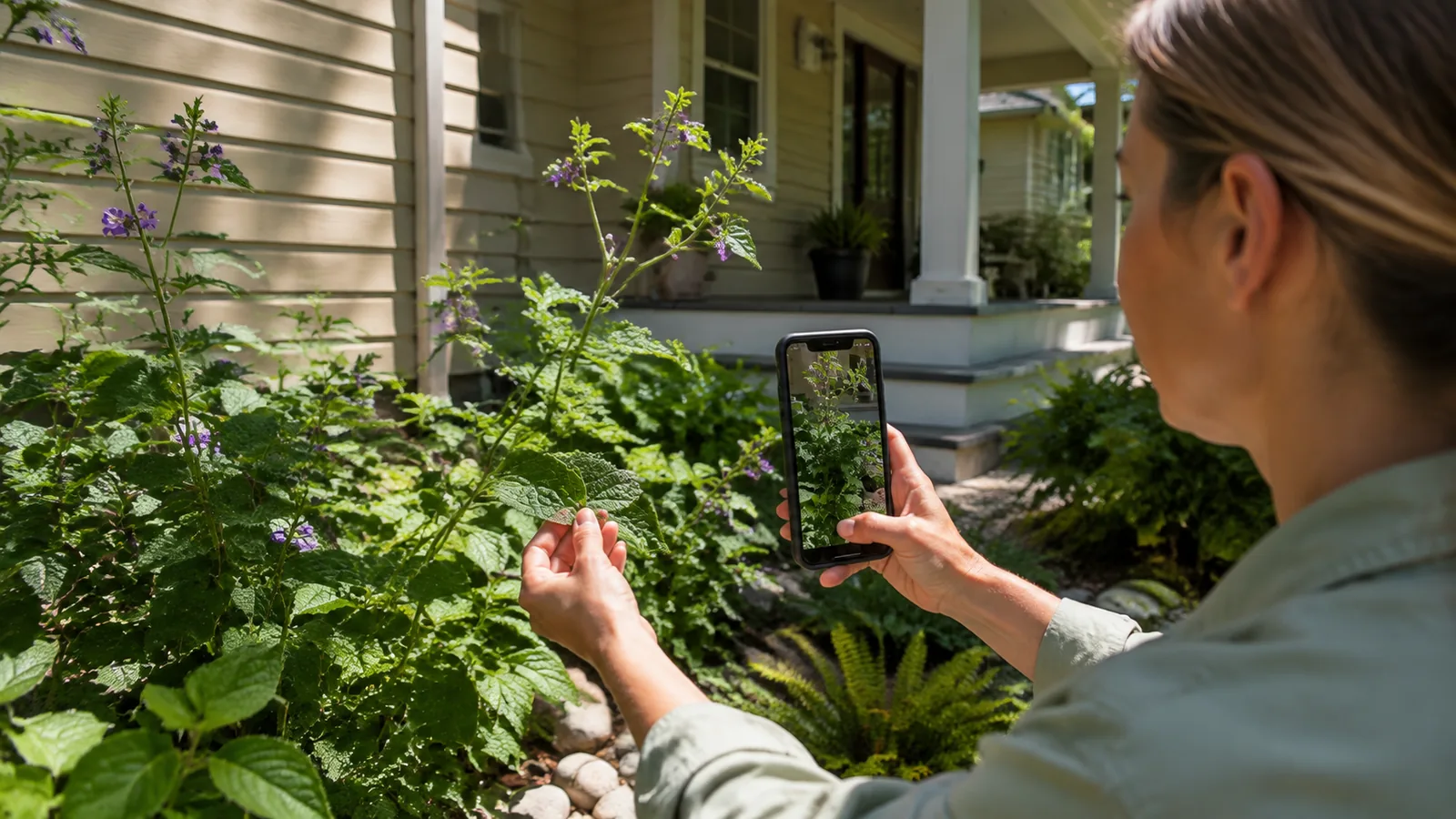
You cannot reliably answer “what tree is this?” from one leaf or a blurry photograph. You need the whole tree, including its leaves, bark, buds, branching, fruit, location, and season, then you need to compare those details with a trusted plant database before pruning or removing it.
What tree is this?
A tree can only be identified with confidence by combining several clues, not by matching one leaf. Photograph the entire canopy, trunk, bark, leaf stems, buds, fruit or seed structures, and the ground beneath it, then record the month, sunlight, soil, and approximate height before comparing it with reliable plant references.
Start with the big picture. Is the tree tall and narrow, broad and spreading, multi-trunked, or low and shrubby? Does the canopy hold leaves in fall, or is it already bare? Those details narrow the field before you get lost in a parade of nearly identical leaf photos.
Next, inspect the branch arrangement. Opposite branches grow in pairs at the same point. Alternate branches take turns up the stem. That small detail is often more useful than color, especially in fall when leaves are changing and every tree is trying to look mysterious.
Take one photo from several feet away and another close enough to show texture. A picture of a single fallen leaf is weak evidence. A picture showing the leaf, twig, bark, and whole tree is much better.
Can I identify a tree from leaves alone?
No. Leaves help, but they are not enough for a dependable identification because leaf shape changes with age, drought, shade, insect damage, and the position of the leaf on the tree. Confirm the leaf against twigs, bark, buds, flowers, fruit, and growth habit before you make a planting or safety decision.
Look at the leaf attachment point. Is the leaf opposite or alternate? Is it simple, with one blade, or compound, with several leaflets on one stem? Check the margin too: smooth, toothed, lobed, or deeply divided. Write those observations down rather than trusting your first guess.
Fall adds a complication. Drought-stressed leaves may be smaller or scorched. Storm damage can strip the lower canopy. A tree that looks evergreen in one season may be deciduous in another, so the month matters.
The Penn State Extension guide to shade-tolerant trees and shrubs is useful as a comparison point for plants suited to lower light, but it does not replace a full identification. A database entry is a starting place, not a permission slip to plant the mystery tree beside your foundation.
What should I photograph to identify a tree?
Photograph the tree from six to ten feet away, then take close-ups of a leaf attached to its twig, the bark, a bud, a branch junction, and any fruit or seed structure. Include a ruler or coin for scale, and photograph both the sunny and shaded sides if the leaves look different.
Use this small checklist:
- Whole tree, including the canopy and trunk.
- Bark at eye level and near the base.
- One fresh leaf still attached to a twig.
- Upper and lower leaf surfaces.
- Buds or flowers, if present.
- Fruit, cones, pods, or winged seeds.
- A branch showing whether leaves are opposite or alternate.
- The surrounding site, including lawn, fence, house, pavement, and nearby trees.
Also write down the height in feet, trunk diameter, hours of direct sun, and whether the soil is sandy, clay-heavy, rocky, or wet. In Austin, caliche and limestone can sit just below a thin soil layer, while Blackland Prairie clay may crack open by August. That site information can help separate a suitable tree from one that merely looks similar.
If you upload a photo online, include the month and your location. “Found in my yard” is not enough. “Found in a sunny Austin garden in October, 18 feet tall, opposite leaves, flaky bark, and small paired seeds” gives someone useful evidence.
Is this tree safe to keep in the garden?
Identification and safety are related but separate questions. An accurately named tree may still have dead limbs, weak branch unions, storm damage, root problems, or a trunk leaning toward a house. Inspect the tree in spring and fall for disease, damage, and structural hazards before deciding whether it belongs in the garden.
Stand back and look up. Dead branches, hanging limbs, fresh cracks, exposed roots, cavities, and branches rubbing against each other deserve attention. A low branch is not automatically dangerous, but it may need removal if it blocks a walkway or prevents a clear line of sight.
Do not climb a questionable tree to collect a better photograph. Do not cut a large limb because an app gave you a species name. Major pruning and hazardous removal are jobs for a qualified tree professional, especially near a roof, utility line, driveway, or play area. Routine inspections can reduce hazards, according to this tree health and hazard guidance.
The February 2021 freeze still shapes how I look at Austin trees. A healthy-looking canopy can hide a damaged union or long-dead interior branch. I walk the yard in fall with a notebook, because memory is not a tree inspection system, querida.
What tree is right for a shady home garden?
Choose a shade-tolerant native tree only after confirming its mature size, soil needs, moisture needs, and root space. A native tree is not automatically right for every yard, and a shade-tolerant tree still has limits. Match the tree to the site rather than forcing a favorite species into compacted clay or reflected heat.
Here is the decision I would use in Austin:
| Identification or planting choice | Best use | Honest downside |
|---|---|---|
| Confirmed shade-tolerant native tree | A garden with filtered light, suitable soil, and room for mature roots and branches | Native does not mean maintenance-free, drought-proof, or small |
| Unidentified volunteer tree | Temporary observation while you gather leaves, bark, and seasonal clues | You may waste years on a poor fit or miss a structural problem |
| Walnut or another juglone-producing tree | A large site where nearby plants can tolerate its chemical effect and mature size | Juglone may affect sensitive nearby plants, so the planting zone becomes harder to manage |
| Professionally assessed existing tree | A mature tree near structures or one with damage, cavities, or large limbs | Assessment and pruning cost money, but guessing can cost more |
Walnuts deserve a specific warning. If the mystery tree may be a walnut, do not fill the surrounding bed with sensitive plants until the identification is confirmed, because walnuts produce juglone and some nearby plants may respond poorly. The trade-off is real: a large tree can offer shade, but it can also limit what grows beneath it.
A tree database can help you compare mature height, canopy width, light, soil, and water needs. I would rather spend twenty minutes checking those details than spend three years watering a tree that never liked my yard.
Who should use this tree identification guide?
This guide suits a homeowner who inherited an unfamiliar tree, found a volunteer seedling, is planning a bed beneath an existing canopy, or needs to document a tree before calling for pruning. It does not suit someone who needs an immediate hazard decision, wants to eat an unknown fruit, or plans to remove a large tree based on a single photograph.
Use it this fall if the tree is healthy enough to observe and you can photograph its remaining leaves, bark, and structure. Keep notes for six to eight weeks. A second look after leaf drop can reveal buds, twig color, branching, and fruit that the canopy hid.
Ignore this do-it-yourself process if a limb is hanging over a roof, the trunk is splitting, the tree is leaning rapidly, roots are lifting a foundation or walkway, or a storm has damaged the canopy. Keep people away from the area and contact a qualified professional.
If you are choosing a new tree rather than identifying an old one, my get a concept for your yard tool can help you think through spacing, shade, circulation, and the view from the house before you buy a five-gallon pot and hope for the best.
How do I care for an unidentified tree in fall?
Water an unidentified tree according to its soil and weather rather than its guessed species, keep a 2 to 3 inch mulch layer around the root zone, and leave the mulch several inches away from the trunk. Inspect for dead, crossing, and low branches, but postpone major pruning until the tree is identified and its condition is understood.
Mulch helps conserve moisture and protects roots, but a mulch volcano against the bark holds dampness where the trunk should stay dry. Spread mulch broadly over the root zone if you can, keeping it clear of the trunk flare. The honest downside is labor: mulch must be renewed and pulled back when it settles.
Do not fertilize simply because the tree looks stressed. The research guidance recommends balanced fertilizer in early spring, not a random fall feeding, and excess fertilizer can push tender growth when the plant should be preparing for colder weather. Test the soil or get a professional recommendation first.
Young trees in colder climates may need burlap wraps or windbreaks for winter stress, according to this seasonal tree-care guidance. Burlap can protect exposed young trunks, but it takes time to install, can trap moisture if used carelessly, and is not a substitute for choosing a tree suited to the site.
When should I call a tree professional?
Call a qualified tree professional for a health assessment, major pruning, or safe removal when the tree has large dead limbs, storm damage, cavities, cracks, unstable roots, or branches near structures and utility lines. Identification apps and plant databases can support observation, but they cannot inspect a dangerous branch union from your phone.
Ask what the person will assess. You want the trunk, root flare, major branch unions, canopy balance, deadwood, clearance, and signs of disease or damage considered together. A clean haircut is not the same thing as a safe pruning plan.
Avoid topping. It removes large portions of the canopy, creates ugly weak regrowth, and can make the tree harder to manage later. If a professional recommends removing a major limb or the whole tree, ask what hazard or site conflict makes that necessary.
You can still do useful work. Photograph the tree, mark the direction of lean, measure the trunk, note recent storms, and record when symptoms appeared. That information makes the assessment faster and helps you avoid paying for a guess.
What tree is this if I only have one leaf?
One leaf is not enough for a reliable tree identification. Photograph the whole tree, bark, twig, leaf attachment, buds, fruit, and surrounding site, then compare those details with a trusted plant database. Leaf shape can vary with age, drought, shade, and damage, so treat a one-leaf match as a possibility, not a confirmed name.
Can a phone app identify my tree?
A phone app can suggest likely tree names, but it cannot confirm identity or assess safety by itself. Use the suggestion as a starting point, then check bark, branching, buds, fruit, mature size, and location against a reliable reference. Never use an app result alone to remove a tree, prune a large limb, or plant beneath it.
What should I do if my mystery tree has dead branches?
Keep people away from the area and call a qualified tree professional if dead branches are large, hanging over a structure, or near a walkway or utility line. You can photograph the damage from the ground, but do not climb the tree or cut major limbs yourself. Identification matters, but immediate structural risk matters more.
Should I prune an unidentified tree in fall?
You can remove a clearly dead, broken, or dangerous small branch if you can do so safely, but postpone major pruning until the tree is identified and assessed. Inspect the tree in spring and fall, as recommended in the supplied tree-care guidance, and avoid cutting large limbs simply to improve its shape or make a photograph easier.
Can a walnut tree harm plants nearby?
A walnut tree can produce juglone, which may affect sensitive nearby plants. Confirm the identification before planting a dense bed beneath or beside a suspected walnut, and check mature root and canopy space too. The trade-off is straightforward: walnuts can be valuable large trees, but they reduce the number of plants that may thrive close to them.
What information should I give a tree expert?
Give the tree expert your address or general location, approximate height, trunk diameter, sun exposure, soil conditions, recent storm history, photos of bark and branches, and the date you first noticed a problem. Mention whether the tree is near a roof, driveway, fence, or utility line. Clear notes help the assessment start with facts instead of guesses.
Want a plan for your own yard?
Tell us the space and we will put a planting plan together for it. Start at get my concept, or browse what actually grows where you are over on plants.
Frequently asked questions
What tree is this if I only have one leaf?
One leaf is not enough for a reliable tree identification. Photograph the whole tree, bark, twig, leaf attachment, buds, fruit, and surrounding site, then compare those details with a trusted [plant database](/plants). Leaf shape can vary with age, drought, shade, and damage, so treat a one-leaf match as a possibility, not a confirmed name.
Can a phone app identify my tree?
A phone app can suggest likely tree names, but it cannot confirm identity or assess safety by itself. Use the suggestion as a starting point, then check bark, branching, buds, fruit, mature size, and location against a reliable reference. Never use an app result alone to remove a tree, prune a large limb, or plant beneath it.
What should I do if my mystery tree has dead branches?
Keep people away from the area and call a qualified tree professional if dead branches are large, hanging over a structure, or near a walkway or utility line. You can photograph the damage from the ground, but do not climb the tree or cut major limbs yourself. Identification matters, but immediate structural risk matters more.
Should I prune an unidentified tree in fall?
You can remove a clearly dead, broken, or dangerous small branch if you can do so safely, but postpone major pruning until the tree is identified and assessed. Inspect the tree in spring and fall, as recommended in the supplied tree-care guidance, and avoid cutting large limbs simply to improve its shape or make a photograph easier.
Can a walnut tree harm plants nearby?
A walnut tree can produce juglone, which may affect sensitive nearby plants. Confirm the identification before planting a dense bed beneath or beside a suspected walnut, and check mature root and canopy space too. The trade-off is straightforward: walnuts can be valuable large trees, but they reduce the number of plants that may thrive close to them.
What information should I give a tree expert?
Give the tree expert your address or general location, approximate height, trunk diameter, sun exposure, soil conditions, recent storm history, photos of bark and branches, and the date you first noticed a problem. Mention whether the tree is near a roof, driveway, fence, or utility line. Clear notes help the assessment start with facts instead of guesses.
Free, no obligation
Ready to design your dream landscape? Start here.
Tell us where you are and we will start a free profile for you, with plants that actually survive your climate and a real sense of what the build would cost.