
What to Plant in October by USDA Zone
October is the month to plant garlic, spring bulbs, and dormant bare-root trees in most USDA zones. Here is what to plant now, how deep to go, and when your local freeze or warm winter changes the plan.
September 24, 2026
By Diego Navarro
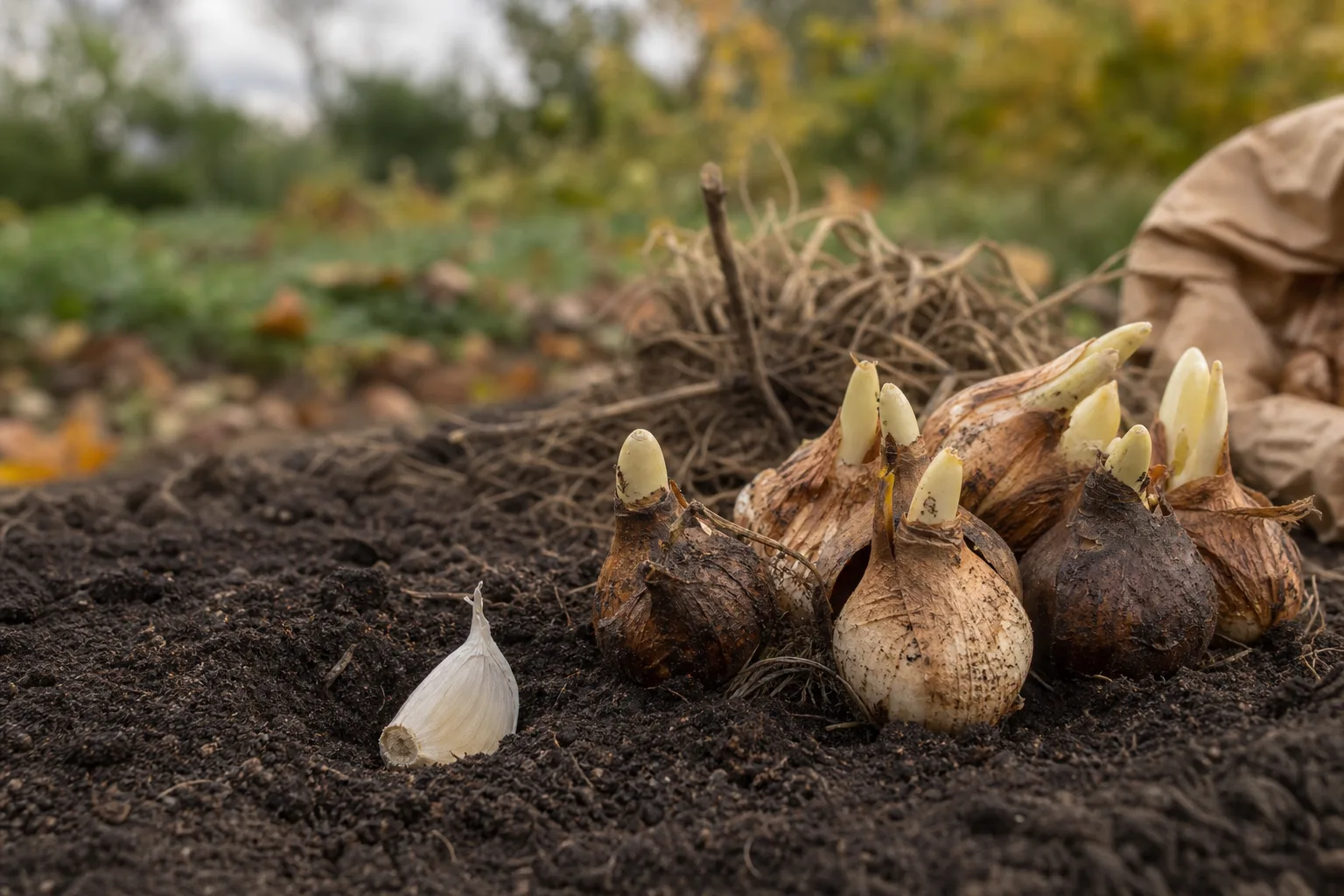
Is October really the best month to plant in most zones?
Yes, October is the month I would choose for garlic, spring bulbs, and dormant bare-root trees in most gardens from USDA zone 3 through zone 10. The soil is still workable, the air has cooled, and roots can settle before winter or summer heat arrives, but the exact week depends on your first hard freeze.
In zones 3 through 6, plant hardneck garlic in early to mid-October, at least two weeks before the first hard freeze. In zones 7 through 9, softneck garlic can go in later, often late October through early November, and the warmest gardens can plant later still.
Spring bulbs such as tulips, daffodils, crocuses, and hyacinths belong in October because they need a winter chilling period before spring growth. Each one has a trade-off: tulips can fade after a season, daffodils are dependable but poisonous if eaten, crocuses are small and easily buried by mulch, and hyacinths have strong fragrance that some people find too heavy.
Bare-root trees are a different purchase. You order them before they sell out, then plant the dormant tree after delivery, usually in September or October. In Central Texas, October is the best month because November can still be warm, while August is simply an argument with a shovel.
What should you plant in October in zones 3 through 6?
In zones 3 through 6, plant hardneck garlic, spring bulbs, and dormant bare-root trees in October, with garlic going in early or mid-month before the ground freezes. Set the garlic cloves 2 inches deep and 4 to 6 inches apart, then mulch lightly after the soil cools.
Hardneck garlic handles cold winters and usually produces a flower stalk called a scape in early summer, but it stores for less time than softneck garlic. Softneck garlic stores longer and often performs better in mild winters, but it is less reliable where the ground freezes hard.
Plant garlic at least two weeks before your first hard freeze, not two weeks before the date on the calendar that your neighbor remembers. This garlic planting guide also places northern garlic planting in late September or October and says cloves must go in before the ground freezes.
For bulbs, put daffodils and crocuses in October even if the leaves have already fallen. Daffodils return more reliably than tulips, but their foliage needs to remain in place after flowering, which can look untidy for several weeks.
Trees should be planted earlier in the coldest zones, often late September through October. A bare-root tree costs less to ship than a container tree, but it arrives with exposed roots, so it cannot sit in a garage for two weeks while you decide where it belongs.
What should you plant in October in zones 7 through 10?
In zones 7 through 10, plant spring bulbs throughout October, plant softneck garlic in late October or early November, and set bare-root trees when they arrive dormant and the soil is workable. Mild zones give you a longer planting window, but waiting until spring wastes the root-building advantage of fall.
Softneck garlic is usually the better choice for mild winters because it does not need the same hard cold period as hardneck types, and its bulbs store well. The trade-off is that softneck garlic does not usually make the tall scapes that hardneck growers harvest, so you give up one small summer crop.
In Austin, I watch the soil more than the calendar. Black clay can still be warm and wet in October, while caliche may stop a shovel 8 inches down even after a good rain. If the soil forms a sticky ball, wait a few days; if it is dry enough to crumble, plant and water deeply.
Warm-zone gardeners can plant garlic in November, December, or even January, but earlier is safer than later if the bed is ready. The fall garlic timing notes from Gardenary support October as the main planting window while recognizing that local climate changes the schedule.
Bulbs still need October attention in mild zones. Tulips may need more dependable winter chilling than your soil provides, so they can be a poor repeat performer in warm areas; daffodils and crocuses are usually less fussy, but every bulb can rot in a bed that stays wet.
How should you plant garlic in October?
Plant garlic by separating a healthy bulb into individual cloves, keeping the papery skin on, placing each clove pointed side up, and covering it with 2 inches of soil. Space cloves 4 to 6 inches apart in well-drained, organic-rich soil, water the bed thoroughly, and add a light mulch once the weather cools.
Do not plant a grocery-store garlic bulb and assume it is suited to your zone. It may have been treated, stored poorly, or grown in a climate unlike yours, and the clove can produce a plant without producing a large bulb.
I plant the largest outside cloves and cook the small interior cloves. The larger clove gives the plant more stored energy, but saving the biggest cloves means you use up the garlic you might otherwise eat. That is the honest trade.
A raised bed helps where clay stays wet, but raised beds cost money and dry faster in summer. In-ground beds are cheaper and hold moisture longer, but you must improve drainage without turning the planting hole into a bathtub of compost.
Water after planting so the soil settles around the clove, then keep the bed evenly moist until winter growth slows. Garlic planted in October is commonly harvested in July, and young scapes can be cut in early summer, though removing them costs you the flower stalk you might want for seed production.
Which spring bulbs belong in the ground this month?
Plant tulips, daffodils, crocuses, and hyacinths in October so their bulbs receive the winter chilling needed for spring growth. Follow the package depth when available, keep the pointed end up, and choose firm bulbs because soft or moldy bulbs often fail before spring.
Daffodils are my first choice for a dependable bed because they return better than many tulips, but the bulbs and foliage are toxic if eaten and deer may still damage the flowers. Tulips give you stronger color choices, but many modern types bloom best for one season and then decline.
Crocuses are useful at the front of a bed because they stay short, usually under 6 inches, but they disappear quickly after flowering and can be covered by leaves or mulch. Hyacinths bring fragrance and sturdy flower spikes, but their scent can overwhelm a small entry bed.
Plant bulbs in groups rather than one lonely dot every 18 inches. A cluster of 7 to 15 bulbs reads as a planting, while scattered bulbs look accidental until the third year, when half of them have been eaten or lost to wet soil.
Do not cut bulb foliage immediately after flowering. The leaves recharge the bulb, but leaving them in place means you accept a six-week period of fading foliage. You can hide that mess with later perennials, though those plants compete for water and add another purchase.
When should you order and plant a bare-root tree?
Order bare-root trees in late summer or early fall, then plant them as soon as they arrive dormant, usually in September or October. For zones 4 through 8, mid to late October is a strong target because the soil remains workable while air temperatures are cool; colder zones should plant earlier.
Bare-root ordering matters because popular sizes and varieties sell out before the box arrives. The tree is cheaper and lighter to ship than a container tree, but its exposed roots dry quickly, so delayed planting can kill a plant that looked perfectly healthy in the catalog.
Dig a hole twice as wide as the root ball or root spread, but no deeper than the roots were growing. Backfill with native soil mixed with compost, water thoroughly, and apply 2 to 3 inches of mulch without piling it against the trunk.
Native soil keeps the new roots moving into the surrounding ground. Pure compost in the hole sounds generous, but roots can circle in the soft pocket or struggle when the pocket holds water differently from the soil around it.
In Austin, I have used a rock bar for a two-hour hole and then found the tree sitting too low because the bottom softened after rain. The tree was not being dramatic. The ground was.
Who is this October planting plan for, and who should ignore it?
This plan suits homeowners who can prepare a bed this week, water deeply after planting, and check their local first-freeze pattern instead of following a national calendar. Ignore it for now if your soil is frozen, waterlogged, or impossible to dig without smearing clay, because planting into bad conditions creates expensive repairs.
It suits the Round Rock grandmother with a sunny bulb border, the Del Valle homeowner starting a first raised bed, and anyone who wants spring growth already underway before the weather warms. It also suits a gardener who can protect a new tree from drying winds and lawn equipment.
It does not suit someone who will plant a bare-root tree and then leave town for three weeks. It does not suit a bed that floods after every rain. Fix drainage or irrigation first.
If deer pressure is high, bulbs and young trees may need protection, and the barrier is a real cost in both money and appearance. If oak trees are nearby, schedule pruning carefully and follow local oak wilt guidance rather than treating October as permission to cut everything.
Before choosing varieties, use the plant database to check mature size, light needs, and zone fit. A plant that survives your winter can still fail because the bed is too hot, too wet, or too crowded.
Which October planting method should you choose?
Choose fall planting in the ground for the lowest ongoing cost, a raised bed for drainage control, or a bare-root tree for economical access to dormant woody plants. I would choose an in-ground or raised garlic bed, October bulbs, and a bare-root tree over spring planting because fall gives roots time to settle before summer heat.
The best choice depends on your soil and how often you can water. There is no prize for selecting the cheapest method if it puts garlic in standing water or a tree in a bed you cannot irrigate.
| Option | Best timing | Main benefit | Honest downside |
|---|---|---|---|
| In-ground garlic | October, or late October to January in mild zones | Lowest setup cost and simple harvest in July | Fails in compacted or wet soil |
| Raised-bed garlic | October | Better drainage and easy spacing | Costs more and dries faster in summer |
| Spring bulbs | October | Spring color after winter chilling | Tulips may decline after one season, and foliage lingers |
| Bare-root tree | September to October while dormant | Lower shipping cost and fast root establishment | Roots dry quickly and cannot wait after delivery |
Everyone says fall planting is easy. In practice, the calendar is the easy part; soil moisture, drainage, and the first freeze decide whether the plant establishes.
If you want help laying out the bed before you order, use get a concept for your yard after measuring the planting area, the hose reach, and the hours of sun. A pretty drawing cannot rescue a tree planted over caliche with no water.
What questions do gardeners ask about October planting by zone?
October planting works because it matches cool air, workable soil, and the dormant or chilling needs of several important garden plants. The questions below give you the practical answer for timing, depth, variety choice, and late planting, with the trade-offs spelled out plainly.
What is the best month to plant garlic?
October is the best month to plant garlic in most home gardens, although northern zones may plant in late September and mild southern zones may wait until November or later. Plant before the ground freezes in cold regions, and plant early rather than late when your local soil is workable.
How deep should garlic cloves be planted?
Plant garlic cloves 2 inches deep and 4 to 6 inches apart in well-drained soil. Put the pointed end up and leave the papery skin attached. Shallow planting exposes cloves to cold and drying, while overly wet soil can rot them even at the correct depth.
Can I plant garlic in November?
You can plant garlic in November in mild zones 7 through 9, and even later in some warm gardens, provided the soil is workable and not waterlogged. Cold zones should plant earlier because cloves need time to develop roots before the ground freezes.
Are daffodils or tulips better for fall planting?
Daffodils are usually the better choice for dependable return after fall planting, while tulips offer more color and form but often decline after one season. Both belong in October, and both have trade-offs: daffodil foliage lingers, while tulips can require replacing.
When should I plant a bare-root tree?
Plant a bare-root tree as soon as it arrives dormant, usually in September or October, with mid to late October working well in zones 4 through 8. Dig twice as wide as the root spread, keep the original depth, water thoroughly, and mulch 2 to 3 inches deep.
Is October too late to plant bulbs?
October is not too late to plant spring bulbs in most zones, and it is the target month for tulips, daffodils, crocuses, and hyacinths. If the ground is still workable, plant now rather than storing bulbs indoors, where they can dry out or develop mold.
I learned this rhythm from my father's twelve-foot strip of New Jersey clay and from watching Central Texas turn a garden bed into a brick by September. Put the roots in while the ground gives you a chance. That is the work.
Want a plan for your own yard?
Tell us the space and we will put a planting plan together for it. Start at get my concept, or browse what actually grows where you are over on plants.
Frequently asked questions
What is the best month to plant garlic?
October is the best month to plant garlic in most home gardens, although northern zones may plant in late September and mild southern zones may wait until November or later. Plant before the ground freezes in cold regions, and plant early rather than late when your local soil is workable.
How deep should garlic cloves be planted?
Plant garlic cloves 2 inches deep and 4 to 6 inches apart in well-drained soil. Put the pointed end up and leave the papery skin attached. Shallow planting exposes cloves to cold and drying, while overly wet soil can rot them even at the correct depth.
Can I plant garlic in November?
You can plant garlic in November in mild zones 7 through 9, and even later in some warm gardens, provided the soil is workable and not waterlogged. Cold zones should plant earlier because cloves need time to develop roots before the ground freezes.
Are daffodils or tulips better for fall planting?
Daffodils are usually the better choice for dependable return after fall planting, while tulips offer more color and form but often decline after one season. Both belong in October, and both have trade-offs: daffodil foliage lingers, while tulips can require replacing.
When should I plant a bare-root tree?
Plant a bare-root tree as soon as it arrives dormant, usually in September or October, with mid to late October working well in zones 4 through 8. Dig twice as wide as the root spread, keep the original depth, water thoroughly, and mulch 2 to 3 inches deep.
Is October too late to plant bulbs?
October is not too late to plant spring bulbs in most zones, and it is the target month for tulips, daffodils, crocuses, and hyacinths. If the ground is still workable, plant now rather than storing bulbs indoors, where they can dry out or develop mold.
Free, no obligation
Ready to design your dream landscape? Start here.
Tell us where you are and we will start a free profile for you, with plants that actually survive your climate and a real sense of what the build would cost.