
What kinda tree is this?
If you are staring at a tree in your yard and need a fast answer, start with leaves, bark, branching pattern, and fruit or seed pods. In fall, you can still narrow it down by whether it drops leaves, keeps them, or shows distinctive pods and bark that you can match against a plant database.
September 18, 2026
By Diego Navarro
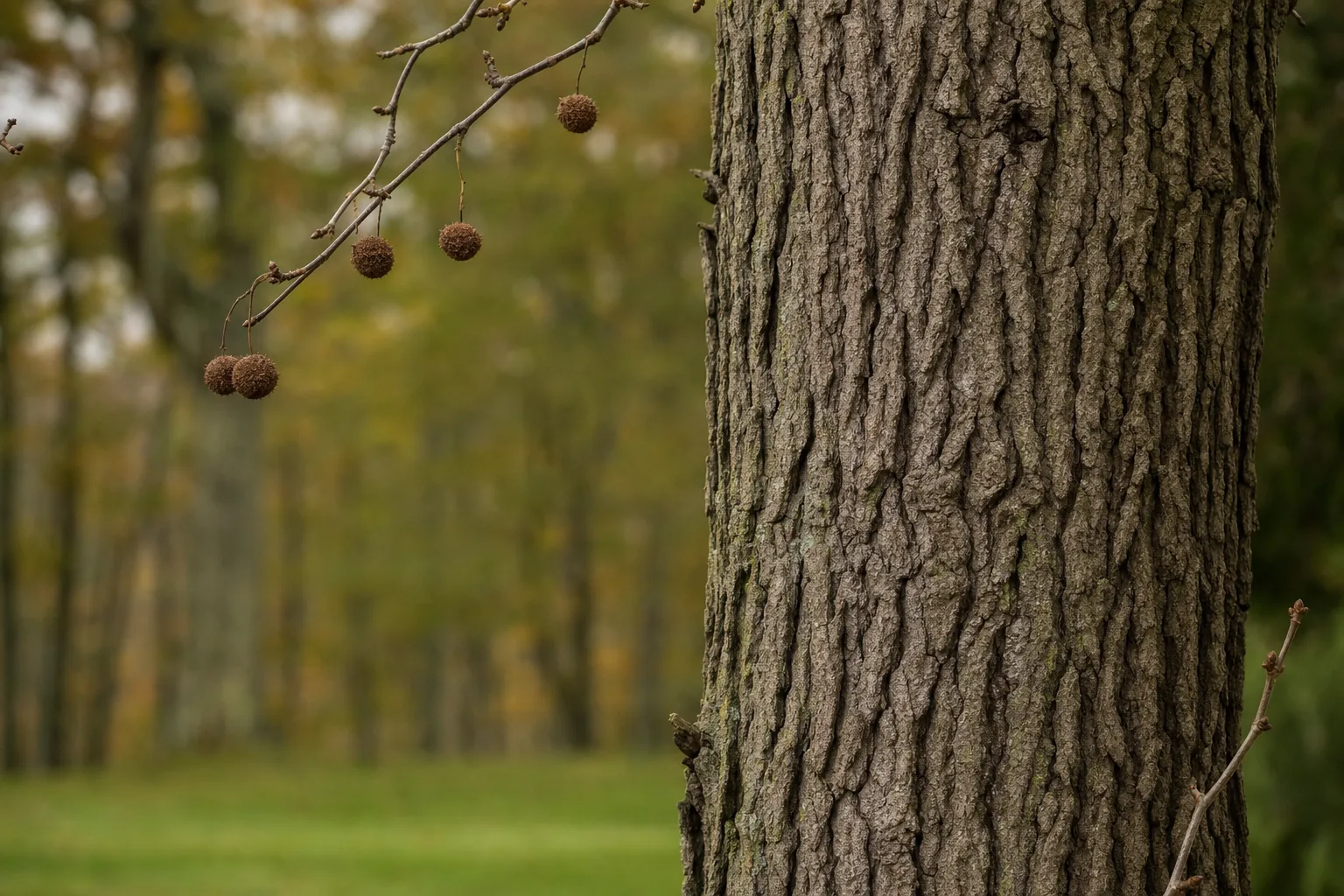
What kinda tree is this?
Start with the tree’s overall shape, bark, leaf arrangement, and any fruit or seed pods, because that is the fastest way to narrow a home-garden tree down without making up a story. In fall, you can still get a solid ID if you notice whether it drops leaves, keeps them, or carries pods, and then compare those details with a plant database.
Everyone wants the instant answer. Trees usually do not cooperate.
If you are standing in the yard right now, take four photos: the whole tree, a close-up of one leaf, the bark at eye level, and any fruit, pods, cones, or buds. I’d rather have those four than one dramatic shot of a branch against the sky.
What details should I look at first?
Look at the tree from 10 to 15 feet away first, then move in close. Start with shape, then bark texture, then leaves, then any fruit or seed pods, because that order matches how tree identification actually works in a yard and not in a lab. The Morton Arboretum’s tree resources point people toward tree profiles and plant selection details for exactly this kind of use Morton Arboretum.
Shape tells you if the crown is rounded, vase-shaped, upright, or spreading. Bark tells you if it is smooth, peeling, furrowed, ridged, or plated.
Then check the leaves. Are they simple or compound, opposite or alternate, smooth-edged, serrated, or lobed? That part matters more than the tree’s vibes, which are usually excellent but not diagnostic.
How do I tell simple leaves from compound leaves?
A simple leaf has one blade attached to one petiole, while a compound leaf has several leaflets attached to one stem. That one difference can separate a lot of trees fast, especially in fall when color is less helpful than structure.
Here is the short version:
| Option | What it looks like | Honest downside |
|---|---|---|
| Simple leaf | One blade per leaf stalk | Can look similar across many species |
| Compound leaf | Several leaflets on one leaf stalk | Easy to mistake for a twig with leaves on it |
If you are not sure, trace the leaf back to the stem. A compound leaf ends at one bud location, while leaflets do not each have their own bud. That is the part people miss, and then they spend twenty minutes arguing with a tree that does not care.
In Central Texas, I see plenty of confusion around ashes, pecans, and hickories because the leaflets look busy from a distance. Up close, the structure settles the argument.
What does the bark tell me?
Bark tells you a lot when leaves are missing or half-chewed, especially in fall. Smooth bark, peeling bark, blocky bark, and deeply furrowed bark each point in different directions, and bark texture stays visible longer than leaf color does.
Run your eye up the trunk and note whether the bark is uniform or changes from base to top. Also check whether the trunk flares at the base or disappears into a mulch volcano, because a buried flare makes everything harder to read and can stress the tree.
If the tree is young, bark may not help much yet. If it is older, bark can be the strongest clue you have left after the leaves drop.
What should I do if it is fall and the leaves are gone?
If it is fall and the leaves are gone, use the branches, buds, bark, and any remaining pods or fruit, then wait for a better look in spring if you still cannot get there. Deciduous trees drop their leaves, while evergreen trees hold foliage year-round, so that first split alone cuts the list in half.
Spring is the best time to inspect fresh buds and look for pests or disease, but fall is still useful for reading the bones of the tree. Clean up dead leaves and debris around the base if you see them sitting there and harboring trouble Quora.
If you are in Austin or Round Rock, you are also working around hard soil, limestone, and black clay that does not stay put. That does not change the ID work, but it does matter if you are thinking about planting the same tree later.
What if I just want the most likely answer fast?
If you want the fastest practical answer, compare the tree to a local species list, then confirm it with leaf arrangement, bark, and fruit before you commit. The Morton Arboretum says tree and plant profiles are built for descriptions and details that help you identify and select trees, and that is the right instinct here Morton Arboretum.
Use the plant database after you have a decent guess, not before. That saves you from chasing a name that fits one feature and misses the other three.
When I was learning plants from my dad’s tomatoes in a twelve foot strip of clay along the driveway, the rule was simple: look at the whole plant before you start naming it. Trees are the same, just taller and more committed.
Who is this tree ID method for, and who should ignore it?
This method suits a homeowner standing in the yard with no tag, no receipt, and no memory of what was planted five years ago. It also suits anyone trying to figure out whether a tree is evergreen or deciduous before they prune, water, or replace it.
Ignore this approach if you need a lab-level species confirmation, if the tree is a protected wild specimen, or if you only have a blurry canopy photo from across the street. Then you need an arborist or a better photo set, not confidence.
It also does not help much if the tree is just a stump with leaves from a vine wrapped through it. Nature loves a messy legal situation.
Should I prune, spray, or fertilize while I am figuring it out?
No, not yet. Prune in the dormant season to remove broken or crossing branches, and only use pest control when you see actual damage, because targeted treatment beats random spraying every time Quora.
Use horticultural oil or insecticidal soap for aphids, caterpillars, or scale only when the pest is present. Spraying for a problem you have not identified is how people burn money and still miss the problem.
Mulch is the one thing I do like here, but keep it honest. Put down a 2 to 3 inch layer of organic mulch, and keep it away from the trunk so the flare stays visible and air can move.
What should I do after I identify it?
After you identify it, check whether the tree fits your site, because a tree that is right in the database can still be wrong for your yard. Soil, light, and space decide a lot, and OSU Extension says new trees should be selected for the planting site, planted at the right depth, watered thoroughly, and staked only if necessary OSU Extension.
In Austin, I build for caliche that stops a shovel eight inches down, and for August that does not negotiate. That means matching the tree to the site is not a nice extra, it is the whole job.
If you are planting later, choose a healthy containerized or balled-and-burlapped tree, set it at the proper depth, and watch it closely for the first few years. A bad planting depth costs you years.
What mistakes make tree ID and care harder?
The biggest mistake is using one feature and ignoring the rest. A leaf shape alone, a bark photo alone, or a guess from the tree’s height alone will get you into trouble, because many species overlap on one trait and differ on three others.
Another mistake is doing maintenance too early or too hard. Heavy pruning in the wrong season, overwatering, or blasting pests before you have proof can stress the tree more than the original issue.
Do you need to clear debris under the canopy? Yes, if you see dead leaves and deadwood piling up, especially in spring. Do you need to spray every week just because a neighbor did? No. That is how a simple identification question turns into a full-time hobby.
Which tree traits are most useful in a quick garden ID?
The most useful traits are leaf arrangement, leaf edge, bark texture, growth form, and fruit or pods. Those five features give you enough to narrow a tree quickly in the garden, and they still work after the leaves start dropping in fall.
Use this order in the yard:
- Whole-tree shape.
- Leaf arrangement, opposite or alternate.
- Simple or compound leaves.
- Leaf edge, smooth, serrated, or lobed.
- Bark and any fruit, cones, or seed pods.
If you only have five minutes, photograph all five. Then go compare what you see with a plant database and a local tree profile, not a forum thread from 2014.
The truth is plain. The tree will tell you what it is if you listen in the right order.
FAQs
How do I tell if a tree is deciduous or evergreen? A deciduous tree drops its leaves in fall, while an evergreen tree keeps foliage through the year. That is your first split in the yard, and it is useful because it narrows the field fast before you look at bark, buds, or pods. In Central Texas, some trees hold leaves longer than you expect, so look for the overall pattern, not one branch.
What photos should I take for tree ID? Take four photos: the whole tree, one leaf close up, the bark at eye level, and any fruit, pods, cones, or buds. Those four images give you enough structure to compare against a plant database without guessing from a single blurry shot. If the tree is tall, step back and include the canopy shape.
Can I identify a tree from bark alone? Sometimes, but not reliably. Bark is useful, especially on mature trees, yet many species overlap in texture and pattern, so bark alone can mislead you. Use it with leaf arrangement, branching habit, and any fruit or seed pods, or you may end up naming the right family and the wrong species.
Should I spray for pests while I am identifying the tree? No, not unless you can see actual pest damage or the pest itself. The safer move is to inspect first, then use targeted controls like horticultural oil or insecticidal soap for aphids, caterpillars, or scale if they are present. Spraying first is expensive and usually sloppy.
When should I prune a tree in my yard? Prune during the dormant season to remove crossing or broken branches and to improve airflow. That timing helps reduce stress and disease risk, and it is easier to see the branch structure without a full canopy in the way. If the tree is oak, be careful with local oak wilt timing and avoid casual cuts during the wrong months.
What should I do if I still cannot identify the tree? If you still cannot identify it, keep collecting photos through the season and compare them with a plant database or a local tree resource. A spring bud photo often solves what a fall leaf photo cannot. If the tree is causing allergy, poison, or mushroom concerns, do not guess, and get the right local help instead of a home test.
Want a plan for your own yard?
Tell us the space and we will put a planting plan together for it. Start at get my concept, or browse what actually grows where you are over on plants.
Frequently asked questions
How do I tell if a tree is deciduous or evergreen?
A deciduous tree drops its leaves in fall, while an evergreen tree keeps foliage through the year. That is your first split in the yard, and it is useful because it narrows the field fast before you look at bark, buds, or pods. In Central Texas, some trees hold leaves longer than you expect, so look for the overall pattern, not one branch.
What photos should I take for tree ID?
Take four photos: the whole tree, one leaf close up, the bark at eye level, and any fruit, pods, cones, or buds. Those four images give you enough structure to compare against a plant database without guessing from a single blurry shot. If the tree is tall, step back and include the canopy shape.
Can I identify a tree from bark alone?
Sometimes, but not reliably. Bark is useful, especially on mature trees, yet many species overlap in texture and pattern, so bark alone can mislead you. Use it with leaf arrangement, branching habit, and any fruit or seed pods, or you may end up naming the right family and the wrong species.
Should I spray for pests while I am identifying the tree?
No, not unless you can see actual pest damage or the pest itself. The safer move is to inspect first, then use targeted controls like horticultural oil or insecticidal soap for aphids, caterpillars, or scale if they are present. Spraying first is expensive and usually sloppy.
When should I prune a tree in my yard?
Prune during the dormant season to remove crossing or broken branches and to improve airflow. That timing helps reduce stress and disease risk, and it is easier to see the branch structure without a full canopy in the way. If the tree is oak, be careful with local oak wilt timing and avoid casual cuts during the wrong months.
What should I do if I still cannot identify the tree?
If you still cannot identify it, keep collecting photos through the season and compare them with a plant database or a local tree resource. A spring bud photo often solves what a fall leaf photo cannot. If the tree is causing allergy, poison, or mushroom concerns, do not guess, and get the right local help instead of a home test.
Free, no obligation
Ready to design your dream landscape? Start here.
Tell us where you are and we will start a free profile for you, with plants that actually survive your climate and a real sense of what the build would cost.