
What Is This Flower Called? It Is Probably a Zinnia
That bright, daisy-like flower in your garden is probably a zinnia. Here is how to check, what to do with it in fall, and how to grow the same easy annual next year.
September 28, 2026
By Valeria Navarro
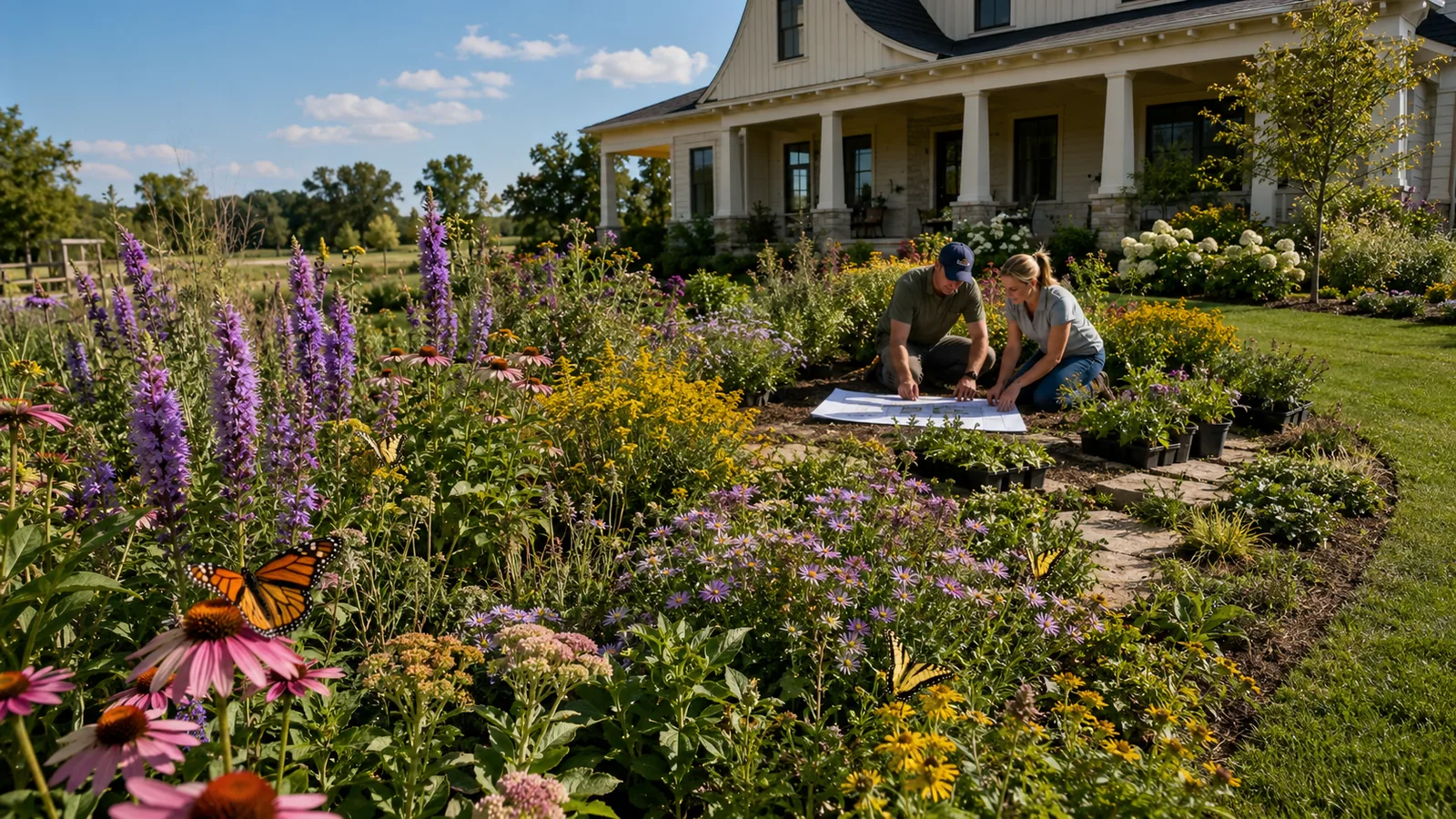
The flower you are seeing is most likely a zinnia, especially if it has a bright, daisy-like flower head, a firm upright stem, and cheerful colors. Zinnias are beginner-friendly annuals, but a photograph alone cannot confirm a species, so compare the flower and leaves before you label it.
What is this flower called?
The flower is probably a zinnia, a colorful annual commonly grown for its daisy-like blooms and long summer display. If you are standing beside a flower with a round, layered head in pink, red, orange, yellow, white, or purple, zinnia is the first name I would test, not the last name I would assume.
Look at the whole plant, not only the bloom. A zinnia usually has a straight stem, opposite leaves, and a flower held clearly above the foliage. The bloom may look simple, with one ring of petals, or full and crowded, with many layers.
That visual habit matters because flower identification is a comparison job. A useful plant-identification guide shows how gardeners work from flower shape, leaves, growth habit, and timing rather than guessing from color alone (plant identification guide).
Here is my quick answer from the garden: bright daisy-like head, firm stem, warm-season bloom, likely zinnia. If the plant is sprawling, woody, climbing, or has a very different leaf shape, pause before writing the name on your plant tag.
How can I tell if the flower is a zinnia?
You can identify a likely zinnia by checking four things: the flower head, stem, leaves, and season. The bloom is often round and cheerful, the stem is upright, the leaves sit opposite one another, and the plant flowers through summer into early fall when grown in sun.
Start with the petals. Are they arranged around a visible center, or are they packed into a pom-pom shape? Both forms can point toward a zinnia, so petal arrangement alone is not enough.
Next, pinch your eyes toward the stem. Zinnias are usually upright rather than delicate and trailing. The leaves are not ferny. They are broader and sit along the stem, which gives the plant a solid, garden-border look.
Now check the calendar. A flower blooming through hot weather and still holding color in early fall fits the zinnia pattern described in the growing guidance provided for this question. That timing is especially believable in Austin, where summer heat can hang around for weeks.
If you want to compare more species before deciding, use the plant database. Take one photograph of the bloom, one of the leaves, and one of the whole plant. That three-photo habit beats one dramatic close-up every time.
Is this flower a zinnia or another daisy-like flower?
It may be a zinnia, but a daisy-like flower cannot be identified from color alone. Compare the plant’s leaf shape, stem habit, flower center, and blooming season, then treat zinnia as a strong possibility rather than a guaranteed answer until those details agree.
Everyone says, “It is yellow, so it must be that yellow flower.” In practice, that shortcut wastes time because many garden flowers share the same colors and open shape. Color narrows the search. It does not finish it.
Use this small comparison while you stand in the garden:
| What you see | Most useful reading | Honest downside |
|---|---|---|
| Upright plant, broad opposite leaves, bright round bloom, summer to early-fall flowering | Zinnia is a strong match | A photo still cannot confirm the exact zinnia type or cultivar |
| Thin or airy foliage, sprawling stems, or a flower held differently | Keep looking at other daisy-like flowers | You may need a clear leaf and whole-plant photograph to identify it |
| One flower with no leaves or stem visible | Not enough evidence yet | Guessing from a bloom alone can give you the wrong plant name |
For a reliable check, photograph the underside of a leaf too. Many identification clues are hiding there, while the flower is busy showing off.
The broader flower references are useful for learning common flower names, but they also show why a list of flower types is not the same thing as a confirmed identification (common flower types).
What should I do with a zinnia that is blooming in fall?
Leave a healthy zinnia blooming in fall if the flowers still look good, and remove spent flower heads as they fade. Deadheading helps encourage continued flowering, while consistent watering supports the plant without leaving the soil soggy, especially during a hot, dry Austin autumn.
Start with the ugly flowers. Snip each faded head just above a set of leaves or a branching point. You do not need to perform surgery with tiny scissors. Clean hand pruners are enough.
If the plant is still producing fresh buds, keep harvesting or deadheading. Zinnias are useful cut flowers, and taking mature blooms can keep the plant looking less tired near the end of the season. The trade-off is that every cut removes a flower you could enjoy outside.
Water at the soil line. Do not sprinkle the foliage every evening because you feel guilty about the heat. In Central Texas, clay can hold water after a deep drink, then crack hard when it dries, so check the soil before watering again.
The growing guidance for zinnias recommends consistent water while avoiding overwatering, plus deadheading to support blooming through summer into early fall. That is the right balance. Not drought neglect. Not daily swamp-making.
Can I save seeds from this flower for next year?
You can allow a healthy zinnia flower to mature and collect its dry seeds, but seed saving works best when you know the flower is actually a zinnia and can let one or two blooms finish instead of deadheading every flower. Dry, mature flower heads are easier to handle than fresh petals.
Choose one strong plant with healthy leaves and a flower color you want to repeat. Stop cutting that flower. Let the head remain on the plant until it is dry and papery, then remove it in dry weather.
Spread the material somewhere dry for several days. Separate the seeds gently and label the envelope with the flower color and the year. “Pretty pink” is not a useful label six months later. Trust me, I have killed plants and then forgotten what I planted beside them.
The trade-off is simple. Saving seed costs little money, but it costs you one or more fresh blooms now and gives you no promise that every future plant will look exactly like the parent.
Keep the packet dry and cool until planting time. Next year, sow after the last frost, then space seedlings 12 to 18 inches apart in sunny, well-drained soil. That spacing prevents a flower bed from becoming a damp, crowded tangle.
How do I grow zinnias next year?
Grow zinnias from seed after the last frost in full sun and well-drained soil, with seedlings 12 to 18 inches apart. Water consistently without overwatering, and deadhead old flowers during the season. This simple plan suits beginners, but zinnias still fail if shade, soggy soil, or crowding takes over.
Sun comes first. Choose a place that receives several hours of direct light rather than a bright corner under a tree. A sunny bed also gives the stems a better chance of staying upright.
Drainage comes next. In my Austin garden, the lesson is sharp: caliche and limestone can sit under a thin soil layer, while Blackland Prairie clay can hold water and then set like a brick by August. Improve the bed only enough to help water move through. Do not build a rich, wet bathtub.
Give each seedling 12 to 18 inches of room. Twelve inches works for a tighter display. Eighteen inches gives more air and easier access for watering and cutting. Space is not decoration. It is maintenance you pay for in advance.
Water consistently while plants establish, then check the soil before another drink. The goal is even moisture, not constant saturation. A plant that is watered heavily and then ignored is living through a feast and a famine.
For a layout that fits your actual bed, use get a concept for your yard. The tool can help you place a sunny cutting patch where you will actually see and water it, rather than hiding your new zinnias behind the shed like a guilty secret.
Who should grow zinnias, and who should skip them?
Zinnias suit a homeowner who has a sunny bed, wants bright annual color, can water consistently for the first weeks, and does not mind removing faded flowers. Skip them for a deeply shaded bed, waterlogged soil, or a garden you will not check for several weeks at a time.
Choose zinnias if you want a quick seasonal display without committing to a permanent shrub. They are also a good fit if you like cutting flowers for the kitchen table and can accept that the bed will change when the season ends.
Skip them if your only available spot gets little direct sun. A plant can be brave, but it cannot negotiate with a wall that blocks the light. Also skip them if your soil stays saturated after rain. Fix drainage first or choose a different planting plan.
Austin gardeners need to be honest about water. A zinnia is more forgiving than a fussy flower, but “easy” does not mean “never water it.” Midsummer restrictions and long stretches near 100 degrees still require a plan for establishment.
This is not a forever plant. It is a warm-season annual. That is the beauty and the bill. You get a lot of color for one season, then you replant, save seed, or change the bed next year.
Are zinnias easy flowers for beginner gardeners?
Yes, zinnias are among the more beginner-friendly annual flowers because they provide bright blooms with a straightforward care routine: sun, well-drained soil, consistent watering, 12 to 18 inches of spacing, and deadheading. Their main weakness is not complexity. It is that beginners often crowd them or overwater them.
Start with fewer plants than your excitement wants. Six well-spaced zinnias will usually teach you more than twenty packed into one narrow strip. You can watch how quickly the soil dries, where the afternoon sun lands, and which stems need support.
Do not buy a complicated feeding schedule before you solve the basics. The research provided emphasizes planting conditions, spacing, watering, and deadheading. Those are the levers I would pull first.
A small garden can be practical rather than precious. Flower-growing guidance often frames flowers as an everyday practice that creates more space and calm, not as a luxury reserved for people with large yards (flower-growing encouragement). I agree, with one condition: the plant has to match the site.
My abuela taught me to notice what the patio was telling me. Miami’s sandy fill drained before I finished watering. Austin clay can hold the same water and then harden around it. Zinnias forgive a beginner, but they still need you to read the soil.
What are the answers to the questions gardeners ask about this flower?
The short answers are simple: the flower is probably a zinnia, identification needs the whole plant, fall flowers can be deadheaded, and next year’s crop needs sun, drainage, water, and room. Use the questions below as a final garden-side check before you label the plant.
What is this flower called?
It is probably a zinnia if it has a bright, daisy-like bloom, an upright stem, broad opposite leaves, and summer-to-early-fall flowering. Check the whole plant before deciding because color alone is not enough for a reliable identification.
How can I tell if the flower is a zinnia?
Look for a round or layered flower head, a sturdy upright stem, broad leaves set along the stem, and blooming during warm weather. Those clues together make zinnia a strong possibility, but a clear photograph of the leaves and whole plant gives you a better answer.
Is this flower a zinnia or another daisy-like flower?
It may be a zinnia, but compare the leaves, stem, center, and growth habit before naming it. Many flowers share bright colors and open faces, so a close-up bloom without the plant’s foliage cannot settle the identification.
What should I do with a zinnia that is blooming in fall?
Keep it blooming if it is healthy, remove faded flowers, and water the soil consistently without overwatering. Deadheading can encourage more flowers through early fall, while leaving one flower to mature may let you collect dry seed for next year.
Can I save seeds from this flower for next year?
Yes, if you have reasonably confirmed it is a zinnia, let one or two healthy flower heads dry on the plant, collect the dry seeds, and label them. Saving seed costs you those flowers now and does not guarantee identical plants next season.
How do I grow zinnias next year?
Plant zinnia seeds after the last frost in full sun and well-drained soil, then space seedlings 12 to 18 inches apart. Water consistently without keeping the soil soggy, and deadhead spent flowers to support a longer summer and early-fall display.
Want a plan for your own yard?
Tell us the space and we will put a planting plan together for it. Start at get my concept, or browse what actually grows where you are over on plants.
Frequently asked questions
What is this flower called?
It is probably a zinnia if it has a bright, daisy-like bloom, an upright stem, broad opposite leaves, and summer-to-early-fall flowering. Check the whole plant before deciding because color alone is not enough for a reliable identification.
How can I tell if the flower is a zinnia?
Look for a round or layered flower head, a sturdy upright stem, broad leaves set along the stem, and blooming during warm weather. Those clues together make zinnia a strong possibility, but a clear photograph of the leaves and whole plant gives you a better answer.
Is this flower a zinnia or another daisy-like flower?
It may be a zinnia, but compare the leaves, stem, center, and growth habit before naming it. Many flowers share bright colors and open faces, so a close-up bloom without the plant’s foliage cannot settle the identification.
What should I do with a zinnia that is blooming in fall?
Keep it blooming if it is healthy, remove faded flowers, and water the soil consistently without overwatering. Deadheading can encourage more flowers through early fall, while leaving one flower to mature may let you collect dry seed for next year.
Can I save seeds from this flower for next year?
Yes, if you have reasonably confirmed it is a zinnia, let one or two healthy flower heads dry on the plant, collect the dry seeds, and label them. Saving seed costs you those flowers now and does not guarantee identical plants next season.
How do I grow zinnias next year?
Plant zinnia seeds after the last frost in full sun and well-drained soil, then space seedlings 12 to 18 inches apart. Water consistently without keeping the soil soggy, and deadhead spent flowers to support a longer summer and early-fall display.
Free, no obligation
Ready to design your dream landscape? Start here.
Tell us where you are and we will start a free profile for you, with plants that actually survive your climate and a real sense of what the build would cost.