
What Flower Is This? A Practical Way to Identify It in Your Garden
Standing beside an unfamiliar bloom? Here is how to narrow down its identity using the flower, leaves, stem, season, and growing conditions before you trust a label or buy more of it.
September 18, 2026
By Diego Navarro
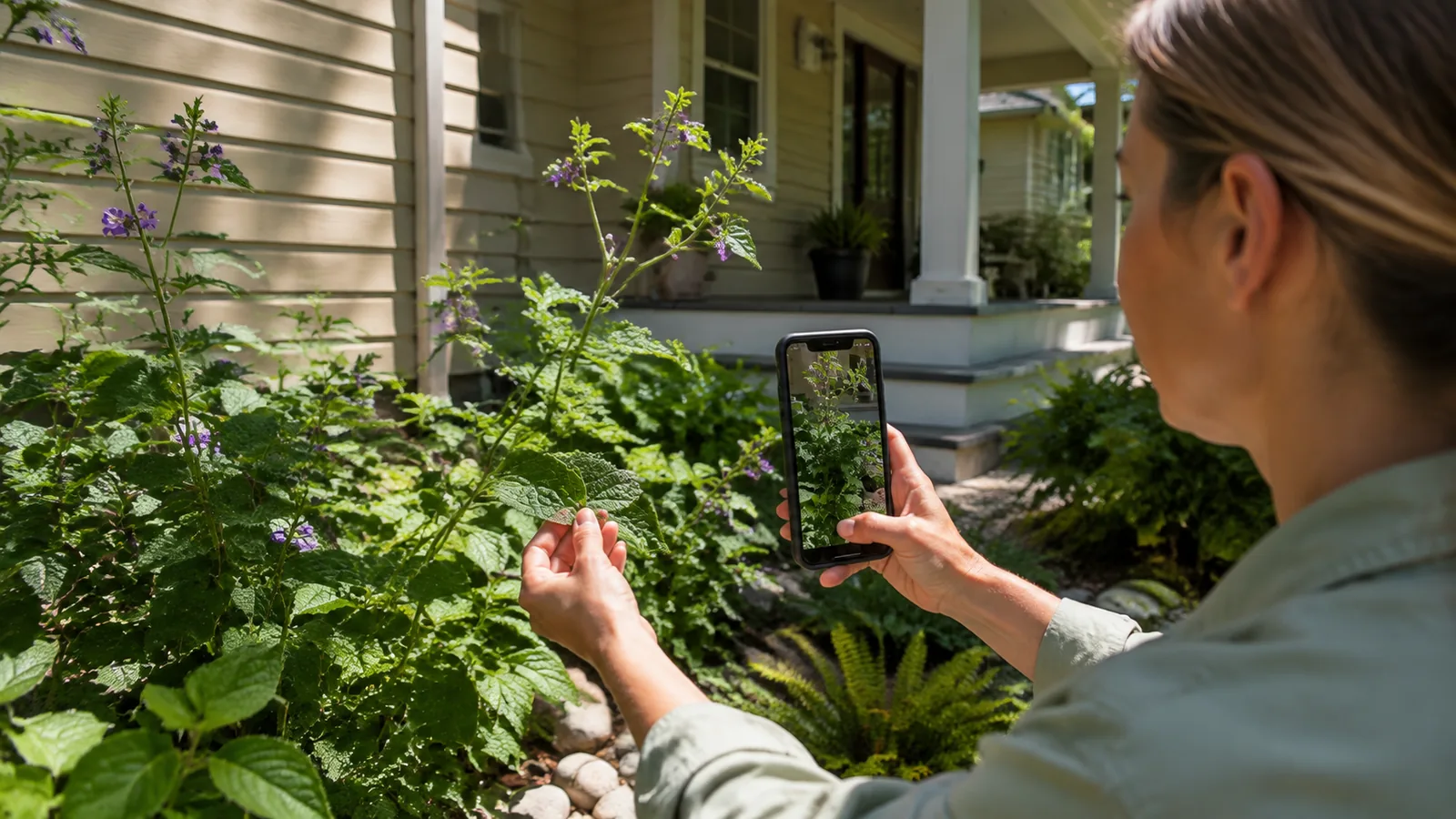
The flower may be identifiable, but nobody can name it reliably from “purple flower” or “yellow flower” alone. Photograph the bloom, leaves, stem, and whole plant, then compare those details with a trusted plant database; if it is wild or has been swallowed, do not eat it or trust a home test.
What flower is this if I only know its color?
Color narrows the field, but it does not identify a flower because many unrelated plants share the same red, pink, yellow, white, or purple blooms. Start with the bloom’s shape, the number of petals, the leaf arrangement, the plant’s height, and whether it is growing in full sun or shade.
Take one photograph from 12 inches away and another from 6 feet away. The close photograph should show the center of the flower, not just the petals. The wider photograph tells you whether the plant is a low mound, a single upright stem, a shrub, or a climbing plant.
Write down the month and your location. A flower standing in an Austin garden in October is not working from the same seasonal schedule as one blooming in New Jersey in June. That little note can save you from comparing the wrong plants.
Most flower gardens perform best with 6 to 8 hours of direct sun, and a soil pH near 6.0 to 6.5 suits many ornamental plants, according to The Garden’s flower-garden guidance. Those details do not name the plant, but they help test whether a suggested identification makes sense.
What should I photograph to identify a flower?
Photograph five parts: the entire plant, one flower from the front, one flower from the side, two leaves attached to the stem, and the base of the plant. Include a ruler or coin for scale, and record whether the plant is planted, potted, climbing, or growing without help.
Use daylight, but avoid the hard glare of noon. A flower photographed at 8 a.m. or near sunset often shows its actual color better than one blasted by a phone flash. Keep the camera still, tap the flower on the screen, and take three versions.
Do not remove the flower just to get a better picture. If you do cut a stem for an indoor arrangement, use clean scissors and leave enough growth for the plant to recover. Cut-flower harvesting can encourage more stems on some garden plants, but it also reduces flowers available for pollinators. Every shortcut sends a bill.
Upload the images with the plant’s height, bloom month, light level, watering pattern, and county. Then check the plant database for matching species and care requirements rather than relying on a single image result.
How can I identify a flower from its leaves and stem?
Leaves and stems often separate lookalikes better than petal color does. Record whether the leaves are opposite or alternate, smooth or serrated, narrow or broad, fuzzy or glossy, and attached directly to the stem or on a noticeable stalk; also note whether the stem is woody, hollow, square, or thorny.
Measure the plant from soil to its tallest point. Measure one mature leaf from base to tip. A plant that is 8 inches tall with 2-inch leaves belongs in a different search than a 4-foot plant with 10-inch leaves, even if both have pink flowers.
Look at the flower center without pulling it apart. Note whether you see a button, cone, cluster of tiny flowers, or a visible set of stamens. If the plant has a scent, write that down, but do not treat fragrance as proof. Several unrelated flowers smell sweet, and some flowers have almost no scent at all.
The flower garden guidance from The Garden emphasizes matching plants to sunlight, soil, spacing, and bloom timing. That is useful here because identification is not only a petal game. The place where the plant succeeds is evidence.
Can a phone app tell me what flower this is?
A phone app can produce a useful shortlist, but it should not be treated as a final identification from one blurry bloom. Confirm the result with the whole plant, the month, your region, and several photographs, because a confident app can still confuse two flowers that differ in toxicity, mature size, or care.
Take at least four images before searching. Use a clear front view, side view, leaf view, and whole-plant view. If the app gives five possible names, that is not failure. It is telling you that your photograph needs more evidence.
Check whether the suggested plant fits your site. A rose needs roughly 3 to 4 feet of spacing in the garden guidance, while pansies and asters are commonly spaced 12 to 18 inches apart, but either choice has a cost. Roses need pruning and room, while pansies and asters give less permanent structure.
Do not purchase fertilizer, pesticide, or a replacement plant based only on an app result. First confirm the name through a second reliable reference, then compare its light, water, soil, and mature-size requirements. A wrong label is cheap until it is planted beside a foundation.
What flower is blooming in my garden this fall?
A fall bloom can belong to an annual, perennial, shrub, or plant that simply kept flowering after summer, so the season alone is not enough. In October, record the bloom date, recent temperatures, irrigation schedule, and whether the plant survived from last year before you compare it with a database entry.
In Central Texas, I care more about what is still alive in September and October than what looked perfect in May. Black clay swells and shrinks, limestone can stop a shovel 8 inches down, and August decides which plants were serious. A pretty flower in fall has already passed one test.
Do not disturb the roots while trying to identify it. Mark the plant with a temporary tag and take another photograph in 7 days. A new flower, developing seed head, or fresh leaf may show a feature that was hidden today.
For future color, plan early, middle, and late bloom periods instead of buying every plant that catches your eye. Longwood Gardens’ seasonal flower-gardening guidance supports planning for flowers across the year, though every named plant still needs to fit your actual climate and soil.
How do I identify a flower without planting another one?
Use a simple evidence card before you buy anything: date, county, sun hours, plant height, flower width, leaf shape, stem type, bloom position, and whether the plant returns each year. Compare that card with several photographs in a plant database, then wait for a second feature before making a final call.
Here is the field card I use:
- Date: Write the month and day, not “spring.”
- Light: Count direct sun. Six hours is different from bright shade.
- Size: Measure height and the widest spread in inches.
- Flower: Measure its width and describe the center.
- Leaves: Photograph both sides and the attachment to the stem.
- Stem: Note woody, soft, hollow, hairy, thorny, or square.
- Site: Record pot, raised bed, clay, gravel, or lawn edge.
- Water: Note whether irrigation runs daily, twice weekly, or not at all.
Everyone says the bloom is the answer. In practice, the whole plant is the answer, because color changes with light and cameras while leaf arrangement and growth habit are steadier clues.
If the plant is in a bare new bed, soil preparation may also explain its size. Compost or well-rotted manure can improve fertility and drainage, but it can also bring weeds and should not be piled against the stem. A helpful amendment is still an amendment you have to manage.
Who is this flower-identification method for, and who should ignore it?
This method suits homeowners standing beside an unknown garden plant, renters who inherited a bed, and new gardeners who need a likely name before choosing water, spacing, or pruning. Ignore the shortcut if you need a legal, botanical, or safety-grade identification, because photographs and home comparisons cannot replace a qualified local expert.
It is also a good fit for someone planning a bed in Round Rock, Del Valle, or another Central Texas neighborhood where sun, deer pressure, caliche, and irrigation can change the result. If you are laying out a new bed, use get a concept for your yard after you know the plant’s mature size, not before.
This method is a poor fit for a plant found after a child or pet has chewed it. It is also a poor fit for a wild plant you want to eat. No home test settles edibility or safety.
For a suspected poisoning, call Poison Control at 1-800-222-1222. For an unknown wild mushroom, contact a local mycological society as well, and do not taste it while you wait for an answer.
What should I do after I identify the flower?
After identification, check the plant’s mature height, mature width, light requirement, soil preference, water needs, bloom season, and maintenance before moving or feeding it. Then adjust care gradually, because a plant that has settled into a site can suffer from a sudden change more than from one imperfect week.
If the site is sunny, confirm it receives 6 to 8 hours of direct light. If the bed drains poorly, fix drainage before increasing fertilizer. Soil that stays waterlogged can damage roots, and extra fertilizer will not repair that problem. More input is not the same as better care.
Water deeply after planting, then keep the soil consistently moist without leaving it saturated. Drip irrigation can put water near the roots, but emitters clog and timers fail. In Austin, I use a timer because August does not negotiate, then I still put my hand in the soil.
Fertilizer is not an identification tool. A balanced 10-10-10 formula every 4 to 6 weeks is listed in the supplied flower-garden guidance, but overfeeding can create lush growth with fewer flowers and adds expense. Deadheading can encourage repeat bloom on some plants, yet it removes seed heads and takes time.
What flower is this, and is it safe to touch or eat?
A flower photograph cannot establish that a plant is safe to eat, and a common name can refer to several different plants. Do not taste an unidentified flower, leaf, seed, or mushroom, and do not use a home test; identify the entire plant through a qualified source before handling it for anything beyond ordinary gardening.
Wash your hands after handling an unknown plant, especially before preparing food. Keep trimmings away from children and animals until the name is confirmed. Gloves can protect your skin from irritation, but gloves do not make an unknown plant edible.
If someone has swallowed part of the plant, call Poison Control at 1-800-222-1222 rather than waiting for symptoms or searching for a kitchen test. If the plant is wild or the concern involves a mushroom, contact a local mycological society for identification support.
The ordinary garden rule is simple: beauty is not evidence. A label, a photograph, or a neighbor’s confident guess does not settle safety. That is not dramatic. It is just cheaper than being wrong.
Which clues matter most when flowers look alike?
The most useful clues are the flower’s center, leaf arrangement, stem structure, mature size, bloom month, and growing site. Color ranks lower because it varies with light, camera settings, age, and weather; use color to begin a search, then use structure and timing to confirm it.
| Clue | What to record | Honest downside |
|---|---|---|
| Flower shape | Petal count, center, width, side profile | Flowers may be damaged or partly open |
| Leaves | Arrangement, edge, texture, size | Young leaves may not match mature leaves |
| Stem | Woody, soft, hollow, hairy, thorny | The key feature may be hidden near the base |
| Season | Month, recent weather, repeat bloom | A warm or cold spell can shift flowering |
| Site | Sun, soil, irrigation, pot or bed | Nearby care can change the plant’s growth |
Take notes before you search. Once you see a likely name, the brain starts editing the photograph to fit it. Gardeners are not immune. We just own more kneeling pads.
If two candidates still look equal, photograph the plant again after 7 to 14 days and compare the new growth. Bring those images to a local nursery, county extension office, or qualified botanist, and keep the plant in place until the identification is sound.
Want a plan for your own yard?
Tell us the space and we will put a planting plan together for it. Start at get my concept, or browse what actually grows where you are over on plants.
Frequently asked questions
What flower is this if I only know its color?
Color narrows the field, but it does not identify a flower because many unrelated plants share the same red, pink, yellow, white, or purple blooms. Start with the bloom’s shape, the number of petals, the leaf arrangement, the plant’s height, and whether it is growing in full sun or shade.
What should I photograph to identify a flower?
Photograph five parts: the entire plant, one flower from the front, one flower from the side, two leaves attached to the stem, and the base of the plant. Include a ruler or coin for scale, and record whether the plant is planted, potted, climbing, or growing without help.
Can a phone app tell me what flower this is?
A phone app can produce a useful shortlist, but it should not be treated as a final identification from one blurry bloom. Confirm the result with the whole plant, the month, your region, and several photographs, because a confident app can still confuse two flowers that differ in toxicity, mature size, or care.
What flower is blooming in my garden this fall?
A fall bloom can belong to an annual, perennial, shrub, or plant that simply kept flowering after summer, so the season alone is not enough. In October, record the bloom date, recent temperatures, irrigation schedule, and whether the plant survived from last year before you compare it with a database entry.
How do I identify a flower without planting another one?
Use a simple evidence card before you buy anything: date, county, sun hours, plant height, flower width, leaf shape, stem type, bloom position, and whether the plant returns each year. Compare that card with several photographs in a [plant database](/plants), then wait for a second feature before making a final call.
What flower is this, and is it safe to touch or eat?
A flower photograph cannot establish that a plant is safe to eat, and a common name can refer to several different plants. Do not taste an unidentified flower, leaf, seed, or mushroom, and do not use a home test; identify the entire plant through a qualified source before handling it for anything beyond ordinary gardening.
Free, no obligation
Ready to design your dream landscape? Start here.
Tell us where you are and we will start a free profile for you, with plants that actually survive your climate and a real sense of what the build would cost.