
How Do You Water a New Planting Without Drowning It?
New plantings need one thorough soak, then a pause while the top inch or two dries. In fall, the safest schedule depends on the plant’s size, soil, rain, wind, and drainage, not a calendar reminder. Here is how to check the soil and water enough without turning the root zone into a bowl of soup.
September 27, 2026
By Diego Navarro
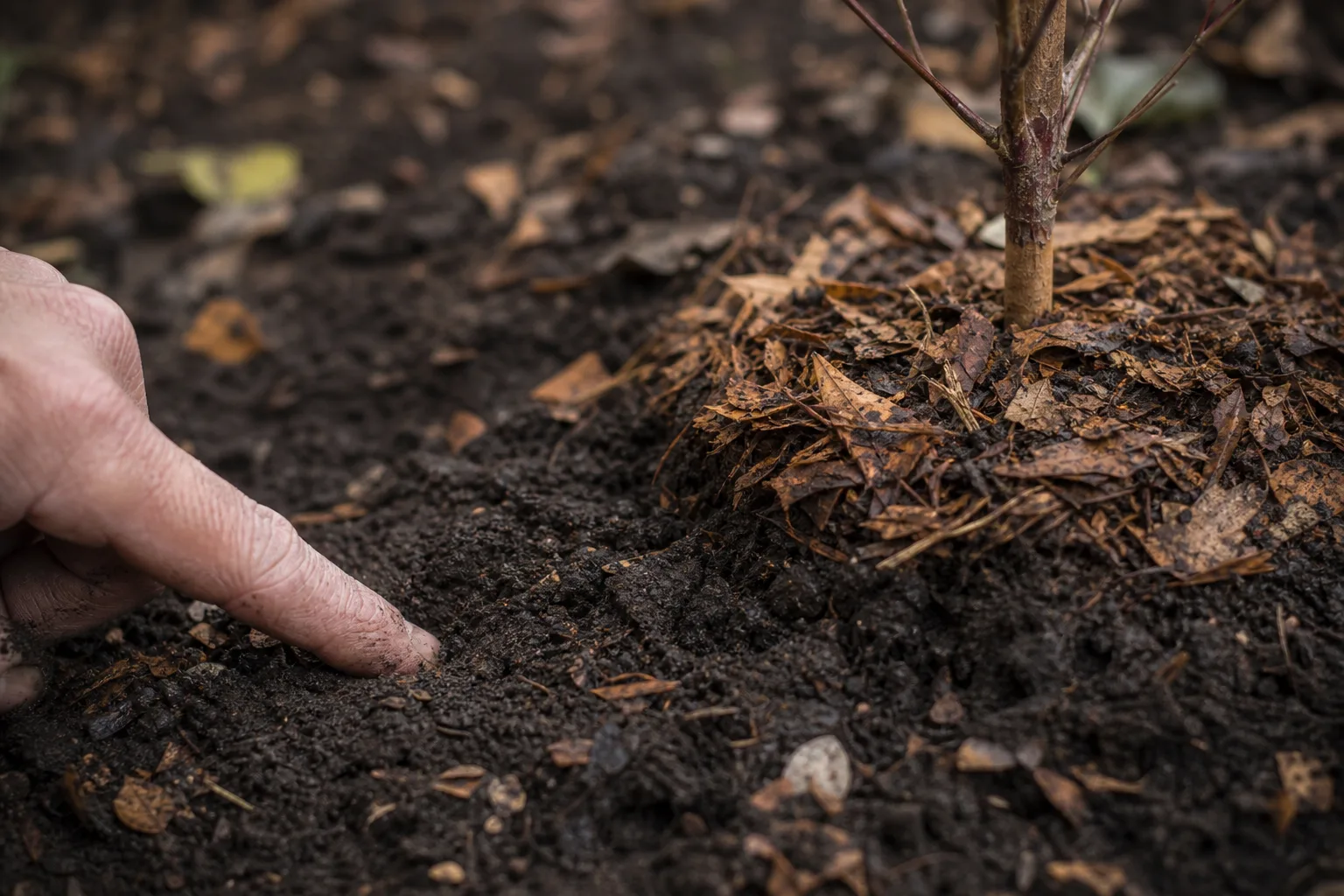
Water a new planting thoroughly once to settle the soil around its roots, then wait until the top 1 to 2 inches dries before watering again. In fall, small seedlings often need a light drink every 2 to 4 days, while larger transplants usually need a deeper soak every 5 to 7 days, adjusted for rain, wind, temperature, and soil type.
How much water does a new planting need today?
A new planting needs one slow, thorough watering at placement, enough to settle soil around the roots without washing them bare. After that first soak, do not water again until the top 1 to 2 inches feels dry; cool, damp soil means you should wait, while dry, crumbly soil means water until moisture reaches beyond the root zone.
For a small seedling, use a gentle shower and wet the soil around the planting, not just the stem. A larger transplant needs a slower soak that reaches several inches down, because a splash across the surface evaporates before the roots get a fair drink.
In Austin, I would check a new planting the next morning, then again two days later. Fall afternoons can still dry the surface quickly, but an October rain can leave black clay wet long after the top looks respectable. The soil gets a vote.
The first watering should settle air pockets. It should not turn the planting hole into a permanent puddle.
How often should you water a new plant in fall?
In a temperate garden, water small seedlings lightly every 2 to 4 days and larger transplants every 5 to 7 days, but use soil moisture as the final decision. Rain, wind, temperature, sunlight, and soil type can move that schedule by several days, so a fixed timer is less reliable than checking 1 to 2 inches below the surface.
For this fall planting, I would begin with these ranges:
| New planting | Starting fall interval | Honest downside |
|---|---|---|
| Small seedling | Every 2 to 4 days | Frequent surface watering can keep the stem and shallow roots too wet |
| Larger transplant | Every 5 to 7 days | A deep soak can stay wet too long in heavy clay |
| Container planting | Whenever the top 1 to 2 inches dries | Pots can swing from soaked to dry faster than garden soil |
That table is a starting point, not permission to water on autopilot. A windy 82-degree afternoon may dry a small container faster than a calm 65-degree week, while a shaded bed after rain may need no added water at all.
The popular rule says new plants need water every day. In practice, daily watering often makes a shallow, constantly wet pocket, especially in clay. Roots need moisture, but they also need air around them.
How can you tell whether soil is too wet or too dry?
Press a finger or small trowel 1 to 2 inches into the soil beside the planting, not directly against the stem. If it feels cool and damp, hold off; if it feels dry and crumbly, water slowly until moisture reaches a few inches beyond the root zone or drains from the container holes.
Do this in two spots if the planting is larger than a dinner plate. One side may be wet from a sprinkler while the other side sits under a roof edge and dries quickly. The surface alone lies with a straight face.
Watch how water behaves when you apply it. If water runs immediately across the soil, the surface may be crusted, compacted, or too dry to absorb quickly. Pause for a minute, then continue with a gentler flow so the water moves downward instead of carrying soil away.
If the soil stays shiny, sticky, and wet at 2 inches for several days, stop adding water and inspect drainage. Yellowing, limp growth in wet soil, or a stem base that stays damp can all be signs that the planting is being loved past the point of usefulness.
Does soil type change how often you water?
Yes, soil type changes both watering frequency and watering volume. Sandy soil drains quickly and usually needs smaller, more frequent applications, while clay holds moisture and needs less frequent, deeper watering after the top 1 to 2 inches dries; compacted clay may need several slow passes instead of one flood.
In Central Texas, this is where the shovel starts arguing. Caliche and limestone may stop a hole 8 inches down, while black clay swells when wet and shrinks when dry, moving soil around a new root ball and sometimes pulling away from its sides.
Sandy soil can lose water below the root zone before a young plant uses it. Water more slowly than you think, check again after 10 minutes, and avoid pouring a large volume all at once if it simply disappears downward.
Clay soil creates the opposite problem. A deep soak may still be sitting there four days later, especially in a low bed. If your finger finds damp soil at 2 inches, skip the scheduled watering and check again in 24 hours.
The plant database can help you check the mature size and likely site needs of a plant before you copy one watering schedule across the whole bed. Different root systems do not read the same calendar.
What is the safest way to water around new roots?
Use a watering can or hose set to a gentle shower, aiming at the soil around the root zone rather than blasting the stem or exposed surface. Apply water in a slow circle, pause when runoff begins, and resume only after the soil absorbs it so roots stay covered and the planting hole remains intact.
A strong jet can dislodge roots, expose the crown, and carve a channel that sends water away from the planting. I have fixed enough little trenches beside new plants to know that “more pressure” is not a watering strategy.
For a small planting, water a circle roughly 6 to 12 inches wide. For a larger transplant, extend that circle beyond the original root ball, because new roots will move outward into the surrounding soil rather than staying politely inside the nursery shape.
Drip irrigation can work well, especially during a long dry spell, but its trade-off is that a clogged emitter can kill a plant quietly while the timer keeps doing its job. Check emitters by hand once a week for the first month, and use a timer as a helper, not as your eyes.
A local reference point is useful here: the San Antonio Botanical Garden includes water-saving gardening in its home gardening programming, which reflects the fact that Central Texas watering has to account for limited water and sharp weather changes San Antonio Botanical Garden. The hose still needs supervision.
Should you add mulch around a new planting?
Add a light 2 to 3 centimeter layer of shredded leaves, straw, or compost to slow surface evaporation, reduce crusting, and keep moisture more even. Keep mulch away from the stem so water does not sit against it, because a wet collar can rot while the soil a few inches away looks perfectly reasonable.
Shredded leaves are useful in fall and can settle into a thin cover, but whole leaves can mat together and hold too much water at the surface. Straw sheds water better, yet it can blow into the yard and may contain seed. Compost improves the surface, but a thick layer can stay wet and smother the crown.
Use a ruler if you need to. Two centimeters is less than an inch, not a decorative mound six inches high around the stem. The mulch should look like a blanket, not a volcano.
Leave a bare ring about 2 to 3 inches wide around a small stem, and a wider ring around a larger trunk or crown. Mulch helps moisture stay steady; it does not repair a planting hole with poor drainage.
Who is this fall watering plan for, and who should ignore it?
This plan suits homeowners who planted seedlings or transplants in an ordinary bed or container and can check soil moisture every 2 to 3 days. Ignore the schedule for a saturated low spot, a container without drainage holes, or a planting with special instructions that require different moisture, because those situations need correction before routine watering.
It also suits someone standing outside in fall with a finger, a trowel, and five minutes. You do not need a moisture meter to make the first decision. Feel the soil, look at the drainage, and notice whether yesterday’s water actually moved downward.
You should not follow the same interval for every plant in a mixed bed. A seedling with a shallow root system, a large transplant, and a pot on hot concrete can all be three feet apart and need completely different checks.
If your bed is under a roof drip line, beside a downspout, or packed into heavy clay, ignore the calendar until drainage is fixed. A concept for your yard can help you plan planting zones and water access before you add another row to a wet problem.
Here is the question I ask myself on site: “Would I water this soil if the plant were not there?” If the answer is no because it is already cool and damp, I leave the hose hanging.
How should you water a new planting in a container?
A container planting should be watered until excess water appears at the drainage holes, then allowed to drain completely before it returns to its saucer or spot. Check the top 1 to 2 inches first, empty standing water from the saucer after watering, and never treat a pot without drainage holes as ready for routine care.
A pot can look dry on top while holding a wet pocket below. Push a finger down 1 to 2 inches, then lift the container if it is small enough to judge its weight. A light pot with crumbly soil needs water; a heavy pot with cool soil usually needs time.
Fill the pot slowly enough that water enters the mix instead of running down the gap between soil and container wall. If water exits immediately and the soil remains dry inside, the mix may have pulled away from the sides or become hard to rewet.
Saucers protect a patio, but standing water turns them into a shallow reservoir. Empty them after each watering. That extra minute is cheaper than replacing a plant that sat with its roots underwater for a week.
For larger containers, lift one edge only if it is safe, or use a wooden stake to test depth. Do not drill random holes through a finished pot unless you know the material will not crack. The goal is drainage, not a pottery emergency.
What are the most common questions about watering new plantings?
These short answers cover the decisions that matter this afternoon: whether to water after rain, how deep to check, how much mulch to add, and what to do if drainage is poor. Each answer starts with the action, because the plant is not waiting for a committee meeting.
How soon should I water a new plant after planting?
Water a new plant thoroughly immediately after planting so the soil settles around its roots and air pockets close. Then wait until the top 1 to 2 inches dries before watering again. In fall, check the soil after 2 days for a seedling and after 5 days for a larger transplant, adjusting for rain, wind, temperature, and soil type.
Should I water a new planting after it rains?
Check the soil before watering after rain, because rainfall may wet only the surface or may saturate the entire root zone. Press a finger or trowel 1 to 2 inches down; if the soil feels cool and damp, wait, and if it feels dry and crumbly, water slowly until moisture reaches beyond the roots.
How often should I water a new transplant in fall?
Water a new transplant about every 5 to 7 days in fall if the top 1 to 2 inches has dried, but shorten or lengthen that interval for rain, wind, heat, shade, and soil type. Small seedlings generally need checking and lighter watering every 2 to 4 days because their roots occupy less soil.
How thick should mulch be around a new plant?
Use a light mulch layer about 2 to 3 centimeters thick around a new plant, keeping it off the stem or crown. Shredded leaves, straw, or compost can reduce evaporation and crusting, but thick or wet mulch can hold water against the stem, especially in clay or during a cool, rainy fall.
Can I use a hose on a newly planted root ball?
You can use a hose on a newly planted root ball if you set it to a gentle shower and water the surrounding soil slowly. A hard stream can expose roots, wash soil away, and create channels that move water past the root zone. Pause when runoff starts, let the soil absorb it, then continue.
What should I do if water stays around a new plant?
Stop watering if water stays around a new plant or the soil remains wet at 2 inches for several days, then check for compacted clay, a blocked drainage path, or a container saucer holding water. Do not add more mulch or fertilizer to solve it. Improve drainage first, because extra water is the problem.
A horticultural guide on steady moisture makes the same larger point in a different setting: plants adapted to regular rain can suffer when drought interrupts that supply, and water needs have to match the plant and the season Plant Delights Nursery. Your new planting does not need a flood. It needs a measured drink, a pause, and another honest soil check.
Want a plan for your own yard?
Tell us the space and we will put a planting plan together for it. Start at get my concept, or browse what actually grows where you are over on plants.
Frequently asked questions
How soon should I water a new plant after planting?
Water a new plant thoroughly immediately after planting so the soil settles around its roots and air pockets close. Then wait until the top 1 to 2 inches dries before watering again. In fall, check the soil after 2 days for a seedling and after 5 days for a larger transplant, adjusting for rain, wind, temperature, and soil type.
Should I water a new planting after it rains?
Check the soil before watering after rain, because rainfall may wet only the surface or may saturate the entire root zone. Press a finger or trowel 1 to 2 inches down; if the soil feels cool and damp, wait, and if it feels dry and crumbly, water slowly until moisture reaches beyond the roots.
How often should I water a new transplant in fall?
Water a new transplant about every 5 to 7 days in fall if the top 1 to 2 inches has dried, but shorten or lengthen that interval for rain, wind, heat, shade, and soil type. Small seedlings generally need checking and lighter watering every 2 to 4 days because their roots occupy less soil.
How thick should mulch be around a new plant?
Use a light mulch layer about 2 to 3 centimeters thick around a new plant, keeping it off the stem or crown. Shredded leaves, straw, or compost can reduce evaporation and crusting, but thick or wet mulch can hold water against the stem, especially in clay or during a cool, rainy fall.
Can I use a hose on a newly planted root ball?
You can use a hose on a newly planted root ball if you set it to a gentle shower and water the surrounding soil slowly. A hard stream can expose roots, wash soil away, and create channels that move water past the root zone. Pause when runoff starts, let the soil absorb it, then continue.
What should I do if water stays around a new plant?
Stop watering if water stays around a new plant or the soil remains wet at 2 inches for several days, then check for compacted clay, a blocked drainage path, or a container saucer holding water. Do not add more mulch or fertilizer to solve it. Improve drainage first, because extra water is the problem.
Free, no obligation
Ready to design your dream landscape? Start here.
Tell us where you are and we will start a free profile for you, with plants that actually survive your climate and a real sense of what the build would cost.