
Traditional uses of Cucumbertree (Magnolia acuminata)
Explore the specific traditional medicinal uses of Cucumbertree (Magnolia acuminata) as recorded among the Cherokee, with all details drawn from documented sources. Learn what was used, how it was applied, and what gardeners should know before growing this high-water tree.
August 24, 2026
By Valeria Navarro
TL;DR: Cucumbertree (Magnolia acuminata) was traditionally used by the Cherokee for stomachaches, toothaches, sinus issues, and digestive complaints, with all uses involving the bark and recorded in 1975 by Hamel and Chiltoskey. No toxicity has been recorded, but the tree requires high water and is not noted as edible for humans.
Last updated: August 24, 2026
Cucumbertree (Magnolia acuminata) has a history of traditional medicinal use among the Cherokee, with every recorded application involving the bark. These uses were documented by Hamel and Chiltoskey in 1975, and include remedies for stomach and digestive issues, toothaches, and sinus complaints. No tradition records it as edible for people, and no toxicity has been noted.
What traditional medicinal uses of Cucumbertree were recorded among the Cherokee?
The Cherokee used the bark of Cucumbertree in several ways, including infusions for stomachache or cramps, compound medicines for 'bloody flux,' and as a remedy for toothache. These practices were recorded in detail by Hamel and Chiltoskey in 1975.
How was Cucumbertree bark used for digestive complaints?
Infusions and steambaths made from the bark were documented as remedies for indigestion, cramps, and abdominal swelling among the Cherokee. These uses were specifically recorded in Hamel and Chiltoskey's 1975 survey of Cherokee plant traditions.

Photo by Homoarborea, licensed CC0, via Wikimedia Commons.
_Meise_Nationale_Plantentuin.jpg)
What did Cherokee tradition record about Cucumbertree and toothache?
Multiple preparations of Cucumbertree bark were used for toothache, including infusions, decoctions held in the mouth, and hot infusions snuffed for sinus and dental pain. All these uses were documented by Hamel and Chiltoskey in 1975.
Was Cucumbertree ever recorded as edible or toxic?
No tradition recorded Cucumbertree as palatable or edible for humans, and no toxicity has been noted in the sources provided. The focus in every use was medicinal, not culinary.

Photo by Liné1, licensed CC BY-SA 3.0, via Wikimedia Commons.

Who should grow Cucumbertree, and who should skip it?
Cucumbertree needs a lot of water, so it suits gardeners with deep, moisture-holding soil or access to irrigation. If your yard is on shallow limestone or you garden where water is rationed by July, this tree will struggle. It's not a fit for renters, balcony gardeners, or anyone looking for an edible landscape tree.
How do the different traditional uses of Cucumbertree compare?
Here’s a side-by-side comparison of the documented Cherokee uses for Cucumbertree, all sourced from Hamel and Chiltoskey, 1975:
| Tradition | Part Used | What Was Recorded | Source |
|---|---|---|---|
| Cherokee | Bark | Infusion for stomachache or cramps | Hamel & Chiltoskey, 1975, p. 44 |
| Cherokee | Bark | Compound medicine for 'bloody flux' | Hamel & Chiltoskey, 1975, p. 44 |
| Cherokee | Bark | Infusion for toothache | Hamel & Chiltoskey, 1975, p. 44 |
| Cherokee | Bark | Used in steambath for indigestion or biliousness with swelling abdomen | Hamel & Chiltoskey, 1975, p. 44 |
| Cherokee | Bark | Hot infusion snuffed for sinus and used for toothache | Hamel & Chiltoskey, 1975, p. 44 |
| Cherokee | Bark | Warm compound decoction held in mouth for toothache | Hamel & Chiltoskey, 1975, p. 44 |
Frequently Asked Questions
What did the Cherokee use Cucumbertree (Magnolia acuminata) for?
The Cherokee used Cucumbertree bark for a range of medicinal purposes, including infusions for stomachache or cramps, compound medicines for 'bloody flux,' and various preparations for toothache and digestive complaints. All these uses were documented by Hamel and Chiltoskey in 1975.
Is Cucumbertree (Magnolia acuminata) edible or toxic?
No tradition has recorded Cucumbertree as edible or palatable for humans, and no toxicity has been reported in the documented sources. Its traditional uses focus solely on medicinal applications, not as a food plant.
How much water does Cucumbertree need?
Cucumbertree requires a high amount of water to thrive, according to the recorded growing conditions. It is best suited to areas with consistent moisture or gardeners who can provide regular irrigation, making it a challenge in drought-prone regions like Central Texas.
What part of Cucumbertree was used in traditional remedies?
All documented Cherokee uses of Cucumbertree involved the bark, which was prepared in various ways for medicinal purposes such as infusions, decoctions, and steambaths. No other plant part was recorded in these traditions.
Who should consider planting Cucumbertree in their yard?
Gardeners with deep, moisture-retentive soil or reliable irrigation are best suited for Cucumbertree. Those on shallow limestone, heavy clay that cracks, or with water restrictions should skip it, as the tree struggles without steady moisture.
Are the traditional uses of Cucumbertree supported by modern science?
The uses described here are based on documented Cherokee traditions from 1975 and have not been evaluated by modern clinical research. These records reflect ancestral knowledge, not verified medical advice.
Want this worked out for your own yard?
Dream Landscaper reads the conditions you actually have, then plans around them rather than around a generic zone chart. Start with the city plant guides to see what already thrives near you, and when you want a real layout instead of a list, get your concept and we will take it from there.
Sources
- Hamel, Paul B. and Mary U. Chiltoskey, 1975, Cherokee Plants and Their Uses -- A 400 Year History, Sylva, N.C. Herald Publishing Co., page 44
Valeria and Diego are not doctors, and nothing here is medical advice. This article shares traditional and ancestral plant wisdom that was passed down through generations. It may be beneficial when applied with your own discretion, and with medical supervision as needed.
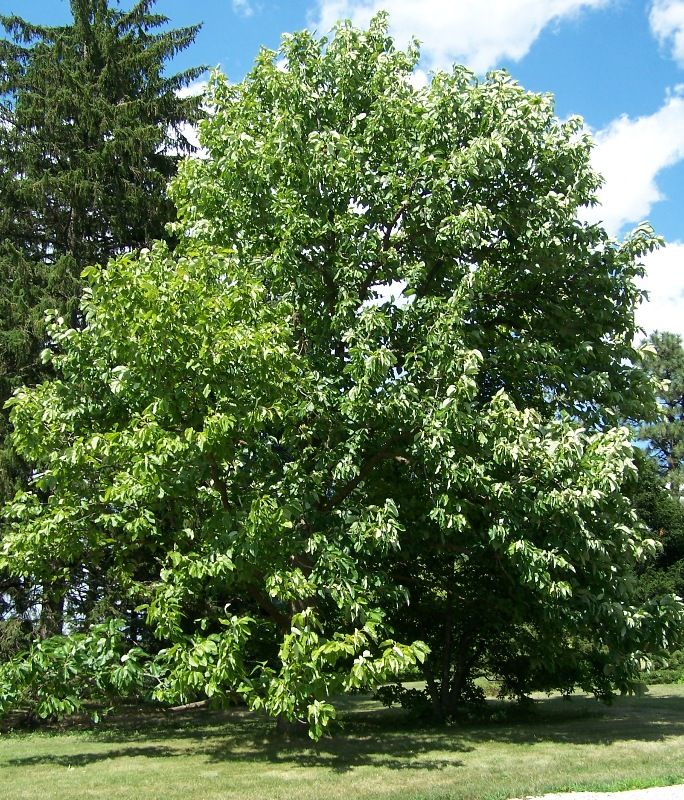
Photo of Cucumbertree (Magnolia acuminata) by Bruce Marlin, licensed CC BY 3.0, via Wikimedia Commons.


I hope this look at Cucumbertree’s history helps you decide if it belongs in your garden.
Frequently asked questions
What did the Cherokee use Cucumbertree (Magnolia acuminata) for?
The Cherokee used Cucumbertree bark for a range of medicinal purposes, including infusions for stomachache or cramps, compound medicines for 'bloody flux,' and various preparations for toothache and digestive complaints. All these uses were documented by Hamel and Chiltoskey in 1975.
Is Cucumbertree (Magnolia acuminata) edible or toxic?
No tradition has recorded Cucumbertree as edible or palatable for humans, and no toxicity has been reported in the documented sources. Its traditional uses focus solely on medicinal applications, not as a food plant.
How much water does Cucumbertree need?
Cucumbertree requires a high amount of water to thrive, according to the recorded growing conditions. It is best suited to areas with consistent moisture or gardeners who can provide regular irrigation, making it a challenge in drought-prone regions like Central Texas.
What part of Cucumbertree was used in traditional remedies?
All documented Cherokee uses of Cucumbertree involved the bark, which was prepared in various ways for medicinal purposes such as infusions, decoctions, and steambaths. No other plant part was recorded in these traditions.
Who should consider planting Cucumbertree in their yard?
Gardeners with deep, moisture-retentive soil or reliable irrigation are best suited for Cucumbertree. Those on shallow limestone, heavy clay that cracks, or with water restrictions should skip it, as the tree struggles without steady moisture.
Are the traditional uses of Cucumbertree supported by modern science?
The uses described here are based on documented Cherokee traditions from 1975 and have not been evaluated by modern clinical research. These records reflect ancestral knowledge, not verified medical advice.
Free, no obligation
Ready to design your dream landscape? Start here.
Tell us where you are and we will start a free profile for you, with plants that actually survive your climate and a real sense of what the build would cost.