
Traditional uses of Tanseyleaf Aster (Machaeranthera tanacetifolia)
Tanseyleaf Aster, a wildflower native to the American Southwest, has a long record of use in Hopi, Navajo, and Zuni traditions. This article reports the documented traditional uses, with every claim attributed to its original source.
August 23, 2026
By Diego Navarro
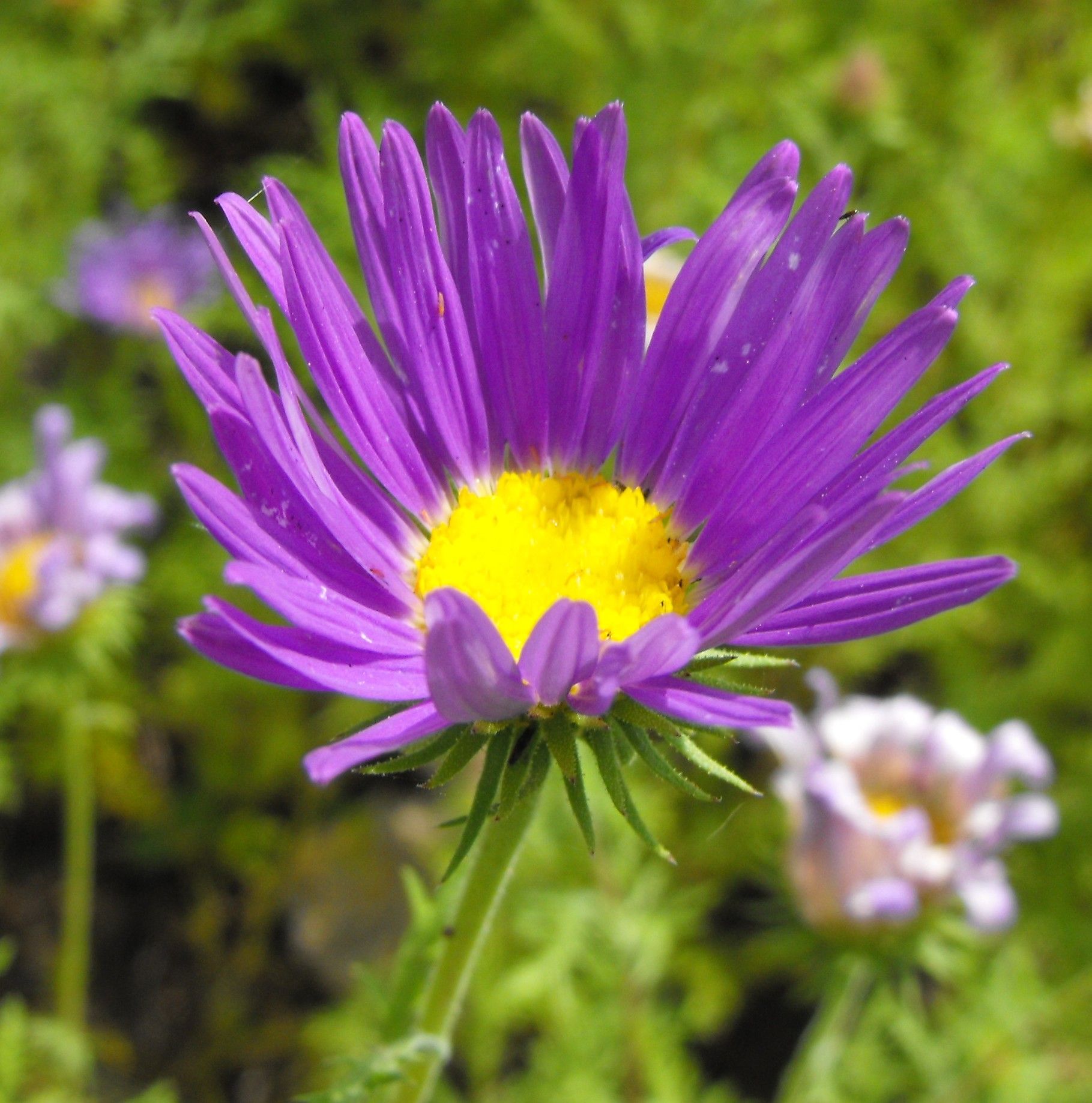
TL;DR: Tanseyleaf Aster (Machaeranthera tanacetifolia) was traditionally used by the Hopi, Navajo, and Zuni peoples for a range of purposes, including as a decoction for women in childbirth, a stimulant, and to relieve stomachache and nasal congestion. All uses are documented in 20th-century ethnobotanical sources and are not recommendations for modern use.
Last updated: August 23, 2026
What traditional uses of Tanseyleaf Aster have been recorded?
Tanseyleaf Aster was documented in several Native American traditions, with each use tied to a specific group and purpose. The Hopi used it for parturient women and as a stimulant, the Navajo for stomachache and nasal congestion, and the Zuni in flower infusions for unspecified illnesses. Each of these records comes from 20th-century ethnobotanical studies.
What did the Hopi record about Tanseyleaf Aster?
Among the Hopi, a decoction of the plant was taken by parturient women for any disorder, and another decoction was used as a strong stimulant. These uses were documented by Whiting in 1939 (Whiting, Alfred F., 1939, Ethnobotany of the Hopi, Museum of Northern Arizona Bulletin #15, page 31, 36, 94). The records do not specify preparation details or quantities.

Photo by Matt Lavin from Bozeman, Montana, USA, licensed CC BY-SA 2.0, via Wikimedia Commons.
.jpg)
How did the Navajo use Tanseyleaf Aster?
The Ramah Navajo recorded two uses: a decoction of the whole plant for stomachache, and the dried root used as snuff to cause sneezing for relief of a congested nose. Both uses were documented by Vestal in 1952 (Vestal, Paul A., 1952, The Ethnobotany of the Ramah Navaho, Papers of the Peabody Museum of American Archaeology and Ethnology 40(4):1-94, page 49).
What did the Zuni record about Tanseyleaf Aster?
Zuni tradition included an infusion of the flowers, taken with other flowers for unspecified illnesses. This use was recorded by Camazine and Bye in 1980 (Camazine, Scott and Robert A. Bye, 1980, A Study Of The Medical Ethnobotany Of The Zuni Indians of New Mexico, Journal of Ethnopharmacology 2:365-388, page 375). The details of the illnesses and the preparation were not specified.

Photo by Patrick Alexander from Las Cruces, NM, licensed CC0, via Wikimedia Commons.

Who should grow Tanseyleaf Aster and who should skip it?
Gardeners looking for a moderately drought-tolerant wildflower with a history in Southwestern landscapes may find Tanseyleaf Aster a good fit. It is not recorded as edible or palatable to humans, so skip it if you want a food crop. Households with pets do not face a recorded toxicity risk, but it is not a forage plant.
What are the trade-offs of growing Tanseyleaf Aster?
This plant handles moderate water and adapts to native soils, but it is not a showy perennial for every garden. Flowers are small and the plant can look weedy if not managed. In heavy clay that stays wet after a rain, it may rot out over winter.
How do the traditional uses compare across cultures?
| Tradition | Part Used | What Was Recorded | Source |
|---|---|---|---|
| Hopi | Unspecified | Decoction taken by parturient women for any disorder | Whiting, Alfred F., 1939, Ethnobotany of the Hopi, Museum of Northern Arizona Bulletin #15 |
| Hopi | Unspecified | Decoction taken as a strong stimulant | Whiting, Alfred F., 1939, Ethnobotany of the Hopi, Museum of Northern Arizona Bulletin #15 |
| Navajo (Ramah) | Unspecified | Decoction of whole plant taken for stomachache | Vestal, Paul A., 1952, The Ethnobotany of the Ramah Navaho |
| Navajo (Ramah) | Dried root | Used as snuff to cause sneezing, relieve congested nose | Vestal, Paul A., 1952, The Ethnobotany of the Ramah Navaho |
| Zuni | Flowers | Infusion with other flowers for unspecified illnesses | Camazine, Scott and Robert A. Bye, 1980, A Study Of The Medical Ethnobotany Of The Zuni |
Frequently Asked Questions
What traditional medicinal uses of Tanseyleaf Aster were recorded among the Hopi?
The Hopi used a decoction of Tanseyleaf Aster for parturient women experiencing any disorder and also as a strong stimulant. Both uses were documented by Alfred F. Whiting in 1939, and no details about preparation or dosage were recorded in the source.
How did the Ramah Navajo use Tanseyleaf Aster?
The Ramah Navajo used a decoction of the whole Tanseyleaf Aster plant for stomachache and the dried root as a snuff to cause sneezing and relieve a congested nose. These uses were recorded by Paul A. Vestal in 1952.
What did the Zuni tradition record about Tanseyleaf Aster?
Zuni tradition included using an infusion of Tanseyleaf Aster flowers, taken with other flowers for unspecified illnesses. This use was documented by Camazine and Bye in 1980, but the specific illnesses and preparation details were not described.
Is Tanseyleaf Aster considered toxic or edible for humans?
No toxicity or palatability to humans has been recorded for Tanseyleaf Aster. There are no documented warnings or records of the plant being used as food, so it is not considered edible or dangerous based on available sources.
Who should consider growing Tanseyleaf Aster in their garden?
Gardeners in the Southwest looking for a moderately drought-tolerant wildflower with traditional significance may consider Tanseyleaf Aster. It is not a food crop and does not have recorded toxicity, making it suitable for ornamental use but not for those seeking edible plants.
What are the main trade-offs of growing Tanseyleaf Aster?
Tanseyleaf Aster can look weedy if not managed and may rot in heavy clay soils that stay wet. Flowers are small and not showy, so it is best suited to naturalized or wildflower settings rather than formal garden beds.
Want this worked out for your own yard?
Dream Landscaper reads the conditions you actually have, then plans around them rather than around a generic zone chart. Start with the city plant guides to see what already thrives near you, and when you want a real layout instead of a list, get your concept and we will take it from there.
Sources
- Whiting, Alfred F., 1939, Ethnobotany of the Hopi, Museum of Northern Arizona Bulletin #15, page 36, 94
- Whiting, Alfred F., 1939, Ethnobotany of the Hopi, Museum of Northern Arizona Bulletin #15, page 31, 94
- Vestal, Paul A., 1952, The Ethnobotany of the Ramah Navaho, Papers of the Peabody Museum of American Archaeology and Ethnology 40(4):1-94, page 49
- Camazine, Scott and Robert A. Bye, 1980, A Study Of The Medical Ethnobotany Of The Zuni Indians of New Mexico, Journal of Ethnopharmacology 2:365-388, page 375
Valeria and Diego are not doctors, and nothing here is medical advice. This article shares traditional and ancestral plant wisdom that was passed down through generations. It may be beneficial when applied with your own discretion, and with medical supervision as needed.
Photo of Tanseyleaf Aster (Machaeranthera tanacetifolia) by Stickpen, licensed Public domain, via Wikimedia Commons.


Thanks for reading about Tanseyleaf Aster with me, I hope this helps you see the plant in a new light.
Frequently asked questions
What traditional medicinal uses of Tanseyleaf Aster were recorded among the Hopi?
The Hopi used a decoction of Tanseyleaf Aster for parturient women experiencing any disorder and also as a strong stimulant. Both uses were documented by Alfred F. Whiting in 1939, and no details about preparation or dosage were recorded in the source.
How did the Ramah Navajo use Tanseyleaf Aster?
The Ramah Navajo used a decoction of the whole Tanseyleaf Aster plant for stomachache and the dried root as a snuff to cause sneezing and relieve a congested nose. These uses were recorded by Paul A. Vestal in 1952.
What did the Zuni tradition record about Tanseyleaf Aster?
Zuni tradition included using an infusion of Tanseyleaf Aster flowers, taken with other flowers for unspecified illnesses. This use was documented by Camazine and Bye in 1980, but the specific illnesses and preparation details were not described.
Is Tanseyleaf Aster considered toxic or edible for humans?
No toxicity or palatability to humans has been recorded for Tanseyleaf Aster. There are no documented warnings or records of the plant being used as food, so it is not considered edible or dangerous based on available sources.
Who should consider growing Tanseyleaf Aster in their garden?
Gardeners in the Southwest looking for a moderately drought-tolerant wildflower with traditional significance may consider Tanseyleaf Aster. It is not a food crop and does not have recorded toxicity, making it suitable for ornamental use but not for those seeking edible plants.
What are the main trade-offs of growing Tanseyleaf Aster?
Tanseyleaf Aster can look weedy if not managed and may rot in heavy clay soils that stay wet. Flowers are small and not showy, so it is best suited to naturalized or wildflower settings rather than formal garden beds.
Free, no obligation
Ready to design your dream landscape? Start here.
Tell us where you are and we will start a free profile for you, with plants that actually survive your climate and a real sense of what the build would cost.