
Traditional uses of Western Larch (Larix occidentalis)
Explore the documented traditional uses of Western Larch (Larix occidentalis) among Native American peoples, including its roles in remedies for respiratory and joint conditions. Learn who should consider growing this low-water conifer and see how its uses compare across different traditions.
August 13, 2026
By Diego Navarro
TL;DR: Western Larch (Larix occidentalis) was traditionally used by Native American groups for respiratory conditions, joint discomfort, and wound care, with specific uses recorded among the Kutenai, Nez Perce, and Okanagan-Colville peoples. No toxicity to humans has been recorded, and the tree is not considered edible, but it has a history of medicinal and topical applications.
Last updated: August 13, 2026
What traditional uses of Western Larch were recorded among Native American peoples?
Native American traditions recorded several uses for Western Larch, mainly involving the bark, sap, and plant tops. The Kutenai used an infusion of bark for tuberculosis and gum for cuts and bruises, while the Nez Perce used bark infusions for colds and coughs and chewed the sap for sore throats. The Okanagan-Colville soaked arthritic limbs in a decoction of the plant tops (Hart, 1992; Turner et al., 1980).
How did different groups use Western Larch for respiratory issues?
Nez Perce traditions recorded the use of Western Larch bark infusions for colds and coughs, and chewing the sap for sore throats. The Kutenai also used a bark infusion for tuberculosis. These uses were documented in the early 1990s by Jeff Hart in Montana Native Plants and Early Peoples (Hart, 1992).

Photo by Chris Schnepf, University of Idaho, USA, licensed CC BY 3.0 us, via Wikimedia Commons.

Was Western Larch used for joint or muscle discomfort?
A decoction of Western Larch plant tops was used by the Okanagan-Colville to soak arthritic limbs. This specific use was recorded in British Columbia and Washington by Turner, Bouchard, and Kennedy in their 1980 ethnobotanical survey (Turner et al., 1980).
Did Western Larch play a role in wound care or skin remedies?
Gum from Western Larch was used by the Kutenai for cuts and bruises. This topical application is one of the few non-respiratory uses recorded and was documented by Jeff Hart in 1992 (Hart, 1992).

Photo by Peter Stevens from Seattle, licensed CC BY 2.0, via Wikimedia Commons.

Who should grow Western Larch and who should skip it?
Grow Western Larch if you have space for a large conifer and need a tree that gets by on low water. Skip it if you garden on heavy clay that stays wet, or if you want something edible. Renters with only a balcony or anyone looking for a tree for small yards should look elsewhere. Deer pressure is less of an issue, but space is not negotiable.
How do the traditional uses of Western Larch compare across groups?
Here’s a side-by-side look at the recorded uses:
| Tradition | Part Used | What Was Recorded | Source |
|---|---|---|---|
| Kutenai | Bark, Gum | Bark infusion for tuberculosis; gum for wounds | Hart, 1992 |
| Nez Perce | Bark, Sap | Bark infusion for colds, coughs; sap for sore throat | Hart, 1992 |
| Okanagan-Colville | Plant tops | Decoction to soak arthritic limbs | Turner et al., 1980 |
What growing conditions are recorded for Western Larch?
Western Larch is recorded as having low water requirements. No palatability to humans has been documented, and no toxicity is recorded. It’s a large conifer best suited for open spaces and soils that don’t stay soggy after a rain. If you’re planting in Central Texas, you’ll need to watch for root rot in heavy clay.
Frequently Asked Questions
What respiratory uses of Western Larch were recorded among Native Americans?
Respiratory uses of Western Larch included bark infusions for colds and coughs among the Nez Perce, sap chewed for sore throats, and a bark infusion for tuberculosis among the Kutenai. These practices were documented by Jeff Hart in 1992.
Was Western Larch used for joint pain or arthritis?
Yes, the Okanagan-Colville used a decoction of Western Larch plant tops to soak arthritic limbs. This use was recorded by Turner, Bouchard, and Kennedy in 1980 and highlights a topical application for joint discomfort.
Did Native American groups use Western Larch for skin or wound care?
The Kutenai used gum from Western Larch for cuts and bruises, as documented by Jeff Hart in 1992. This is one of the recorded topical uses of the tree among Native American groups.
Is Western Larch considered toxic or edible?
No toxicity to humans has been recorded for Western Larch, but it is not documented as being palatable or edible. Traditional uses focus on medicinal and topical applications rather than consumption.
What are the water requirements for Western Larch?
Western Larch is recorded as having low water requirements, making it suitable for areas where water conservation is important. However, it does not tolerate soils that stay wet, especially in regions with heavy clay.
Who should consider growing Western Larch?
Western Larch is best for gardeners with space for a large conifer and those who need a low-water tree. It is not suitable for small yards, renters with only a balcony, or gardens with persistently wet, heavy clay soil.
Want this worked out for your own yard?
Dream Landscaper reads the conditions you actually have, then plans around them rather than around a generic zone chart. Start with the city plant guides to see what already thrives near you, and when you want a real layout instead of a list, get your concept and we will take it from there.
Sources
- Hart, Jeff, 1992, Montana Native Plants and Early Peoples, Helena. Montana Historical Society Press, page 22
- Turner, Nancy J., R. Bouchard and Dorothy I.D. Kennedy, 1980, Ethnobotany of the Okanagan-Colville Indians of British Columbia and Washington, Victoria. British Columbia Provincial Museum, page 25
Valeria and Diego are not doctors, and nothing here is medical advice. This article shares traditional and ancestral plant wisdom that was passed down through generations. It may be beneficial when applied with your own discretion, and with medical supervision as needed.
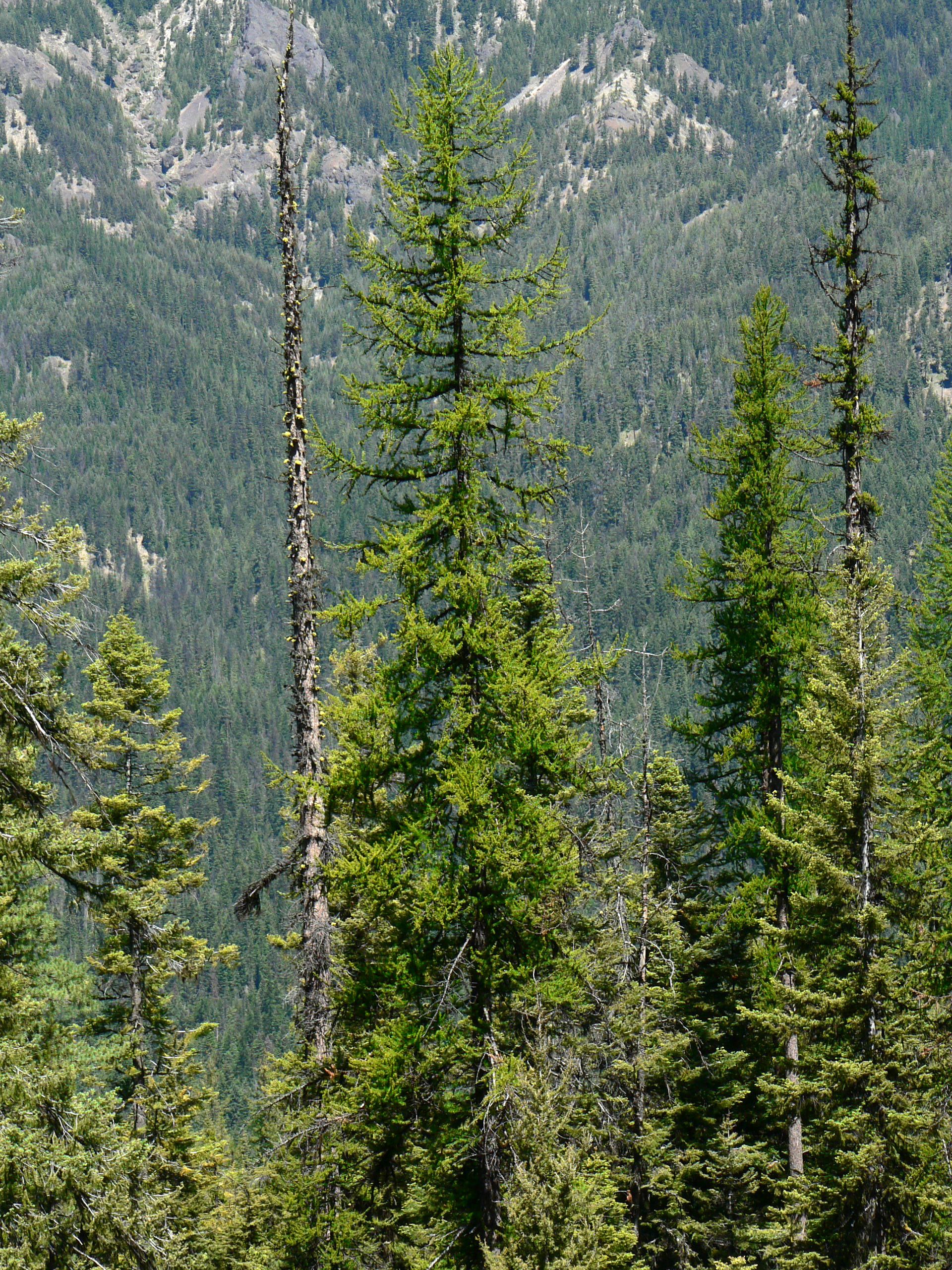
Photo of Western Larch (Larix occidentalis) by Walter Siegmund (talk), licensed CC BY 2.5, via Wikimedia Commons.


Thanks for reading about Western Larch and its history, if you’ve got the space and the soil, it’s a tree with a story worth growing.
Frequently asked questions
What respiratory uses of Western Larch were recorded among Native Americans?
Respiratory uses of Western Larch included bark infusions for colds and coughs among the Nez Perce, sap chewed for sore throats, and a bark infusion for tuberculosis among the Kutenai. These practices were documented by Jeff Hart in 1992.
Was Western Larch used for joint pain or arthritis?
Yes, the Okanagan-Colville used a decoction of Western Larch plant tops to soak arthritic limbs. This use was recorded by Turner, Bouchard, and Kennedy in 1980 and highlights a topical application for joint discomfort.
Did Native American groups use Western Larch for skin or wound care?
The Kutenai used gum from Western Larch for cuts and bruises, as documented by Jeff Hart in 1992. This is one of the recorded topical uses of the tree among Native American groups.
Is Western Larch considered toxic or edible?
No toxicity to humans has been recorded for Western Larch, but it is not documented as being palatable or edible. Traditional uses focus on medicinal and topical applications rather than consumption.
What are the water requirements for Western Larch?
Western Larch is recorded as having low water requirements, making it suitable for areas where water conservation is important. However, it does not tolerate soils that stay wet, especially in regions with heavy clay.
Who should consider growing Western Larch?
Western Larch is best for gardeners with space for a large conifer and those who need a low-water tree. It is not suitable for small yards, renters with only a balcony, or gardens with persistently wet, heavy clay soil.
Free, no obligation
Ready to design your dream landscape? Start here.
Tell us where you are and we will start a free profile for you, with plants that actually survive your climate and a real sense of what the build would cost.