
Traditional Uses of Bog Laurel (Kalmia polifolia)
Historical records describe bog laurel leaves in Gosiute, Hesquiat, and Kwakiutl traditions, including medicinal use, warnings against tea, and recorded applications for blood spitting and persistent wounds. Those accounts belong to specific communities and sources, not to modern medical guidance.
September 18, 2026
By Diego Navarro
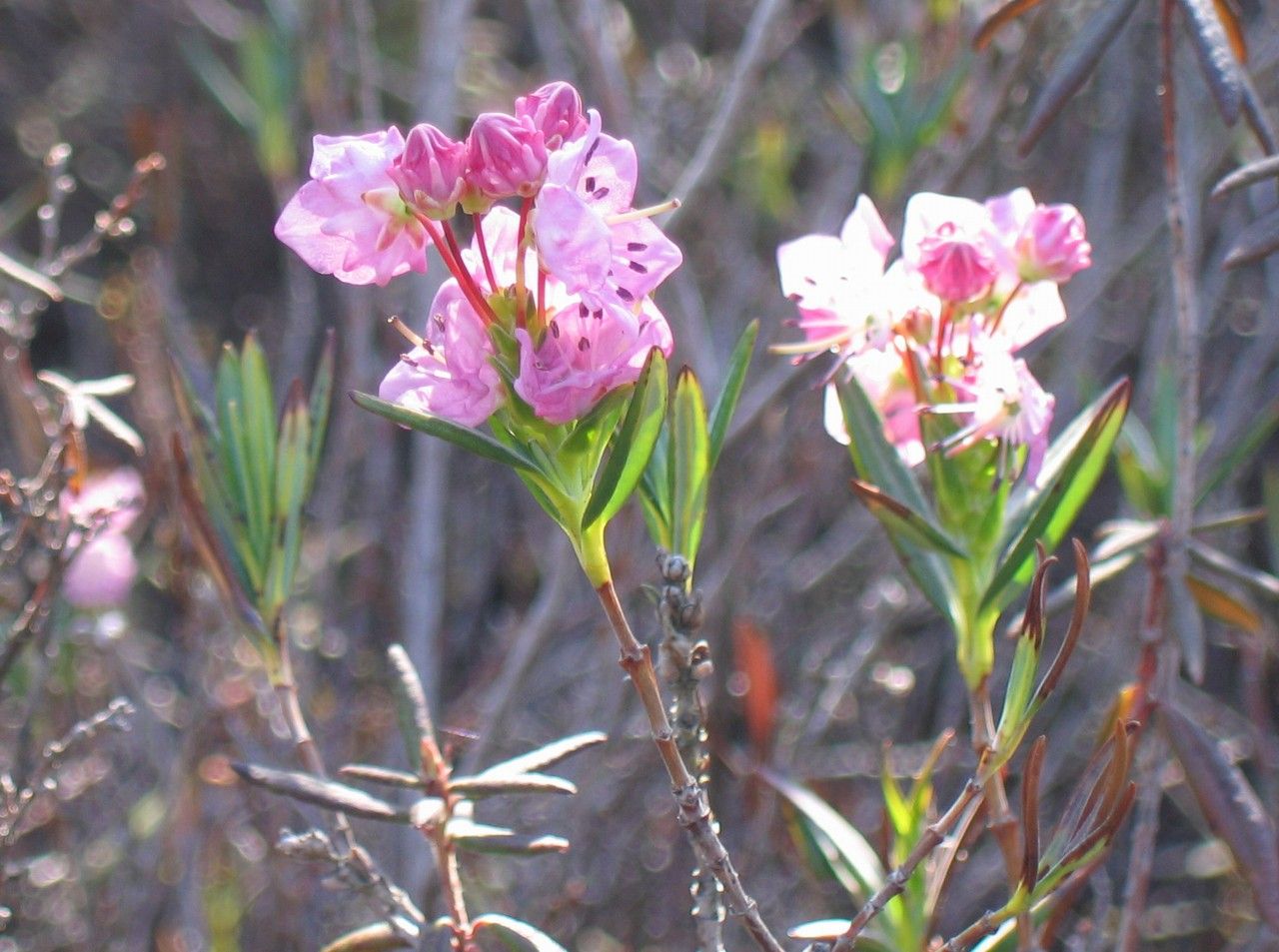
TL;DR: Bog laurel (Kalmia polifolia) appears in documented Gosiute, Hesquiat, and Kwakiutl records as a leaf medicine, with one Hesquiat warning that the leaves could be poisonous and should never make tea. Kwakiutl sources recorded leaf decoctions for spitting blood and washes for open sores or wounds that did not heal, but these are historical reports, not medical advice.
Last updated: September 18, 2026
Bog laurel (Kalmia polifolia) has documented traditional uses among the Gosiute, Hesquiat, and Kwakiutl, including leaf medicine, recorded treatments for spitting blood, and a wash for persistent sores and wounds. The Hesquiat record also says the leaves could be poisonous and should never be used to make tea, so this is a plant to study carefully, not experiment with.
What are the documented traditional uses of bog laurel?
Bog laurel was recorded as a leaf medicine among the Gosiute, as a plant whose leaves could be poisonous among the Hesquiat, and in Kwakiutl records as a source of decoctions for spitting blood and washes for open sores or wounds that did not heal. Each use comes from a named historical source, not a modern clinical study.
| Tradition | Part used | What was recorded | Source |
|---|---|---|---|
| Gosiute | Leaves | Used as medicine | Chamberlin, Ralph V., 1911, The Ethno-Botany of the Gosiute Indians of Utah, Memoirs of the American Anthropological Association 2(5):331-405., page 373 |
| Hesquiat | Leaves | Could be poisonous and should never be used to make tea | Turner, Nancy J. and Barbara S. Efrat, 1982, Ethnobotany of the Hesquiat Indians of Vancouver Island, Victoria. British Columbia Provincial Museum, page 65 |
| Kwakiutl | Leaves | Decoction taken for spitting of blood | Boas, Franz, 1966, Kwakiutl Ethnography, Chicago. University of Chicago Press, page 380 |
| Southern Kwakiutl | Leaves | Decoction taken for blood spitting | Turner, Nancy Chapman and Marcus A. M. Bell, 1973, The Ethnobotany of the Southern Kwakiutl Indians of British Columbia, Economic Botany 27:257-310, page 283 |
| Kwakiutl | Leaves | Decoction used as a wash for open sores and wounds that do not heal | Boas, Franz, 1966, Kwakiutl Ethnography, Chicago. University of Chicago Press, page 382 |
What did the Gosiute record about bog laurel?
The Gosiute record says bog laurel leaves were used as medicine, but it does not specify a condition, preparation, or exact purpose. Ralph V. Chamberlin documented that use among the Gosiute in Utah in 1911, making this a clear ethnobotanical record with limited detail rather than a broad claim about the plant.
What did the Gosiute record about bog laurel? The Gosiute record documented bog laurel leaves as medicine, without naming a particular condition or explaining a preparation. Ralph V. Chamberlin recorded this use among the Gosiute in Utah in 1911 in The Ethno-Botany of the Gosiute Indians of Utah, page 373. The account is specific about the plant part and tradition, but spare about the purpose.

Photo by Superior National Forest, licensed CC BY 2.0, via Wikimedia Commons.
.jpg)
What warning did the Hesquiat record about bog laurel?
The Hesquiat record says bog laurel leaves could be poisonous and should never be used to make tea. Nancy J. Turner and Barbara S. Efrat documented that warning among the Hesquiat of Vancouver Island in 1982, so the historical record itself argues against treating bog laurel as an ordinary household tea plant or assuming that traditional use was universal.
What warning did the Hesquiat record about bog laurel? The Hesquiat record warned that bog laurel leaves could be poisonous and should never be used to make tea. Turner and Efrat documented this among the Hesquiat of Vancouver Island in 1982 in Ethnobotany of the Hesquiat Indians of Vancouver Island, page 65. That warning stands beside, and limits, the other historical records.
What did Kwakiutl sources record using bog laurel leaves?
Kwakiutl sources recorded bog laurel leaf decoctions for spitting blood, while another entry recorded a decoction used as a wash for open sores and wounds that did not heal. Franz Boas documented both Kwakiutl uses in 1966, and Turner and Bell recorded the blood-spitting use among the Southern Kwakiutl in 1973.
What did Kwakiutl sources record using bog laurel leaves? Kwakiutl sources recorded leaf decoctions for spitting blood and a wash for open sores or wounds that did not heal. Boas documented the blood-spitting account on page 380 and the wound account on page 382 of Kwakiutl Ethnography in 1966, while Turner and Bell recorded blood spitting in 1973, page 283.

Photo by Joshua Mayer from Madison, WI, USA, licensed CC BY-SA 2.0, via Wikimedia Commons.
_(24276279950).jpg)
Who should grow bog laurel, and who should skip it?
Bog laurel suits a gardener researching documented wetland plants who can provide moderate water and does not need edible foliage, while a household seeking a tea herb should skip it because the Hesquiat record says the leaves could be poisonous. Renters with a balcony, gardeners with dry caliche, and anyone without steady moisture should also look elsewhere. The plant library has better matches.
Who should grow bog laurel, and who should skip it? Grow bog laurel if you are building a moist planting and want a plant with documented cultural history, not if you want a culinary or tea plant. Skip it for a dry balcony, heavy black clay that stays wet through a freeze, or a garden without reliable moderate water. The leaves were not recorded as palatable to humans, and the Hesquiat warning deserves respect.
How should gardeners read bog laurel’s historical record?
Gardeners should read bog laurel’s record as community-specific ethnobotany, not as proof that the plant treats a condition today. The Gosiute, Hesquiat, and Kwakiutl accounts differ in purpose and caution, and the repeated Kwakiutl entries document tradition rather than modern confirmation. For a site-specific planting plan, use get my concept, not a historical remedy as a design brief.
How should gardeners read bog laurel’s historical record? Read bog laurel’s history as documented testimony from particular communities and named researchers, not as present-day medical evidence. The records identify leaves, conditions, and warnings, but they do not establish modern safety or effectiveness. That distinction matters, especially because one source warns against making tea while other sources describe medicinal uses.
Frequently Asked Questions
What are the documented traditional uses of bog laurel?
Bog laurel was recorded as a leaf medicine among the Gosiute, as a plant whose leaves could be poisonous among the Hesquiat, and as a leaf decoction for spitting blood and a wash for persistent sores or wounds among the Kwakiutl. These are historical ethnobotanical records, not modern medical recommendations or proof of present-day safety.
What did the Gosiute record about bog laurel?
The Gosiute record documented bog laurel leaves as medicine, without naming a particular condition or explaining a preparation. Ralph V. Chamberlin recorded this use among the Gosiute in Utah in 1911 in The Ethno-Botany of the Gosiute Indians of Utah, page 373. The source gives a clear tradition and plant part, but little detail about purpose.
What warning did the Hesquiat record about bog laurel?
The Hesquiat record warned that bog laurel leaves could be poisonous and should never be used to make tea. Turner and Efrat documented this among the Hesquiat of Vancouver Island in 1982 in Ethnobotany of the Hesquiat Indians of Vancouver Island, page 65. That caution is part of the historical record and should not be softened by the other reported uses.
What did Kwakiutl sources record using bog laurel leaves?
Kwakiutl sources recorded bog laurel leaf decoctions for spitting blood and a wash for open sores or wounds that did not heal. Boas documented these accounts in Kwakiutl Ethnography in 1966, on pages 380 and 382, while Turner and Bell recorded the blood-spitting use among the Southern Kwakiutl in 1973, page 283.
Who should grow bog laurel, and who should skip it?
Grow bog laurel if you are building a moist planting and want a plant with documented cultural history, not if you want a culinary or tea plant. Skip it for a dry balcony, heavy black clay that stays wet through a freeze, or a garden without reliable moderate water. The leaves were not recorded as palatable to humans.
How should gardeners read bog laurel’s historical record?
Read bog laurel’s history as documented testimony from particular communities and named researchers, not as present-day medical evidence. The records identify leaves, conditions, and warnings, but they do not establish modern safety or effectiveness. One source warns against making tea, while others describe medicinal uses, so the accounts need to be held together rather than blended into a simple remedy claim.
Want this worked out for your own yard?
Dream Landscaper reads the conditions you actually have, then plans around them rather than around a generic zone chart. Start with the city plant guides to see what already thrives near you, and when you want a real layout instead of a list, get your concept and we will take it from there.
Sources
- Chamberlin, Ralph V., 1911, The Ethno-Botany of the Gosiute Indians of Utah, Memoirs of the American Anthropological Association 2(5):331-405., page 373
- Turner, Nancy J. and Barbara S. Efrat, 1982, Ethnobotany of the Hesquiat Indians of Vancouver Island, Victoria. British Columbia Provincial Museum, page 65
- Boas, Franz, 1966, Kwakiutl Ethnography, Chicago. University of Chicago Press, page 380
- Turner, Nancy Chapman and Marcus A. M. Bell, 1973, The Ethnobotany of the Southern Kwakiutl Indians of British Columbia, Economic Botany 27:257-310, page 283
- Boas, Franz, 1966, Kwakiutl Ethnography, Chicago. University of Chicago Press, page 382
Valeria and Diego are not doctors, and nothing here is medical advice. This article shares traditional and ancestral plant wisdom that was passed down through generations. It may be beneficial when applied with your own discretion, and with medical supervision as needed.
Photo of Bog Laurel (Kalmia polifolia) by photo by user Meggar, licensed CC BY-SA 3.0, via Wikimedia Commons.


I hope this gives you a clear, honest place to start before you put bog laurel in the ground or in anything else.
Frequently asked questions
What are the documented traditional uses of bog laurel?
Bog laurel was recorded as a leaf medicine among the Gosiute, as a plant whose leaves could be poisonous among the Hesquiat, and as a leaf decoction for spitting blood and a wash for persistent sores or wounds among the Kwakiutl. These are historical ethnobotanical records, not modern medical recommendations or proof of present-day safety.
What did the Gosiute record about bog laurel?
The Gosiute record documented bog laurel leaves as medicine, without naming a particular condition or explaining a preparation. Ralph V. Chamberlin recorded this use among the Gosiute in Utah in 1911 in *The Ethno-Botany of the Gosiute Indians of Utah*, page 373. The source gives a clear tradition and plant part, but little detail about purpose.
What warning did the Hesquiat record about bog laurel?
The Hesquiat record warned that bog laurel leaves could be poisonous and should never be used to make tea. Turner and Efrat documented this among the Hesquiat of Vancouver Island in 1982 in *Ethnobotany of the Hesquiat Indians of Vancouver Island*, page 65. That caution is part of the historical record and should not be softened by the other reported uses.
What did Kwakiutl sources record using bog laurel leaves?
Kwakiutl sources recorded bog laurel leaf decoctions for spitting blood and a wash for open sores or wounds that did not heal. Boas documented these accounts in *Kwakiutl Ethnography* in 1966, on pages 380 and 382, while Turner and Bell recorded the blood-spitting use among the Southern Kwakiutl in 1973, page 283.
Who should grow bog laurel, and who should skip it?
Grow bog laurel if you are building a moist planting and want a plant with documented cultural history, not if you want a culinary or tea plant. Skip it for a dry balcony, heavy black clay that stays wet through a freeze, or a garden without reliable moderate water. The leaves were not recorded as palatable to humans.
How should gardeners read bog laurel’s historical record?
Read bog laurel’s history as documented testimony from particular communities and named researchers, not as present-day medical evidence. The records identify leaves, conditions, and warnings, but they do not establish modern safety or effectiveness. One source warns against making tea, while others describe medicinal uses, so the accounts need to be held together rather than blended into a simple remedy claim.
Free, no obligation
Ready to design your dream landscape? Start here.
Tell us where you are and we will start a free profile for you, with plants that actually survive your climate and a real sense of what the build would cost.