
What were the traditional uses of Virginia Iris (Iris virginica)?
Cherokee records documented Virginia Iris for several traditional purposes, including a salve for ulcers, an infusion taken for the liver, and a compound root decoction associated with “yellowish urine.” Here is what the source says, what remains uncertain, and what the plant asks of a gardener in a wet or dry landscape.
October 2, 2026
By Valeria Navarro
TL;DR: Virginia Iris was documented among the Cherokee as a root-based salve for ulcers, an infusion taken for the liver, and a compound root decoction used for “yellowish urine,” according to Hamel and Chiltoskey’s 1975 record. These are historical ethnobotanical accounts, not present-day treatment claims. Virginia Iris also has a high recorded water requirement, is not recorded as palatable to humans, and has no toxicity status recorded.
Last updated: October 2, 2026
Virginia Iris was documented among the Cherokee as a compound root preparation used as a salve for ulcers, an infusion taken for the liver, and a compound root preparation associated with “yellowish urine” (Hamel and Chiltoskey, Cherokee Plants and Their Uses -- A 400 Year History, 1975, page 41). The record is historical ethnobotany, not a present-day treatment claim, and Virginia Iris has a high recorded water requirement.
What traditional uses of Virginia Iris were recorded among the Cherokee?
The Cherokee record names three uses for Virginia Iris: a salve for ulcers, an infusion taken for the liver, and a compound root decoction used for “yellowish urine” (Hamel and Chiltoskey, Cherokee Plants and Their Uses -- A 400 Year History, 1975, page 41). The source documents these traditions, but it does not establish modern medical effectiveness or safety.
The ulcer use was recorded as a compound decoction of pulverized root used as a salve among the Cherokee (Hamel and Chiltoskey, Cherokee Plants and Their Uses -- A 400 Year History, 1975, page 41). The same source recorded an infusion taken for the liver among the Cherokee (Hamel and Chiltoskey, Cherokee Plants and Their Uses -- A 400 Year History, 1975, page 41).
A third recorded use was a compound decoction of root for “yellowish urine,” with that wording preserved from the source (Hamel and Chiltoskey, Cherokee Plants and Their Uses -- A 400 Year History, 1975, page 41). I’m keeping the phrase intact rather than translating it into a modern diagnosis, because that would claim more than the record says.
What did Cherokee records say Virginia Iris was used for?
Cherokee records documented Virginia Iris as a salve for ulcers, an infusion taken for the liver, and a compound root decoction used for “yellowish urine” (Hamel and Chiltoskey, Cherokee Plants and Their Uses -- A 400 Year History, 1975, page 41). Those statements describe recorded tradition only. They do not show that Virginia Iris treats any condition today.
Who recorded the traditional uses of Virginia Iris?
Paul B. Hamel and Mary U. Chiltoskey recorded these Virginia Iris uses among the Cherokee in their 1975 book, Cherokee Plants and Their Uses -- A 400 Year History, page 41. The confidence supplied for each entry is documented, while the record identifies the tradition and region rather than offering a modern clinical assessment.
That attribution matters. The source names the Cherokee as the tradition in which the uses were recorded, and Hamel and Chiltoskey as the authors who preserved the account (Hamel and Chiltoskey, Cherokee Plants and Their Uses -- A 400 Year History, 1975, page 41). I won’t flatten that history into a generic “folk remedy” label.
How reliable is the historical record for Virginia Iris?
The supplied entries are marked documented because Hamel and Chiltoskey recorded them in a named source and on a named page (Hamel and Chiltoskey, Cherokee Plants and Their Uses -- A 400 Year History, 1975, page 41). That supports reporting what was recorded, but it does not prove the recorded uses work medically or should be repeated.

Photo by Robert H. Mohlenbrock. USDA NRCS. 1995. Northeast wetland flora: Field office guide to plant species. Northeast National Technical Center, Chester., licensed Public domain, via Wikimedia Commons.

Does Virginia Iris need a lot of water in the garden?
For garden planning, Virginia Iris is associated with a high water requirement, so a dry Austin bed is a poor match. The plant is not recorded as palatable to humans, and no toxicity status is recorded in the supplied information. That leaves a clear design trade-off: moisture, not mystery, is the cost.
In Central Texas, high water demand is not a tiny footnote. Blackland Prairie clay can crack open by August, yet hold winter moisture long enough to punish roots during a freeze. Virginia Iris belongs in a deliberately moist spot, not a bed you hope the sprinkler remembers.
For more plant profiles, you can browse Dream Landscaper’s plant library. If you’re building a planting plan around a wet area, the garden concept tool can help you think through the whole composition instead of tossing one thirsty plant into a dry border.
Is Virginia Iris a good choice for a dry Austin garden?
Virginia Iris is a poor choice for a dry Austin garden because its recorded water requirement is high. Central Texas heat, water restrictions, alkaline clay, and long stretches without rain make that a real maintenance cost. Choose a consistently moist location, or skip Virginia Iris and design around plants that fit the water already available.
Who should grow Virginia Iris, and who should skip it?
Virginia Iris suits a homeowner with a reliably wet garden area and the time or irrigation access to maintain that moisture. A renter with a balcony, a gardener working with fast-drying containers, or a household seeking edible foliage should skip it, because the plant is not recorded as palatable to humans and its water demand is high.
Grow Virginia Iris beside a dependable moisture source, where the design can support its needs without pretending Austin is Miami. Skip it in a xeric gravel bed, a neglected rental pot, or a rain-only planting scheme. I’ve killed plants by asking them to live in the wrong climate, and that lesson gets expensive fast.
Who should grow Virginia Iris in a home garden?
A homeowner with a consistently moist planting area and dependable irrigation is the best fit for Virginia Iris. Someone with a dry balcony, a rain-only yard, or a strict low-water landscape should skip it. The plant’s high recorded water requirement is the main garden trade-off, while human palatability has not been recorded.

Photo by James St. John, licensed CC BY 2.0, via Wikimedia Commons.
_(Newark%2C_Ohio%2C_USA)_1_(27196090684).jpg)
How do the documented Cherokee uses of Virginia Iris compare?
The documented Cherokee entries describe different recorded applications, but all come from the same source, region, and page. The table separates the ulcer salve, liver infusion, and “yellowish urine” use without adding modern interpretations or preparation advice (Hamel and Chiltoskey, Cherokee Plants and Their Uses -- A 400 Year History, 1975, page 41).
| Tradition | Part used | What was recorded | Source |
|---|---|---|---|
| Cherokee | Unspecified | Compound decoction of pulverized root used as a salve for ulcers | Hamel and Chiltoskey, Cherokee Plants and Their Uses -- A 400 Year History, 1975, page 41 |
| Cherokee | Unspecified | Infusion taken for the liver | Hamel and Chiltoskey, Cherokee Plants and Their Uses -- A 400 Year History, 1975, page 41 |
| Cherokee | Unspecified | Compound decoction of root used for “yellowish urine” | Hamel and Chiltoskey, Cherokee Plants and Their Uses -- A 400 Year History, 1975, page 41 |
What part of Virginia Iris was mentioned in the record?
The entries identify the root, including pulverized root, for the recorded Virginia Iris uses, while the infusion entry leaves the plant part unspecified (Hamel and Chiltoskey, Cherokee Plants and Their Uses -- A 400 Year History, 1975, page 41). The source records what was documented, not a complete botanical or medical protocol.
Is Virginia Iris edible or toxic according to the supplied record?
Virginia Iris is not recorded as palatable to humans in the supplied information, and no toxicity status is recorded. Those are separate statements, so neither should be stretched into a claim that the plant is edible or safe to consume. The historical Cherokee uses are reported with their source, not offered as home instructions.
That distinction is worth keeping plain. “Not recorded as palatable” does not mean I can label Virginia Iris poisonous, and “no toxicity status recorded” does not mean I can label it safe. For a family garden, treat the missing information as a reason not to experiment with eating it.
Is Virginia Iris safe to consume?
The supplied record does not establish that Virginia Iris is safe to consume. Virginia Iris is not recorded as palatable to humans, and no toxicity status is recorded. The historical Cherokee uses should remain attributed ethnobotanical documentation from Hamel and Chiltoskey, not instructions for consuming the plant or claims about present-day safety.
Frequently Asked Questions
What did Cherokee records say Virginia Iris was used for?
Cherokee records documented Virginia Iris as a salve for ulcers, an infusion taken for the liver, and a compound root decoction used for “yellowish urine” (Hamel and Chiltoskey, Cherokee Plants and Their Uses -- A 400 Year History, 1975, page 41). Those statements describe recorded tradition only. They do not show that Virginia Iris treats any condition today.
How reliable is the historical record for Virginia Iris?
The supplied entries are marked documented because Hamel and Chiltoskey recorded them in a named source and on a named page (Hamel and Chiltoskey, Cherokee Plants and Their Uses -- A 400 Year History, 1975, page 41). That supports reporting what was recorded, but it does not prove the recorded uses work medically or should be repeated.
Is Virginia Iris a good choice for a dry Austin garden?
Virginia Iris is a poor choice for a dry Austin garden because its recorded water requirement is high. Central Texas heat, water restrictions, alkaline clay, and long stretches without rain make that a real maintenance cost. Choose a consistently moist location, or skip Virginia Iris and design around plants that fit the water already available.
Who should grow Virginia Iris in a home garden?
A homeowner with a consistently moist planting area and dependable irrigation is the best fit for Virginia Iris. Someone with a dry balcony, a rain-only yard, or a strict low-water landscape should skip it. The plant’s high recorded water requirement is the main garden trade-off, while human palatability has not been recorded.
What part of Virginia Iris was mentioned in the record?
The entries identify the root, including pulverized root, for the recorded Virginia Iris uses, while the infusion entry leaves the plant part unspecified (Hamel and Chiltoskey, Cherokee Plants and Their Uses -- A 400 Year History, 1975, page 41). The source records what was documented, not a complete botanical or medical protocol.
Is Virginia Iris safe to consume?
The supplied record does not establish that Virginia Iris is safe to consume. Virginia Iris is not recorded as palatable to humans, and no toxicity status is recorded. The historical Cherokee uses should remain attributed ethnobotanical documentation from Hamel and Chiltoskey, not instructions for consuming the plant or claims about present-day safety.
Want this worked out for your own yard?
Dream Landscaper reads the conditions you actually have, then plans around them rather than around a generic zone chart. Start with the city plant guides to see what already thrives near you, and when you want a real layout instead of a list, get your concept and we will take it from there.
Sources
- Hamel, Paul B. and Mary U. Chiltoskey, 1975, Cherokee Plants and Their Uses -- A 400 Year History, Sylva, N.C. Herald Publishing Co., page 41
Valeria and Diego are not doctors, and nothing here is medical advice. This article shares traditional and ancestral plant wisdom that was passed down through generations. It may be beneficial when applied with your own discretion, and with medical supervision as needed.
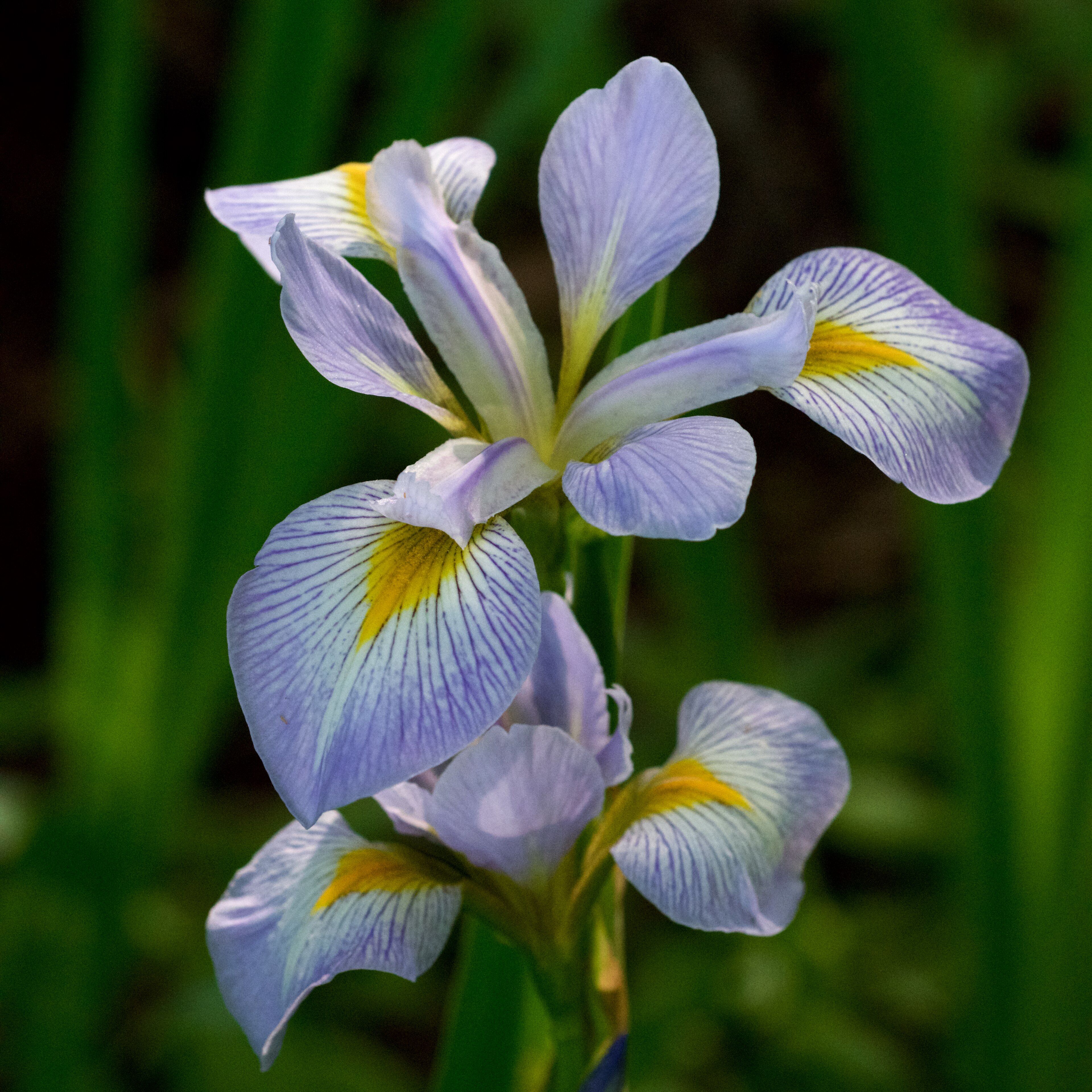
Photo of Virginia Iris (Iris virginica) by Eric Hunt, licensed CC BY-SA 4.0, via Wikimedia Commons.


I hope this helps you honor the record while choosing a Virginia Iris spot that can truly keep up with its thirst.
Frequently asked questions
What did Cherokee records say Virginia Iris was used for?
Cherokee records documented Virginia Iris as a salve for ulcers, an infusion taken for the liver, and a compound root decoction used for “yellowish urine” (Hamel and Chiltoskey, *Cherokee Plants and Their Uses -- A 400 Year History*, 1975, page 41). Those statements describe recorded tradition only. They do not show that Virginia Iris treats any condition today.
How reliable is the historical record for Virginia Iris?
The supplied entries are marked documented because Hamel and Chiltoskey recorded them in a named source and on a named page (Hamel and Chiltoskey, *Cherokee Plants and Their Uses -- A 400 Year History*, 1975, page 41). That supports reporting what was recorded, but it does not prove the recorded uses work medically or should be repeated.
Is Virginia Iris a good choice for a dry Austin garden?
Virginia Iris is a poor choice for a dry Austin garden because its recorded water requirement is high. Central Texas heat, water restrictions, alkaline clay, and long stretches without rain make that a real maintenance cost. Choose a consistently moist location, or skip Virginia Iris and design around plants that fit the water already available.
Who should grow Virginia Iris in a home garden?
A homeowner with a consistently moist planting area and dependable irrigation is the best fit for Virginia Iris. Someone with a dry balcony, a rain-only yard, or a strict low-water landscape should skip it. The plant’s high recorded water requirement is the main garden trade-off, while human palatability has not been recorded.
What part of Virginia Iris was mentioned in the record?
The entries identify the root, including pulverized root, for the recorded Virginia Iris uses, while the infusion entry leaves the plant part unspecified (Hamel and Chiltoskey, *Cherokee Plants and Their Uses -- A 400 Year History*, 1975, page 41). The source records what was documented, not a complete botanical or medical protocol.
Is Virginia Iris safe to consume?
The supplied record does not establish that Virginia Iris is safe to consume. Virginia Iris is not recorded as palatable to humans, and no toxicity status is recorded. The historical Cherokee uses should remain attributed ethnobotanical documentation from Hamel and Chiltoskey, not instructions for consuming the plant or claims about present-day safety.
Free, no obligation
Ready to design your dream landscape? Start here.
Tell us where you are and we will start a free profile for you, with plants that actually survive your climate and a real sense of what the build would cost.