
Traditional uses of Great St. Johnswort (Hypericum ascyron)
Great St. Johnswort, Hypericum ascyron, was used in documented Native American traditions, especially among the Menominee and Meskwaki. Its root was compounded for kidney troubles, weak lungs, and the early stages of consumption, and applied topically for water moccasin bites.
September 17, 2026
By Valeria Navarro
TL;DR: Great St. Johnswort (Hypericum ascyron) was traditionally used by the Menominee and Meskwaki peoples, mainly in compounds for kidney troubles, weak lungs, and the early stages of consumption, as well as topically for snakebites. These uses were recorded in the early 20th century by Huron H. Smith, but no modern medical claims are made here.
Last updated: September 17, 2026
What traditional uses of Great St. Johnswort were recorded among Native American groups?
Great St. Johnswort was documented among the Menominee and Meskwaki for several uses. The Menominee used compounds with its root for kidney troubles and weak lungs, and as a specific for the first stages of consumption. The Meskwaki used a powder of the boiled root for water moccasin bites and compounds for early consumption (Smith, 1923; Smith, 1928).
How did the Menominee use Great St. Johnswort?
The Menominee used Great St. Johnswort in compounds, often with blackcap raspberry root, for kidney troubles. They also considered the root a specific remedy for weak lungs and the first stages of consumption, which was a term for tuberculosis at the time (Smith, 1923).

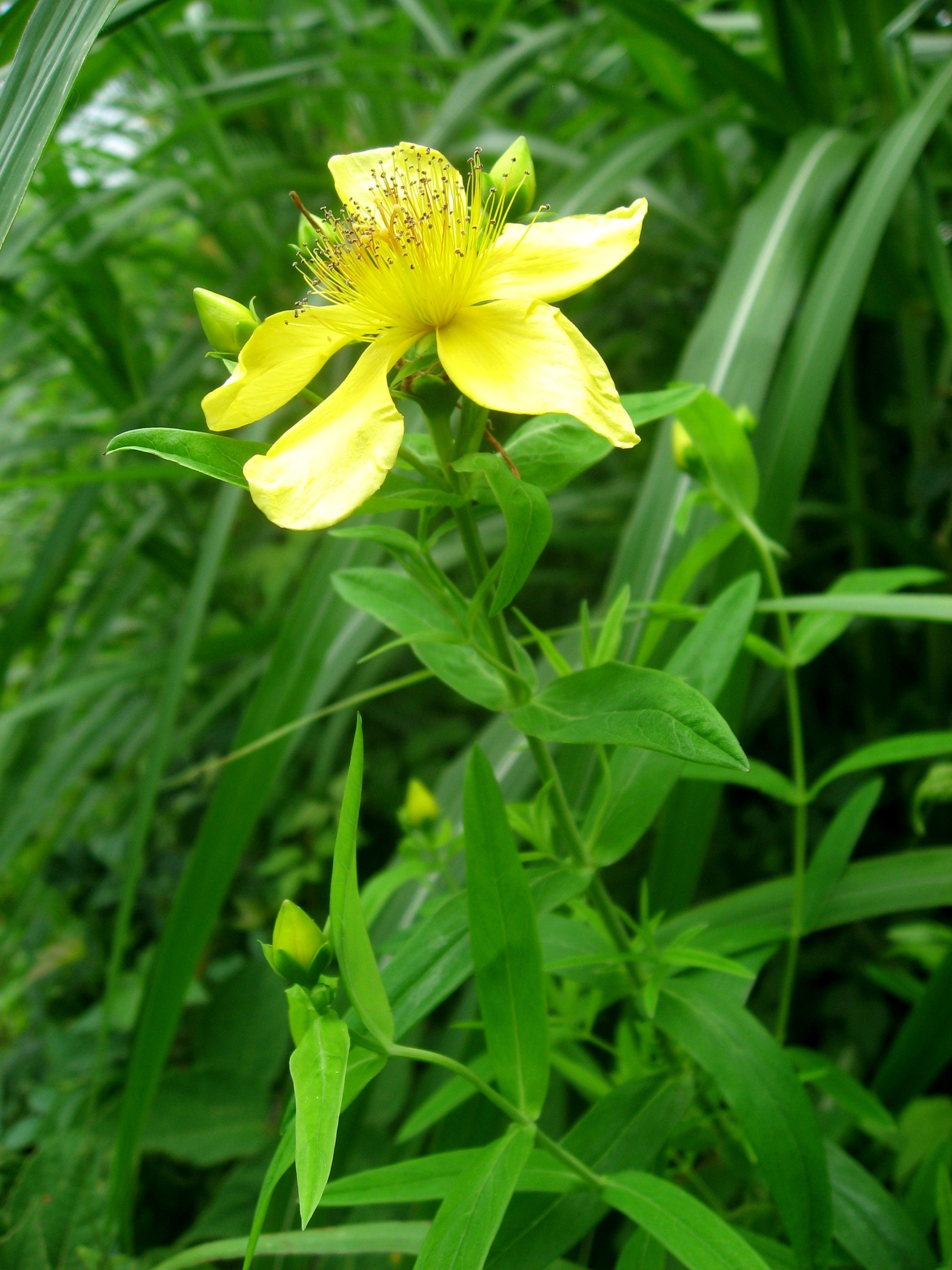
Photo by Piropiro77, licensed CC BY-SA 4.0, via Wikimedia Commons.

What did the Meskwaki record about Great St. Johnswort?
The Meskwaki applied a powder made from the boiled root to draw poison from water moccasin bites. They also used compounds containing the root for consumption in its early stages, similar to Menominee practice (Smith, 1928).
What part of Great St. Johnswort was used in these traditions?
The specific part is usually just called "root" or left unspecified in the records. Both the Menominee and Meskwaki traditions mention the root in their remedies, but do not give further details on preparation or exact plant parts (Smith, 1923; Smith, 1928).

Photo by Lumaca, licensed CC BY-SA 4.0, via Wikimedia Commons.
.jpg)
Who should grow Great St. Johnswort, and who should skip it?
Great St. Johnswort is a fit for gardeners with moderate water access and space for a perennial that is not palatable to humans. If your soil stays soggy after a rain or you only have a small balcony, skip this one. It is not a culinary herb, so it is best for those interested in native plant traditions or pollinator gardens.
How do the recorded uses of Great St. Johnswort compare across traditions?
| Tradition | Part Used | What Was Recorded | Source |
|---|---|---|---|
| Menominee | Unspecified | Compounded with blackcap raspberry root for kidney troubles | Smith, 1923 |
| Menominee | Unspecified | Compound containing root for weak lungs and as a specific for consumption | Smith, 1923 |
| Menominee | Root | Root, thought to be a 'specific,' used in first stages of consumption | Smith, 1923 |
| Meskwaki | Unspecified | Powder of boiled root applied for water moccasin bite | Smith, 1928 |
| Meskwaki | Unspecified | Compound containing root used for consumption in the first stages | Smith, 1928 |
| Menominee | Unspecified | Compounded with blackcap raspberry root for kidney troubles | Smith, 1923 |
Where can I learn more about traditional plant uses?
You can explore more traditional uses of native plants in the /plants directory, or get a custom planting concept for your space at /get-my-concept. For deeper research, see the sources listed below.
Frequently Asked Questions
What traditional remedies used Great St. Johnswort among Native Americans?
Great St. Johnswort was used by the Menominee and Meskwaki peoples in compounds for kidney troubles, weak lungs, and the early stages of consumption, and as a powder for water moccasin bites. These uses were documented by Huron H. Smith in the early 20th century.
Was Great St. Johnswort used as food or medicine?
There are no records of Great St. Johnswort being used as food. Its documented uses are medicinal, including compounds for kidney troubles, weak lungs, and topical application for snakebites, as recorded among the Menominee and Meskwaki.
What part of Great St. Johnswort was used in traditional remedies?
The root of Great St. Johnswort was most often mentioned in the records, though sometimes the part was left unspecified. Both the Menominee and Meskwaki traditions refer to the root in their uses.
Is Great St. Johnswort toxic to humans or pets?
No toxicity was recorded for Great St. Johnswort in the sources cited. There are no warnings about its safety in the ethnobotanical records from the Menominee or Meskwaki traditions.
Can I use Great St. Johnswort for the same purposes today?
This article reports historical uses only and does not recommend using Great St. Johnswort for any medical purpose today. Always consult a healthcare provider before using any plant medicinally.
What growing conditions does Great St. Johnswort need?
Great St. Johnswort was recorded as needing moderate water. It is not noted as edible for humans, so it is best grown for its traditional or ornamental value rather than as a food crop.
Want this worked out for your own yard?
Dream Landscaper reads the conditions you actually have, then plans around them rather than around a generic zone chart. Start with the city plant guides to see what already thrives near you, and when you want a real layout instead of a list, get your concept and we will take it from there.
Sources
- Smith, Huron H., 1923, Ethnobotany of the Menomini Indians, Bulletin of the Public Museum of the City of Milwaukee 4:1-174, page 37, 38
- Smith, Huron H., 1928, Ethnobotany of the Meskwaki Indians, Bulletin of the Public Museum of the City of Milwaukee 4:175-326, page 223
Valeria and Diego are not doctors, and nothing here is medical advice. This article shares traditional and ancestral plant wisdom that was passed down through generations. It may be beneficial when applied with your own discretion, and with medical supervision as needed.
Photo of Great St. Johnswort (Hypericum ascyron) by Qwert1234, licensed CC BY-SA 3.0, via Wikimedia Commons.


Thanks for exploring the history of Great St. Johnswort with me, and keep growing with curiosity.
Frequently asked questions
What traditional remedies used Great St. Johnswort among Native Americans?
Great St. Johnswort was used by the Menominee and Meskwaki peoples in compounds for kidney troubles, weak lungs, and the early stages of consumption, and as a powder for water moccasin bites. These uses were documented by Huron H. Smith in the early 20th century.
Was Great St. Johnswort used as food or medicine?
There are no records of Great St. Johnswort being used as food. Its documented uses are medicinal, including compounds for kidney troubles, weak lungs, and topical application for snakebites, as recorded among the Menominee and Meskwaki.
What part of Great St. Johnswort was used in traditional remedies?
The root of Great St. Johnswort was most often mentioned in the records, though sometimes the part was left unspecified. Both the Menominee and Meskwaki traditions refer to the root in their uses.
Is Great St. Johnswort toxic to humans or pets?
No toxicity was recorded for Great St. Johnswort in the sources cited. There are no warnings about its safety in the ethnobotanical records from the Menominee or Meskwaki traditions.
Can I use Great St. Johnswort for the same purposes today?
This article reports historical uses only and does not recommend using Great St. Johnswort for any medical purpose today. Always consult a healthcare provider before using any plant medicinally.
What growing conditions does Great St. Johnswort need?
Great St. Johnswort was recorded as needing moderate water. It is not noted as edible for humans, so it is best grown for its traditional or ornamental value rather than as a food crop.
Free, no obligation
Ready to design your dream landscape? Start here.
Tell us where you are and we will start a free profile for you, with plants that actually survive your climate and a real sense of what the build would cost.