
Traditional Uses of Atlantic Mannagrass (Glyceria obtusa)
Atlantic Mannagrass (Glyceria obtusa) was historically used by the Catawba people, who prepared an infusion of its beaten roots as a remedy for backaches. This tradition is well-documented but limited to this specific use, with no recorded evidence of toxicity or palatability to humans.
August 12, 2026
By Diego Navarro
TL;DR: Atlantic Mannagrass (Glyceria obtusa) was recorded by Linda Averill Taylor in 1940 as being used by the Catawba people, who made an infusion of the beaten roots to address backaches. No other traditional uses or toxicity have been documented, and it is not recorded as being palatable to humans.
Last updated: August 12, 2026
What traditional uses of Atlantic Mannagrass have been recorded?
Atlantic Mannagrass was documented among the Catawba people as a remedy for backaches, specifically through an infusion made from beaten roots. This record comes from Linda Averill Taylor's 1940 work and is the only documented traditional use for this plant. No other uses or edible applications have been recorded.
Who used Atlantic Mannagrass and for what purpose?
The Catawba people of the southeastern United States used Atlantic Mannagrass. They prepared an infusion from its beaten roots and took it for backaches, as recorded by Taylor in 1940. There are no other cultures or uses documented in the available sources.

Photo by Doug McGrady from Warwick, RI, USA, licensed CC BY 2.0, via Wikimedia Commons.
_(40275553025).jpg)
How confident are we in the traditional use of Atlantic Mannagrass?
The use of Atlantic Mannagrass for backaches is considered well-documented. Linda Averill Taylor’s 1940 ethnobotanical survey clearly records the Catawba tradition of using an infusion of the roots for this purpose. There is no conflicting or contested information in the record.
What growing conditions does Atlantic Mannagrass require?
Atlantic Mannagrass needs a high amount of water to thrive. This is not a drought plant, and it will not survive in soils that dry out or in areas with inconsistent moisture. It is not recorded as palatable to humans, so it is not a food crop.

Photo by Bonnie Semmling, licensed CC BY 4.0, via Wikimedia Commons.

Who should grow Atlantic Mannagrass and who should skip it?
Grow Atlantic Mannagrass if you have a wet area, such as a rain garden, pond edge, or a spot that stays soggy after storms. Skip it if your soil dries out between waterings or if you garden in heavy clay that bakes hard in summer. Renters with only a balcony or anyone looking for an edible grass should look elsewhere.
How does the Catawba use of Atlantic Mannagrass compare to other traditions?
The only documented traditional use of Atlantic Mannagrass is by the Catawba, who used an infusion of the beaten roots for backaches. No other traditions or uses are recorded in the available literature.
| Tradition | Part Used | What Was Recorded | Source |
|---|---|---|---|
| Catawba (Native American) | Beaten roots (infusion) | Remedy for backaches | Taylor, Linda Averill, 1940, Plants Used As Curatives by Certain Southeastern Tribes, Cambridge, MA. Botanical Museum of Harvard University, page 6 |
Frequently Asked Questions
What traditional use of Atlantic Mannagrass was recorded among Native Americans?
The Catawba people used an infusion of the beaten roots of Atlantic Mannagrass as a remedy for backaches, according to a 1940 record by Linda Averill Taylor. No other traditional uses have been documented.
Is Atlantic Mannagrass considered edible or palatable to humans?
Atlantic Mannagrass is not recorded as palatable to humans. There are no documented uses of this plant as a food source in the available literature.
Is there any evidence of toxicity for Atlantic Mannagrass?
No evidence of toxicity has been recorded for Atlantic Mannagrass. The available sources do not mention any toxic effects or warnings regarding this plant.
What growing conditions does Atlantic Mannagrass require?
Atlantic Mannagrass requires a high amount of water and will not thrive in dry or drought-prone soils. It is best suited for wet areas, such as rain gardens or pond edges, where the soil remains consistently moist.
Who documented the traditional use of Atlantic Mannagrass?
Linda Averill Taylor documented the traditional use of Atlantic Mannagrass in her 1940 work, 'Plants Used As Curatives by Certain Southeastern Tribes.' She specifically recorded its use among the Catawba people.
Who should consider planting Atlantic Mannagrass?
Gardeners with consistently wet areas, such as pond margins or rain gardens, should consider Atlantic Mannagrass. Those with dry soil, heavy clay that dries out, or only a balcony should skip this plant.
Want this worked out for your own yard?
Dream Landscaper reads the conditions you actually have, then plans around them rather than around a generic zone chart. Start with the city plant guides to see what already thrives near you, and when you want a real layout instead of a list, get your concept and we will take it from there.
Sources
- Taylor, Linda Averill, 1940, Plants Used As Curatives by Certain Southeastern Tribes, Cambridge, MA. Botanical Museum of Harvard University, page 6
Valeria and Diego are not doctors, and nothing here is medical advice. This article shares traditional and ancestral plant wisdom that was passed down through generations. It may be beneficial when applied with your own discretion, and with medical supervision as needed.
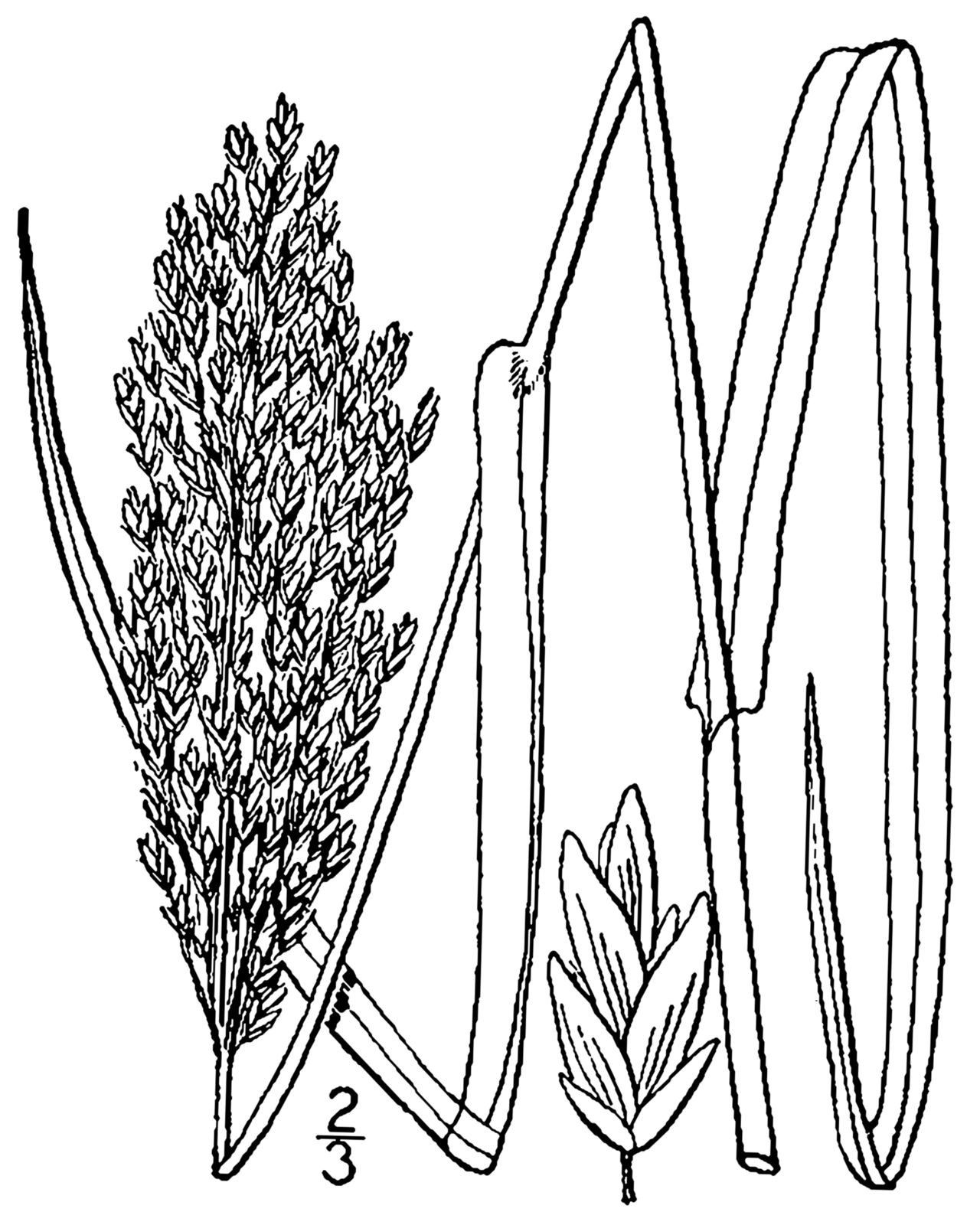
Photo of Atlantic Mannagrass (Glyceria obtusa) by Britton, N.L., and A. Brown. 1913. An illustrated flora of the northern United States, Canada and the British Possessions. 3 vols. Charles Scribner's Sons, New York. Vol. 1: 264. Courtesy of Kentucky Native Plant Society. Scanned by Omnitek Inc., licensed Public domain, via Wikimedia Commons.
_BB-1913.png)

Thanks for reading about the history and uses of Atlantic Mannagrass with me.
Frequently asked questions
What traditional use of Atlantic Mannagrass was recorded among Native Americans?
The Catawba people used an infusion of the beaten roots of Atlantic Mannagrass as a remedy for backaches, according to a 1940 record by Linda Averill Taylor. No other traditional uses have been documented.
Is Atlantic Mannagrass considered edible or palatable to humans?
Atlantic Mannagrass is not recorded as palatable to humans. There are no documented uses of this plant as a food source in the available literature.
Is there any evidence of toxicity for Atlantic Mannagrass?
No evidence of toxicity has been recorded for Atlantic Mannagrass. The available sources do not mention any toxic effects or warnings regarding this plant.
What growing conditions does Atlantic Mannagrass require?
Atlantic Mannagrass requires a high amount of water and will not thrive in dry or drought-prone soils. It is best suited for wet areas, such as rain gardens or pond edges, where the soil remains consistently moist.
Who documented the traditional use of Atlantic Mannagrass?
Linda Averill Taylor documented the traditional use of Atlantic Mannagrass in her 1940 work, 'Plants Used As Curatives by Certain Southeastern Tribes.' She specifically recorded its use among the Catawba people.
Who should consider planting Atlantic Mannagrass?
Gardeners with consistently wet areas, such as pond margins or rain gardens, should consider Atlantic Mannagrass. Those with dry soil, heavy clay that dries out, or only a balcony should skip this plant.
Free, no obligation
Ready to design your dream landscape? Start here.
Tell us where you are and we will start a free profile for you, with plants that actually survive your climate and a real sense of what the build would cost.