
Traditional uses of Philadelphia Fleabane (Erigeron philadelphicus)
Philadelphia Fleabane, a wildflower in the Asteraceae family, was used in specific Native American traditions for a range of health concerns. These uses were recorded among the Blackfoot and Cherokee peoples, with each tradition documented by ethnobotanists in the 20th century.
September 4, 2026
By Diego Navarro
TL;DR: Philadelphia Fleabane (Erigeron philadelphicus) was traditionally used by the Blackfoot and Cherokee for conditions like childbirth hemorrhage, chronic diarrhea, headaches, and suppressed menstruation. These uses were recorded in the late 20th century and reflect specific cultural practices, not modern medical advice or evidence.
Last updated: September 4, 2026
What traditional uses of Philadelphia Fleabane were recorded among Native American peoples?
The Blackfoot and Cherokee used Philadelphia Fleabane for several health concerns, including childbirth hemorrhage, chronic diarrhea, headaches, suppressed menstruation, and epilepsy. These practices were documented in the late 20th century by ethnobotanists studying traditional medicine. Each use was specific to the community and recorded in detail by researchers.
Which parts of Philadelphia Fleabane were used in these traditions?
Ethnobotanical records do not specify which part of Philadelphia Fleabane was used in these traditions. Both the Blackfoot and Cherokee accounts refer to the plant in general, without breaking down which leaves, stems, or flowers were involved. This lack of detail is typical in some historical sources.

Photo by Alpsdake, licensed CC BY-SA 3.0, via Wikimedia Commons.
.JPG)
Who should consider growing Philadelphia Fleabane, and who should skip it?
Gardeners with moderate water access and space for a native wildflower might try Philadelphia Fleabane. It is not recorded as edible or palatable to humans, so skip it if you want a culinary plant. Renters with only a balcony may find it too large, and those with heavy clay that stays wet should watch for rot.
How do the traditional uses of Philadelphia Fleabane compare between the Blackfoot and Cherokee?
The Blackfoot and Cherokee each recorded different uses for Philadelphia Fleabane, though both traditions focused on serious health concerns. The Cherokee documented more uses, including for headaches and epilepsy, while the Blackfoot focused on childbirth hemorrhage and chronic diarrhea.
| Tradition | Part Used | What Was Recorded | Source |
|---|---|---|---|
| Blackfoot | Unspecified | Plant used for childbirth hemorrhage | Johnston, Alex, 1987, Plants and the Blackfoot, Lethbridge, Alberta, page 56 |
| Blackfoot | Unspecified | Plant used for chronic diarrhea | Johnston, Alex, 1987, Plants and the Blackfoot, Lethbridge, Alberta, page 56 |
| Cherokee | Unspecified | Taken for 'suppressed menstruation' | Hamel, Paul B. and Mary U. Chiltoskey, 1975, Cherokee Plants and Their Uses, page 35 |
| Cherokee | Unspecified | Used as a poultice for headache | Hamel, Paul B. and Mary U. Chiltoskey, 1975, Cherokee Plants and Their Uses, page 35 |
| Cherokee | Unspecified | Used for hemorrhages, spitting of blood and epilepsy | Hamel, Paul B. and Mary U. Chiltoskey, 1975, Cherokee Plants and Their Uses, page 35 |

Photo by Fredlyfish4, licensed CC BY-SA 4.0, via Wikimedia Commons.

Are the traditional uses of Philadelphia Fleabane still practiced or recommended today?
No modern medical or herbal authority recommends Philadelphia Fleabane for these uses today. The records reflect what was practiced historically among the Blackfoot and Cherokee, not current medical advice. Always consult a healthcare provider for health concerns.
What are the main caveats or uncertainties in the traditional records for Philadelphia Fleabane?
The main caveat is that the specific plant parts and preparation methods were not recorded in the sources. There is also no modern evidence to support these uses, and the records do not say how widespread or effective the practices were. These are historical notes, not clinical data.
Frequently Asked Questions
What health uses did the Blackfoot record for Philadelphia Fleabane?
The Blackfoot recorded using Philadelphia Fleabane for childbirth hemorrhage and for chronic diarrhea, according to Johnston, 1987. These uses were documented as part of their traditional medicine practices.
How did the Cherokee use Philadelphia Fleabane traditionally?
Cherokee traditions recorded Philadelphia Fleabane as a remedy for suppressed menstruation, headaches (as a poultice), hemorrhages, spitting of blood, and epilepsy, as documented by Hamel and Chiltoskey, 1975.
Is Philadelphia Fleabane considered toxic to humans?
No toxicity to humans has been recorded for Philadelphia Fleabane. There is no traditional or scientific record of it being poisonous, but it is also not recorded as palatable or edible.
Can I eat Philadelphia Fleabane or use it in cooking?
Philadelphia Fleabane is not recorded as palatable or edible to humans in any tradition or modern source. It is not recommended as a culinary plant.
Are the traditional uses of Philadelphia Fleabane supported by modern science?
Modern science has not confirmed or recommended the traditional uses of Philadelphia Fleabane. The records reflect historical practices among the Blackfoot and Cherokee, not current medical advice or evidence.
What growing conditions does Philadelphia Fleabane prefer?
Philadelphia Fleabane was recorded as having moderate water requirements. It is a wildflower native to North America and may not thrive in heavy clay that stays wet or in areas with extreme drought without supplemental water.
Want this worked out for your own yard?
Dream Landscaper reads the conditions you actually have, then plans around them rather than around a generic zone chart. Start with the city plant guides to see what already thrives near you, and when you want a real layout instead of a list, get your concept and we will take it from there.
Sources
- Johnston, Alex, 1987, Plants and the Blackfoot, Lethbridge, Alberta. Lethbridge Historical Society, page 56
- Hamel, Paul B. and Mary U. Chiltoskey, 1975, Cherokee Plants and Their Uses -- A 400 Year History, Sylva, N.C. Herald Publishing Co., page 35
Valeria and Diego are not doctors, and nothing here is medical advice. This article shares traditional and ancestral plant wisdom that was passed down through generations. It may be beneficial when applied with your own discretion, and with medical supervision as needed.
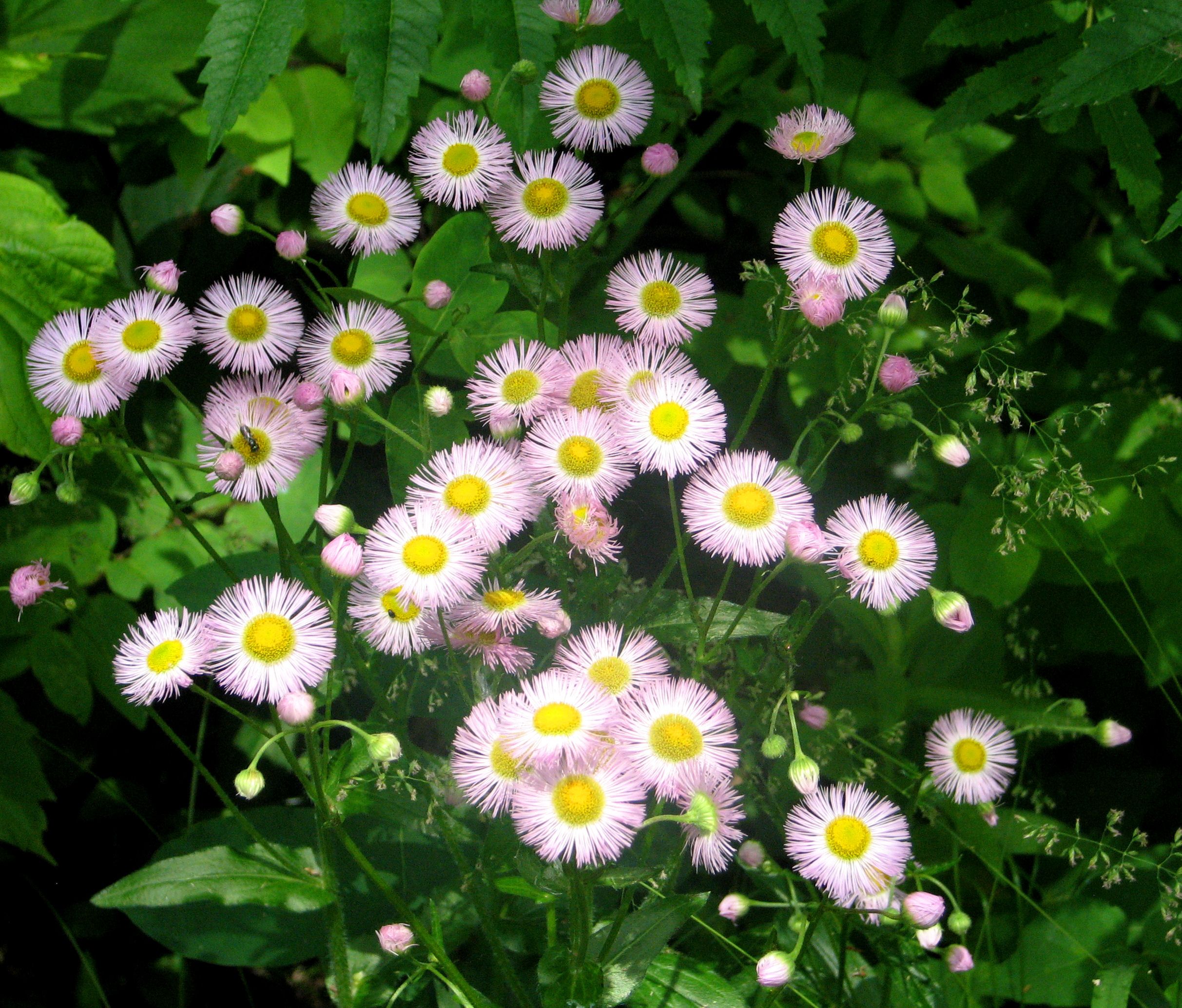
Photo of Philadelphia Fleabane (Erigeron philadelphicus) by D. Gordon E. Robertson, licensed CC BY-SA 3.0, via Wikimedia Commons.


Thanks for reading about the history and uses of Philadelphia Fleabane with me.
Frequently asked questions
What health uses did the Blackfoot record for Philadelphia Fleabane?
The Blackfoot recorded using Philadelphia Fleabane for childbirth hemorrhage and for chronic diarrhea, according to Johnston, 1987. These uses were documented as part of their traditional medicine practices.
How did the Cherokee use Philadelphia Fleabane traditionally?
Cherokee traditions recorded Philadelphia Fleabane as a remedy for suppressed menstruation, headaches (as a poultice), hemorrhages, spitting of blood, and epilepsy, as documented by Hamel and Chiltoskey, 1975.
Is Philadelphia Fleabane considered toxic to humans?
No toxicity to humans has been recorded for Philadelphia Fleabane. There is no traditional or scientific record of it being poisonous, but it is also not recorded as palatable or edible.
Can I eat Philadelphia Fleabane or use it in cooking?
Philadelphia Fleabane is not recorded as palatable or edible to humans in any tradition or modern source. It is not recommended as a culinary plant.
Are the traditional uses of Philadelphia Fleabane supported by modern science?
Modern science has not confirmed or recommended the traditional uses of Philadelphia Fleabane. The records reflect historical practices among the Blackfoot and Cherokee, not current medical advice or evidence.
What growing conditions does Philadelphia Fleabane prefer?
Philadelphia Fleabane was recorded as having moderate water requirements. It is a wildflower native to North America and may not thrive in heavy clay that stays wet or in areas with extreme drought without supplemental water.
Free, no obligation
Ready to design your dream landscape? Start here.
Tell us where you are and we will start a free profile for you, with plants that actually survive your climate and a real sense of what the build would cost.