
Traditional Uses of Northern Bush Honeysuckle (Diervilla lonicera)
Northern Bush Honeysuckle (Diervilla lonicera) was used in several Native American traditions for its leaves, bark, and roots. Documented uses include remedies for stomach pain, as a diuretic, for constipation, and as an eyewash, with records from the Chippewa, Menominee, Algonquin, and Tete-de-Boule peoples.
August 25, 2026
By Diego Navarro
TL;DR: Northern Bush Honeysuckle (Diervilla lonicera) was traditionally used by Native American groups for stomach pain, as a diuretic, for constipation, and as an eyewash. These uses were documented among the Chippewa, Menominee, Algonquin, and Tete-de-Boule peoples, with no toxicity recorded and no evidence of use as a food plant.
Last updated: August 25, 2026
What traditional uses of Northern Bush Honeysuckle have been recorded?
Northern Bush Honeysuckle was used by several Native American groups for medicinal purposes. The Chippewa used the leaves for stomach pain and the bark as an eyewash and for constipation. The Menominee used the root as a mild diuretic. The Algonquin and Tete-de-Boule used the leaves as a diuretic as well. These records come from early twentieth-century ethnobotanical studies.
Which Native American groups used Northern Bush Honeysuckle, and for what?
The Chippewa, Menominee, Algonquin, and Tete-de-Boule all recorded uses for Northern Bush Honeysuckle. The Chippewa used both leaves and bark for stomach pain, constipation, and as an eyewash. The Menominee used the root for a mild diuretic effect. The Algonquin and Tete-de-Boule also used the leaves as a diuretic.

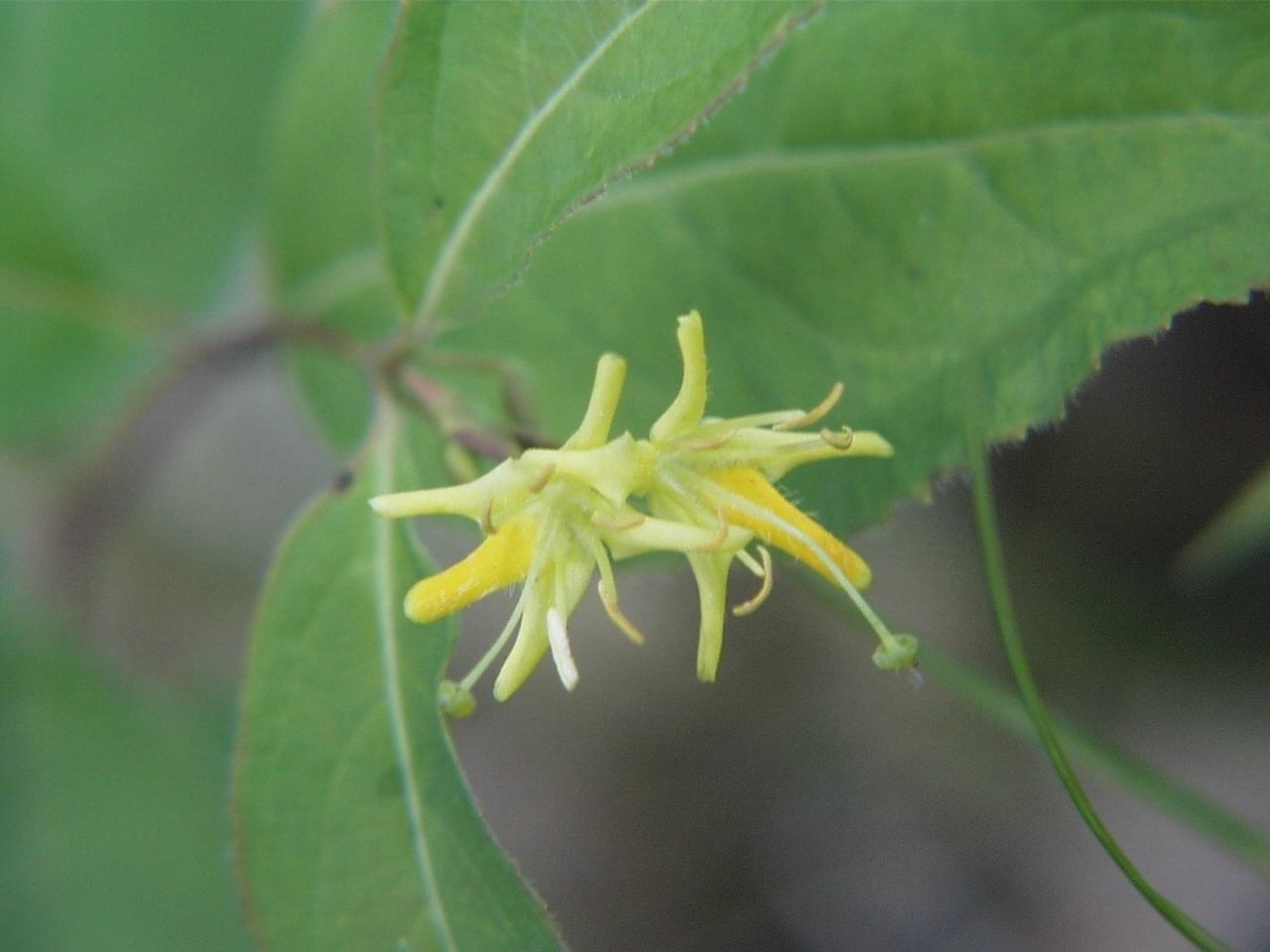
Photo by Rob Routledge, Sault College, Bugwood.org, licensed CC BY 3.0 us, via Wikimedia Commons.

What parts of Northern Bush Honeysuckle were used in these traditions?
Leaves, bark, and roots of Northern Bush Honeysuckle were all recorded as used in traditional remedies. Leaves were used for stomach pain and as a diuretic, bark was used as an eyewash and for constipation, and roots were used as a mild diuretic. These details are drawn from ethnobotanical reports from the early twentieth century.
How confident are we in these recorded uses?
All the uses listed here are documented in published ethnobotanical sources from the early twentieth century. Confidence is high because each use is attributed to a specific group and source. Where only one group recorded a use, the evidence is thinner but still documented. No uses are speculative or based on oral tradition alone.

Photo by Aaron Carlson, licensed CC BY-SA 2.0, via Wikimedia Commons.
.jpg)
Who should grow Northern Bush Honeysuckle, and who should skip it?
Northern Bush Honeysuckle works for gardeners looking for a low-water shrub that is not palatable to humans or pets. It is a good fit for people with rocky or sandy soils and those wanting a native plant with traditional significance. Skip it if you want an edible shrub or if your soil stays wet through winter, as it prefers drier ground.
How do the documented traditions compare?
| Tradition | Part Used | What Was Recorded | Source |
|---|---|---|---|
| Algonquin, Tete-de-Boule | Leaves | Used as a diuretic | Raymond, Marcel., 1945, page 128 |
| Chippewa | Leaves | Compound decoction taken for stomach pain | Densmore, Frances, 1928, page 342 |
| Chippewa | Bark | Infusion used as an eyewash | Gilmore, Melvin R., 1933, page 141 |
| Chippewa | Bark | Infusion taken for constipation | Gilmore, Melvin R., 1933, page 141 |
| Menominee | Root | Infusion taken as a mild diuretic | Smith, Huron H., 1923, page 27 |
Where can I find more information about traditional plant uses?
You can find more on native and traditional plant uses at the plants directory. For help designing a landscape that honors these traditions or fits your site, check out get my concept. Always check the original sources for historical context and accuracy.
Frequently Asked Questions
What medicinal uses of Northern Bush Honeysuckle were recorded among Native Americans?
Medicinal uses of Northern Bush Honeysuckle recorded among Native Americans include treating stomach pain, acting as a diuretic, relieving constipation, and serving as an eyewash. These uses were documented by the Chippewa, Menominee, Algonquin, and Tete-de-Boule peoples in early twentieth-century ethnobotanical studies.
Is Northern Bush Honeysuckle considered toxic?
No toxicity has been recorded for Northern Bush Honeysuckle in any of the documented sources. There are no warnings or reports of adverse effects in the ethnobotanical literature cited here.
Did any tradition use Northern Bush Honeysuckle as a food plant?
There is no record of Northern Bush Honeysuckle being used as a food plant in the traditions documented here. All recorded uses are medicinal, and the plant is not noted as palatable to humans.
Which parts of Northern Bush Honeysuckle were used in traditional remedies?
Traditional remedies used the leaves, bark, and roots of Northern Bush Honeysuckle. Leaves were used as a diuretic and for stomach pain, bark was used as an eyewash and for constipation, and roots were used as a mild diuretic.
Who documented the traditional uses of Northern Bush Honeysuckle?
The traditional uses of Northern Bush Honeysuckle were documented by Marcel Raymond, Frances Densmore, Melvin R. Gilmore, and Huron H. Smith in published ethnobotanical sources from the early twentieth century.
Is Northern Bush Honeysuckle suitable for low-water gardens?
Northern Bush Honeysuckle is suitable for low-water gardens, as its water requirement was recorded as low. It is a good fit for gardeners who want a tough, native shrub with traditional significance and do not need an edible plant.
Want this worked out for your own yard?
Dream Landscaper reads the conditions you actually have, then plans around them rather than around a generic zone chart. Start with the city plant guides to see what already thrives near you, and when you want a real layout instead of a list, get your concept and we will take it from there.
Sources
- Raymond, Marcel., 1945, Notes Ethnobotaniques Sur Les Tete-De-Boule De Manouan, Contributions de l'Institut botanique l'Universite de Montreal 55:113-134, page 128
- Densmore, Frances, 1928, Uses of Plants by the Chippewa Indians, SI-BAE Annual Report #44:273-379, page 342
- Gilmore, Melvin R., 1933, Some Chippewa Uses of Plants, Ann Arbor. University of Michigan Press, page 141
- Smith, Huron H., 1923, Ethnobotany of the Menomini Indians, Bulletin of the Public Museum of the City of Milwaukee 4:1-174, page 27
Valeria and Diego are not doctors, and nothing here is medical advice. This article shares traditional and ancestral plant wisdom that was passed down through generations. It may be beneficial when applied with your own discretion, and with medical supervision as needed.
Photo of Northern Bush Honeysuckle (Diervilla lonicera) by US Wildlife and Fish Service, Sherburne National Wildlife Refuge, licensed Public domain, via Wikimedia Commons.


If you want a native shrub with a story and a tough streak, this one will not let you down.
Frequently asked questions
What medicinal uses of Northern Bush Honeysuckle were recorded among Native Americans?
Medicinal uses of Northern Bush Honeysuckle recorded among Native Americans include treating stomach pain, acting as a diuretic, relieving constipation, and serving as an eyewash. These uses were documented by the Chippewa, Menominee, Algonquin, and Tete-de-Boule peoples in early twentieth-century ethnobotanical studies.
Is Northern Bush Honeysuckle considered toxic?
No toxicity has been recorded for Northern Bush Honeysuckle in any of the documented sources. There are no warnings or reports of adverse effects in the ethnobotanical literature cited here.
Did any tradition use Northern Bush Honeysuckle as a food plant?
There is no record of Northern Bush Honeysuckle being used as a food plant in the traditions documented here. All recorded uses are medicinal, and the plant is not noted as palatable to humans.
Which parts of Northern Bush Honeysuckle were used in traditional remedies?
Traditional remedies used the leaves, bark, and roots of Northern Bush Honeysuckle. Leaves were used as a diuretic and for stomach pain, bark was used as an eyewash and for constipation, and roots were used as a mild diuretic.
Who documented the traditional uses of Northern Bush Honeysuckle?
The traditional uses of Northern Bush Honeysuckle were documented by Marcel Raymond, Frances Densmore, Melvin R. Gilmore, and Huron H. Smith in published ethnobotanical sources from the early twentieth century.
Is Northern Bush Honeysuckle suitable for low-water gardens?
Northern Bush Honeysuckle is suitable for low-water gardens, as its water requirement was recorded as low. It is a good fit for gardeners who want a tough, native shrub with traditional significance and do not need an edible plant.
Free, no obligation
Ready to design your dream landscape? Start here.
Tell us where you are and we will start a free profile for you, with plants that actually survive your climate and a real sense of what the build would cost.