
Traditional Uses of Beaked Hazelnut (Corylus cornuta)
Beaked Hazelnut, Corylus cornuta, holds a place in Native American ethnobotany for uses ranging from sore eyes to heart troubles. Here’s what was recorded, who used it, and what gardeners should know before planting it.
August 26, 2026
By Valeria Navarro
TL;DR: Beaked Hazelnut (Corylus cornuta) was documented in Native American traditions for uses such as soothing sore eyes, addressing heart and intestinal troubles, and treating rheumatism, with each use attributed to specific groups and sources. No toxicity has been recorded, and its nuts are palatable to humans, but its traditional uses are not medical advice.
Last updated: August 26, 2026
What traditional uses of Beaked Hazelnut were recorded by Native American groups?
Beaked Hazelnut was documented for several uses among Native American groups, including remedies for sore eyes, heart troubles, intestinal disorders, and rheumatism. Each use was recorded by ethnobotanists in the mid-20th century, with sources specifying the group and preparation. These records offer a window into the plant’s place in traditional medicine.
Which parts of Beaked Hazelnut were used in these traditions?
Most sources do not specify the exact part used, but infusions and poultices were made from branches, leaves, and bark. Some preparations involved combining the bark with other plants. The lack of detail about exact parts is common in older ethnobotanical records, so caution is wise if you are curious about historical practices.

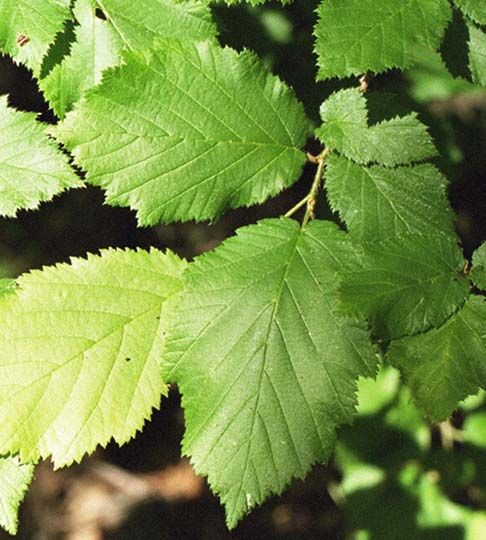
Photo by Ayotte, Gilles, 1948-, licensed CC BY-SA 4.0, via Wikimedia Commons.

How do the recorded uses compare across different Native American traditions?
Here’s a side-by-side look at the documented traditions, what part was used, and what was recorded:
| Tradition | Part Used | What Was Recorded | Source |
|---|---|---|---|
| Abnaki | Unspecified | Used for sore eyes | Rousseau, Jacques, 1947, Ethnobotanique Abenakise, Archives de Folklore 11:145-182, p. 155 |
| Algonquin, Quebec | Unspecified | Infusion of branches and leaves for intestinal disorders | Black, Meredith Jean, 1980, Algonquin Ethnobotany, Mercury Series Number 65, p. 151 |
| Algonquin, Quebec | Unspecified | Infusion of branches and leaves for heart troubles | Black, Meredith Jean, 1980, Algonquin Ethnobotany, Mercury Series Number 65, p. 151 |
| Algonquin, Tete-de-Boule | Unspecified | Infusion of branch tips for heart problems | Raymond, Marcel, 1945, Notes Ethnobotaniques Sur Les Tete-De-Boule De Manouan, p. 128 |
| Iroquois | Unspecified | Poultice of branches for rheumatism | Rousseau, Jacques, 1945, Le Folklore Botanique De L'ile Aux Coudres, p. 85 |
| Abnaki | Unspecified | Decoction of bark (with two other plants) for eye pain | Rousseau, Jacques, 1947, Ethnobotanique Abenakise, Archives de Folklore 11:145-182, p. 165 |
Who should grow Beaked Hazelnut and who should skip it?
Beaked Hazelnut works for gardeners with moderate water access and those looking for edible nuts. It is a good fit for wildlife gardens and edible landscapes. Skip it if you have heavy clay that stays soggy after storms, or if you want a plant that is totally hands-off. Renters with only a balcony will have better luck with something smaller.

Photo by Ayotte, Gilles, 1948-, licensed CC BY-SA 4.0, via Wikimedia Commons.

Is Beaked Hazelnut safe to grow and eat?
No toxicity has been recorded for Beaked Hazelnut, and its nuts are palatable to humans. That said, always check for allergies before trying any new wild food, and remember that traditional uses are not medical advice. The plant is considered safe for most gardens.
What are the trade-offs of growing Beaked Hazelnut in Central Texas?
Beaked Hazelnut needs moderate water, which can be a challenge during our long, hot Austin summers. It may struggle in heavy, alkaline clay or in areas with water restrictions. You’ll need to keep an eye on soil drainage, especially after a February freeze or a week of rain.
Where can I learn more about traditional plant uses?
You can explore more plants and their histories at the Dream Landscaper plant library. For a custom garden plan that fits your climate and soil, check out Get My Concept. Always read the sources for the full story behind each tradition.
Frequently Asked Questions
What did Native American traditions use Beaked Hazelnut for?
Native American traditions recorded uses for Beaked Hazelnut including remedies for sore eyes, heart troubles, intestinal disorders, and rheumatism. Each use was documented by ethnobotanists and attributed to specific groups such as the Abnaki, Algonquin, and Iroquois.
Is Beaked Hazelnut safe for humans and pets?
No toxicity has been recorded for Beaked Hazelnut, and its nuts are considered palatable to humans. There are no known records of harm to humans or pets, but always introduce new plants to your space with care.
Which parts of Beaked Hazelnut were used in traditional remedies?
Most records do not specify the exact part, but branches, leaves, and bark were mentioned in infusions, decoctions, and poultices. Some preparations combined the bark with other plants for specific uses.
Can I grow Beaked Hazelnut in Central Texas?
Beaked Hazelnut needs moderate water and does best in soil that drains after heavy rain. In Central Texas, you may need to amend clay soil and watch for water restrictions, especially during the summer.
Are there any trade-offs to growing Beaked Hazelnut?
The main trade-off is its moderate water requirement, which can be a challenge in areas with hot, dry summers or water restrictions. It may also struggle in heavy clay that stays wet after storms.
Where can I learn more about the traditional uses of plants?
You can find more about traditional plant uses in the Dream Landscaper plant library, and by reading the cited sources. For a garden plan suited to your space, try the Get My Concept tool.
Want this worked out for your own yard?
Dream Landscaper reads the conditions you actually have, then plans around them rather than around a generic zone chart. Start with the city plant guides to see what already thrives near you, and when you want a real layout instead of a list, get your concept and we will take it from there.
Sources
- Rousseau, Jacques, 1947, Ethnobotanique Abenakise, Archives de Folklore 11:145-182, page 155
- Black, Meredith Jean, 1980, Algonquin Ethnobotany: An Interpretation of Aboriginal Adaptation in South Western Quebec, Ottawa. National Museums of Canada. Mercury Series Number 65, page 151
- Raymond, Marcel., 1945, Notes Ethnobotaniques Sur Les Tete-De-Boule De Manouan, Contributions de l'Institut botanique l'Universite de Montreal 55:113-134, page 128
- Rousseau, Jacques, 1945, Le Folklore Botanique De L'ile Aux Coudres, Contributions de l'Institut botanique l'Universite de Montreal 55:75-111, page 85
- Rousseau, Jacques, 1947, Ethnobotanique Abenakise, Archives de Folklore 11:145-182, page 165
Valeria and Diego are not doctors, and nothing here is medical advice. This article shares traditional and ancestral plant wisdom that was passed down through generations. It may be beneficial when applied with your own discretion, and with medical supervision as needed.
Photo of Beaked Hazelnut (Corylus cornuta) by an unnamed Wikimedia contributor, licensed Public domain, via Wikimedia Commons.


If you want a native with a story and a snack, Beaked Hazelnut is worth a spot in your garden.
Frequently asked questions
What did Native American traditions use Beaked Hazelnut for?
Native American traditions recorded uses for Beaked Hazelnut including remedies for sore eyes, heart troubles, intestinal disorders, and rheumatism. Each use was documented by ethnobotanists and attributed to specific groups such as the Abnaki, Algonquin, and Iroquois.
Is Beaked Hazelnut safe for humans and pets?
No toxicity has been recorded for Beaked Hazelnut, and its nuts are considered palatable to humans. There are no known records of harm to humans or pets, but always introduce new plants to your space with care.
Which parts of Beaked Hazelnut were used in traditional remedies?
Most records do not specify the exact part, but branches, leaves, and bark were mentioned in infusions, decoctions, and poultices. Some preparations combined the bark with other plants for specific uses.
Can I grow Beaked Hazelnut in Central Texas?
Beaked Hazelnut needs moderate water and does best in soil that drains after heavy rain. In Central Texas, you may need to amend clay soil and watch for water restrictions, especially during the summer.
Are there any trade-offs to growing Beaked Hazelnut?
The main trade-off is its moderate water requirement, which can be a challenge in areas with hot, dry summers or water restrictions. It may also struggle in heavy clay that stays wet after storms.
Where can I learn more about the traditional uses of plants?
You can find more about traditional plant uses in the Dream Landscaper plant library, and by reading the cited sources. For a garden plan suited to your space, try the Get My Concept tool.
Free, no obligation
Ready to design your dream landscape? Start here.
Tell us where you are and we will start a free profile for you, with plants that actually survive your climate and a real sense of what the build would cost.