
Traditional Uses of Silky Dogwood (Cornus amomum)
Recorded uses of silky dogwood among the Iroquois focused on bark, roots, and compound decoctions for washes, emetics, laxatives, and urinary or skin complaints. It was also recorded as a high-water plant, with no toxicity recorded and no human food use recorded in the source material.
September 18, 2026
By Diego Navarro
TL;DR: Among the Iroquois, silky dogwood was recorded in 1977 by James William Herrick for bark and root preparations used as washes, emetics, laxatives, and for urinating pain, Italian itch, gonorrhea sores, and making babies sleep. The plant was also recorded as needing high water, with no palatability for humans recorded and no toxicity recorded in the source material.
Last updated: September 18, 2026
Silky dogwood, Cornus amomum, shows up in the record as a plant the Iroquois used in several bark and root preparations, and the 1977 account by James William Herrick is specific about the uses even when it leaves the exact plant part unclear. The same source records high water needs, no human food value, and no toxicity record, which is a different kind of useful when you're deciding what belongs in a wet spot and what gets left alone.
What did the Iroquois record silky dogwood for?
Among the Iroquois, silky dogwood was recorded in 1977 by James William Herrick as a plant for several distinct uses, mostly centered on bark and roots. Herrick documented washes for Italian itch and gonorrhea sores, an emetic made from bark, a laxative made from roots, a wash to make babies sleep, and a root preparation for urinating pain, all as traditional uses rather than modern recommendations.
Which plant parts were recorded as used?
The source record points to bark and roots, though not every entry names a precise part beyond that. Herrick's 1977 thesis records an infusion of bark, a decoction of bark, and compound decoctions of roots among the Iroquois, which matters because the documentation is the part we can verify, while the exact folk practice around each use is thin in places.

Photo by Robert H. Mohlenbrock @ USDA-NRCS PLANTS Database / USDA SCS. 1991. Southern wetland flora: Field office guide to plant species. South National Technical Center, Fort Worth, TX., licensed Public domain, via Wikimedia Commons.

How was silky dogwood used for skin and sores?
Herrick's 1977 account recorded silky dogwood among the Iroquois as a wash for affected parts of Italian itch and as a wash or powdered bark applied to gonorrhea sores. That is the kind of ethnobotanical note that tells you a plant had a place in household and healing practice, without pretending the record says more than it does.
What was silky dogwood used for internally?
The same 1977 Iroquois Medical Botany record by Herrick says a decoction of bark was taken as an emetic, a compound decoction of roots was taken as a laxative, and a compound decoction of roots was taken for urinating pain. These are internally used preparations as recorded in the source, and they belong to the historical record, not to a modern home remedy list.

Photo by Steve Hurst @ USDA-NRCS PLANTS Database, licensed Public domain, via Wikimedia Commons.

Who is silky dogwood for, and who should skip it?
Silky dogwood fits a low, wet place that stays wet, and the record says it has high water requirement, so a homeowner with a ditch line, swale, rain garden, or pond edge is the kind of person looking at the right plant. Skip it if you're hoping for something edible, because no human palatability was recorded, and skip it if your site is dry gravel over caliche, because that ground will make a liar out of the tag before August is done.
Is silky dogwood known as edible or toxic?
No human palatability was recorded for silky dogwood in the material you gave me, so I wouldn't treat it as a food plant from this source. No toxicity was recorded either, and that is the whole honest answer here, no more and no less.
How should a home gardener read this plant's record?
A home gardener should read silky dogwood as a moisture-loving native with a documented Indigenous medicinal record, not as a kitchen plant or a casual cure. If you're building a wet corner on purpose, that high water note is the useful one; if you're on a site with black clay that shifts and then cracks open, the bigger lesson is still drainage and placement, because a plant can be traditional and still hate the wrong hole.
| tradition | part used | what was recorded | source |
|---|---|---|---|
| Native American, Iroquois | unspecified | Complex compound decoction used as wash for affected parts of Italian itch. | Herrick, James William, 1977, Iroquois Medical Botany, State University of New York, Albany, PhD Thesis, page 403 |
| Native American, Iroquois | unspecified | Infusion of bark used as wash or powdered bark applied to gonorrhea sores. | Herrick, James William, 1977, Iroquois Medical Botany, State University of New York, Albany, PhD Thesis, page 402 |
| Native American, Iroquois | unspecified | Decoction of bark taken as an emetic. | Herrick, James William, 1977, Iroquois Medical Botany, State University of New York, Albany, PhD Thesis, page 403 |
| Native American, Iroquois | unspecified | Compound decoction of roots taken as a laxative. | Herrick, James William, 1977, Iroquois Medical Botany, State University of New York, Albany, PhD Thesis, page 402 |
| Native American, Iroquois | unspecified | Infusion of bark used as wash to make babies sleep. | Herrick, James William, 1977, Iroquois Medical Botany, State University of New York, Albany, PhD Thesis, page 402 |
| Native American, Iroquois | unspecified | Compound decoction of roots taken for urinating pain. | Herrick, James William, 1977, Iroquois Medical Botany, State University of New York, Albany, PhD Thesis, page 402 |
Frequently Asked Questions
What did the Iroquois record silky dogwood for?
The Iroquois, as recorded by James William Herrick in 1977, used silky dogwood in several bark and root preparations. Herrick documented it for Italian itch, gonorrhea sores, an emetic use, a laxative use, a wash to make babies sleep, and urinating pain.
Which parts of silky dogwood were used in the record?
Bark and roots were the plant parts recorded in Herrick's 1977 thesis, although some entries stay broad and say only 'unspecified.' That kind of record is common in ethnobotany, and it means we can name the tradition and use with confidence, even if every exact household practice was not written down.
Was silky dogwood recorded as edible?
No human palatability was recorded for silky dogwood in the source material you provided. That means there is no basis here for calling it an edible plant, and I would leave it in the ornamental and ethnobotanical lane unless a better source says otherwise.
Was silky dogwood recorded as toxic?
No toxicity was recorded for silky dogwood in the source material you provided. That is not the same as proving safety, it just means the record you gave me does not include a toxicity warning, and I should not invent one.
Does silky dogwood need a wet site?
Yes, the record you gave says silky dogwood has a high water requirement. In a home landscape, that points it toward rain gardens, stream edges, and other spots that stay moist, not toward a dry bed over caliche or a gravel strip that bakes hard by July.
Should a homeowner grow silky dogwood for medicine?
A homeowner should not treat silky dogwood as a self-prescribed medicine cabinet plant. The record is historical and traditional, tied to the Iroquois and documented by Herrick in 1977, and it belongs in the category of cultural knowledge rather than modern medical direction.
Want this worked out for your own yard?
Dream Landscaper reads the conditions you actually have, then plans around them rather than around a generic zone chart. Start with the city plant guides to see what already thrives near you, and when you want a real layout instead of a list, get your concept and we will take it from there.
Sources
- Herrick, James William, 1977, Iroquois Medical Botany, State University of New York, Albany, PhD Thesis, page 403
- Herrick, James William, 1977, Iroquois Medical Botany, State University of New York, Albany, PhD Thesis, page 402
Valeria and Diego are not doctors, and nothing here is medical advice. This article shares traditional and ancestral plant wisdom that was passed down through generations. It may be beneficial when applied with your own discretion, and with medical supervision as needed.
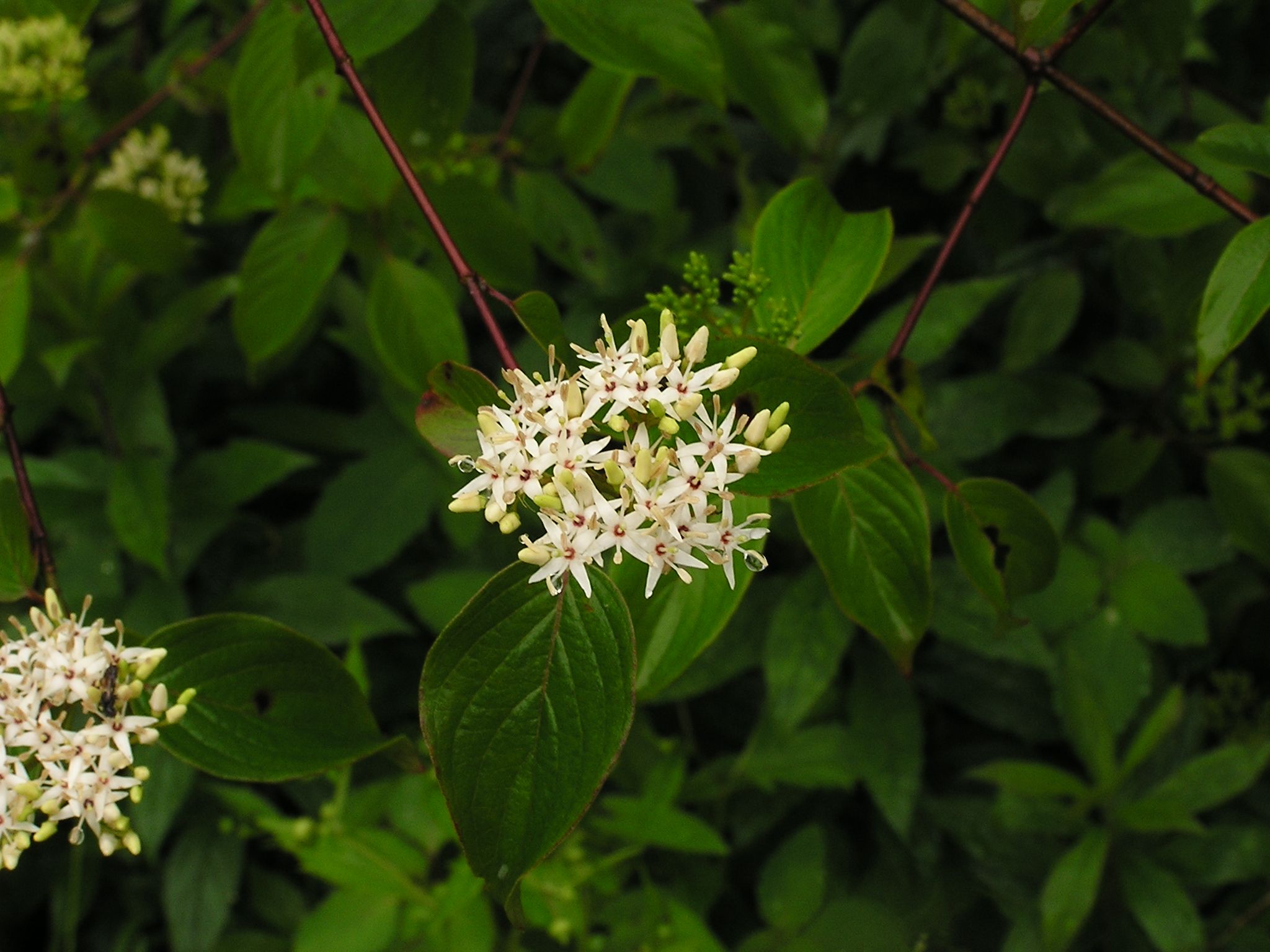
Photo of Silky Dogwood (Cornus amomum) by User:SB_Johnny, licensed CC BY-SA 3.0, via Wikimedia Commons.


I’d plant silky dogwood where the water hangs around and leave the dry, angry spots to something tougher.
Frequently asked questions
What did the Iroquois record silky dogwood for?
The Iroquois, as recorded by James William Herrick in 1977, used silky dogwood in several bark and root preparations. Herrick documented it for Italian itch, gonorrhea sores, an emetic use, a laxative use, a wash to make babies sleep, and urinating pain.
Which parts of silky dogwood were used in the record?
Bark and roots were the plant parts recorded in Herrick's 1977 thesis, although some entries stay broad and say only 'unspecified.' That kind of record is common in ethnobotany, and it means we can name the tradition and use with confidence, even if every exact household practice was not written down.
Was silky dogwood recorded as edible?
No human palatability was recorded for silky dogwood in the source material you provided. That means there is no basis here for calling it an edible plant, and I would leave it in the ornamental and ethnobotanical lane unless a better source says otherwise.
Was silky dogwood recorded as toxic?
No toxicity was recorded for silky dogwood in the source material you provided. That is not the same as proving safety, it just means the record you gave me does not include a toxicity warning, and I should not invent one.
Does silky dogwood need a wet site?
Yes, the record you gave says silky dogwood has a high water requirement. In a home landscape, that points it toward rain gardens, stream edges, and other spots that stay moist, not toward a dry bed over caliche or a gravel strip that bakes hard by July.
Should a homeowner grow silky dogwood for medicine?
A homeowner should not treat silky dogwood as a self-prescribed medicine cabinet plant. The record is historical and traditional, tied to the Iroquois and documented by Herrick in 1977, and it belongs in the category of cultural knowledge rather than modern medical direction.
Free, no obligation
Ready to design your dream landscape? Start here.
Tell us where you are and we will start a free profile for you, with plants that actually survive your climate and a real sense of what the build would cost.