
Traditional Uses of Coconut Palm (Cocos nucifera)
Explore the recorded traditional uses of the Coconut Palm among Hawaiian healers, including remedies for swollen wombs, deep cuts, and general debility. All uses are documented in early twentieth-century sources.
August 12, 2026
By Diego Navarro
TL;DR: The Coconut Palm (Cocos nucifera) was recorded among Hawaiian healers for several traditional remedies, including burning fruit shells for swollen wombs, using young shoots for deep cuts, and applying coconut oil as a rub. These uses were documented by Akaiko Akana in 1922, with no toxicity recorded and a low water requirement for the plant.
Last updated: August 12, 2026
What traditional uses of Coconut Palm were recorded among Hawaiian healers?
Coconut Palm was documented among Hawaiian healers for burning fruit shells and using the smoke for swollen wombs, applying young shoots to deep cuts, rubbing young meat on the head, using dried meat ash for general debility, and applying coconut oil as a rub. These were all recorded by Akaiko Akana in 1922.
How did Hawaiian healers use different parts of the Coconut Palm?
Different parts of the Coconut Palm were used for distinct remedies: fruit shells were burned for their smoke, young shoots were applied to wounds, young meat was used as a rub for the brain, dried meat ash was used for body weakness, and oil was applied as a general rub. All these practices are documented in Akana's 1922 text.
| Tradition | Part Used | What Was Recorded | Source |
|---|---|---|---|
| Native American | Fruit shells | Burned, smoke used for swollen wombs | Akana, Akaiko, 1922, Hawaiian Herbs of Medicinal Value, Honolulu: Pacific Book House, p.73 |
| Native American | Young shoots | Used for deep cuts | Akana, Akaiko, 1922, Hawaiian Herbs of Medicinal Value, Honolulu: Pacific Book House, p.73 |
| Native American | Young meat | Applied as a rub for the brain | Akana, Akaiko, 1922, Hawaiian Herbs of Medicinal Value, Honolulu: Pacific Book House, p.73 |
| Native American | Dried meat ash | Used for general debility of the body | Akana, Akaiko, 1922, Hawaiian Herbs of Medicinal Value, Honolulu: Pacific Book House, p.73 |
| Native American | Oil | Used as a good rub | Akana, Akaiko, 1922, Hawaiian Herbs of Medicinal Value, Honolulu: Pacific Book House, p.73 |

Photo by Haanofonua, licensed CC BY-SA 4.0, via Wikimedia Commons.

Who should grow Coconut Palm and who should skip it?
Grow Coconut Palm if you live in a frost-free climate with space for a large tree, and you want a low water, edible plant. Skip it if you have heavy clay that stays wet after rain, a small yard, or frequent freezes. It is not for renters with a balcony or anyone with limited space.
What are the trade-offs of growing Coconut Palm?
Coconut Palm needs plenty of space and warm temperatures year-round. It will not survive a hard Central Texas freeze, and it is not suited to black clay that holds water. The tree also grows tall, so harvesting fruit or maintaining it can be a challenge.

Photo by Thamizhpparithi Maari, licensed CC BY-SA 3.0, via Wikimedia Commons.

Was Coconut Palm ever recorded as toxic or unsafe?
No toxicity or unsafe properties have been recorded for Coconut Palm in these sources. The plant is recorded as palatable to humans and was used in traditional Hawaiian remedies without mention of harm.
Are these traditional uses supported by modern science?
The uses listed here are documented as part of Hawaiian traditional medicine by Akana in 1922. They are not supported by modern clinical studies, so they should be understood as historical records rather than medical advice.
Frequently Asked Questions
What traditional remedies used Coconut Palm among Hawaiian healers?
Hawaiian healers used Coconut Palm fruit shells burned for swollen wombs, young shoots for deep cuts, young meat as a rub for the brain, dried meat ash for general debility, and coconut oil as a rub, all documented by Akaiko Akana in 1922.
Is Coconut Palm safe for humans?
No toxicity or unsafe properties were recorded for Coconut Palm in the cited sources. It is considered palatable to humans and was used in traditional Hawaiian remedies without mention of harm.
What growing conditions does Coconut Palm require?
Coconut Palm has a low water requirement and needs a frost-free climate with space to grow tall. It does not tolerate heavy clay that stays wet or regions with frequent freezes, making it best for warm, open areas.
Are the traditional uses of Coconut Palm backed by modern science?
The traditional uses of Coconut Palm listed here are documented by Akana in 1922 as part of Hawaiian medicine. They are not supported by modern clinical studies and should be understood as historical records rather than medical advice.
Who should consider growing Coconut Palm?
Grow Coconut Palm if you have a large, frost-free yard and want a low water, edible tree. Skip it if you have limited space, heavy wet clay, or live where freezes are common.
What are the main trade-offs of growing Coconut Palm?
The main trade-offs include its large size, need for warm temperatures year-round, and difficulty surviving hard freezes or heavy wet soils. Harvesting and maintenance can also be challenging due to its height.
Want this worked out for your own yard?
Dream Landscaper reads the conditions you actually have, then plans around them rather than around a generic zone chart. Start with the city plant guides to see what already thrives near you, and when you want a real layout instead of a list, get your concept and we will take it from there.
Sources
- Akana, Akaiko, 1922, Hawaiian Herbs of Medicinal Value, Honolulu: Pacific Book House, page 73
Valeria and Diego are not doctors, and nothing here is medical advice. This article shares traditional and ancestral plant wisdom that was passed down through generations. It may be beneficial when applied with your own discretion, and with medical supervision as needed.
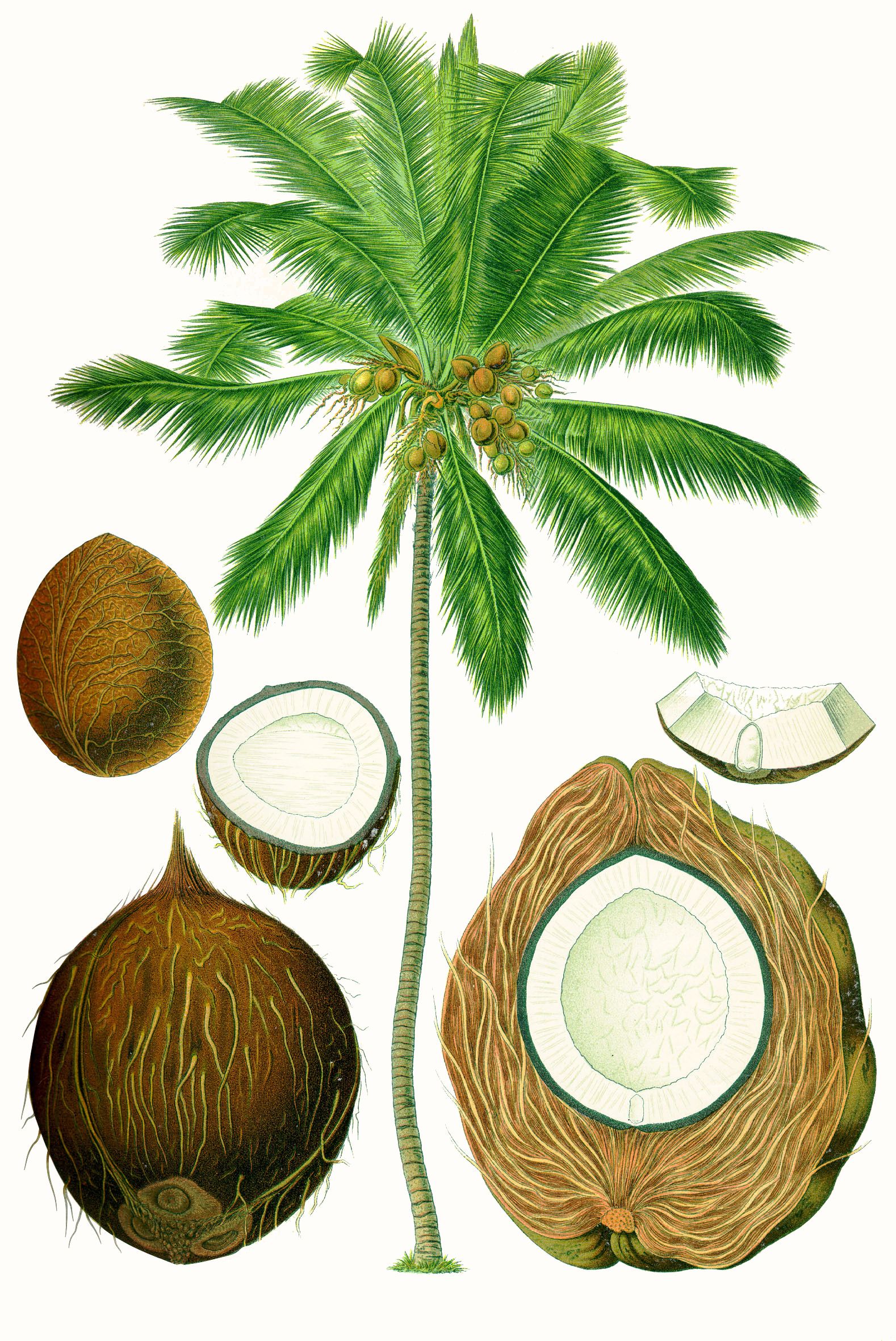
Photo of Coconut Palm (Cocos nucifera) by Franz Eugen Köhler, Köhler's Medizinal-Pflanzen, licensed Public domain, via Wikimedia Commons.


Thanks for reading about the real history behind Coconut Palm and how it was used in Hawaiian tradition.
Frequently asked questions
What traditional remedies used Coconut Palm among Hawaiian healers?
Hawaiian healers used Coconut Palm fruit shells burned for swollen wombs, young shoots for deep cuts, young meat as a rub for the brain, dried meat ash for general debility, and coconut oil as a rub, all documented by Akaiko Akana in 1922.
Is Coconut Palm safe for humans?
No toxicity or unsafe properties were recorded for Coconut Palm in the cited sources. It is considered palatable to humans and was used in traditional Hawaiian remedies without mention of harm.
What growing conditions does Coconut Palm require?
Coconut Palm has a low water requirement and needs a frost-free climate with space to grow tall. It does not tolerate heavy clay that stays wet or regions with frequent freezes, making it best for warm, open areas.
Are the traditional uses of Coconut Palm backed by modern science?
The traditional uses of Coconut Palm listed here are documented by Akana in 1922 as part of Hawaiian medicine. They are not supported by modern clinical studies and should be understood as historical records rather than medical advice.
Who should consider growing Coconut Palm?
Grow Coconut Palm if you have a large, frost-free yard and want a low water, edible tree. Skip it if you have limited space, heavy wet clay, or live where freezes are common.
What are the main trade-offs of growing Coconut Palm?
The main trade-offs include its large size, need for warm temperatures year-round, and difficulty surviving hard freezes or heavy wet soils. Harvesting and maintenance can also be challenging due to its height.
Free, no obligation
Ready to design your dream landscape? Start here.
Tell us where you are and we will start a free profile for you, with plants that actually survive your climate and a real sense of what the build would cost.