
Traditional Uses of Yellow Bluebeadlily (Clintonia borealis)
Yellow Bluebeadlily, Clintonia borealis, has been used in several Native American traditions for external treatments of wounds, burns, and infections. These uses were recorded among the Algonquin, Chippewa, and Iroquois, with no toxicity reported.
September 6, 2026
By Diego Navarro
TL;DR: Yellow Bluebeadlily (Clintonia borealis) was traditionally used by Native American groups like the Algonquin, Chippewa, and Iroquois for treating wounds, burns, infections, and certain heart conditions, as recorded in early ethnobotanical sources. No toxicity or palatability for humans has been documented, and all uses were external or specifically described in the cited traditions.
Last updated: September 6, 2026
What traditional uses of Yellow Bluebeadlily have been recorded?
Yellow Bluebeadlily was used by Native American groups for external applications to wounds, burns, infections, and ulcers, and in one case, a decoction was taken for the heart. These uses were recorded in the twentieth century by ethnobotanists working with the Algonquin, Chippewa, and Iroquois. No food or toxicity use was recorded.
Which Native American groups used Yellow Bluebeadlily and for what?
The Algonquin used poultices of Yellow Bluebeadlily leaves for infections, wounds, and ulcers, as recorded by Black in 1980 and Raymond in 1945. The Chippewa applied fresh leaf poultices to burns and used decoctions externally for sores, according to Densmore in 1928. The Iroquois used a decoction of the plant for the heart, recorded by Herrick in 1977.

Photo by Superior National Forest, licensed CC BY 2.0, via Wikimedia Commons.
.jpg)
What parts of Yellow Bluebeadlily were used in these traditions?
Most records specify the leaves of Yellow Bluebeadlily for poultices and external use. Some sources mention the plant as a whole when describing decoctions. No tradition described the plant as edible or palatable for humans, and none reported toxicity.
Who should grow Yellow Bluebeadlily and who should skip it?
Yellow Bluebeadlily is a fit for gardeners in cooler climates with moderate water and shaded woodland settings. It is not suitable for Central Texas clay or limestone, or for anyone looking for edible or drought-tolerant plants. Skip it if you need a plant that handles heat, direct sun, or dry spells.

Photo by Charles de Mille-Isles from Mille-Isles, Canada, licensed CC BY 2.0, via Wikimedia Commons.
.jpg)
How do the documented traditions compare?
| Tradition | Part Used | What Was Recorded | Source |
|---|---|---|---|
| Algonquin | Leaves | Poultice for infections, wounds, and ulcers | Black 1980; Raymond 1945 |
| Chippewa | Leaves | Fresh leaf poultice for burns; decoction for sores | Densmore 1928 |
| Iroquois | Unspecified | Decoction of plant taken for the heart | Herrick 1977 |
Is Yellow Bluebeadlily considered toxic or edible?
No toxicity has been recorded for Yellow Bluebeadlily, and no tradition describes it as palatable or edible for humans. All documented uses were external or specific to traditional remedies, not as a food source.
Frequently Asked Questions
What did the Algonquin use Yellow Bluebeadlily for?
The Algonquin used poultices of Yellow Bluebeadlily leaves for infections, wounds, and ulcers, as recorded in Black 1980 and Raymond 1945. These applications were external and focused on treating skin conditions rather than internal use.
How did the Chippewa use Yellow Bluebeadlily?
The Chippewa used a poultice of fresh Yellow Bluebeadlily leaves for burns and a decoction applied externally to sores, as documented by Densmore in 1928. These were traditional remedies for skin injuries and infections.
Did any tradition use Yellow Bluebeadlily for heart conditions?
Yes, among the Iroquois, a decoction of Yellow Bluebeadlily was taken for the heart, as recorded by Herrick in 1977. This is the only documented internal use among the sources provided.
Is Yellow Bluebeadlily toxic or edible for humans?
No toxicity or palatability for humans has been recorded for Yellow Bluebeadlily. None of the cited traditions describe it as edible, and all documented uses were for external or specific medicinal purposes.
What growing conditions does Yellow Bluebeadlily require?
Yellow Bluebeadlily requires moderate water and is suited to shaded woodland settings. It does not handle heat, drought, or heavy clay like you find in Central Texas, making it better for cooler, moist climates.
Are there any modern uses for Yellow Bluebeadlily?
No modern clinical uses are documented in the sources provided. All uses described are traditional and recorded among Native American groups, with no evidence for current medical or culinary application.
Want this worked out for your own yard?
Dream Landscaper reads the conditions you actually have, then plans around them rather than around a generic zone chart. Start with the city plant guides to see what already thrives near you, and when you want a real layout instead of a list, get your concept and we will take it from there.
Sources
- Black, Meredith Jean, 1980, Algonquin Ethnobotany: An Interpretation of Aboriginal Adaptation in South Western Quebec, Ottawa. National Museums of Canada. Mercury Series Number 65, page 138
- Raymond, Marcel., 1945, Notes Ethnobotaniques Sur Les Tete-De-Boule De Manouan, Contributions de l'Institut botanique l'Universite de Montreal 55:113-134, page 126
- Densmore, Frances, 1928, Uses of Plants by the Chippewa Indians, SI-BAE Annual Report #44:273-379, page 354
- Herrick, James William, 1977, Iroquois Medical Botany, State University of New York, Albany, PhD Thesis, page 283
Valeria and Diego are not doctors, and nothing here is medical advice. This article shares traditional and ancestral plant wisdom that was passed down through generations. It may be beneficial when applied with your own discretion, and with medical supervision as needed.
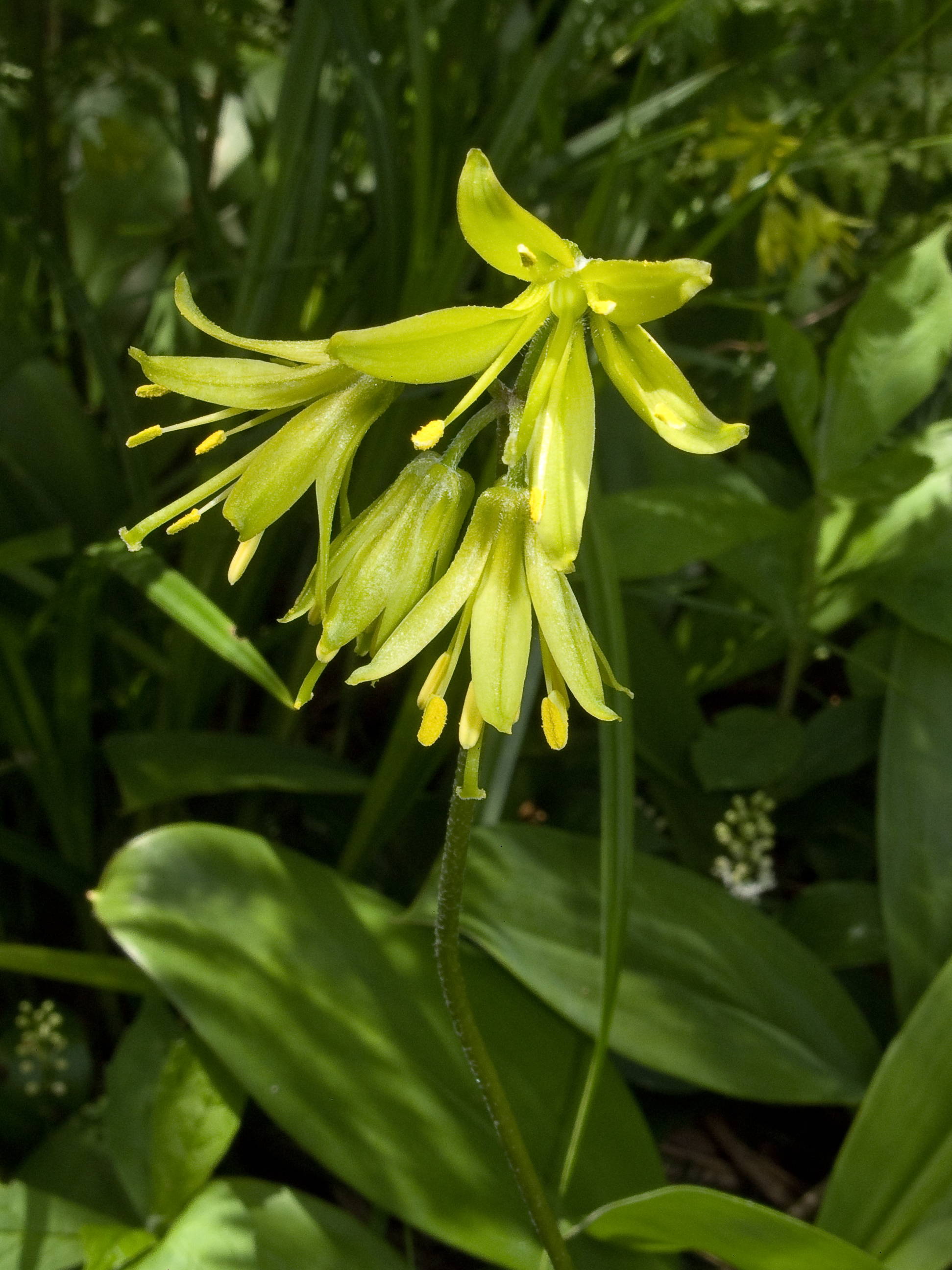
Photo of Yellow Bluebeadlily (Clintonia borealis) by Peter coxhead, licensed CC BY-SA 4.0, via Wikimedia Commons.


Thanks for reading and for respecting the stories these plants carry.
Frequently asked questions
What did the Algonquin use Yellow Bluebeadlily for?
The Algonquin used poultices of Yellow Bluebeadlily leaves for infections, wounds, and ulcers, as recorded in Black 1980 and Raymond 1945. These applications were external and focused on treating skin conditions rather than internal use.
How did the Chippewa use Yellow Bluebeadlily?
The Chippewa used a poultice of fresh Yellow Bluebeadlily leaves for burns and a decoction applied externally to sores, as documented by Densmore in 1928. These were traditional remedies for skin injuries and infections.
Did any tradition use Yellow Bluebeadlily for heart conditions?
Yes, among the Iroquois, a decoction of Yellow Bluebeadlily was taken for the heart, as recorded by Herrick in 1977. This is the only documented internal use among the sources provided.
Is Yellow Bluebeadlily toxic or edible for humans?
No toxicity or palatability for humans has been recorded for Yellow Bluebeadlily. None of the cited traditions describe it as edible, and all documented uses were for external or specific medicinal purposes.
What growing conditions does Yellow Bluebeadlily require?
Yellow Bluebeadlily requires moderate water and is suited to shaded woodland settings. It does not handle heat, drought, or heavy clay like you find in Central Texas, making it better for cooler, moist climates.
Are there any modern uses for Yellow Bluebeadlily?
No modern clinical uses are documented in the sources provided. All uses described are traditional and recorded among Native American groups, with no evidence for current medical or culinary application.
Free, no obligation
Ready to design your dream landscape? Start here.
Tell us where you are and we will start a free profile for you, with plants that actually survive your climate and a real sense of what the build would cost.