
Traditional uses of Devil'S Darning Needles (Clematis virginiana)
Explore the documented traditional uses of Devil'S Darning Needles (Clematis virginiana) among the Cherokee and Iroquois, including its role in green corn medicine and infusions for various ailments. Learn what was recorded, who used it, and what gardeners should know about growing this native vine.
September 1, 2026
By Valeria Navarro
TL;DR: Devil'S Darning Needles (Clematis virginiana) was historically used by the Cherokee and Iroquois for a range of traditional remedies, including infusions for backache, nerves, kidneys, and stomach trouble, as well as in green corn medicine and for treating sores. All uses are documented in 20th-century ethnobotanical sources, with no toxicity recorded for humans.
Last updated: September 1, 2026
What traditional medicinal uses were recorded for Devil'S Darning Needles?
Cherokee and Iroquois traditions recorded several uses for Devil'S Darning Needles, including infusions for backache, nerves, kidneys, and stomach trouble, as well as its inclusion in green corn medicine and topical use for sores. These uses are documented in ethnobotanical works from the 1970s.
- Among the Cherokee, an infusion with milkweed was used for backache (Hamel & Chiltoskey, 1975).
- The same tradition included the plant in green corn medicine (Hamel & Chiltoskey, 1975).
- Infusions of the root were taken for stomach trouble, nerves, and kidneys (Hamel & Chiltoskey, 1975).
- Iroquois records describe the root powder and infusion used on venereal disease sores (Herrick, 1977).
Who used Devil'S Darning Needles and where?
Most documented uses come from the Cherokee in the southeastern United States and the Iroquois in the northeast. These records were collected in the 20th century, reflecting practices passed down through generations but not necessarily in current use today.
- Cherokee uses are detailed in North Carolina ethnobotanical surveys (Hamel & Chiltoskey, 1975).
- Iroquois use was recorded in New York State (Herrick, 1977).

Photo by Ayotte, Gilles, 1948-, licensed CC BY-SA 4.0, via Wikimedia Commons.

How was Devil'S Darning Needles prepared or combined in traditional use?
Preparations were generally infusions or powders, sometimes combined with other plants like milkweed. Specific preparation methods were not detailed in the sources, and no dosages or instructions are given. The records focus on the plant's role in remedies rather than exact recipes.
- Infusion with milkweed for backache (Cherokee).
- Root infusions for nerves, kidneys, and stomach trouble (Cherokee).
- Root powder and infusion for sores (Iroquois).
Who should grow Devil'S Darning Needles and who should skip it?
Gardeners with moderate water access and a spot for a native vine will find Devil'S Darning Needles rewarding. It handles Central Texas clay if drainage is decent, but renters or those with only a balcony may find it too aggressive. Not palatable to humans, so skip it if you want edible vines.
- Homeowners with fences or trellises can enjoy its vigorous growth.
- Those in heavy shade or with only pots may struggle to keep it happy.
- Households with curious pets need not worry, as no toxicity is recorded.

Photo by sonnia hill, licensed CC BY 2.0, via Wikimedia Commons.

What are the trade-offs of growing Devil'S Darning Needles?
This vine is tough and native, but it can get unruly without regular pruning. It needs moderate water, so it might sulk during a Central Texas drought if you forget to water. Not a good pick for edible gardens, since it isn't recorded as palatable.
- Sprawls quickly and needs support.
- Needs more water than cactus or yucca.
- Not a food crop.
How do the Cherokee and Iroquois uses of Devil'S Darning Needles compare?
The Cherokee focused on internal uses, infusions for nerves, kidneys, stomach, and backache, plus ceremonial medicine. The Iroquois used the root externally for sores. Both traditions valued the root, but their remedies addressed different needs.
| Tradition | Part Used | What Was Recorded | Source |
|---|---|---|---|
| Cherokee | Unspecified | Infusion with milkweed for backache | Hamel & Chiltoskey, 1975 |
| Cherokee | Unspecified | Ingredient in green corn medicine | Hamel & Chiltoskey, 1975 |
| Cherokee | Root | Infusion for stomach trouble and nerves | Hamel & Chiltoskey, 1975 |
| Cherokee | Root | Infusion for kidneys | Hamel & Chiltoskey, 1975 |
| Iroquois | Root | Root powder and infusion for venereal disease sores | Herrick, 1977 |
Where can I find more about traditional uses of native plants?
For more on native plant traditions, check out the sources below or visit our plants directory. If you're thinking about adding native vines to your space, our Get My Concept service can help you plan for your conditions and style.
Frequently Asked Questions
What traditional remedies did the Cherokee use Devil'S Darning Needles for?
The Cherokee used Devil'S Darning Needles in infusions with milkweed for backache, as an ingredient in green corn medicine, and as root infusions for stomach trouble, nerves, and kidneys, according to Hamel & Chiltoskey, 1975.
How did the Iroquois use Devil'S Darning Needles?
The Iroquois used the root powder and infusion of Devil'S Darning Needles for treating venereal disease sores, as documented by Herrick, 1977. This use was topical and distinct from the Cherokee’s internal remedies.
Is Devil'S Darning Needles toxic to humans or pets?
There is no recorded toxicity for Devil'S Darning Needles (Clematis virginiana) to humans or pets in the sources cited here. It is not considered palatable, but no warnings are noted in the ethnobotanical records.
Can I eat Devil'S Darning Needles or use it in cooking?
Devil'S Darning Needles is not recorded as palatable to humans, and no traditional use as a food plant is documented. It is best grown for its ornamental and historical value rather than as an edible crop.
What kind of garden is best for Devil'S Darning Needles?
Devil'S Darning Needles does well in gardens with moderate water and room for a vigorous native vine. It needs support and regular pruning, so it’s best for homeowners with fences or trellises, not for small containers or balconies.
Are there modern medical uses for Devil'S Darning Needles?
No modern medical uses are documented in the sources provided. All uses discussed here are traditional remedies recorded among the Cherokee and Iroquois, and are not supported by current clinical research.
Want this worked out for your own yard?
Dream Landscaper reads the conditions you actually have, then plans around them rather than around a generic zone chart. Start with the city plant guides to see what already thrives near you, and when you want a real layout instead of a list, get your concept and we will take it from there.
Sources
- Hamel, Paul B. and Mary U. Chiltoskey, 1975, Cherokee Plants and Their Uses -- A 400 Year History, Sylva, N.C. Herald Publishing Co., page 60
- Herrick, James William, 1977, Iroquois Medical Botany, State University of New York, Albany, PhD Thesis, page 330
Valeria and Diego are not doctors, and nothing here is medical advice. This article shares traditional and ancestral plant wisdom that was passed down through generations. It may be beneficial when applied with your own discretion, and with medical supervision as needed.
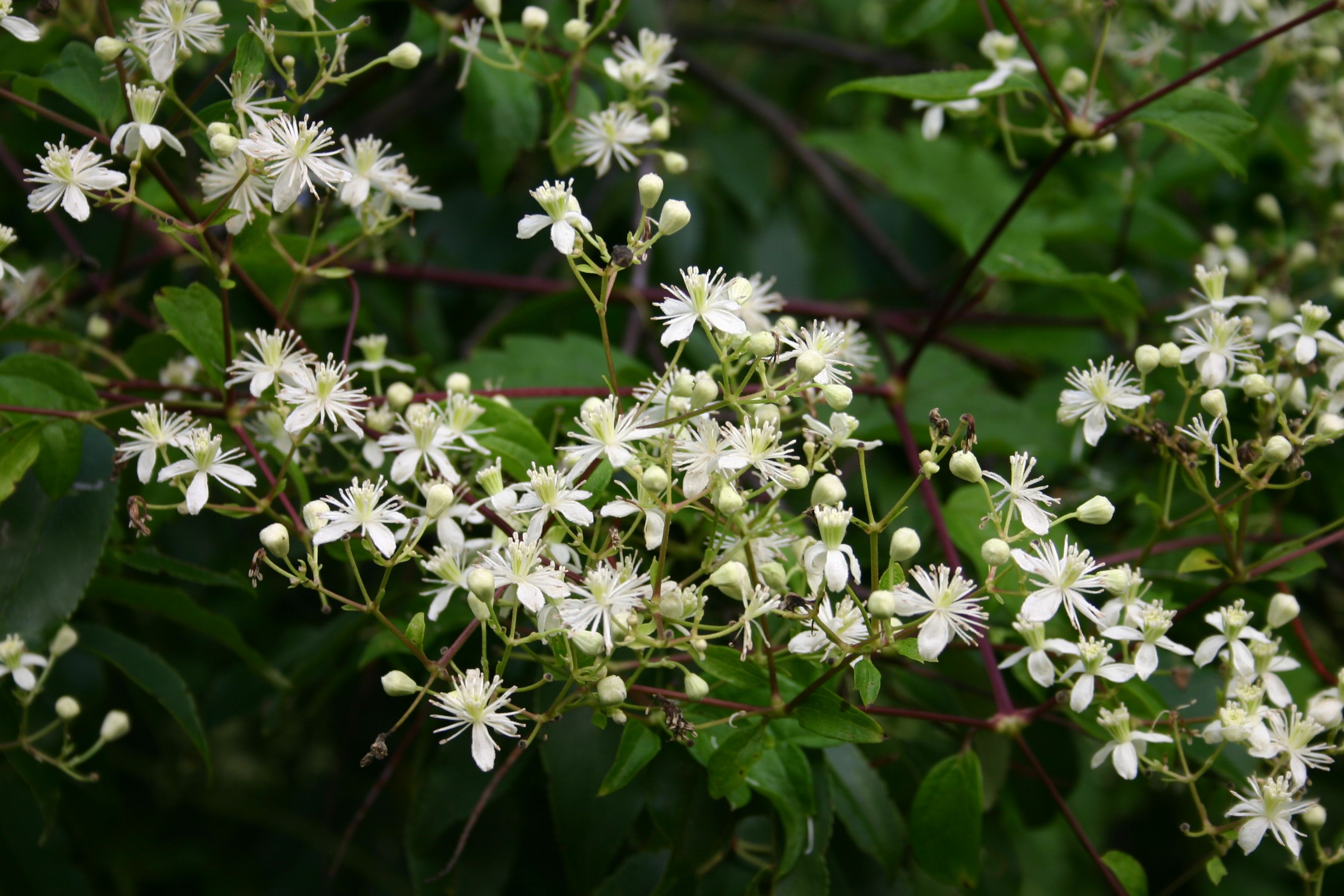
Photo of Devil'S Darning Needles (Clematis virginiana) by User:SB_Johnny, licensed CC BY-SA 3.0, via Wikimedia Commons.


Thanks for exploring the roots and stories behind Devil'S Darning Needles with me today.
Frequently asked questions
What traditional remedies did the Cherokee use Devil'S Darning Needles for?
The Cherokee used Devil'S Darning Needles in infusions with milkweed for backache, as an ingredient in green corn medicine, and as root infusions for stomach trouble, nerves, and kidneys, according to Hamel & Chiltoskey, 1975.
How did the Iroquois use Devil'S Darning Needles?
The Iroquois used the root powder and infusion of Devil'S Darning Needles for treating venereal disease sores, as documented by Herrick, 1977. This use was topical and distinct from the Cherokee’s internal remedies.
Is Devil'S Darning Needles toxic to humans or pets?
There is no recorded toxicity for Devil'S Darning Needles (Clematis virginiana) to humans or pets in the sources cited here. It is not considered palatable, but no warnings are noted in the ethnobotanical records.
Can I eat Devil'S Darning Needles or use it in cooking?
Devil'S Darning Needles is not recorded as palatable to humans, and no traditional use as a food plant is documented. It is best grown for its ornamental and historical value rather than as an edible crop.
What kind of garden is best for Devil'S Darning Needles?
Devil'S Darning Needles does well in gardens with moderate water and room for a vigorous native vine. It needs support and regular pruning, so it’s best for homeowners with fences or trellises, not for small containers or balconies.
Are there modern medical uses for Devil'S Darning Needles?
No modern medical uses are documented in the sources provided. All uses discussed here are traditional remedies recorded among the Cherokee and Iroquois, and are not supported by current clinical research.
Free, no obligation
Ready to design your dream landscape? Start here.
Tell us where you are and we will start a free profile for you, with plants that actually survive your climate and a real sense of what the build would cost.