
Traditional Uses of Chicory (Cichorium intybus)
Chicory (Cichorium intybus) has a high water requirement and has been recorded as edible for humans. Cherokee and Iroquois traditions documented its root used as a tonic for nerves and as a wash or poultice for sores, with no toxicity recorded.
September 18, 2026
By Diego Navarro
TL;DR: Chicory (Cichorium intybus) was recorded among the Cherokee as a root infusion used as a tonic for nerves, and among the Iroquois as a root decoction used as a wash and poultice for chancres and fever sores. No toxicity was recorded, and it requires a lot of water to thrive.
Last updated: September 18, 2026
What traditional uses of chicory were recorded among Native American groups?
Cherokee tradition recorded an infusion of chicory root used as a tonic for nerves, while Iroquois tradition documented a decoction of the roots used as a wash and poultice for chancres and fever sores. Both uses are cited directly from ethnobotanical sources, with no toxicity noted in either case.
- Cherokee: Infusion of root as a tonic for nerves (Hamel & Chiltoskey, 1975)
- Iroquois: Decoction of roots as wash and poultice for sores (Herrick, 1977)
How do the documented traditional uses of chicory compare?
The Cherokee and Iroquois both used chicory roots, but for different purposes: the Cherokee prepared an infusion for nerves, while the Iroquois made a decoction as a topical wash and poultice for sores. Both uses were documented in the 1970s by ethnobotanists, with no overlap in the specific conditions treated.
| Tradition | Part Used | What Was Recorded | Source |
|---|---|---|---|
| Cherokee | Root | Infusion used as a tonic for nerves | Hamel & Chiltoskey, 1975 |
| Iroquois | Root | Decoction used as wash and poultice for chancres, sores | Herrick, 1977 |

Photo by Stefan.lefnaer, licensed CC BY-SA 4.0, via Wikimedia Commons.

What growing conditions does chicory need, and what should you expect?
Chicory was recorded as needing high water and being palatable to humans. If you have sandy soil or live where rain is scarce, expect to water deeply and often. In Central Texas, that means drip irrigation on a timer if you want it alive past July. It will not tolerate drought, and soggy clay can rot the roots.
Who should grow chicory, and who should skip it?
Grow chicory if you have a reliable water source and space for a plant that needs steady moisture. It fits in gardens where you’re already watering vegetables. Skip it if you’re on strict water restrictions, have heavy clay that stays wet after rain, or want something deer-proof, deer will eat it if they can get to it.

Photo by Josep Gesti, licensed CC BY-SA 4.0, via Wikimedia Commons.

Is chicory safe to eat or use?
No toxicity has been recorded for chicory in these traditions. It was noted as palatable to humans, and both the Cherokee and Iroquois used the root in ways that suggest they considered it safe. Still, if you have allergies or sensitivities, use caution and consult a professional before trying anything new.
How does chicory compare to other traditional plants?
Chicory stands out for its high water need and the specific uses recorded: a nerve tonic by the Cherokee and a topical wash by the Iroquois. Unlike some other native plants, there’s no record of toxicity, but it does require more water than most wildflowers or prairie herbs you might see in Central Texas.
Frequently Asked Questions
What did the Cherokee use chicory for traditionally?
The Cherokee traditionally used an infusion of chicory root as a tonic for nerves, as documented by Hamel and Chiltoskey in 1975. This use was recorded specifically among the Cherokee and cited in their ethnobotanical history.
How did the Iroquois use chicory?
The Iroquois used a decoction of chicory roots as a wash and poultice applied to chancres and fever sores, according to Herrick’s 1977 ethnobotanical research. This use was topical and specific to their recorded medicinal practices.
Is chicory toxic to humans?
No toxicity has been recorded for chicory in the traditions cited here. Both the Cherokee and Iroquois used the root in ways that suggest it was considered safe and palatable for humans.
Does chicory need a lot of water?
Chicory was recorded as having a high water requirement. If you want to grow it in a dry climate or in sandy soil, you’ll need to provide regular, deep watering to keep it alive and healthy.
Who should consider growing chicory?
Chicory is best for gardeners with reliable irrigation or naturally moist soil, especially those interested in traditional or edible plants. It’s not a good fit for people with strict water limits, heavy clay soil, or high deer pressure.
How do the Cherokee and Iroquois uses of chicory differ?
The Cherokee used chicory root as a nerve tonic, while the Iroquois used it as a wash and poultice for sores. Each group’s use was specific and documented in separate ethnobotanical sources from the 1970s.
Want this worked out for your own yard?
Dream Landscaper reads the conditions you actually have, then plans around them rather than around a generic zone chart. Start with the city plant guides to see what already thrives near you, and when you want a real layout instead of a list, get your concept and we will take it from there.
Sources
- Hamel, Paul B. and Mary U. Chiltoskey, 1975, Cherokee Plants and Their Uses -- A 400 Year History, Sylva, N.C. Herald Publishing Co., page 29
- Herrick, James William, 1977, Iroquois Medical Botany, State University of New York, Albany, PhD Thesis, page 476
Valeria and Diego are not doctors, and nothing here is medical advice. This article shares traditional and ancestral plant wisdom that was passed down through generations. It may be beneficial when applied with your own discretion, and with medical supervision as needed.
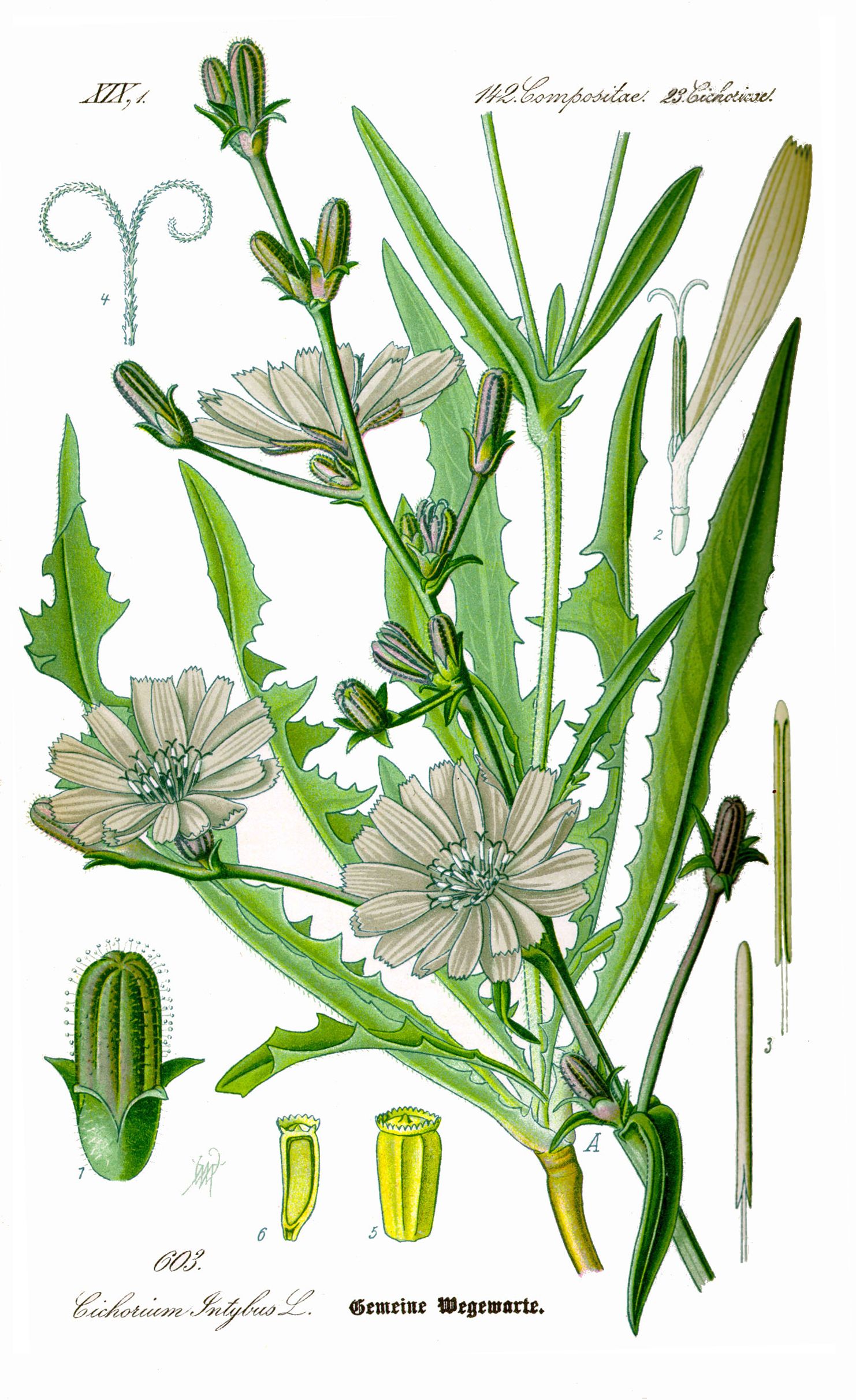
Photo of Chicory (Cichorium intybus) by Original book source: Prof. Dr. Otto Wilhelm Thomé Flora von Deutschland, Österreich und der Schweiz 1885, Gera, Germany, licensed Public domain, via Wikimedia Commons.


If you’re thinking about adding chicory to your garden, I hope this helps you weigh the real trade-offs and traditions behind it.
Frequently asked questions
What did the Cherokee use chicory for traditionally?
The Cherokee traditionally used an infusion of chicory root as a tonic for nerves, as documented by Hamel and Chiltoskey in 1975. This use was recorded specifically among the Cherokee and cited in their ethnobotanical history.
How did the Iroquois use chicory?
The Iroquois used a decoction of chicory roots as a wash and poultice applied to chancres and fever sores, according to Herrick’s 1977 ethnobotanical research. This use was topical and specific to their recorded medicinal practices.
Is chicory toxic to humans?
No toxicity has been recorded for chicory in the traditions cited here. Both the Cherokee and Iroquois used the root in ways that suggest it was considered safe and palatable for humans.
Does chicory need a lot of water?
Chicory was recorded as having a high water requirement. If you want to grow it in a dry climate or in sandy soil, you’ll need to provide regular, deep watering to keep it alive and healthy.
Who should consider growing chicory?
Chicory is best for gardeners with reliable irrigation or naturally moist soil, especially those interested in traditional or edible plants. It’s not a good fit for people with strict water limits, heavy clay soil, or high deer pressure.
How do the Cherokee and Iroquois uses of chicory differ?
The Cherokee used chicory root as a nerve tonic, while the Iroquois used it as a wash and poultice for sores. Each group’s use was specific and documented in separate ethnobotanical sources from the 1970s.
Free, no obligation
Ready to design your dream landscape? Start here.
Tell us where you are and we will start a free profile for you, with plants that actually survive your climate and a real sense of what the build would cost.