
Traditional Uses of Douglas' Dustymaiden (Chaenactis douglasii)
Douglas' Dustymaiden was used in several Native American traditions, including as a topical remedy for aching limbs and as an infusion for skin and heart concerns. These uses were documented among the Gosiute, Great Basin, and Okanagon peoples, with no toxicity recorded.
August 16, 2026
By Valeria Navarro
TL;DR: Douglas' Dustymaiden was traditionally used by Native American groups as a topical and wash remedy for soreness, skin issues, and bites, and as an infusion for slowing children's heartbeats. These uses were documented among the Gosiute, Great Basin, and Okanagon peoples, with no toxicity or palatability to humans recorded.
Last updated: August 16, 2026
What traditional uses of Douglas' Dustymaiden have been recorded?
Douglas' Dustymaiden, or Chaenactis douglasii, was used by several Native American groups for topical and infusion remedies. The Gosiute used mashed plant on sore limbs, the Okanagon used infusions as washes for skin issues and bites, and the Great Basin Indians gave infusions to children to slow heartbeats. All uses are documented in early twentieth-century sources.
Which Native American groups used Douglas' Dustymaiden and for what?
The Gosiute, Okanagon, and Great Basin Indian groups all recorded uses for Douglas' Dustymaiden. The Gosiute rubbed mashed plant on limbs for soreness, the Okanagon used infusions as washes for skin and bite issues, and the Great Basin Indians gave infusions to children for heart rate concerns. Each use was documented in ethnobotanical studies from 1911 to 1966.

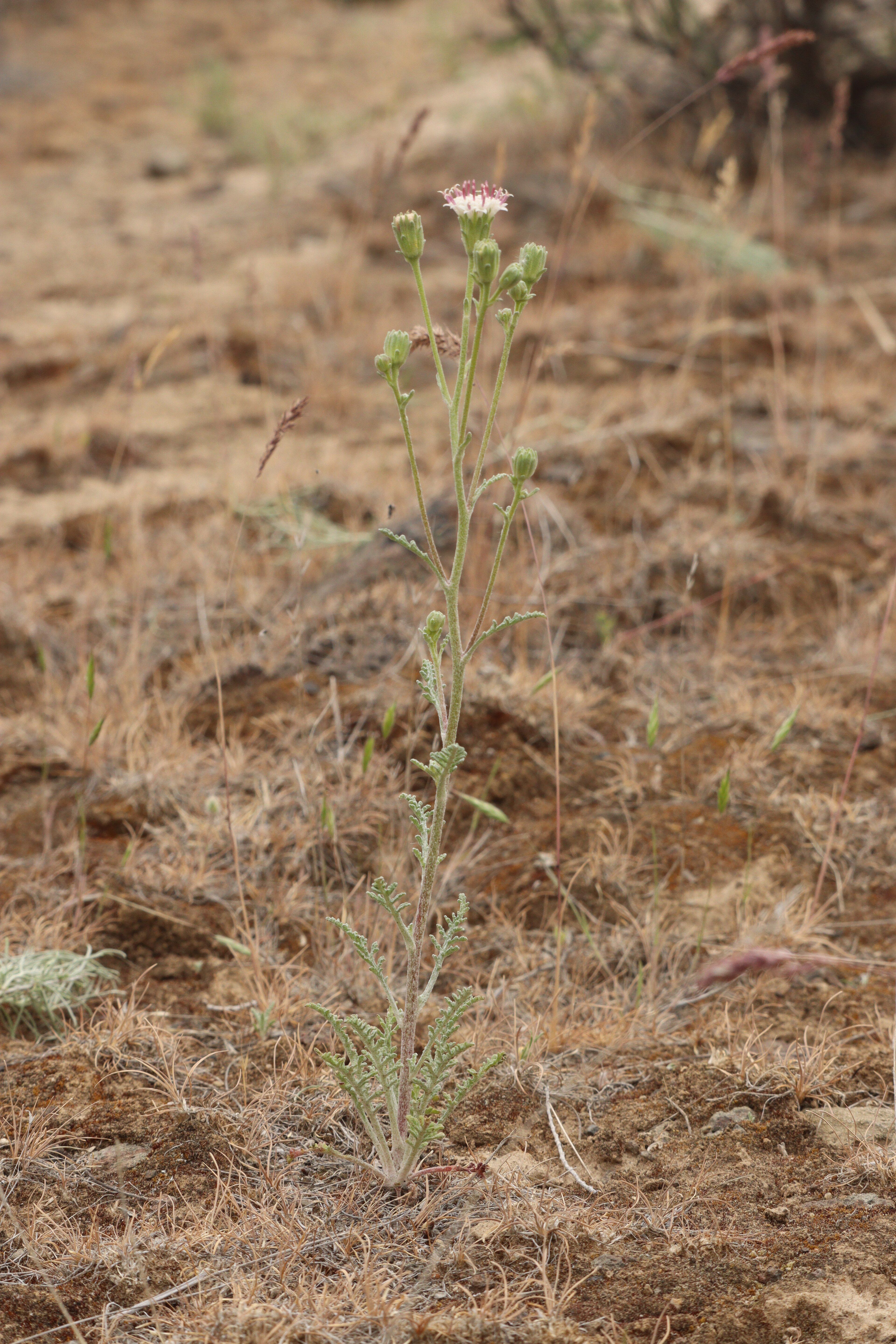
Photo by Matt Lavin from Bozeman, Montana, USA, licensed CC BY-SA 2.0, via Wikimedia Commons.
.jpg)
What parts of Douglas' Dustymaiden were used in these traditions?
Sources do not specify which part of Douglas' Dustymaiden was used, only that the mashed plant or whole plant infusion was prepared. The lack of detail is typical of early ethnobotanical records, which often focused on the remedy rather than the plant part. All recorded uses refer to the plant as a whole or mashed.
How does Douglas' Dustymaiden compare to other traditional remedies?
Douglas' Dustymaiden stands out for its use in topical applications and infusions, but it is not recorded as edible or toxic. Its low water requirement makes it different from many garden herbs. It has no record of being palatable to humans, so it is not a culinary herb.
| Tradition | Part Used | What Was Recorded | Source |
|---|---|---|---|
| Gosiute | Unspecified | Mashed plant rubbed on limbs for soreness or aching | Chamberlin, Ralph V., 1911, The Ethno-Botany of the Gosiute Indians of Utah, page 365 |
| Great Basin | Unspecified | Infusion of whole plant given to children to slow their heart beats | Nickerson, Gifford S., 1966, Some Data on Plains and Great Basin Indian Uses, page 50 |
| Okanagon | Unspecified | Infusion used as wash for chapped hands, pimples, boils, tumors, swellings | Perry, F., 1952, Ethno-Botany of the Indians in the Interior of British Columbia, page 42 |
| Okanagon | Unspecified | Infusion of plant used as wash for insect and snake bites | Perry, F., 1952, Ethno-Botany of the Indians in the Interior of British Columbia, page 42 |

Photo by Thayne Tuason, licensed CC BY-SA 4.0, via Wikimedia Commons.

Who should grow Douglas' Dustymaiden and who should skip it?
Douglas' Dustymaiden is a good fit for gardeners with dry, low-water beds or anyone restoring native prairie. It is not for you if you want edible herbs or have a pet that chews everything, since it is not recorded as palatable. Renters with small patios may find it too wild for containers.
What are the trade-offs of growing Douglas' Dustymaiden?
Douglas' Dustymaiden needs little water, but it can look scraggly in rich garden soil and may not blend with lush, ornamental beds. It is best in native or xeric plantings. You will not get culinary use from it, and its value is mostly historical and ecological.
Frequently Asked Questions
What did the Gosiute use Douglas' Dustymaiden for?
The Gosiute used mashed Douglas' Dustymaiden rubbed on limbs to relieve soreness or aching, as documented by Chamberlin in 1911. This use was topical and did not involve ingestion or specific plant parts.
How was Douglas' Dustymaiden used among the Okanagon?
The Okanagon used an infusion of Douglas' Dustymaiden as a wash for chapped hands, pimples, boils, tumors, swellings, and for insect and snake bites. These uses were documented by Perry in 1952 and were all external applications.
Was Douglas' Dustymaiden ever used internally?
Yes, among the Great Basin Indians, an infusion of the whole plant was given to children to slow their heartbeats, as recorded by Nickerson in 1966. No other internal uses were documented.
Is Douglas' Dustymaiden safe to eat or toxic?
There is no record of Douglas' Dustymaiden being palatable to humans or toxic. None of the documented uses involve eating the plant, and no toxicity is reported in the sources provided.
What growing conditions does Douglas' Dustymaiden need?
Douglas' Dustymaiden was recorded as having a low water requirement, making it suitable for xeric or native gardens. It is not a good fit for gardens with consistently wet or rich soil.
Who should consider planting Douglas' Dustymaiden?
Gardeners interested in native, drought-tolerant plants or those restoring prairie habitats should consider Douglas' Dustymaiden. It is not ideal for those wanting edible herbs or for renters with only small patios.
Want this worked out for your own yard?
Dream Landscaper reads the conditions you actually have, then plans around them rather than around a generic zone chart. Start with the city plant guides to see what already thrives near you, and when you want a real layout instead of a list, get your concept and we will take it from there.
Sources
- Chamberlin, Ralph V., 1911, The Ethno-Botany of the Gosiute Indians of Utah, Memoirs of the American Anthropological Association 2(5):331-405., page 365
- Nickerson, Gifford S., 1966, Some Data on Plains and Great Basin Indian Uses of Certain Native Plants, Tebiwa 9(1):45-51, page 50
- Perry, F., 1952, Ethno-Botany of the Indians in the Interior of British Columbia, Museum and Art Notes 2(2):36-43., page 42
Valeria and Diego are not doctors, and nothing here is medical advice. This article shares traditional and ancestral plant wisdom that was passed down through generations. It may be beneficial when applied with your own discretion, and with medical supervision as needed.
Photo of Douglas' Dustymaiden (Chaenactis douglasii) by Walter Siegmund (talk), licensed CC BY-SA 4.0, via Wikimedia Commons.


Thanks for exploring the history of Douglas' Dustymaiden with me, and may your garden always surprise you.
Frequently asked questions
What did the Gosiute use Douglas' Dustymaiden for?
The Gosiute used mashed Douglas' Dustymaiden rubbed on limbs to relieve soreness or aching, as documented by Chamberlin in 1911. This use was topical and did not involve ingestion or specific plant parts.
How was Douglas' Dustymaiden used among the Okanagon?
The Okanagon used an infusion of Douglas' Dustymaiden as a wash for chapped hands, pimples, boils, tumors, swellings, and for insect and snake bites. These uses were documented by Perry in 1952 and were all external applications.
Was Douglas' Dustymaiden ever used internally?
Yes, among the Great Basin Indians, an infusion of the whole plant was given to children to slow their heartbeats, as recorded by Nickerson in 1966. No other internal uses were documented.
Is Douglas' Dustymaiden safe to eat or toxic?
There is no record of Douglas' Dustymaiden being palatable to humans or toxic. None of the documented uses involve eating the plant, and no toxicity is reported in the sources provided.
What growing conditions does Douglas' Dustymaiden need?
Douglas' Dustymaiden was recorded as having a low water requirement, making it suitable for xeric or native gardens. It is not a good fit for gardens with consistently wet or rich soil.
Who should consider planting Douglas' Dustymaiden?
Gardeners interested in native, drought-tolerant plants or those restoring prairie habitats should consider Douglas' Dustymaiden. It is not ideal for those wanting edible herbs or for renters with only small patios.
Free, no obligation
Ready to design your dream landscape? Start here.
Tell us where you are and we will start a free profile for you, with plants that actually survive your climate and a real sense of what the build would cost.