
What Were the Traditional Uses of American Beautyberry?
Historical records from Alabama describe American Beautyberry in sweatbath practices for malarial fever and rheumatism. Here is what John R. Swanton and Linda Averill Taylor documented, what remains uncertain, and what homeowners should know before choosing this low-water shrub for an Austin garden.
October 3, 2026
By Valeria Navarro
TL;DR: Historical records from Alabama describe American Beautyberry in sweatbath practices for malarial fever and rheumatism. John R. Swanton documented roots, branches, and leaves in records from 1928, while Linda Averill Taylor documented roots and leaves in 1940. These are historical ethnobotanical records, not present-day medical advice or preparation instructions.
Last updated: October 3, 2026
American Beautyberry was recorded among the Alabama for sweatbath practices involving malarial fever and rheumatism, according to John R. Swanton and Linda Averill Taylor. The plant has a recorded low water requirement, but it was not recorded as palatable to humans, and no toxicity was recorded in the supplied material.
The historical record is specific, but it is not a modern treatment guide. The sources describe decoctions of roots, branches, or leaves used in sweatbaths, with the repeated Alabama entries cited below in Religious Beliefs and Medical Practices of the Creek Indians and Plants Used As Curatives by Certain Southeastern Tribes.
What traditional uses were recorded for American Beautyberry?
American Beautyberry was recorded among the Alabama for sweatbath use connected with malarial fever and rheumatism. Swanton recorded roots and branches for malarial fever and rheumatism in 1928, while Taylor recorded roots and leaves for malarial fever in 1940. Those are documented historical uses, not claims that American Beautyberry treats illness today.
- Swanton recorded a decoction of root and branch used in a sweatbath for malarial fever and rheumatism among the Alabama. (Religious Beliefs and Medical Practices of the Creek Indians, 1928, page 663.)
- Taylor recorded a decoction of roots and leaves used as a sweatbath for malarial fever among the Alabama. (Plants Used As Curatives by Certain Southeastern Tribes, 1940, page 52.)
Who recorded American Beautyberry's uses among the Alabama?
John R. Swanton documented American Beautyberry's root and branch records among the Alabama in 1928, and Linda Averill Taylor documented root and leaf records in 1940. Both sources identify sweatbath use for malarial fever, while Swanton also recorded rheumatism. The repeated entries strengthen documentation, but they do not prove modern effectiveness.
Swanton's account is Religious Beliefs and Medical Practices of the Creek Indians, SI-BAE Annual Report #42:473-672, page 663. Taylor's account is Plants Used As Curatives by Certain Southeastern Tribes, page 52. I keep those names in view because a plant story without its recorder is just garden gossip in a nicer hat.

Photo by Kirk Olson from Jacksonville, FL, USA, licensed CC BY 2.0, via Wikimedia Commons.

Which parts of American Beautyberry were recorded in these practices?
The supplied records name roots with branches in Swanton's Alabama account and roots with leaves in Taylor's account. The source data labels the formal part-used field as unspecified, so this article does not turn those historical descriptions into a precise botanical recipe. The trade-off is clarity: the record is useful, but not complete.
| Tradition | Part used | What was recorded | Source |
|---|---|---|---|
| Native American, Alabama | Unspecified | Decoction of root and branch used in a sweatbath for malarial fever and rheumatism | Swanton, 1928, page 663 |
| Native American, Alabama | Unspecified | Decoction of roots and branches used in a sweatbath for malarial fevers | Swanton, 1928, page 663 |
| Native American, Alabama | Unspecified | Decoction of roots and leaves used as a sweatbath for malarial fever | Taylor, 1940, page 52 |
| Native American, Alabama | Unspecified | Decoction of roots and leaves used as a sweatbath for malarial fever | Taylor, 1940, page 52 |
| Native American, Alabama | Unspecified | Decoction of roots and leaves used as a sweatbath for malarial fever | Taylor, 1940, page 52 |
| Native American, Alabama | Unspecified | Decoction of roots and branches used in a sweatbath for rheumatism | Swanton, 1928, page 663 |
Who should grow American Beautyberry, and who should skip it?
American Beautyberry suits a homeowner in Austin who wants a low-water shrub and can give it room to grow without expecting edible fruit. A renter with only a balcony should skip it, as should anyone choosing plants specifically for human harvest. Blackland Prairie clay can hold water after a storm, so the shrub still needs a spot that does not stay soggy through winter.
This is a landscape choice, not a kitchen crop. The recorded low water requirement is a real advantage under Central Texas restrictions, but low water does not mean zero water during establishment. Browse the wider plant library if your yard is more caliche than soil, or use Get My Concept to think through the whole space before buying a shrub on impulse.

Photo by Photo by David J. Stang, licensed CC BY-SA 4.0, via Wikimedia Commons.

Was American Beautyberry recorded as edible or toxic?
American Beautyberry was not recorded as palatable to humans in the supplied growing information, and no toxicity was recorded in the supplied material. That means the record does not support presenting it as a human food or adding an invented toxicity warning. Its honest garden trade-off is simple: grow it for landscape interest, not because a historical-use record makes it a snack.
No edible use appears in the allowed traditional-use list. No toxicity warning appears there either. I am not going to manufacture one because a plant article sounds more authoritative with a scary paragraph; that would be bad reporting, especially for a shrub whose documented record is already narrow.
How should readers interpret American Beautyberry's historical medicinal record?
Readers should interpret American Beautyberry's record as documented ethnobotany from Alabama, not evidence of a present-day cure. Swanton and Taylor both recorded sweatbath practices connected with malarial fever, and Swanton also recorded rheumatism, but neither citation supplies modern clinical proof. The source trail is strong enough to report and too limited to prescribe.
The repeated Taylor entries describe roots and leaves for malarial fever, while Swanton's entries describe roots and branches for malarial fever and rheumatism. (Plants Used As Curatives by Certain Southeastern Tribes, 1940, page 52; Religious Beliefs and Medical Practices of the Creek Indians, 1928, page 663.) I would preserve the history and leave treatment decisions to qualified clinicians.
Frequently Asked Questions
What traditional uses were recorded for American Beautyberry?
American Beautyberry was recorded among the Alabama for sweatbath use connected with malarial fever and rheumatism. Swanton documented roots and branches for both conditions in 1928, while Taylor documented roots and leaves for malarial fever in 1940. These are historical records from named sources, not present-day medical advice or proof that the plant treats illness now.
Who recorded American Beautyberry's uses among the Alabama?
John R. Swanton recorded American Beautyberry's root and branch uses among the Alabama in 1928, and Linda Averill Taylor recorded root and leaf uses in 1940. Swanton's source also includes rheumatism, while both accounts include malarial fever. The documentation identifies a historical practice, but it does not establish modern medical effectiveness.
Which parts of American Beautyberry were recorded in these practices?
The records name roots with branches in Swanton's account and roots with leaves in Taylor's account. The supplied data labels the formal part-used field as unspecified, so those descriptions should not be treated as a complete preparation guide. The historical sources identify plant parts, but they do not provide a modern recipe or dosage.
Who should grow American Beautyberry, and who should skip it?
American Beautyberry suits homeowners who want a low-water landscape shrub and have room for it to grow without expecting edible fruit. Balcony renters and gardeners seeking a human food crop should skip it. In Austin, choose a place that does not stay wet through winter, because low water needs do not protect a shrub from soggy alkaline clay.
Was American Beautyberry recorded as edible or toxic?
American Beautyberry was not recorded as palatable to humans in the supplied growing information, and no toxicity was recorded in the supplied material. That supports neither a food claim nor an invented warning. The practical trade-off is to treat the plant as a landscape subject rather than a harvest crop unless reliable, separate guidance says otherwise.
How should readers interpret American Beautyberry's historical medicinal record?
Readers should treat American Beautyberry's record as documented ethnobotany from Alabama, not as evidence of a present-day cure. Swanton and Taylor recorded sweatbath practices associated with malarial fever, and Swanton also recorded rheumatism. Their citations preserve the history, but they do not provide clinical proof, dosage, preparation instructions, or a basis for self-treatment.
Want this worked out for your own yard?
Dream Landscaper reads the conditions you actually have, then plans around them rather than around a generic zone chart. Start with the city plant guides to see what already thrives near you, and when you want a real layout instead of a list, get your concept and we will take it from there.
Sources
- Swanton, John R, 1928, Religious Beliefs and Medical Practices of the Creek Indians, SI-BAE Annual Report #42:473-672, page 663
- Taylor, Linda Averill, 1940, Plants Used As Curatives by Certain Southeastern Tribes, Cambridge, MA. Botanical Museum of Harvard University, page 52
Valeria and Diego are not doctors, and nothing here is medical advice. This article shares traditional and ancestral plant wisdom that was passed down through generations. It may be beneficial when applied with your own discretion, and with medical supervision as needed.
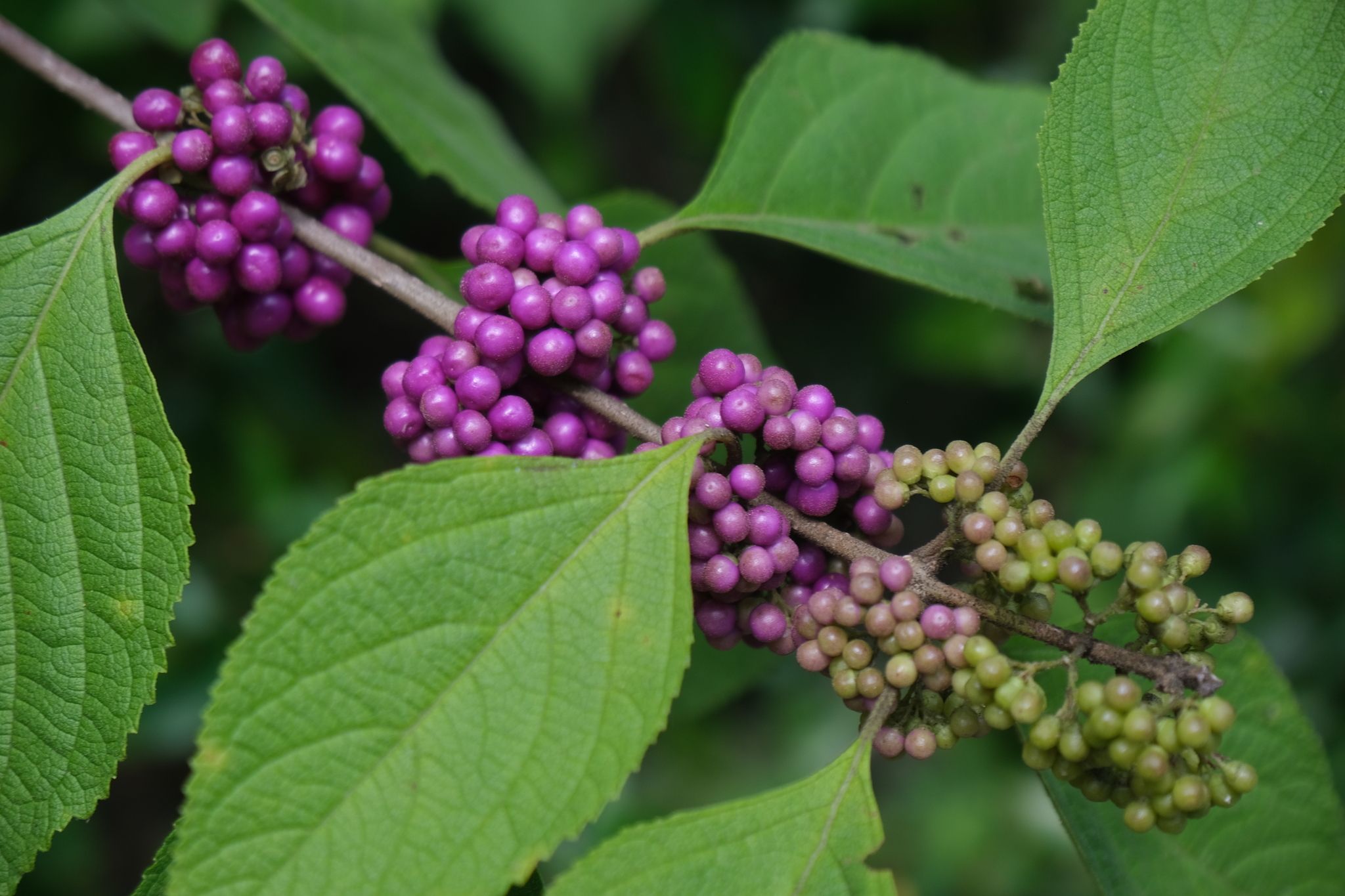
Photo of American Beautyberry (Callicarpa americana) by Alex Abair, licensed CC BY 4.0, via Wikimedia Commons.


I hope this helps you give American Beautyberry a truthful place in your garden, with respect for the record and plenty of room for good judgment.
Frequently asked questions
What traditional uses were recorded for American Beautyberry?
American Beautyberry was recorded among the Alabama for sweatbath use connected with malarial fever and rheumatism. Swanton documented roots and branches for both conditions in 1928, while Taylor documented roots and leaves for malarial fever in 1940. These are historical records from named sources, not present-day medical advice or proof that the plant treats illness now.
Who recorded American Beautyberry's uses among the Alabama?
John R. Swanton recorded American Beautyberry's root and branch uses among the Alabama in 1928, and Linda Averill Taylor recorded root and leaf uses in 1940. Swanton's source also includes rheumatism, while both accounts include malarial fever. The documentation identifies a historical practice, but it does not establish modern medical effectiveness.
Which parts of American Beautyberry were recorded in these practices?
The records name roots with branches in Swanton's account and roots with leaves in Taylor's account. The supplied data labels the formal part-used field as unspecified, so those descriptions should not be treated as a complete preparation guide. The historical sources identify plant parts, but they do not provide a modern recipe or dosage.
Who should grow American Beautyberry, and who should skip it?
American Beautyberry suits homeowners who want a low-water landscape shrub and have room for it to grow without expecting edible fruit. Balcony renters and gardeners seeking a human food crop should skip it. In Austin, choose a place that does not stay wet through winter, because low water needs do not protect a shrub from soggy alkaline clay.
Was American Beautyberry recorded as edible or toxic?
American Beautyberry was not recorded as palatable to humans in the supplied growing information, and no toxicity was recorded in the supplied material. That supports neither a food claim nor an invented warning. The practical trade-off is to treat the plant as a landscape subject rather than a harvest crop unless reliable, separate guidance says otherwise.
How should readers interpret American Beautyberry's historical medicinal record?
Readers should treat American Beautyberry's record as documented ethnobotany from Alabama, not as evidence of a present-day cure. Swanton and Taylor recorded sweatbath practices associated with malarial fever, and Swanton also recorded rheumatism. Their citations preserve the history, but they do not provide clinical proof, dosage, preparation instructions, or a basis for self-treatment.
Free, no obligation
Ready to design your dream landscape? Start here.
Tell us where you are and we will start a free profile for you, with plants that actually survive your climate and a real sense of what the build would cost.