
Traditional Uses of Rape (Brassica napus): Cherokee Ethnobotany
Rape (Brassica napus) has a long history of use among the Cherokee, recorded for a range of traditional remedies from fever to appetite stimulation. This article explores those specific uses, with every claim tied to its original source.
August 18, 2026
By Valeria Navarro
TL;DR: The Cherokee recorded several traditional uses for rape (Brassica napus), including remedies for fever, 'nervous fever,' dropsy, ague, palsy, and as a poultice for croup, as well as to stimulate appetite. All of these uses are documented in Hamel and Chiltoskey's 1975 ethnobotanical work. No toxicity has been recorded for this plant.
Last updated: August 18, 2026
What traditional uses of rape (Brassica napus) were recorded among the Cherokee?
Cherokee tradition documented rape (Brassica napus) for a range of internal and external remedies, including fever, 'nervous fever,' dropsy, ague, palsy, and as a poultice for croup. It was also taken to increase appetite. These uses were all recorded by Hamel and Chiltoskey in 1975.
Which parts of rape (Brassica napus) were used in Cherokee tradition?
The specific plant parts used in these Cherokee remedies were not detailed in the recorded source. All uses are attributed to the plant generally, without specifying leaf, root, or seed. This is typical of some older ethnobotanical records, where details can be sparse.

Photo by Harry Rose from South West Rocks, Australia, licensed CC BY 2.0, via Wikimedia Commons.
.jpg)
How confident are we in these traditional uses?
Each use of rape (Brassica napus) listed here is considered documented, not anecdotal or speculative. Hamel and Chiltoskey’s 1975 book is a respected source for Cherokee ethnobotany, but it does not provide modern clinical evidence. The confidence comes from the thoroughness of their fieldwork, not from scientific validation.
What are the trade-offs or limitations of growing rape (Brassica napus) at home?
Rape needs moderate water and is palatable to humans, making it a practical edible. The catch is it can be a space hog, and in Central Texas, heavy clay or caliche will challenge its roots. It won’t thrive in soil that stays soggy after rain or in spots with poor drainage.

Photo by Frank Vincentz, licensed CC BY-SA 3.0, via Wikimedia Commons.

Who should grow rape (Brassica napus) and who should skip it?
Homeowners with a bit of sun and space, and those interested in edible or traditional-use plants, are a good fit. If you’re gardening on dense clay that puddles or you only have a balcony, skip this one. It’s not for renters with no yard or folks who want a zero-maintenance plant.
How do the documented Cherokee uses of rape (Brassica napus) compare?
| Tradition | Part Used | What Was Recorded | Source |
|---|---|---|---|
| Cherokee | Unspecified | Taken for fever and 'nervous fever' | Hamel & Chiltoskey, 1975 |
| Cherokee | Unspecified | Taken for 'dropsy' | Hamel & Chiltoskey, 1975 |
| Cherokee | Unspecified | Taken for 'ague' | Hamel & Chiltoskey, 1975 |
| Cherokee | Unspecified | Taken for palsy | Hamel & Chiltoskey, 1975 |
| Cherokee | Unspecified | Used as a poultice for croup | Hamel & Chiltoskey, 1975 |
| Cherokee | Unspecified | Taken to increase the appetite | Hamel & Chiltoskey, 1975 |
Where can I learn more about traditional uses of edible plants?
You’ll find more about edible and traditional-use plants at our plants page. For a garden design that fits your own space and needs, check out get my concept. Always remember, traditional uses are part of a plant’s story, not a prescription for health today.
Frequently Asked Questions
What traditional medicinal uses of rape (Brassica napus) did the Cherokee record?
The Cherokee documented rape (Brassica napus) as a remedy for fever, 'nervous fever,' dropsy, ague, palsy, as a poultice for croup, and to increase appetite, according to Hamel and Chiltoskey, 1975.
Is rape (Brassica napus) toxic to humans?
No toxicity has been recorded for rape (Brassica napus) in the available sources. It is documented as palatable to humans and used both as food and in traditional remedies.
What growing conditions does rape (Brassica napus) require?
Rape (Brassica napus) requires moderate water and will struggle in heavy, waterlogged clay or poorly drained soils. It is palatable to humans, but needs enough space and sun to thrive.
Were specific plant parts of rape (Brassica napus) used in Cherokee tradition?
The specific parts of rape (Brassica napus) used in Cherokee tradition were not detailed in the source. All uses are attributed to the plant in general, without specifying leaves, roots, or seeds.
How reliable are the traditional uses recorded for rape (Brassica napus)?
These uses are well documented in Hamel and Chiltoskey’s 1975 ethnobotanical work, which is a respected source for Cherokee plant knowledge. However, these are traditional uses, not modern clinical recommendations.
Who should consider growing rape (Brassica napus) at home?
Homeowners with sun, space, and an interest in edible or traditional-use plants are good candidates for rape (Brassica napus). Renters, those with only balcony space, or gardeners on dense, wet clay should skip it.
Want this worked out for your own yard?
Dream Landscaper reads the conditions you actually have, then plans around them rather than around a generic zone chart. Start with the city plant guides to see what already thrives near you, and when you want a real layout instead of a list, get your concept and we will take it from there.
Sources
- Hamel, Paul B. and Mary U. Chiltoskey, 1975, Cherokee Plants and Their Uses -- A 400 Year History, Sylva, N.C. Herald Publishing Co., page 46
Valeria and Diego are not doctors, and nothing here is medical advice. This article shares traditional and ancestral plant wisdom that was passed down through generations. It may be beneficial when applied with your own discretion, and with medical supervision as needed.
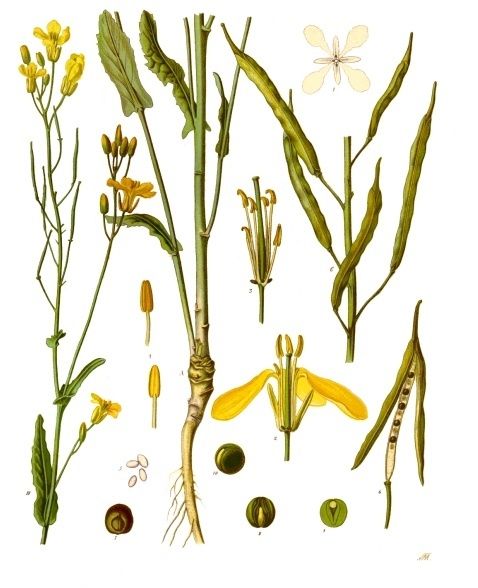
Photo of Rape (Brassica napus) by Walther Otto Müller, licensed Public domain, via Wikimedia Commons.


If you want to grow something with a real story behind it, rape (Brassica napus) brings both food and history to the table.
Frequently asked questions
What traditional medicinal uses of rape (Brassica napus) did the Cherokee record?
The Cherokee documented rape (Brassica napus) as a remedy for fever, 'nervous fever,' dropsy, ague, palsy, as a poultice for croup, and to increase appetite, according to Hamel and Chiltoskey, 1975.
Is rape (Brassica napus) toxic to humans?
No toxicity has been recorded for rape (Brassica napus) in the available sources. It is documented as palatable to humans and used both as food and in traditional remedies.
What growing conditions does rape (Brassica napus) require?
Rape (Brassica napus) requires moderate water and will struggle in heavy, waterlogged clay or poorly drained soils. It is palatable to humans, but needs enough space and sun to thrive.
Were specific plant parts of rape (Brassica napus) used in Cherokee tradition?
The specific parts of rape (Brassica napus) used in Cherokee tradition were not detailed in the source. All uses are attributed to the plant in general, without specifying leaves, roots, or seeds.
How reliable are the traditional uses recorded for rape (Brassica napus)?
These uses are well documented in Hamel and Chiltoskey’s 1975 ethnobotanical work, which is a respected source for Cherokee plant knowledge. However, these are traditional uses, not modern clinical recommendations.
Who should consider growing rape (Brassica napus) at home?
Homeowners with sun, space, and an interest in edible or traditional-use plants are good candidates for rape (Brassica napus). Renters, those with only balcony space, or gardeners on dense, wet clay should skip it.
Free, no obligation
Ready to design your dream landscape? Start here.
Tell us where you are and we will start a free profile for you, with plants that actually survive your climate and a real sense of what the build would cost.