
Traditional uses of Whiteleaf Manzanita (Arctostaphylos manzanita)
Whiteleaf Manzanita, native to the western US, was used by the Concow and Miwok for topical and internal remedies. Its leaves and cider were recorded in documented traditions, but its fruit was considered poisonous by some groups.
August 12, 2026
By Valeria Navarro
TL;DR: Whiteleaf Manzanita was used by the Concow and Miwok peoples for a range of traditional remedies, including poultices for sores, treatments for horses, and cider for appetite and stomach trouble. The fruit was considered poisonous by the Mendocino Indian, and no toxicity to humans has been recorded in modern sources.
Last updated: August 12, 2026
What traditional uses of Whiteleaf Manzanita have been recorded?
Whiteleaf Manzanita was used by the Concow and Miwok peoples for various remedies, including poultices for sores, treatments for horses, cider for appetite and stomach trouble, and chewed leaves for stomachache and cramps. The Mendocino Indian considered the fruit poisonous (Chestnut, 1902; Barrett & Gifford, 1933).
Who should grow Whiteleaf Manzanita and who should skip it?
Grow Whiteleaf Manzanita if you have dry, rocky soil and want a low-water shrub with native roots. Skip it if you need edible fruit or have heavy, wet clay that never dries out. It is not recorded as palatable to humans, and it will struggle in soggy Blackland Prairie clay.

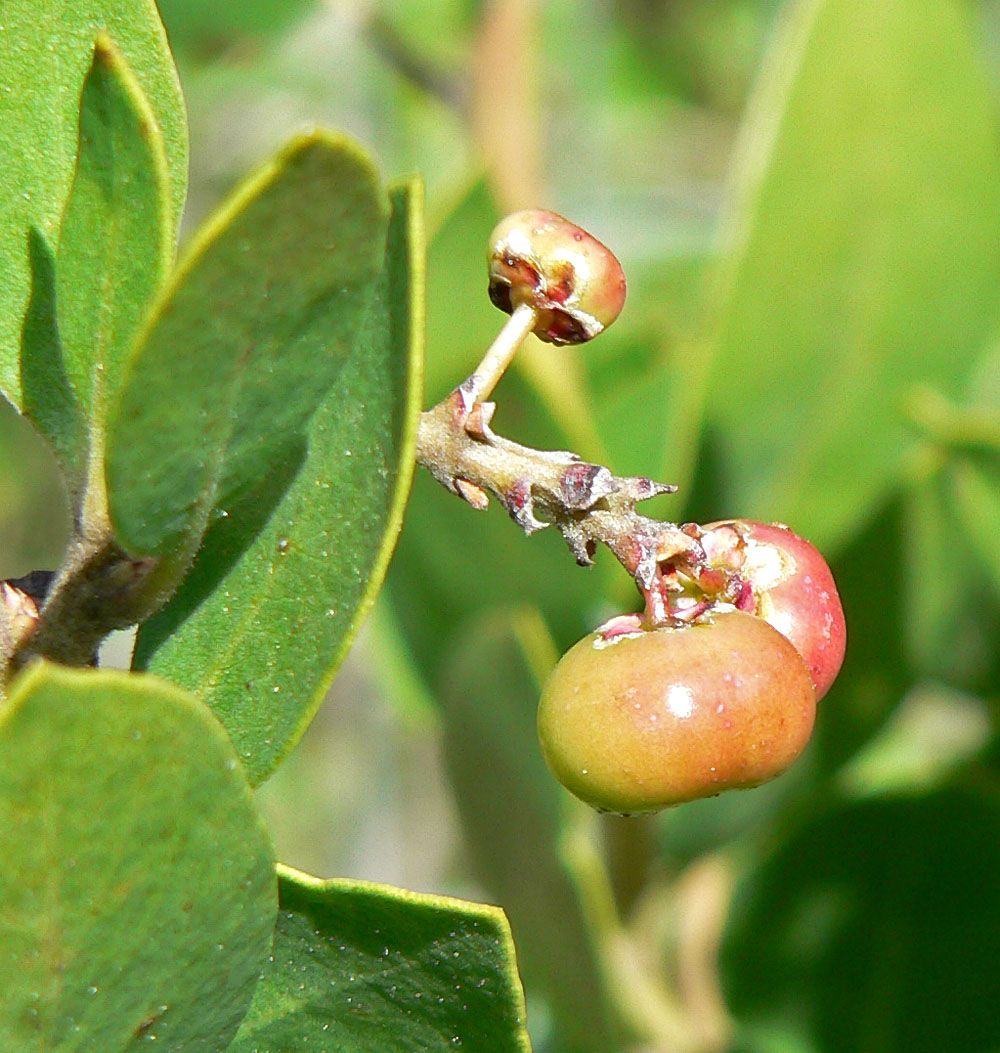
Photo by John Rusk from Berkeley, CA, United States of America, licensed CC BY 2.0, via Wikimedia Commons.
.jpg)
How did the Concow use Whiteleaf Manzanita?
The Concow applied a poultice of chewed leaves to sores and used the plant for the sore backs of horses (Chestnut, 1902). These uses were documented in Mendocino County, California, and reflect practical, topical applications rather than internal remedies.
What did the Miwok record about Whiteleaf Manzanita?
The Miwok used cider made from Whiteleaf Manzanita as an appetizer to create appetite and for stomach trouble. They also chewed the leaves for stomachache and cramps (Barrett & Gifford, 1933). These traditions were recorded as part of Miwok material culture in the 1930s.

Photo by Paul Asman and Jill Lenoble, licensed CC BY 2.0, via Wikimedia Commons.

Was Whiteleaf Manzanita fruit considered safe to eat?
The Mendocino Indian considered the fruit of Whiteleaf Manzanita to be poisonous (Chestnut, 1902). There are no modern toxicity warnings, but this traditional caution means the fruit is not recommended for human consumption.
How do the documented traditions compare?
| Tradition | Part Used | What Was Recorded | Source |
|---|---|---|---|
| Concow | Unspecified | Poultice of chewed leaves applied to sores | Chestnut, 1902, p. 375 |
| Concow | Unspecified | Plant used for sore backs of horses | Chestnut, 1902, p. 375 |
| Mendocino Indian | Unspecified | Fruit considered poisonous | Chestnut, 1902, p. 375 |
| Miwok | Unspecified | Cider employed as an appetizer to create appetite | Barrett & Gifford, 1933, p. 161162 |
| Miwok | Unspecified | Cider used for stomach trouble | Barrett & Gifford, 1933, p. 161162 |
| Miwok | Unspecified | Leaves chewed for stomachache and cramps | Barrett & Gifford, 1933, p. 161162 |
What are the trade-offs of growing Whiteleaf Manzanita?
Whiteleaf Manzanita is drought tolerant and thrives in rocky, well-drained soils, but it will not produce edible fruit and can struggle in heavy, wet clay. It is not a good fit for gardeners looking for a fruiting shrub or those with consistently damp soil.
Frequently Asked Questions
What traditional medicinal uses of Whiteleaf Manzanita were recorded?
Whiteleaf Manzanita was used by the Concow and Miwok for various remedies. The Concow applied chewed leaves as a poultice for sores and used the plant for sore backs of horses, while the Miwok used cider for appetite and stomach trouble and chewed leaves for stomachache and cramps, as documented in early 20th-century sources.
Is Whiteleaf Manzanita fruit safe to eat?
The fruit of Whiteleaf Manzanita was considered poisonous by the Mendocino Indian, according to a 1902 ethnobotanical record. Modern sources do not record toxicity to humans, but the traditional caution means the fruit should not be considered safe for human consumption.
How was Whiteleaf Manzanita used for animals?
Among the Concow, Whiteleaf Manzanita was used for the sore backs of horses. This use was recorded in Mendocino County, California, and reflects the plant's role in traditional animal care rather than as a food or internal remedy.
What conditions did the Miwok use Whiteleaf Manzanita for?
The Miwok used cider made from Whiteleaf Manzanita as an appetizer to create appetite and for stomach trouble. They also chewed the leaves to relieve stomachache and cramps, as documented in a 1933 ethnobotanical study.
Is Whiteleaf Manzanita a good choice for Central Texas gardens?
Whiteleaf Manzanita is drought tolerant and prefers rocky, well-drained soils, making it a potential fit for Central Texas gardens with similar conditions. However, it will struggle in heavy, wet clay and does not produce edible fruit, so it is not ideal for every situation.
Are there any toxicity warnings for Whiteleaf Manzanita?
No modern toxicity warnings for Whiteleaf Manzanita have been recorded, but the fruit was considered poisonous by the Mendocino Indian in historical accounts. This traditional caution suggests avoiding the fruit, even though no current toxicity to humans is documented.
Want this worked out for your own yard?
Dream Landscaper reads the conditions you actually have, then plans around them rather than around a generic zone chart. Start with the city plant guides to see what already thrives near you, and when you want a real layout instead of a list, get your concept and we will take it from there.
Sources
- Chestnut, V. K., 1902, Plants Used by the Indians of Mendocino County, California, Contributions from the U.S. National Herbarium 7:295-408., page 375
- Barrett, S. A. and E. W. Gifford, 1933, Miwok Material Culture, Bulletin of the Public Museum of the City of Milwaukee 2(4):11, page 161162
Valeria and Diego are not doctors, and nothing here is medical advice. This article shares traditional and ancestral plant wisdom that was passed down through generations. It may be beneficial when applied with your own discretion, and with medical supervision as needed.
Photo of Whiteleaf Manzanita (Arctostaphylos manzanita) by an unnamed Wikimedia contributor, licensed CC BY-SA 3.0, via Wikimedia Commons.


Thanks for exploring the roots and stories of Whiteleaf Manzanita with me today.
Frequently asked questions
What traditional medicinal uses of Whiteleaf Manzanita were recorded?
Whiteleaf Manzanita was used by the Concow and Miwok for various remedies. The Concow applied chewed leaves as a poultice for sores and used the plant for sore backs of horses, while the Miwok used cider for appetite and stomach trouble and chewed leaves for stomachache and cramps, as documented in early 20th-century sources.
Is Whiteleaf Manzanita fruit safe to eat?
The fruit of Whiteleaf Manzanita was considered poisonous by the Mendocino Indian, according to a 1902 ethnobotanical record. Modern sources do not record toxicity to humans, but the traditional caution means the fruit should not be considered safe for human consumption.
How was Whiteleaf Manzanita used for animals?
Among the Concow, Whiteleaf Manzanita was used for the sore backs of horses. This use was recorded in Mendocino County, California, and reflects the plant's role in traditional animal care rather than as a food or internal remedy.
What conditions did the Miwok use Whiteleaf Manzanita for?
The Miwok used cider made from Whiteleaf Manzanita as an appetizer to create appetite and for stomach trouble. They also chewed the leaves to relieve stomachache and cramps, as documented in a 1933 ethnobotanical study.
Is Whiteleaf Manzanita a good choice for Central Texas gardens?
Whiteleaf Manzanita is drought tolerant and prefers rocky, well-drained soils, making it a potential fit for Central Texas gardens with similar conditions. However, it will struggle in heavy, wet clay and does not produce edible fruit, so it is not ideal for every situation.
Are there any toxicity warnings for Whiteleaf Manzanita?
No modern toxicity warnings for Whiteleaf Manzanita have been recorded, but the fruit was considered poisonous by the Mendocino Indian in historical accounts. This traditional caution suggests avoiding the fruit, even though no current toxicity to humans is documented.
Free, no obligation
Ready to design your dream landscape? Start here.
Tell us where you are and we will start a free profile for you, with plants that actually survive your climate and a real sense of what the build would cost.