
Traditional Uses of Western Columbine (Aquilegia formosa)
Western Columbine, Aquilegia formosa, was used by the Paiute for joint pain, coughs, colds, and as a perfume, with all uses documented in the early 20th century. No toxicity or food use has been recorded for this plant.
September 16, 2026
By Diego Navarro
TL;DR: Western Columbine (Aquilegia formosa) was traditionally used by the Paiute for joint pain, coughs, colds, and as a natural perfume, with all uses documented between 1932 and 1953. No toxicity or food use has been recorded, and all reported uses are external or for minor ailments, not as a food plant.
Last updated: September 16, 2026
What traditional uses of Western Columbine were recorded among the Paiute?
Western Columbine was used by the Paiute for joint pain, coughs, colds, and as a perfume, with all uses documented in the early to mid-20th century. The roots were mashed and rubbed on rheumatic joints, leaves and roots were used for colds and coughs, and seeds were used as a scent for the body and clothing.
How did the Paiute use Western Columbine for joint pain?
The Paiute used mashed fresh roots of Western Columbine, rubbing them briskly on aching rheumatic joints as a recorded remedy. This practice was documented by Train, Henrichs, and Archer in 1941 (Medicinal Uses of Plants by Indian Tribes of Nevada, page 37).

Photo by Daniel Schwen, licensed CC BY-SA 4.0, via Wikimedia Commons.

What was recorded about Western Columbine for coughs and colds?
A decoction of leaves was taken for colds, and both a decoction of roots and chewed leaves were used for coughs among the Paiute. These uses were documented by Kelly in 1932 (Ethnography of the Surprise Valley Paiute, page 197) and by Train, Henrichs, and Archer in 1941 (page 37).
How was Western Columbine used as a perfume or scent?
Chewed seeds of Western Columbine were rubbed on the body and clothing for perfume and also stored in sachets with clothing. This use was documented among the Paiute by Mahar in 1953 (Ethnobotany of the Oregon Paiutes, page 71).

Photo by brewbooks from near Seattle, USA, licensed CC BY-SA 2.0, via Wikimedia Commons.

Who should grow Western Columbine, and who should skip it?
Western Columbine is a good fit for gardeners looking for a moderate water plant with cultural history, especially in regions with well-draining soil. Skip it if you need a plant for heavy clay that stays wet, or if you want something edible or palatable to humans. It is not recorded as toxic, but it is not a food plant.
How do the documented traditions compare?
| Tradition | Part Used | What Was Recorded | Source |
|---|---|---|---|
| Paiute | Roots | Mashed fresh roots rubbed on rheumatic joints | Train, Henrichs, Archer, 1941, p. 37 |
| Paiute | Leaves | Decoction of leaves taken for colds | Kelly, 1932, p. 197 |
| Paiute | Roots | Decoction of roots taken as a cough remedy | Train, Henrichs, Archer, 1941, p. 37 |
| Paiute | Leaves | Leaves chewed for coughs | Kelly, 1932, p. 197 |
| Paiute | Seeds | Chewed seeds rubbed on body and clothing for perfume, stored with clothing | Mahar, 1953, p. 71 |
Frequently Asked Questions
How did the Paiute use Western Columbine for joint pain?
The Paiute used mashed fresh roots of Western Columbine, rubbing them briskly on aching rheumatic joints as a remedy. This practice was recorded by Train, Henrichs, and Archer in 1941, and is one of the best-documented traditional uses for this plant.
Was Western Columbine used for coughs or colds?
Yes, the Paiute used a decoction of leaves for colds, and both a decoction of roots and chewed leaves for coughs. These uses were documented by Kelly in 1932 and by Train, Henrichs, and Archer in 1941, showing the plant's role in traditional remedies for respiratory issues.
Did the Paiute use Western Columbine as a food plant?
No, there is no record of Western Columbine being used as a food plant by the Paiute or any other group. It was used for external and minor medicinal purposes, as well as for scent, but not for eating.
Is Western Columbine toxic to humans or animals?
There is no recorded toxicity for Western Columbine in the sources cited. However, since it is not recorded as palatable or edible, it is not recommended for consumption, and its traditional uses were external or for minor ailments.
How was Western Columbine used as a perfume?
The Paiute chewed the seeds of Western Columbine and rubbed them on their body and clothing for perfume, and also stored the seeds in sachets with clothing. This use was documented by Mahar in 1953 and is unique among the recorded uses.
Who should consider growing Western Columbine?
Gardeners interested in a moderate water plant with cultural and historical significance might consider Western Columbine. It is not suited for heavy clay that stays wet, nor for those seeking edible or highly palatable plants, but it offers ornamental and heritage value.
Want this worked out for your own yard?
Dream Landscaper reads the conditions you actually have, then plans around them rather than around a generic zone chart. Start with the city plant guides to see what already thrives near you, and when you want a real layout instead of a list, get your concept and we will take it from there.
Sources
- Train, Percy, James R. Henrichs and W. Andrew Archer, 1941, Medicinal Uses of Plants by Indian Tribes of Nevada, Washington DC. U.S. Department of Agriculture, page 37
- Kelly, Isabel T., 1932, Ethnography of the Surprise Valley Paiute, University of California Publications in American Archaeology and Ethnology 31(3):67-210, page 197
- Mahar, James Michael., 1953, Ethnobotany of the Oregon Paiutes of the Warm Springs Indian Reservation, Reed College, B.A. Thesis, page 71
Valeria and Diego are not doctors, and nothing here is medical advice. This article shares traditional and ancestral plant wisdom that was passed down through generations. It may be beneficial when applied with your own discretion, and with medical supervision as needed.
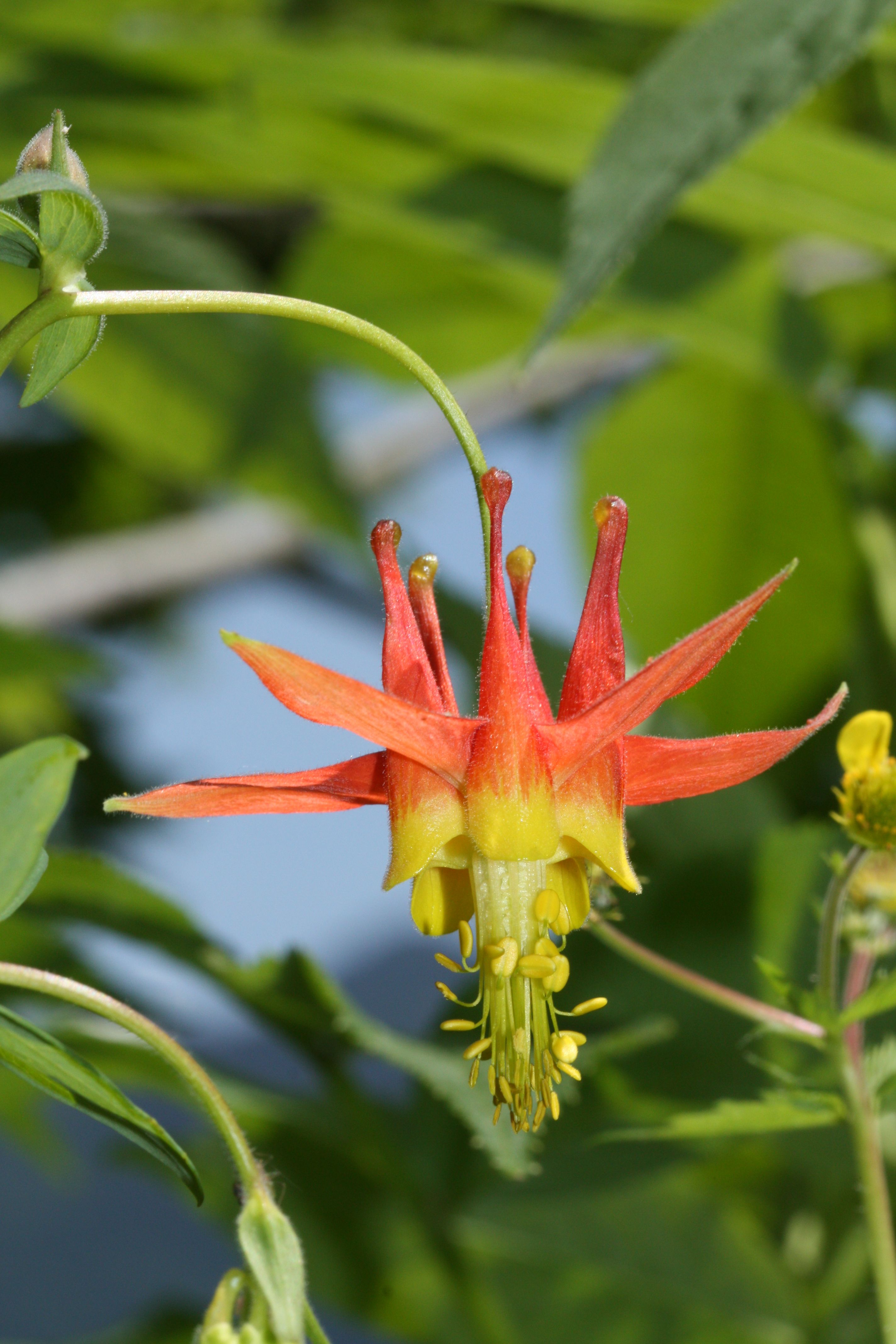
Photo of Western Columbine (Aquilegia formosa) by Walter Siegmund (talk), licensed CC BY-SA 3.0, via Wikimedia Commons.


Thanks for letting me share these stories from the garden and the past with you.
Frequently asked questions
How did the Paiute use Western Columbine for joint pain?
The Paiute used mashed fresh roots of Western Columbine, rubbing them briskly on aching rheumatic joints as a remedy. This practice was recorded by Train, Henrichs, and Archer in 1941, and is one of the best-documented traditional uses for this plant.
Was Western Columbine used for coughs or colds?
Yes, the Paiute used a decoction of leaves for colds, and both a decoction of roots and chewed leaves for coughs. These uses were documented by Kelly in 1932 and by Train, Henrichs, and Archer in 1941, showing the plant's role in traditional remedies for respiratory issues.
Did the Paiute use Western Columbine as a food plant?
No, there is no record of Western Columbine being used as a food plant by the Paiute or any other group. It was used for external and minor medicinal purposes, as well as for scent, but not for eating.
Is Western Columbine toxic to humans or animals?
There is no recorded toxicity for Western Columbine in the sources cited. However, since it is not recorded as palatable or edible, it is not recommended for consumption, and its traditional uses were external or for minor ailments.
How was Western Columbine used as a perfume?
The Paiute chewed the seeds of Western Columbine and rubbed them on their body and clothing for perfume, and also stored the seeds in sachets with clothing. This use was documented by Mahar in 1953 and is unique among the recorded uses.
Who should consider growing Western Columbine?
Gardeners interested in a moderate water plant with cultural and historical significance might consider Western Columbine. It is not suited for heavy clay that stays wet, nor for those seeking edible or highly palatable plants, but it offers ornamental and heritage value.
Free, no obligation
Ready to design your dream landscape? Start here.
Tell us where you are and we will start a free profile for you, with plants that actually survive your climate and a real sense of what the build would cost.