
Traditional Uses of White Alder (Alnus rhombifolia)
Historical records from Mendocino County and the Kawaiisu document White Alder as a medicinal plant, including uses for diarrhea, hemorrhages associated with consumption, perspiration, burns, and a broader medicinal purpose. Here is what those sources say, what they do not establish, and where White Alder fits in a Central Texas landscape.
September 23, 2026
By Diego Navarro
TL;DR: White Alder was documented among the Mendocino Indian for several medicinal uses, including diarrhea, hemorrhages associated with consumption, blood purification, perspiration, and burns, while the Kawaiisu record describes it more generally as medicine. These are historical ethnobotanical records, not modern medical evidence, and White Alder requires consistently high water availability in the landscape.
Last updated: September 23, 2026
White Alder's documented traditional uses include medicinal bark and wood applications recorded among the Mendocino Indian, along with a broader medicinal use recorded among the Kawaiisu. The tree also has a high recorded water requirement, so it is a poor choice for a dry Central Texas bed that depends on rainfall alone.
What traditional uses of White Alder were recorded?
Historical records document White Alder as medicine among the Mendocino Indian and the Kawaiisu, but the two sources differ in detail. Chestnut recorded specific uses involving dried bark for diarrhea, hemorrhages associated with consumption, blood purification, and perspiration, plus dried wood for burns; Zigmond recorded medicine more generally. Both records are historical, not present-day treatment guidance.
| Tradition | Part used | What was recorded | Source |
|---|---|---|---|
| Mendocino Indian | Unspecified in the record | Dried bark decoction recorded for diarrhea, to check hemorrhages for consumption, as a blood purifier, and to perspire; dried wood poultice recorded for burns. | Chestnut, V. K., 1902, Plants Used by the Indians of Mendocino County, California, Contributions from the U.S. National Herbarium 7:295-408., page 332 |
| Kawaiisu | Unspecified in the record | White Alder recorded as a plant used as medicine. | Zigmond, Maurice L., 1981, Kawaiisu Ethnobotany, Salt Lake City. University of Utah Press, page 10 |
Did the Mendocino record name specific White Alder uses?
Chestnut's 1902 account recorded the Mendocino Indian using dried White Alder bark in a decoction for diarrhea, to check hemorrhages for consumption, as a blood purifier, and to perspire. The same account recorded a poultice of dried White Alder wood applied to burns. The source identifies the uses, but it does not establish modern effectiveness or safety. (Chestnut, V. K., 1902, Plants Used by the Indians of Mendocino County, California, Contributions from the U.S. National Herbarium 7:295-408., page 332)
The record is specific about the historical purposes, not about a modern clinical explanation. I’m keeping the wording close to the source because “blood purifier” is a traditional category, not a diagnosis, and “consumption” is the condition named in the account. That distinction matters. A citation should tell you what was recorded, not pretend the old record tested the claim.

Photo by John Rusk from Berkeley, CA, United States of America, licensed CC BY 2.0, via Wikimedia Commons.
.jpg)
What did the Kawaiisu record say about White Alder?
Zigmond's 1981 Kawaiisu ethnobotany recorded White Alder as a plant used as medicine, without specifying a condition, preparation, plant part, or narrower purpose. That is a documented entry, but it carries less detail than Chestnut's Mendocino account. It supports reporting a general medicinal role, not adding uses that the Kawaiisu source does not name. (Zigmond, Maurice L., 1981, Kawaiisu Ethnobotany, Salt Lake City. University of Utah Press, page 10)
The short entry is still worth keeping. Ethnobotanical records are uneven, and a brief record should stay brief rather than being padded with a nearby tradition's details. That is how a source turns into an advertisement wearing a citation.
Who should grow White Alder and who should skip it?
White Alder suits a property with a dependable high-water site, such as a stream edge or landscape that can maintain steady irrigation, and it may interest gardeners studying California native trees and documented plant traditions. A renter with a balcony, a gardener on dry caliche, or anyone relying only on rainfall should skip it. Start with the plant directory if you need a better site match.
Central Texas makes the trade-off plain: a tree recorded with high water requirements is not a casual fit for a bed that bakes through August. Black clay that cracks and swells can also move a young tree before roots settle, while shallow limestone can turn planting into a rock-bar conversation. White Alder is a site-specific choice, not a tough-tree shortcut.

Photo by Eeekster, licensed CC BY 3.0, via Wikimedia Commons.

Does White Alder have recorded food or toxicity information?
White Alder is not recorded here as palatable to humans, and no toxicity status is recorded in the supplied data. That means the sources do not provide a food use or a toxicity warning to report. It does not mean White Alder is established as edible or harmless, so the responsible description is simply that the records are silent on those points.
Gardeners should also keep the historical medicinal entries separate from food information. Chestnut's recorded bark and wood uses describe tradition, while the supplied growing notes describe water demand. Neither set of information gives permission to eat, prepare, or apply the plant today.
How should gardeners read these historical White Alder records?
Read the White Alder records as evidence of what named communities documented, with each use tied to its source and date. The Mendocino account is detailed but historical, while the Kawaiisu entry is broad and brief. Neither source is modern medical evidence, and neither supports dosage, preparation instructions, or a claim that White Alder treats a condition today.
For a landscape decision, pair the ethnobotanical record with the site facts: White Alder has a high recorded water requirement and is not recorded as palatable to humans. If you’re sketching a difficult yard, the get-my-concept tool can help organize the site before you buy a tree. A beautiful plant in the wrong water regime is still the wrong plant.
Frequently Asked Questions
What traditional uses of White Alder were recorded?
White Alder was recorded among the Mendocino Indian for diarrhea, hemorrhages associated with consumption, blood purification, perspiration, and burns, while the Kawaiisu record described the plant generally as medicine. Chestnut documented the Mendocino uses in 1902, and Zigmond documented the Kawaiisu entry in 1981. These records describe tradition, not modern medical treatment. (Chestnut, V. K., 1902, Plants Used by the Indians of Mendocino County, California, Contributions from the U.S. National Herbarium 7:295-408., page 332; Zigmond, Maurice L., 1981, Kawaiisu Ethnobotany, Salt Lake City. University of Utah Press, page 10)
Did the Mendocino record name specific White Alder uses?
Yes. Chestnut's 1902 record says the Mendocino Indian used dried White Alder bark in a decoction for diarrhea, to check hemorrhages for consumption, as a blood purifier, and to perspire, while dried wood was recorded in a poultice applied to burns. The account does not establish modern effectiveness, safety, dosage, or preparation guidance. (Chestnut, V. K., 1902, Plants Used by the Indians of Mendocino County, California, Contributions from the U.S. National Herbarium 7:295-408., page 332)
What did the Kawaiisu record say about White Alder?
The Kawaiisu record described White Alder as a plant used as medicine, but it did not specify a condition, plant part, preparation, or narrower purpose. Maurice L. Zigmond documented that entry in Kawaiisu Ethnobotany in 1981. Because the source is broad, it should not be expanded with the more detailed Mendocino uses. (Zigmond, Maurice L., 1981, Kawaiisu Ethnobotany, Salt Lake City. University of Utah Press, page 10)
Who should grow White Alder and who should skip it?
White Alder is best suited to a landscape with dependable high water availability, such as a streamside site or a garden with reliable irrigation. Gardeners on dry caliche, renters with balconies, and homeowners relying on rainfall should skip it. In Central Texas, a tree with a high recorded water requirement can become a maintenance problem once August settles in.
Does White Alder have recorded food or toxicity information?
White Alder is not recorded as palatable to humans in the supplied data, and no toxicity status is recorded there. Those facts mean the records do not provide a food use or toxicity warning to report. They do not establish that the plant is edible or harmless, so the historical medicinal entries should not be treated as permission to consume or apply it.
How should gardeners read these historical White Alder records?
Gardeners should read the White Alder records as dated documentation of traditional knowledge, not as modern medical evidence. The Mendocino source gives several named uses, while the Kawaiisu source gives only a general medicinal entry. White Alder also has a high recorded water requirement, so the historical record and the planting site must be considered separately.
Want this worked out for your own yard?
Dream Landscaper reads the conditions you actually have, then plans around them rather than around a generic zone chart. Start with the city plant guides to see what already thrives near you, and when you want a real layout instead of a list, get your concept and we will take it from there.
Sources
- Chestnut, V. K., 1902, Plants Used by the Indians of Mendocino County, California, Contributions from the U.S. National Herbarium 7:295-408., page 332
- Zigmond, Maurice L., 1981, Kawaiisu Ethnobotany, Salt Lake City. University of Utah Press, page 10
Valeria and Diego are not doctors, and nothing here is medical advice. This article shares traditional and ancestral plant wisdom that was passed down through generations. It may be beneficial when applied with your own discretion, and with medical supervision as needed.
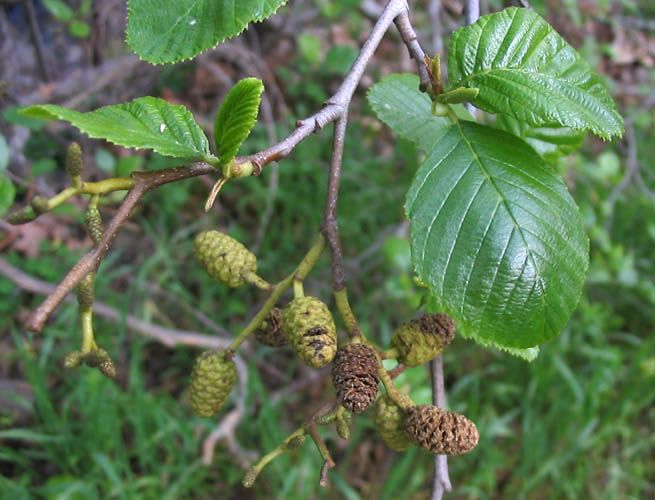
Photo of White Alder (Alnus rhombifolia) by US NPS Santa Monica Mountains National Recreation Area [2], licensed Public domain, via Wikimedia Commons.


I hope this gives you a clear record and an honest planting decision before you put a shovel in the ground.
Frequently asked questions
What traditional uses of White Alder were recorded?
White Alder was recorded among the Mendocino Indian for diarrhea, hemorrhages associated with consumption, blood purification, perspiration, and burns, while the Kawaiisu record described the plant generally as medicine. Chestnut documented the Mendocino uses in 1902, and Zigmond documented the Kawaiisu entry in 1981. These records describe tradition, not modern medical treatment. (Chestnut, V. K., 1902, Plants Used by the Indians of Mendocino County, California, Contributions from the U.S. National Herbarium 7:295-408., page 332; Zigmond, Maurice L., 1981, Kawaiisu Ethnobotany, Salt Lake City. University of Utah Press, page 10)
Did the Mendocino record name specific White Alder uses?
Yes. Chestnut's 1902 record says the Mendocino Indian used dried White Alder bark in a decoction for diarrhea, to check hemorrhages for consumption, as a blood purifier, and to perspire, while dried wood was recorded in a poultice applied to burns. The account does not establish modern effectiveness, safety, dosage, or preparation guidance. (Chestnut, V. K., 1902, Plants Used by the Indians of Mendocino County, California, Contributions from the U.S. National Herbarium 7:295-408., page 332)
What did the Kawaiisu record say about White Alder?
The Kawaiisu record described White Alder as a plant used as medicine, but it did not specify a condition, plant part, preparation, or narrower purpose. Maurice L. Zigmond documented that entry in Kawaiisu Ethnobotany in 1981. Because the source is broad, it should not be expanded with the more detailed Mendocino uses. (Zigmond, Maurice L., 1981, Kawaiisu Ethnobotany, Salt Lake City. University of Utah Press, page 10)
Who should grow White Alder and who should skip it?
White Alder is best suited to a landscape with dependable high water availability, such as a streamside site or a garden with reliable irrigation. Gardeners on dry caliche, renters with balconies, and homeowners relying on rainfall should skip it. In Central Texas, a tree with a high recorded water requirement can become a maintenance problem once August settles in.
Does White Alder have recorded food or toxicity information?
White Alder is not recorded as palatable to humans in the supplied data, and no toxicity status is recorded there. Those facts mean the records do not provide a food use or toxicity warning to report. They do not establish that the plant is edible or harmless, so the historical medicinal entries should not be treated as permission to consume or apply it.
How should gardeners read these historical White Alder records?
Gardeners should read the White Alder records as dated documentation of traditional knowledge, not as modern medical evidence. The Mendocino source gives several named uses, while the Kawaiisu source gives only a general medicinal entry. White Alder also has a high recorded water requirement, so the historical record and the planting site must be considered separately.
Free, no obligation
Ready to design your dream landscape? Start here.
Tell us where you are and we will start a free profile for you, with plants that actually survive your climate and a real sense of what the build would cost.