
Traditional Uses of Common Maidenhair (Adiantum capillus-veneris)
Explore how the Common Maidenhair fern was traditionally used by Native American groups, including remedies for rheumatism and stings, as recorded in mid-20th-century ethnobotanical sources.
September 5, 2026
By Valeria Navarro
TL;DR: Common Maidenhair (Adiantum capillus-veneris) was used by the Mahuna for rheumatism and by the Kayenta Navajo as a lotion for bumblebee or centipede stings, and also for insanity, according to sources from the 1950s. All uses are historical, with no toxicity recorded and no evidence of palatability for humans.
Last updated: September 5, 2026
What traditional uses of Common Maidenhair have been recorded?
Common Maidenhair was used by the Mahuna for rheumatism and by the Kayenta Navajo for stings and insanity, as documented in mid-20th-century ethnobotanical works. These uses come from specific Native American traditions and are not general claims about the plant's effects.
How did the Mahuna and Navajo use Common Maidenhair?
The Mahuna used Common Maidenhair for rheumatism, while the Kayenta Navajo recorded using an infusion as a lotion for bumblebee or centipede stings, and also smoked or infused the plant for insanity. Each use was documented by researchers in the 1950s, reflecting distinct cultural practices.
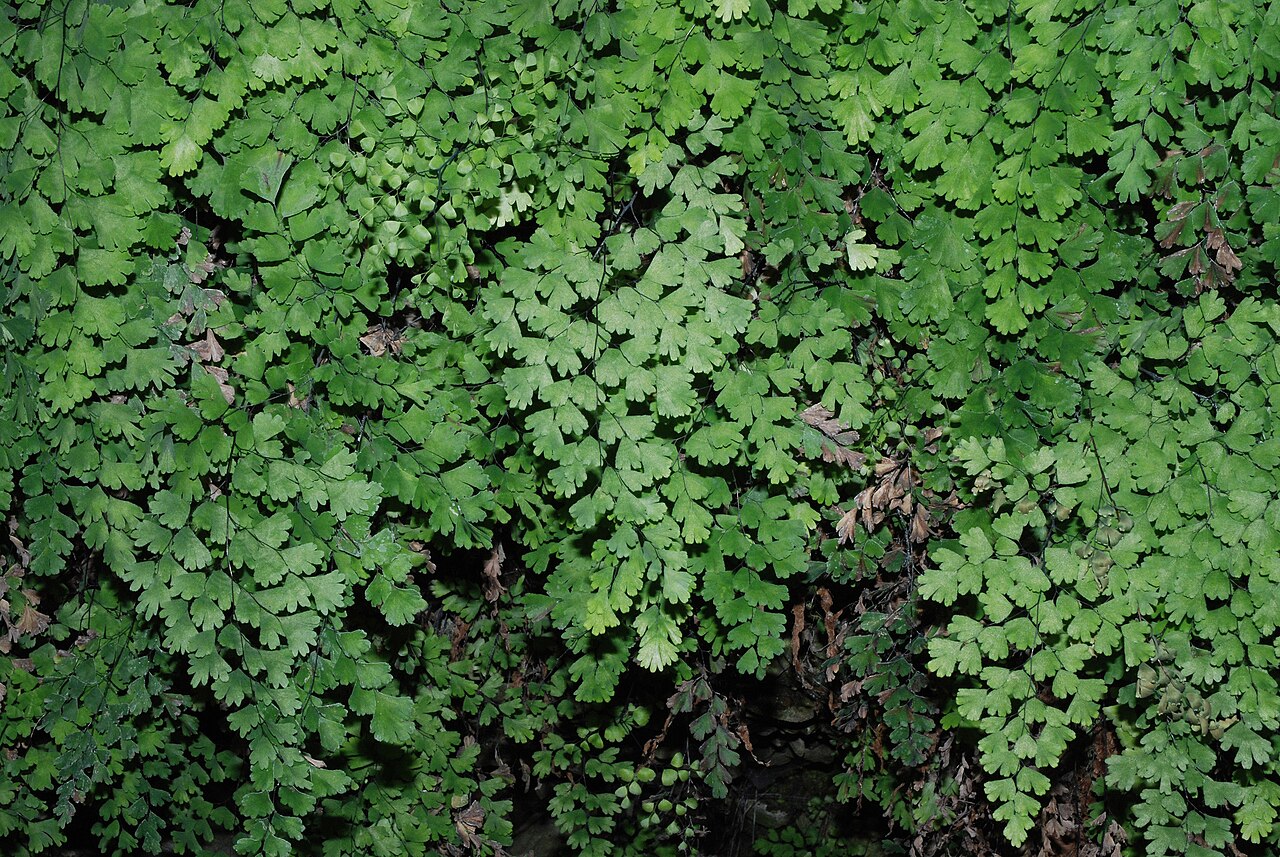
Photo by Tigerente, licensed CC BY-SA 3.0, via Wikimedia Commons.

Which parts of Common Maidenhair were used in these traditions?
The recorded sources do not specify which part of Common Maidenhair was used in these remedies. All mentions refer to the plant generally, without detail on whether fronds, roots, or another part was preferred.
Who should consider growing Common Maidenhair, and who should skip it?
Common Maidenhair needs a lot of water and will not thrive in dry, shallow, or fast-draining soils like the fill you find in new Austin builds. It is best for gardeners with reliably moist, shady spots, think a north-facing patio or a protected spot near a hose bib. Skip it if your only option is a sunny, exposed bed or if you have a cat that chews leaves, since it is not recorded as palatable but also not toxic.

Photo by Stan Shebs, licensed CC BY-SA 3.0, via Wikimedia Commons.

What are the trade-offs of growing Common Maidenhair in Central Texas?
Common Maidenhair is a diva about water. It will crisp up fast in Blackland Prairie clay if you let it dry out, and it does not bounce back from a hard drought. You trade off drought tolerance for delicate beauty, so only plant it where you can keep the soil consistently moist.
How do the traditional uses of Common Maidenhair compare?
| Tradition | Part Used | What Was Recorded | Source |
|---|---|---|---|
| Mahuna | Unspecified | Plant used for rheumatism | Romero, John Bruno, 1954, The Botanical Lore of the California Indians |
| Kayenta Navajo | Unspecified | Infusion of plant used as a lotion for bumblebee or centipede stings | Wyman, Leland C. and Stuart K. Harris, 1951, The Ethnobotany of the Kayenta Navaho |
| Kayenta Navajo | Unspecified | Plant smoked or infusion of plant used for insanity | Wyman, Leland C. and Stuart K. Harris, 1951, The Ethnobotany of the Kayenta Navaho |
Where can I learn more about other traditional plants?
You can find more about traditional and ancestral plant uses at our plants directory. If you want help figuring out what will work in your own space, check out get my concept for a custom plan.
Frequently Asked Questions
What did the Mahuna use Common Maidenhair for?
The Mahuna used Common Maidenhair for rheumatism, as documented by John Bruno Romero in 1954. The specific part of the plant was not recorded, but this use was part of their traditional botanical knowledge.
How did the Kayenta Navajo use Common Maidenhair?
The Kayenta Navajo used an infusion of Common Maidenhair as a lotion for bumblebee or centipede stings and also smoked or infused the plant for insanity, according to Wyman and Harris in 1951.
Is Common Maidenhair toxic to humans or pets?
No toxicity has been recorded for Common Maidenhair. There is no evidence that it is palatable to humans, and it has not been documented as dangerous to pets or people.
What growing conditions does Common Maidenhair need?
Common Maidenhair requires high water and consistently moist soil. It struggles in dry, sunny, or fast-draining locations, especially in Central Texas clay that can bake and crack in summer.
Are there any modern medicinal uses for Common Maidenhair?
No modern medicinal uses are documented in the sources provided. All uses mentioned are traditional and historical, recorded among Native American groups in the mid-20th century.
Which part of Common Maidenhair was used in traditional remedies?
The sources do not specify which part of Common Maidenhair was used in the traditional remedies. All references simply mention the plant as a whole, without more detail.
Want this worked out for your own yard?
Dream Landscaper reads the conditions you actually have, then plans around them rather than around a generic zone chart. Start with the city plant guides to see what already thrives near you, and when you want a real layout instead of a list, get your concept and we will take it from there.
Sources
- Romero, John Bruno, 1954, The Botanical Lore of the California Indians, New York. Vantage Press, Inc., page 60
- Wyman, Leland C. and Stuart K. Harris, 1951, The Ethnobotany of the Kayenta Navaho, Albuquerque. The University of New Mexico Press, page 14
Valeria and Diego are not doctors, and nothing here is medical advice. This article shares traditional and ancestral plant wisdom that was passed down through generations. It may be beneficial when applied with your own discretion, and with medical supervision as needed.

If you have a shady, damp corner, Common Maidenhair could be your new favorite, just be ready to keep it happy with extra water.
Frequently asked questions
What did the Mahuna use Common Maidenhair for?
The Mahuna used Common Maidenhair for rheumatism, as documented by John Bruno Romero in 1954. The specific part of the plant was not recorded, but this use was part of their traditional botanical knowledge.
How did the Kayenta Navajo use Common Maidenhair?
The Kayenta Navajo used an infusion of Common Maidenhair as a lotion for bumblebee or centipede stings and also smoked or infused the plant for insanity, according to Wyman and Harris in 1951.
Is Common Maidenhair toxic to humans or pets?
No toxicity has been recorded for Common Maidenhair. There is no evidence that it is palatable to humans, and it has not been documented as dangerous to pets or people.
What growing conditions does Common Maidenhair need?
Common Maidenhair requires high water and consistently moist soil. It struggles in dry, sunny, or fast-draining locations, especially in Central Texas clay that can bake and crack in summer.
Are there any modern medicinal uses for Common Maidenhair?
No modern medicinal uses are documented in the sources provided. All uses mentioned are traditional and historical, recorded among Native American groups in the mid-20th century.
Which part of Common Maidenhair was used in traditional remedies?
The sources do not specify which part of Common Maidenhair was used in the traditional remedies. All references simply mention the plant as a whole, without more detail.
Free, no obligation
Ready to design your dream landscape? Start here.
Tell us where you are and we will start a free profile for you, with plants that actually survive your climate and a real sense of what the build would cost.