
What were the traditional uses of Striped Maple (Acer pensylvanicum)?
Historical records describe Striped Maple in Abnaki, Algonquin, and Iroquois traditions, including uses connected with bronchial troubles, medicinal tea, animal healing, emesis, laxation, and paralysis. The records are ethnobotanical accounts, not modern medical guidance, and they do not establish present day treatments.
September 27, 2026
By Valeria Navarro
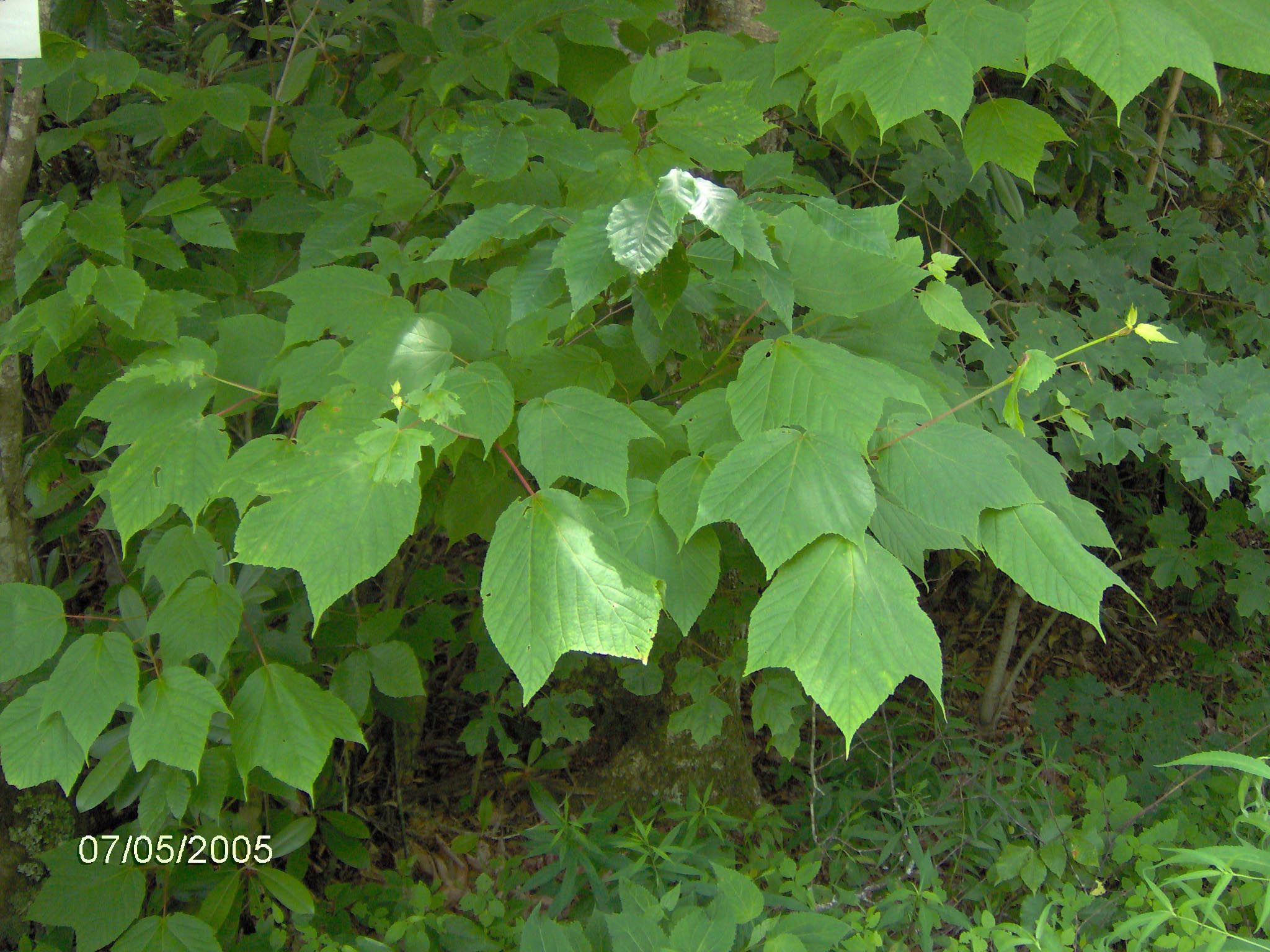
TL;DR: Historical records associate Striped Maple with bronchial troubles among the Abnaki, a medicinal tea and an animal healing account among the Algonquin of Quebec, and bark preparations for emesis, laxation, and paralysis among the Iroquois, as recorded in Ethnobotanique Abenakise, Algonquin Ethnobotany, and Iroquois Medical Botany. Its recorded water requirement is low, but human palatability and toxicity status are not recorded.
Last updated: September 27, 2026
Striped Maple has documented historical uses among the Abnaki, Algonquin, and Iroquois, but those records do not make it a modern treatment. The plant also has a recorded low water requirement, while palatability to humans is not recorded and no toxicity status is recorded.
What did Abnaki records say about Striped Maple?
Striped Maple was recorded among the Abnaki as used for bronchial troubles, according to Jacques Rousseau's 1947 ethnobotanical account, Ethnobotanique Abenakise. The record does not identify a plant part or describe a modern clinical claim. That is the useful line to hold: documented tradition, carefully attributed, with no present day treatment promise.
Rousseau's account is specific about the Abnaki tradition and the recorded condition. It does not provide enough detail here to reconstruct preparation, timing, or quantity, and I won't fill those gaps with guesses.
What was Striped Maple used for in Abnaki records? Striped Maple was recorded among the Abnaki as used for bronchial troubles. Jacques Rousseau documented that use in 1947 in Ethnobotanique Abenakise, page 154. The source does not specify the plant part or provide details that would support a current recommendation, so the record belongs to ethnobotany rather than self treatment.
What did Algonquin records say about Striped Maple?
Among the Algonquin of Quebec, Striped Maple was recorded as an ingredient in a medicinal tea, and a separate account described a moose with a broken bone eating the plant to aid healing. Meredith Jean Black documented both observations in 1980. The records describe tradition and observation, not evidence that the plant heals human injuries.
Black's account gives us two distinct records from Algonquin ethnobotany. One concerns a medicinal tea, while the other concerns animal behavior involving a moose with a broken bone. Neither entry identifies a plant part in the supplied record, and neither should be converted into instructions.
What did Algonquin records document about Striped Maple? Algonquin records from Quebec documented Striped Maple as a medicinal tea and also described a moose with a broken bone eating the plant to aid healing. Meredith Jean Black recorded both observations in 1980 in Algonquin Ethnobotany: An Interpretation of Aboriginal Adaptation in South Western Quebec, page 196. These are historical records, not current medical guidance.

Photo by Ayotte, Gilles, 1948-, licensed CC BY-SA 4.0, via Wikimedia Commons.

What did Iroquois records say about Striped Maple bark?
Iroquois records attributed three bark uses to Striped Maple: a decoction taken as an emetic, a compound decoction taken as a laxative, and a decoction applied as a poultice for paralysis. James William Herrick documented these uses in 1977. The source records them historically and does not provide a safe modern protocol.
The Iroquois entries are grouped together in Iroquois Medical Botany, page 378, and each concerns bark. The recorded purposes differ sharply, from emesis and laxation to an external application for paralysis, so blending them into one vague claim would misrepresent the source.
What bark uses were recorded among the Iroquois? Iroquois records documented Striped Maple bark in three ways: a decoction taken as an emetic, a compound decoction taken as a laxative, and a decoction applied as a poultice for paralysis. James William Herrick recorded these uses in 1977 in Iroquois Medical Botany, page 378. No preparation instructions or quantities are supplied here.
How certain are these traditional Striped Maple records?
All six supplied entries are marked documented, which means the traditions were recorded in named sources rather than added from folklore without attribution. Still, documentation does not prove modern effectiveness or safety. The records also leave some details unspecified, including the plant part in the Abnaki and Algonquin entries.
The source trail is stronger than a vague internet claim because each tradition is tied to a named author, community, date, and page. It is still a historical record. I have killed enough plants, and misread enough labels, to respect what a source says and what it does not say.
Are the traditional uses of Striped Maple proven medical treatments? No, the traditional uses of Striped Maple are not established here as proven medical treatments. The supplied records document historical practices among the Abnaki, Algonquin, and Iroquois, but they do not provide modern clinical evidence, safety testing, or instructions suitable for self treatment. This article reports ethnobotany and does not turn those records into prescriptions.

Photo by Ayotte, Gilles, 1948-, licensed CC BY-SA 4.0, via Wikimedia Commons.

Who should grow Striped Maple, and who should skip it?
Striped Maple may suit a gardener who can provide a site matching its recorded low water requirement and who wants a historically documented native tree in a considered landscape. A renter with a small balcony, a gardener seeking a human food plant, or anyone choosing plants by recorded palatability should skip it because human palatability is not recorded.
In Austin, I would still assess the site before planting. Thin soil over limestone, alkaline clay, deer pressure, and a February freeze can make any tree earn its place. Start with our plant guides, then sketch the whole site through Get My Concept before spending money on a plant that may not fit your space.
Is Striped Maple a good choice for a water wise garden? Striped Maple has a recorded low water requirement, so it may fit a water wise planting plan better than a thirsty choice. That record is not a promise that every Austin site will suit it. Heavy clay that stays wet, exposed limestone, deer browsing, and freeze risk still need evaluation before planting.
Is Striped Maple edible or toxic to humans?
Striped Maple is not recorded as palatable to humans in the supplied data, so I would not present it as a food plant. Its toxicity status is also recorded as none, meaning no toxicity status is recorded here. That wording is not permission to eat it, and it does not replace species identification or professional guidance.
The distinction matters. No recorded toxicity status is not the same statement as proven safety, while unrecorded palatability is not proof that the plant is poisonous. For a household garden, I would choose a documented food plant instead of asking a historically interesting tree to do a job the record does not support.
Is Striped Maple recorded as palatable to humans? No, Striped Maple is not recorded as palatable to humans in the supplied information. That means the data do not support describing it as edible or recommending it for cooking. The plant's toxicity status is also listed as none recorded, but that phrase does not establish food safety or invite experimentation.
| Tradition | Part used | What was recorded | Source |
|---|---|---|---|
| Abnaki | Unspecified | Used for bronchial troubles | Rousseau, Jacques, 1947, Ethnobotanique Abenakise, Archives de Folklore 11:145-182, page 154 |
| Algonquin, Quebec | Unspecified | Infusion of plant used as a medicinal tea | Black, Meredith Jean, 1980, Algonquin Ethnobotany: An Interpretation of Aboriginal Adaptation in South Western Quebec, Ottawa. National Museums of Canada. Mercury Series Number 65, page 196 |
| Algonquin, Quebec | Unspecified | Plant eaten by a moose with a broken bone to aid its healing | Black, Meredith Jean, 1980, Algonquin Ethnobotany: An Interpretation of Aboriginal Adaptation in South Western Quebec, Ottawa. National Museums of Canada. Mercury Series Number 65, page 196 |
| Iroquois | Unspecified, bark recorded in the use | Decoction of bark taken as an emetic | Herrick, James William, 1977, Iroquois Medical Botany, State University of New York, Albany, PhD Thesis, page 378 |
| Iroquois | Unspecified, bark recorded in the use | Compound decoction of bark taken as a laxative | Herrick, James William, 1977, Iroquois Medical Botany, State University of New York, Albany, PhD Thesis, page 378 |
| Iroquois | Unspecified, bark recorded in the use | Decoction of bark applied as poultice for paralysis | Herrick, James William, 1977, Iroquois Medical Botany, State University of New York, Albany, PhD Thesis, page 378 |
Frequently Asked Questions
What was Striped Maple used for in Abnaki records?
Striped Maple was recorded among the Abnaki as used for bronchial troubles. Jacques Rousseau documented that use in 1947 in Ethnobotanique Abenakise, page 154. The source does not specify the plant part or provide details that would support a current recommendation, so the record belongs to ethnobotany rather than self treatment.
What did Algonquin records document about Striped Maple?
Algonquin records from Quebec documented Striped Maple as a medicinal tea and also described a moose with a broken bone eating the plant to aid healing. Meredith Jean Black recorded both observations in 1980 in Algonquin Ethnobotany: An Interpretation of Aboriginal Adaptation in South Western Quebec, page 196. These are historical records, not current medical guidance.
What bark uses were recorded among the Iroquois?
Iroquois records documented Striped Maple bark in three ways: a decoction taken as an emetic, a compound decoction taken as a laxative, and a decoction applied as a poultice for paralysis. James William Herrick recorded these uses in 1977 in Iroquois Medical Botany, page 378. No preparation instructions or quantities are supplied here.
Are the traditional uses of Striped Maple proven medical treatments?
No, the traditional uses of Striped Maple are not established here as proven medical treatments. The supplied records document historical practices among the Abnaki, Algonquin, and Iroquois, but they do not provide modern clinical evidence, safety testing, or instructions suitable for self treatment. This article reports ethnobotany and does not turn those records into prescriptions.
Is Striped Maple a good choice for a water wise garden?
Striped Maple has a recorded low water requirement, so it may fit a water wise planting plan better than a thirsty choice. That record is not a promise that every Austin site will suit it. Heavy clay that stays wet, exposed limestone, deer browsing, and freeze risk still need evaluation before planting.
Is Striped Maple recorded as palatable to humans?
No, Striped Maple is not recorded as palatable to humans in the supplied information. That means the data do not support describing it as edible or recommending it for cooking. The plant's toxicity status is also listed as none recorded, but that phrase does not establish food safety or invite experimentation.
Want this worked out for your own yard?
Dream Landscaper reads the conditions you actually have, then plans around them rather than around a generic zone chart. Start with the city plant guides to see what already thrives near you, and when you want a real layout instead of a list, get your concept and we will take it from there.
Sources
- Rousseau, Jacques, 1947, Ethnobotanique Abenakise, Archives de Folklore 11:145-182, page 154
- Black, Meredith Jean, 1980, Algonquin Ethnobotany: An Interpretation of Aboriginal Adaptation in South Western Quebec, Ottawa. National Museums of Canada. Mercury Series Number 65, page 196
- Herrick, James William, 1977, Iroquois Medical Botany, State University of New York, Albany, PhD Thesis, page 378
Valeria and Diego are not doctors, and nothing here is medical advice. This article shares traditional and ancestral plant wisdom that was passed down through generations. It may be beneficial when applied with your own discretion, and with medical supervision as needed.
Photo of Striped Maple (Acer pensylvanicum) by Jaknouse at English Wikipedia, licensed Public domain, via Wikimedia Commons.


I hope this careful little record helps you choose plants with both curiosity and good sense, corazón.
Frequently asked questions
What was Striped Maple used for in Abnaki records?
Striped Maple was recorded among the Abnaki as used for bronchial troubles. Jacques Rousseau documented that use in 1947 in Ethnobotanique Abenakise, page 154. The source does not specify the plant part or provide details that would support a current recommendation, so the record belongs to ethnobotany rather than self treatment.
What did Algonquin records document about Striped Maple?
Algonquin records from Quebec documented Striped Maple as a medicinal tea and also described a moose with a broken bone eating the plant to aid healing. Meredith Jean Black recorded both observations in 1980 in Algonquin Ethnobotany: An Interpretation of Aboriginal Adaptation in South Western Quebec, page 196. These are historical records, not current medical guidance.
What bark uses were recorded among the Iroquois?
Iroquois records documented Striped Maple bark in three ways: a decoction taken as an emetic, a compound decoction taken as a laxative, and a decoction applied as a poultice for paralysis. James William Herrick recorded these uses in 1977 in Iroquois Medical Botany, page 378. No preparation instructions or quantities are supplied here.
Are the traditional uses of Striped Maple proven medical treatments?
No, the traditional uses of Striped Maple are not established here as proven medical treatments. The supplied records document historical practices among the Abnaki, Algonquin, and Iroquois, but they do not provide modern clinical evidence, safety testing, or instructions suitable for self treatment. This article reports ethnobotany and does not turn those records into prescriptions.
Is Striped Maple a good choice for a water wise garden?
Striped Maple has a recorded low water requirement, so it may fit a water wise planting plan better than a thirsty choice. That record is not a promise that every Austin site will suit it. Heavy clay that stays wet, exposed limestone, deer browsing, and freeze risk still need evaluation before planting.
Is Striped Maple recorded as palatable to humans?
No, Striped Maple is not recorded as palatable to humans in the supplied information. That means the data do not support describing it as edible or recommending it for cooking. The plant's toxicity status is also listed as none recorded, but that phrase does not establish food safety or invite experimentation.
Free, no obligation
Ready to design your dream landscape? Start here.
Tell us where you are and we will start a free profile for you, with plants that actually survive your climate and a real sense of what the build would cost.