
Traditional Uses of Rocky Mountain Maple (Acer glabrum)
Ethnobotanical records document Rocky Mountain Maple among Blackfoot, Navajo, Okanagan-Colville, and Thompson communities. Here is what those sources recorded, what remains uncertain, and what gardeners should know about growing Acer glabrum in a low water landscape.
September 26, 2026
By Valeria Navarro
TL;DR: Rocky Mountain Maple (Acer glabrum) appears in documented Blackfoot, Navajo, Okanagan-Colville, and Thompson records for cathartic use, swellings, hunting ritual, nausea, postpartum care, lactation, and snakebites. Those records describe tradition, not modern medical guidance. As a garden plant, Rocky Mountain Maple has a recorded low water requirement, while human palatability and toxicity were not recorded.
Last updated: September 26, 2026
What is Rocky Mountain Maple recorded to be used for?
Rocky Mountain Maple (Acer glabrum) has documented records among Blackfoot, Navajo, Okanagan-Colville, and Thompson communities for cathartic use, swellings, hunting ritual, nausea, postpartum care, lactation, and snakebites, with each account tied to a named ethnobotanical source. For a garden, its recorded low water requirement is useful, but human palatability and toxicity were not recorded.
The Blackfoot record describes bark as a cathartic. The Ramah Navajo record describes branches for swellings and calls that use a “life medicine.” Both accounts are documented, but neither source supports a present day medical claim. (Hellson, Ethnobotany of the Blackfoot Indians, 1974, p. 65; Vestal, The Ethnobotany of the Ramah Navaho, 1952, p. 36)
What traditional uses of Rocky Mountain Maple are documented?
What did Blackfoot records say about Rocky Mountain Maple?
Blackfoot ethnobotanical records documented bark of Rocky Mountain Maple as an infusion used as a cathartic. That statement reports what John C. Hellson recorded in 1974 among the Blackfoot, not what the plant should be used for today. The source identifies the use, but does not establish modern safety, effectiveness, or dosage. (Hellson, Ethnobotany of the Blackfoot Indians, 1974, p. 65)
The record is specific about the community and plant material, but not about a modern clinical meaning. I am keeping that boundary clear because an old ethnobotanical entry is not a prescription, and a maple growing beside a Central Texas fence is not a substitute for medical care.
What did the Blackfoot use Rocky Mountain Maple bark for?

Photo by Stan Shebs, licensed CC BY-SA 3.0, via Wikimedia Commons.

What did Navajo and Thompson records say about Rocky Mountain Maple?
Navajo records from Ramah documented an infusion of Rocky Mountain Maple branches for swellings and described it as a “life medicine.” Thompson records documented wood and bark for nausea caused by smelling a corpse, plus sticks associated with postpartum healing and lactation. Each account is attributed to its source, and the historical descriptions should not be treated as current medical advice. (Vestal, The Ethnobotany of the Ramah Navaho, 1952, p. 36; Steedman, The Ethnobotany of the Thompson Indians of British Columbia, 1928, p. 475; Turner, Thompson and Thompson et al., Thompson Ethnobotany, 1990, p. 146)
| Tradition | Part used | What was recorded | Source |
|---|---|---|---|
| Blackfoot | Bark | Infusion recorded as a cathartic | Hellson, Ethnobotany of the Blackfoot Indians, 1974, p. 65 |
| Navajo, Ramah | Branches | Infusion recorded for swellings as a “life medicine” | Vestal, The Ethnobotany of the Ramah Navaho, 1952, p. 36 |
| Okanagan-Colville | Branch | Branch tied in a knot and placed over bear tracks while hunting to stop a wounded bear | Turner, Bouchard and Kennedy, Ethnobotany of the Okanagan-Colville Indians of British Columbia and Washington, 1980, p. 59 |
| Thompson | Wood and bark | Decoction recorded for nausea caused by smelling a corpse | Steedman, The Ethnobotany of the Thompson Indians of British Columbia, 1928, p. 475 |
| Thompson | Sticks and associated woody sticks | Decoction recorded for healing women's insides after childbirth and stimulating lactation | Turner, Thompson and Thompson et al., Thompson Ethnobotany, 1990, p. 146 |
| Thompson | Young sticks | Decoction recorded as a wash or internal use for snakebites, with the informant uncertain which | Turner, Thompson and Thompson et al., Thompson Ethnobotany, 1990, p. 146 |
What did Navajo and Thompson records say about Rocky Mountain Maple?
How did Okanagan-Colville records describe Rocky Mountain Maple in hunting?
Among the Okanagan-Colville, a 1980 record described a Rocky Mountain Maple branch tied in a knot and placed over a bear's tracks while hunting, with the intended purpose of stopping a wounded bear. This is a documented hunting practice, not a botanical effect or a claim that the branch physically restrained an animal. (Turner, Bouchard and Kennedy, Ethnobotany of the Okanagan-Colville Indians of British Columbia and Washington, 1980, p. 59)
That distinction matters. Ethnobotany records how people understood and used plants within a cultural setting; it does not turn every recorded action into a testable biological property.
Was Rocky Mountain Maple used in a hunting practice?

Photo by Edamargrite, licensed CC BY-SA 3.0, via Wikimedia Commons.

What did Thompson records document about snakebites and childbirth?
Thompson ethnobotanical records documented Rocky Mountain Maple sticks in a decoction recorded for snakebites, but the informant could not recall whether it was taken internally or used as a wash. The same 1990 source documented sticks in a postpartum practice associated with healing women's insides and stimulating lactation. (Turner, Thompson and Thompson et al., Thompson Ethnobotany, 1990, p. 146)
The uncertainty belongs in the sentence, not in a footnote. No preparation method, quantity, schedule, or modern recommendation can be drawn from that account, and I will not pretend otherwise just to make the paragraph sound tidier.
What did Thompson records say about Rocky Mountain Maple and snakebites?
Who should grow Rocky Mountain Maple, and who should skip it?
Rocky Mountain Maple may suit a homeowner or restoration gardener seeking a plant with a recorded low water requirement and an interest in regional ethnobotany. Skip it if your site cannot support its mature form or if you need a plant documented as palatable to humans. Human palatability was not recorded, and no toxicity status was recorded in the supplied data.
For an Austin yard, test the soil before you celebrate. Limestone and alkaline clay can make a site behave very differently from Miami's fast draining sandy fill, and low water does not mean zero water while a plant establishes. I have killed plants by admiring their drought tolerance and then forgetting the root zone still had to settle in.
Who should grow Rocky Mountain Maple, and who should skip it?
What should gardeners know about Rocky Mountain Maple's water needs and safety?
Rocky Mountain Maple has a recorded low water requirement, but the supplied record does not establish a watering schedule, human palatability, or toxicity warning. Its honest trade-off is simple: low water demand does not remove the need to match the plant to soil, space, cold exposure, and establishment conditions, especially where clay stays wet through a freeze.
Use the plants library to compare it with other candidates, then map the full site through Get My Concept if you are designing around caliche, shade, deer, or water restrictions. Keep the garden decision separate from the historical medicine records. One is planting design; the other is cultural documentation.
Is Rocky Mountain Maple toxic or edible?
Frequently Asked Questions
What traditional uses of Rocky Mountain Maple are documented?
Documented records describe Rocky Mountain Maple in several Indigenous traditions for a cathartic, swellings, a hunting practice, nausea associated with smelling a corpse, postpartum care, lactation, and snakebites. These uses were recorded among Blackfoot, Navajo, Okanagan-Colville, and Thompson communities in named ethnobotanical sources, and they are historical documentation rather than present day medical recommendations.
What did the Blackfoot use Rocky Mountain Maple bark for?
John C. Hellson recorded in 1974 that Blackfoot knowledge included an infusion of Rocky Mountain Maple bark used as a cathartic. The record identifies the community, plant material, and use, but it does not establish a modern dosage, safety profile, or medical effectiveness. This is an ethnobotanical report, not advice to use the bark today. (Hellson, Ethnobotany of the Blackfoot Indians, 1974, p. 65)
Was Rocky Mountain Maple used in a hunting practice?
Yes. Nancy Turner, R. Bouchard, and Dorothy I.D. Kennedy recorded in 1980 that among the Okanagan-Colville, a Rocky Mountain Maple branch was tied in a knot and placed over a bear's tracks while hunting to stop a wounded bear. That account documents a cultural hunting practice, not a proven physical effect of the branch. (Turner, Bouchard and Kennedy, Ethnobotany of the Okanagan-Colville Indians of British Columbia and Washington, 1980, p. 59)
What did Thompson records say about Rocky Mountain Maple and snakebites?
Thompson records documented a decoction of Rocky Mountain Maple young sticks for snakebites, either as a wash or as an internal use. The informant could not recall which application was intended, so the record itself is uncertain on that point. Turner, Thompson and Thompson et al. recorded this account in 1990, and it should not be treated as modern treatment advice. (Turner, Thompson and Thompson et al., Thompson Ethnobotany, 1990, p. 146)
Who should grow Rocky Mountain Maple, and who should skip it?
Rocky Mountain Maple may suit a gardener seeking a plant with a recorded low water requirement and an interest in ethnobotany. Skip it when the site cannot support the plant's mature form or when you need documented human palatability, because palatability was not recorded in the supplied data. Match the plant to soil, exposure, space, and establishment conditions.
Is Rocky Mountain Maple toxic or edible?
The supplied record does not report a toxicity status for Rocky Mountain Maple, and it does not record the plant as palatable to humans. That means the available data are silent, not that the plant has been proved edible or safe. Treat the missing information as a limit of the record, and do not turn historical uses into food or medical guidance.
Want this worked out for your own yard?
Dream Landscaper reads the conditions you actually have, then plans around them rather than around a generic zone chart. Start with the city plant guides to see what already thrives near you, and when you want a real layout instead of a list, get your concept and we will take it from there.
Sources
- Hellson, John C., 1974, Ethnobotany of the Blackfoot Indians, Ottawa. National Museums of Canada. Mercury Series, page 65
- Vestal, Paul A., 1952, The Ethnobotany of the Ramah Navaho, Papers of the Peabody Museum of American Archaeology and Ethnology 40(4):1-94, page 36
- Turner, Nancy J., R. Bouchard and Dorothy I.D. Kennedy, 1980, Ethnobotany of the Okanagan-Colville Indians of British Columbia and Washington, Victoria. British Columbia Provincial Museum, page 59
- Steedman, E.V., 1928, The Ethnobotany of the Thompson Indians of British Columbia, SI-BAE Annual Report #45:441-522, page 475
- Turner, Nancy J., Laurence C. Thompson and M. Terry Thompson et al., 1990, Thompson Ethnobotany: Knowledge and Usage of Plants by the Thompson Indians of British Columbia, Victoria. Royal British Columbia Museum, page 146
Valeria and Diego are not doctors, and nothing here is medical advice. This article shares traditional and ancestral plant wisdom that was passed down through generations. It may be beneficial when applied with your own discretion, and with medical supervision as needed.
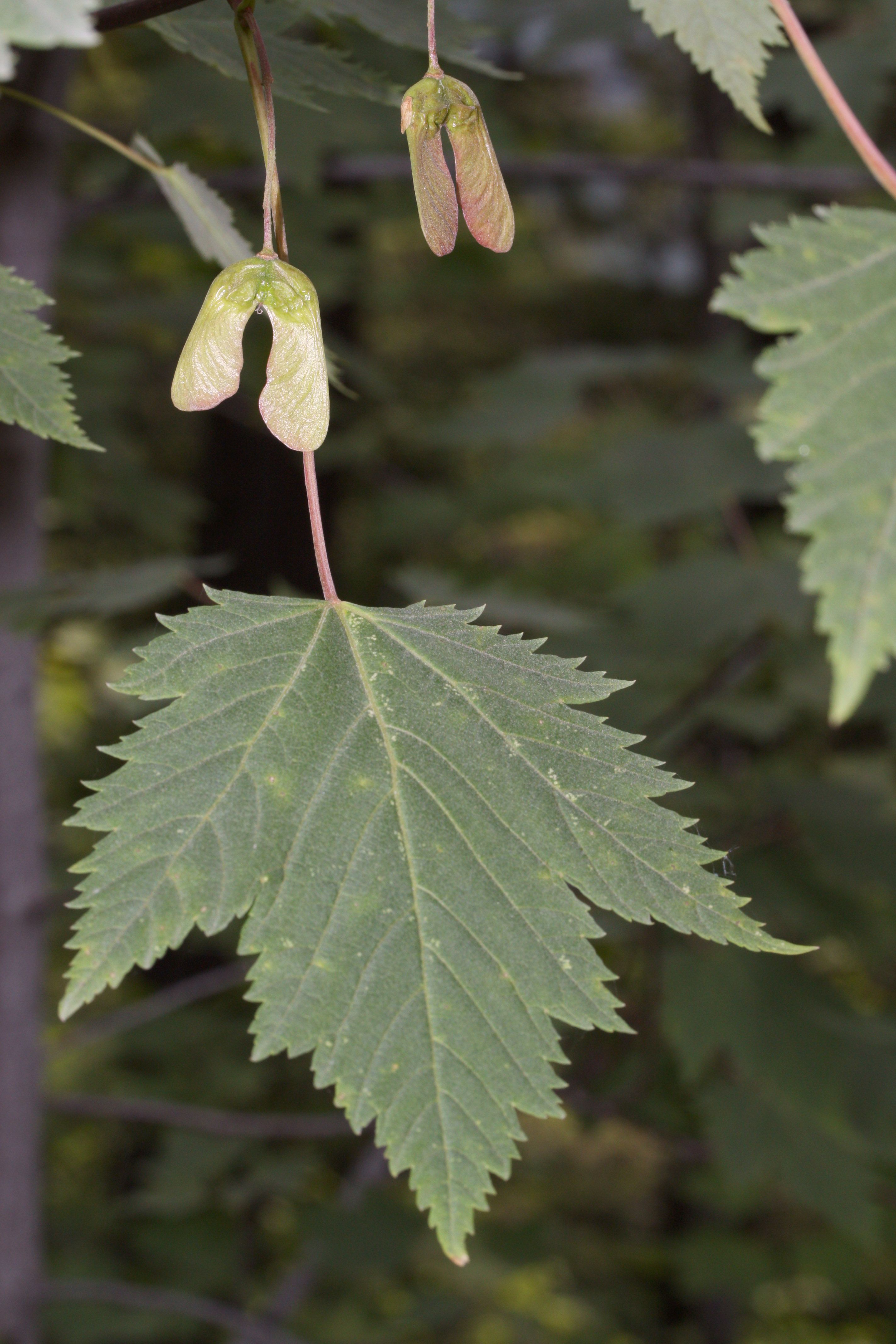
Photo of Rocky Mountain Maple (Acer glabrum) by Walter Siegmund (talk), licensed CC BY-SA 3.0, via Wikimedia Commons.


I hope this helps you honor the record, choose your plantings carefully, and keep a little room in the garden for wonder.
Frequently asked questions
What traditional uses of Rocky Mountain Maple are documented?
Documented records describe Rocky Mountain Maple in several Indigenous traditions for a cathartic, swellings, a hunting practice, nausea associated with smelling a corpse, postpartum care, lactation, and snakebites. These uses were recorded among Blackfoot, Navajo, Okanagan-Colville, and Thompson communities in named ethnobotanical sources, and they are historical documentation rather than present day medical recommendations.
What did the Blackfoot use Rocky Mountain Maple bark for?
John C. Hellson recorded in 1974 that Blackfoot knowledge included an infusion of Rocky Mountain Maple bark used as a cathartic. The record identifies the community, plant material, and use, but it does not establish a modern dosage, safety profile, or medical effectiveness. This is an ethnobotanical report, not advice to use the bark today. (Hellson, *Ethnobotany of the Blackfoot Indians*, 1974, p. 65)
Was Rocky Mountain Maple used in a hunting practice?
Yes. Nancy Turner, R. Bouchard, and Dorothy I.D. Kennedy recorded in 1980 that among the Okanagan-Colville, a Rocky Mountain Maple branch was tied in a knot and placed over a bear's tracks while hunting to stop a wounded bear. That account documents a cultural hunting practice, not a proven physical effect of the branch. (Turner, Bouchard and Kennedy, *Ethnobotany of the Okanagan-Colville Indians of British Columbia and Washington*, 1980, p. 59)
What did Thompson records say about Rocky Mountain Maple and snakebites?
Thompson records documented a decoction of Rocky Mountain Maple young sticks for snakebites, either as a wash or as an internal use. The informant could not recall which application was intended, so the record itself is uncertain on that point. Turner, Thompson and Thompson et al. recorded this account in 1990, and it should not be treated as modern treatment advice. (Turner, Thompson and Thompson et al., *Thompson Ethnobotany*, 1990, p. 146)
Who should grow Rocky Mountain Maple, and who should skip it?
Rocky Mountain Maple may suit a gardener seeking a plant with a recorded low water requirement and an interest in ethnobotany. Skip it when the site cannot support the plant's mature form or when you need documented human palatability, because palatability was not recorded in the supplied data. Match the plant to soil, exposure, space, and establishment conditions.
Is Rocky Mountain Maple toxic or edible?
The supplied record does not report a toxicity status for Rocky Mountain Maple, and it does not record the plant as palatable to humans. That means the available data are silent, not that the plant has been proved edible or safe. Treat the missing information as a limit of the record, and do not turn historical uses into food or medical guidance.
Free, no obligation
Ready to design your dream landscape? Start here.
Tell us where you are and we will start a free profile for you, with plants that actually survive your climate and a real sense of what the build would cost.