
Traditional Uses of Fraser's Fir (Abies fraseri)
Fraser's fir holds a unique place in Cherokee traditional medicine, with uses ranging from wound care to remedies for internal and respiratory complaints. Documented practices reflect a deep knowledge of the plant's properties, though no toxicity has been recorded.
August 28, 2026
By Valeria Navarro
TL;DR: Fraser's fir was traditionally used by the Cherokee for wounds, ulcers, kidney trouble, and various internal and respiratory complaints, as recorded by Hamel and Chiltoskey in 1975. All documented uses come from Cherokee sources, and there is no recorded toxicity or evidence of palatability to humans.
Last updated: August 28, 2026
What traditional uses of Fraser's fir were recorded among the Cherokee?
The Cherokee used Fraser's fir for a range of health concerns, including wounds, ulcers, kidney trouble, and respiratory complaints. These uses were documented by Hamel and Chiltoskey in 1975 and reflect a detailed traditional knowledge of the tree. All cited uses come from Cherokee sources.
What parts of Fraser's fir were used in traditional Cherokee practices?
The specific parts of Fraser's fir used in Cherokee traditions were not recorded in the documented sources. All references simply mention the plant without specifying leaves, bark, resin, or other parts. This lack of detail is a gap in the historical record.
How did the Cherokee use Fraser's fir for internal health issues?
Fraser's fir was taken by the Cherokee to loosen bowels and cleanse and heal internal ulcers, according to Hamel and Chiltoskey, 1975. It was also used for 'falling of the womb,' the 'whites,' and weak backs in females. These uses are well documented but do not include preparation details.
What external uses of Fraser's fir were documented?
The Cherokee used Fraser's fir for wounds and ulcers, as well as for burst blisters. The ooze from the plant, sometimes combined with turpentine, was used for kidney trouble. These practices were recorded by Hamel and Chiltoskey in 1975 and do not specify preparation methods.
Was Fraser's fir used for respiratory or breast complaints?
Yes, the Cherokee used Fraser's fir balsam for breast and lung complaints with pain, soreness, or cough. This use was specifically noted in Hamel and Chiltoskey, 1975. The record does not describe how the balsam was prepared or applied.
Who should grow Fraser's fir and who should skip it?
Fraser's fir is best for gardeners with moderate water access and cooler climates, since it is native to the Southern Appalachians and does not thrive in Central Texas heat or heavy clay. Skip it if your summers are long and hot, or if your soil stays wet after rain, since it can struggle or die in those conditions.
How do the documented Cherokee uses of Fraser's fir compare?
| Tradition | Part Used | What Was Recorded | Source |
|---|---|---|---|
| Cherokee | Unspecified | Used for wounds and ulcers | Hamel and Chiltoskey, 1975 |
| Cherokee | Unspecified | Taken to loosen bowels and cleanse and heal internal ulcers | Hamel and Chiltoskey, 1975 |
| Cherokee | Unspecified | Used for falling of the womb, the whites, and weak backs in females | Hamel and Chiltoskey, 1975 |
| Cherokee | Unspecified | Burst blister, ooze alone or with turpentine for kidney trouble | Hamel and Chiltoskey, 1975 |
| Cherokee | Unspecified | Balsam for breast and lung complaints with pain, soreness or cough | Hamel and Chiltoskey, 1975 |
Frequently Asked Questions
What traditional uses of Fraser's fir were recorded among the Cherokee?
The Cherokee used Fraser's fir for wounds, ulcers, kidney trouble, and various internal and respiratory complaints. These uses were documented by Hamel and Chiltoskey in 1975 and reflect a detailed traditional knowledge of the tree. All cited uses come from Cherokee sources.
What parts of Fraser's fir were used in traditional Cherokee practices?
The specific parts of Fraser's fir used in Cherokee traditions were not recorded in the documented sources. All references simply mention the plant without specifying leaves, bark, resin, or other parts. This lack of detail is a gap in the historical record.
How did the Cherokee use Fraser's fir for internal health issues?
Fraser's fir was taken by the Cherokee to loosen bowels and cleanse and heal internal ulcers, according to Hamel and Chiltoskey, 1975. It was also used for 'falling of the womb,' the 'whites,' and weak backs in females. These uses are well documented but do not include preparation details.
Was Fraser's fir used for respiratory or breast complaints?
Yes, the Cherokee used Fraser's fir balsam for breast and lung complaints with pain, soreness, or cough. This use was specifically noted in Hamel and Chiltoskey, 1975. The record does not describe how the balsam was prepared or applied.
Who should grow Fraser's fir and who should skip it?
Fraser's fir is best for gardeners with moderate water access and cooler climates, since it is native to the Southern Appalachians and does not thrive in Central Texas heat or heavy clay. Skip it if your summers are long and hot, or if your soil stays wet after rain, since it can struggle or die in those conditions.
Is Fraser's fir toxic or palatable to humans?
No toxicity has been recorded for Fraser's fir, and it is not recorded as palatable to humans. The documented uses focus on traditional remedies rather than food or flavor, and there is no evidence in the source material about its edibility.
Want this worked out for your own yard?
Dream Landscaper reads the conditions you actually have, then plans around them rather than around a generic zone chart. Start with the city plant guides to see what already thrives near you, and when you want a real layout instead of a list, get your concept and we will take it from there.
Sources
- Hamel, Paul B. and Mary U. Chiltoskey, 1975, Cherokee Plants and Their Uses -- A 400 Year History, Sylva, N.C. Herald Publishing Co., page 34
Valeria and Diego are not doctors, and nothing here is medical advice. This article shares traditional and ancestral plant wisdom that was passed down through generations. It may be beneficial when applied with your own discretion, and with medical supervision as needed.
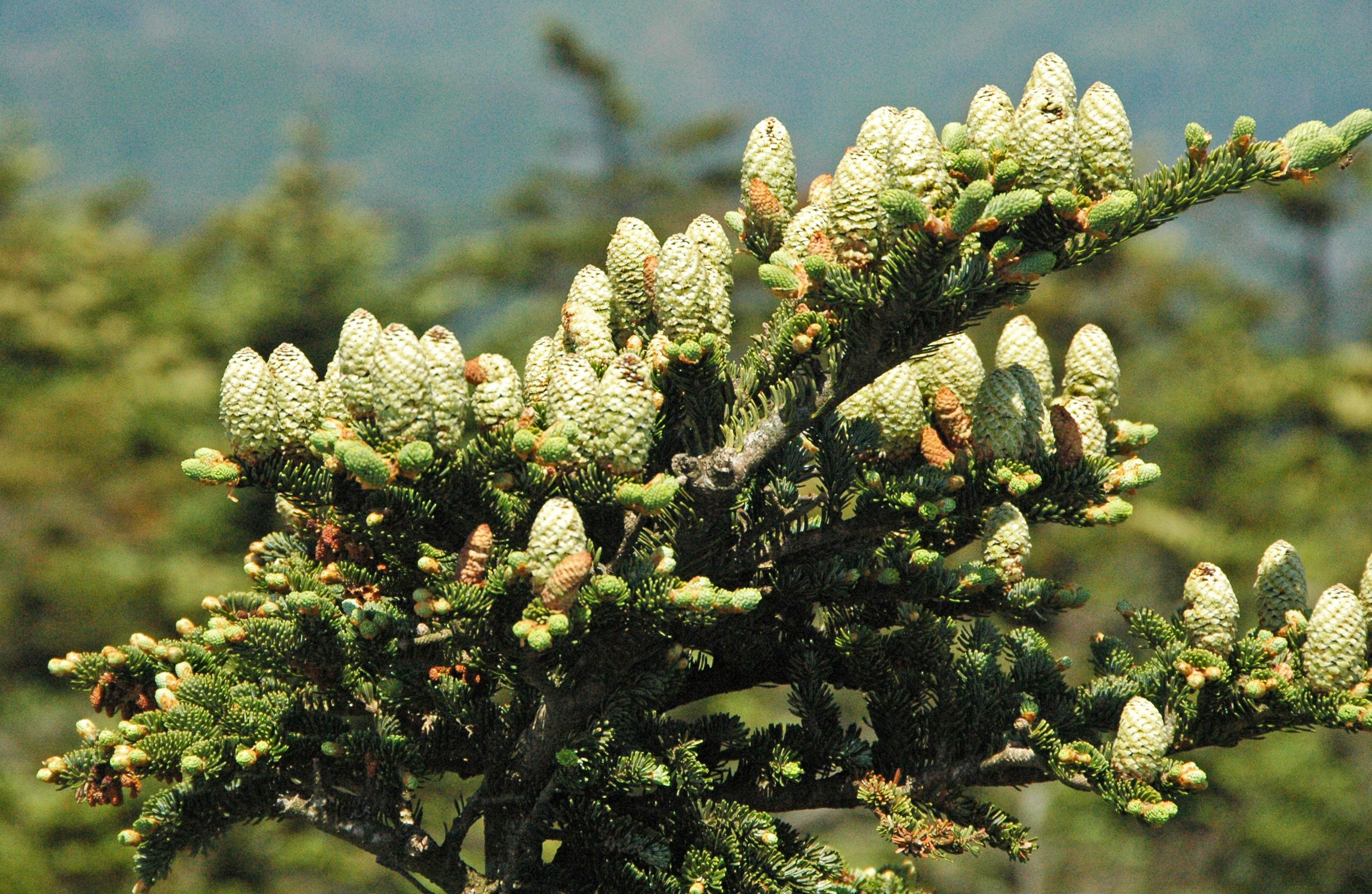
Photo of Fraser'S Fir (Abies fraseri) by James St. John, licensed CC BY 2.0, via Wikimedia Commons.
_(Clingmans_Dome,_Great_Smoky_Mountains,_North_Carolina,_USA)_11_(36843487182).jpg)

Thanks for exploring the roots of Fraser's fir with me, and I hope this helps you see your own trees a little differently.
Frequently asked questions
What traditional uses of Fraser's fir were recorded among the Cherokee?
The Cherokee used Fraser's fir for wounds, ulcers, kidney trouble, and various internal and respiratory complaints. These uses were documented by Hamel and Chiltoskey in 1975 and reflect a detailed traditional knowledge of the tree. All cited uses come from Cherokee sources.
What parts of Fraser's fir were used in traditional Cherokee practices?
The specific parts of Fraser's fir used in Cherokee traditions were not recorded in the documented sources. All references simply mention the plant without specifying leaves, bark, resin, or other parts. This lack of detail is a gap in the historical record.
How did the Cherokee use Fraser's fir for internal health issues?
Fraser's fir was taken by the Cherokee to loosen bowels and cleanse and heal internal ulcers, according to Hamel and Chiltoskey, 1975. It was also used for 'falling of the womb,' the 'whites,' and weak backs in females. These uses are well documented but do not include preparation details.
Was Fraser's fir used for respiratory or breast complaints?
Yes, the Cherokee used Fraser's fir balsam for breast and lung complaints with pain, soreness, or cough. This use was specifically noted in Hamel and Chiltoskey, 1975. The record does not describe how the balsam was prepared or applied.
Who should grow Fraser's fir and who should skip it?
Fraser's fir is best for gardeners with moderate water access and cooler climates, since it is native to the Southern Appalachians and does not thrive in Central Texas heat or heavy clay. Skip it if your summers are long and hot, or if your soil stays wet after rain, since it can struggle or die in those conditions.
Is Fraser's fir toxic or palatable to humans?
No toxicity has been recorded for Fraser's fir, and it is not recorded as palatable to humans. The documented uses focus on traditional remedies rather than food or flavor, and there is no evidence in the source material about its edibility.
Free, no obligation
Ready to design your dream landscape? Start here.
Tell us where you are and we will start a free profile for you, with plants that actually survive your climate and a real sense of what the build would cost.