
What Traditional Uses Were Recorded for White Fir (Abies concolor)?
Historical sources document White Fir foliage, pitch, needles and bark resin in Keres and Paiute traditions. The records describe uses connected with rheumatism, cuts, pulmonary troubles, tuberculosis and venereal disease, while the supplied growing record lists moderate water needs and no recorded palatability to humans.
September 30, 2026
By Valeria Navarro
TL;DR: Historical sources recorded White Fir foliage among the Western Keres for rheumatism, including bathing and taking an infusion, and recorded Paiute uses of pitch, needles and bark resin for cuts, pulmonary troubles, tuberculosis and venereal disease. The supplied growing record lists moderate water needs, with no recorded palatability to humans and no recorded toxicity status.
Last updated: September 30, 2026
Historical sources recorded White Fir foliage among the Western Keres for rheumatism, and recorded Paiute uses of White Fir pitch, needles and bark resin for cuts, pulmonary troubles, tuberculosis and venereal disease. Those uses belong to specific ethnobotanical records, not present day medical guidance.
What did the Keres record White Fir foliage being used for?
The Western Keres record described White Fir foliage in an infusion used as a bath for rheumatism and an infusion taken for rheumatism. George R. Swank documented both uses in 1932 among the Keres of the Acoma and Laguna area. The source identifies the tradition and use, but does not establish present day effectiveness. (Swank, George R., 1932, The Ethnobotany of the Acoma and Laguna Indians, University of New Mexico, M.A. Thesis, page 24)
What did the Paiute record White Fir pitch, needles and bark resin being used for?
The Paiute record describes fresh White Fir pitch applied to cuts, a preparation involving needles and bark resin taken for pulmonary troubles, soft bark resin eaten or bark infusion taken for tuberculosis, and a compound resin preparation taken for venereal disease. Percy Train, James R. Henrichs and W. Andrew Archer documented these uses in 1941. (Train, Percy, James R. Henrichs and W. Andrew Archer, 1941, Medicinal Uses of Plants by Indian Tribes of Nevada, Washington DC. U.S. Department of Agriculture, page 30)
| Tradition | Part used | Recorded use | Source |
|---|---|---|---|
| Keres, Western | Unspecified | Infusion of foliage used as a bath for rheumatism | Swank, George R., 1932, The Ethnobotany of the Acoma and Laguna Indians, University of New Mexico, M.A. Thesis, page 24 |
| Keres, Western | Unspecified | Infusion of foliage taken for rheumatism | Swank, George R., 1932, The Ethnobotany of the Acoma and Laguna Indians, University of New Mexico, M.A. Thesis, page 24 |
| Paiute | Unspecified | Poultice of fresh pitch applied to cuts | Train, Percy, James R. Henrichs and W. Andrew Archer, 1941, Medicinal Uses of Plants by Indian Tribes of Nevada, Washington DC. U.S. Department of Agriculture, page 30 |
| Paiute | Unspecified | Decoction of needles and bark resin taken for pulmonary troubles | Train, Percy, James R. Henrichs and W. Andrew Archer, 1941, Medicinal Uses of Plants by Indian Tribes of Nevada, Washington DC. U.S. Department of Agriculture, page 30 |
| Paiute | Unspecified | Soft bark resin eaten or infusion of bark taken for tuberculosis | Train, Percy, James R. Henrichs and W. Andrew Archer, 1941, Medicinal Uses of Plants by Indian Tribes of Nevada, Washington DC. U.S. Department of Agriculture, page 30 |
| Paiute | Unspecified | Compound decoction of resin taken for venereal disease | Train, Percy, James R. Henrichs and W. Andrew Archer, 1941, Medicinal Uses of Plants by Indian Tribes of Nevada, Washington DC. U.S. Department of Agriculture, page 30 |

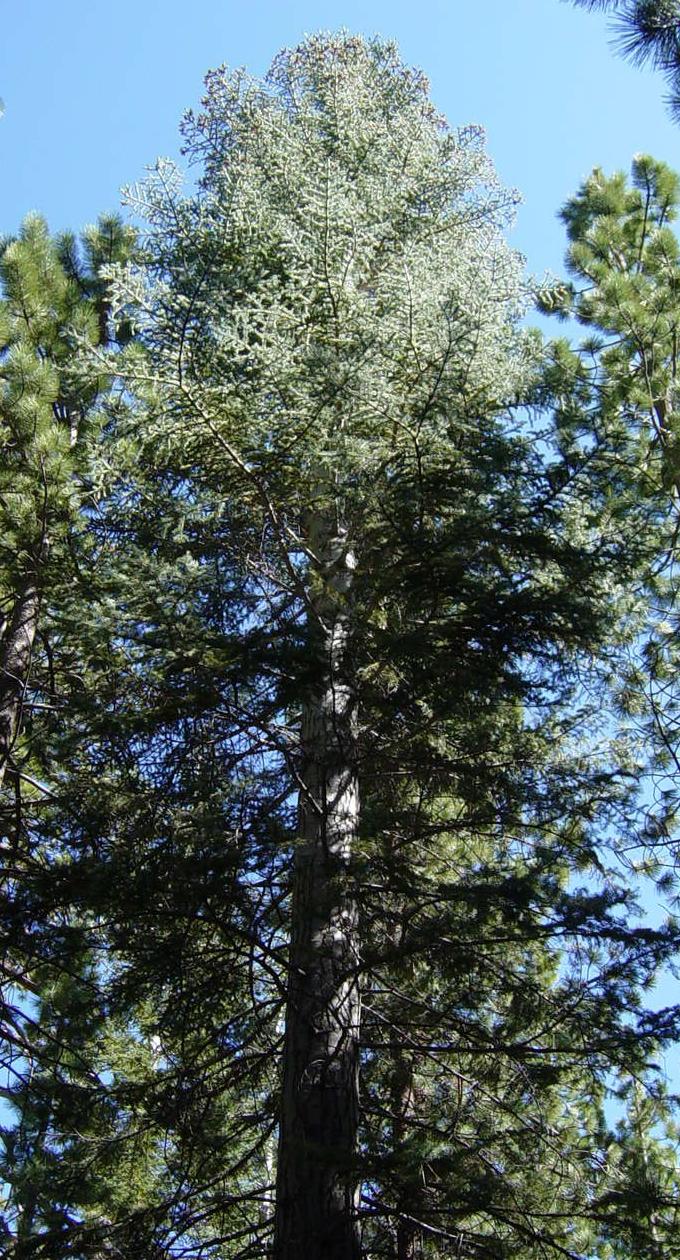
Photo by Dave Powell, USDA Forest Service, licensed CC BY 3.0 us, via Wikimedia Commons.

What preparations of White Fir were recorded in these traditions?
The sources name an infusion, bath, poultice, decoction and resin preparation, but they do not provide instructions here for making or using them. The Keres records connect foliage infusions with rheumatism, while the Paiute records connect fresh pitch, needles and bark resin with the listed conditions. (Swank, George R., 1932, The Ethnobotany of the Acoma and Laguna Indians, University of New Mexico, M.A. Thesis, page 24; Train, Percy, James R. Henrichs and W. Andrew Archer, 1941, Medicinal Uses of Plants by Indian Tribes of Nevada, Washington DC. U.S. Department of Agriculture, page 30)
How much water does White Fir need in the recorded growing information?
The supplied growing information records White Fir as having a moderate water requirement. That is the specific note available here, not a promise about Austin performance, soil tolerance or drought survival. Central Texas adds alkaline clay, limestone and long hot stretches, so the tradeoff is simple: this is not a plant to choose without checking the site first. See more plant information in the plant directory.

Photo by Marija Gajić, licensed CC BY-SA 4.0, via Wikimedia Commons.
.JPG)
Who should grow White Fir, and who should skip it?
White Fir suits a gardener who can verify the site and provide moderate water without guessing through an Austin summer. A renter with a small balcony, a gardener with heavy clay that stays wet, or anyone choosing only for an untested hot spot should skip it until local fit is clear. I have killed plants by trusting a label too much, and I do not recommend that hobby.
Is White Fir recorded as toxic or palatable to humans?
No toxicity status is recorded for White Fir in the supplied information, and palatability to humans is also not recorded. The Paiute account does document soft bark resin eaten, but that is an attributed historical record, not a modern food recommendation. The safest reading is precise: the sources record traditional uses, while the supplied data do not establish edibility or toxicity.
Frequently Asked Questions
What did the Keres record White Fir foliage being used for?
The Western Keres record described White Fir foliage in an infusion used as a bath for rheumatism and an infusion taken for rheumatism. George R. Swank documented both uses in 1932 among the Keres of the Acoma and Laguna area. The source identifies the tradition and use, but does not establish present day effectiveness. (Swank, George R., 1932, The Ethnobotany of the Acoma and Laguna Indians, University of New Mexico, M.A. Thesis, page 24)
What did the Paiute record White Fir pitch, needles and bark resin being used for?
The Paiute record describes fresh White Fir pitch applied to cuts, a preparation involving needles and bark resin taken for pulmonary troubles, soft bark resin eaten or bark infusion taken for tuberculosis, and a compound resin preparation taken for venereal disease. Percy Train, James R. Henrichs and W. Andrew Archer documented these uses in 1941. (Train, Percy, James R. Henrichs and W. Andrew Archer, 1941, Medicinal Uses of Plants by Indian Tribes of Nevada, Washington DC. U.S. Department of Agriculture, page 30)
What preparations of White Fir were recorded in these traditions?
The sources name an infusion, bath, poultice, decoction and resin preparation, but they do not provide instructions here for making or using them. The Keres records connect foliage infusions with rheumatism, while the Paiute records connect fresh pitch, needles and bark resin with the listed conditions. (Swank, George R., 1932, The Ethnobotany of the Acoma and Laguna Indians, University of New Mexico, M.A. Thesis, page 24; Train, Percy, James R. Henrichs and W. Andrew Archer, 1941, Medicinal Uses of Plants by Indian Tribes of Nevada, Washington DC. U.S. Department of Agriculture, page 30)
How much water does White Fir need in the recorded growing information?
The supplied growing information records White Fir as having a moderate water requirement. That is the specific note available here, not a promise about Austin performance, soil tolerance or drought survival. Central Texas adds alkaline clay, limestone and long hot stretches, so the tradeoff is simple: this is not a plant to choose without checking the site first. See more plant information in the plant directory.
Who should grow White Fir, and who should skip it?
White Fir suits a gardener who can verify the site and provide moderate water without guessing through an Austin summer. A renter with a small balcony, a gardener with heavy clay that stays wet, or anyone choosing only for an untested hot spot should skip it until local fit is clear. I have killed plants by trusting a label too much, and I do not recommend that hobby.
Is White Fir recorded as toxic or palatable to humans?
No toxicity status is recorded for White Fir in the supplied information, and palatability to humans is also not recorded. The Paiute account does document soft bark resin eaten, but that is an attributed historical record, not a modern food recommendation. The safest reading is precise: the sources record traditional uses, while the supplied data do not establish edibility or toxicity.
Want this worked out for your own yard?
Dream Landscaper reads the conditions you actually have, then plans around them rather than around a generic zone chart. Start with the city plant guides to see what already thrives near you, and when you want a real layout instead of a list, get your concept and we will take it from there.
Sources
These are the two sources supplied for the recorded Keres and Paiute uses of White Fir. I have kept the citations attached to the claims so the tradition, region and date remain visible instead of getting blurred into a general plant story.
- Swank, George R., 1932, The Ethnobotany of the Acoma and Laguna Indians, University of New Mexico, M.A. Thesis, page 24
- Train, Percy, James R. Henrichs and W. Andrew Archer, 1941, Medicinal Uses of Plants by Indian Tribes of Nevada, Washington DC. U.S. Department of Agriculture, page 30
Valeria and Diego are not doctors, and nothing here is medical advice. This article shares traditional and ancestral plant wisdom that was passed down through generations. It may be beneficial when applied with your own discretion, and with medical supervision as needed.
Photo of White Fir (Abies concolor) by Puncsos, licensed CC BY-SA 3.0, via Wikimedia Commons.


I hope this helps you read White Fir with a gardener’s curiosity and the care that every living tradition deserves.
Frequently asked questions
What did the Keres record White Fir foliage being used for?
The Western Keres record described White Fir foliage in an infusion used as a bath for rheumatism and an infusion taken for rheumatism. George R. Swank documented both uses in 1932 among the Keres of the Acoma and Laguna area. The source identifies the tradition and use, but does not establish present day effectiveness. (Swank, George R., 1932, The Ethnobotany of the Acoma and Laguna Indians, University of New Mexico, M.A. Thesis, page 24)
What did the Paiute record White Fir pitch, needles and bark resin being used for?
The Paiute record describes fresh White Fir pitch applied to cuts, a preparation involving needles and bark resin taken for pulmonary troubles, soft bark resin eaten or bark infusion taken for tuberculosis, and a compound resin preparation taken for venereal disease. Percy Train, James R. Henrichs and W. Andrew Archer documented these uses in 1941. (Train, Percy, James R. Henrichs and W. Andrew Archer, 1941, Medicinal Uses of Plants by Indian Tribes of Nevada, Washington DC. U.S. Department of Agriculture, page 30)
What preparations of White Fir were recorded in these traditions?
The sources name an infusion, bath, poultice, decoction and resin preparation, but they do not provide instructions here for making or using them. The Keres records connect foliage infusions with rheumatism, while the Paiute records connect fresh pitch, needles and bark resin with the listed conditions. (Swank, George R., 1932, The Ethnobotany of the Acoma and Laguna Indians, University of New Mexico, M.A. Thesis, page 24; Train, Percy, James R. Henrichs and W. Andrew Archer, 1941, Medicinal Uses of Plants by Indian Tribes of Nevada, Washington DC. U.S. Department of Agriculture, page 30)
How much water does White Fir need in the recorded growing information?
The supplied growing information records White Fir as having a moderate water requirement. That is the specific note available here, not a promise about Austin performance, soil tolerance or drought survival. Central Texas adds alkaline clay, limestone and long hot stretches, so the tradeoff is simple: this is not a plant to choose without checking the site first. See more plant information in [the plant directory](/plants).
Who should grow White Fir, and who should skip it?
White Fir suits a gardener who can verify the site and provide moderate water without guessing through an Austin summer. A renter with a small balcony, a gardener with heavy clay that stays wet, or anyone choosing only for an untested hot spot should skip it until local fit is clear. I have killed plants by trusting a label too much, and I do not recommend that hobby.
Is White Fir recorded as toxic or palatable to humans?
No toxicity status is recorded for White Fir in the supplied information, and palatability to humans is also not recorded. The Paiute account does document soft bark resin eaten, but that is an attributed historical record, not a modern food recommendation. The safest reading is precise: the sources record traditional uses, while the supplied data do not establish edibility or toxicity.
Free, no obligation
Ready to design your dream landscape? Start here.
Tell us where you are and we will start a free profile for you, with plants that actually survive your climate and a real sense of what the build would cost.