
Tomato Companions Worth Planting, and the Ones That Are Mostly Myth
Basil is the tomato companion I would plant first, while marigolds can help only under the right conditions. Here is what to plant beside tomatoes this fall, what to keep away, and where companion-planting claims outrun the evidence.
October 2, 2026
By Diego Navarro
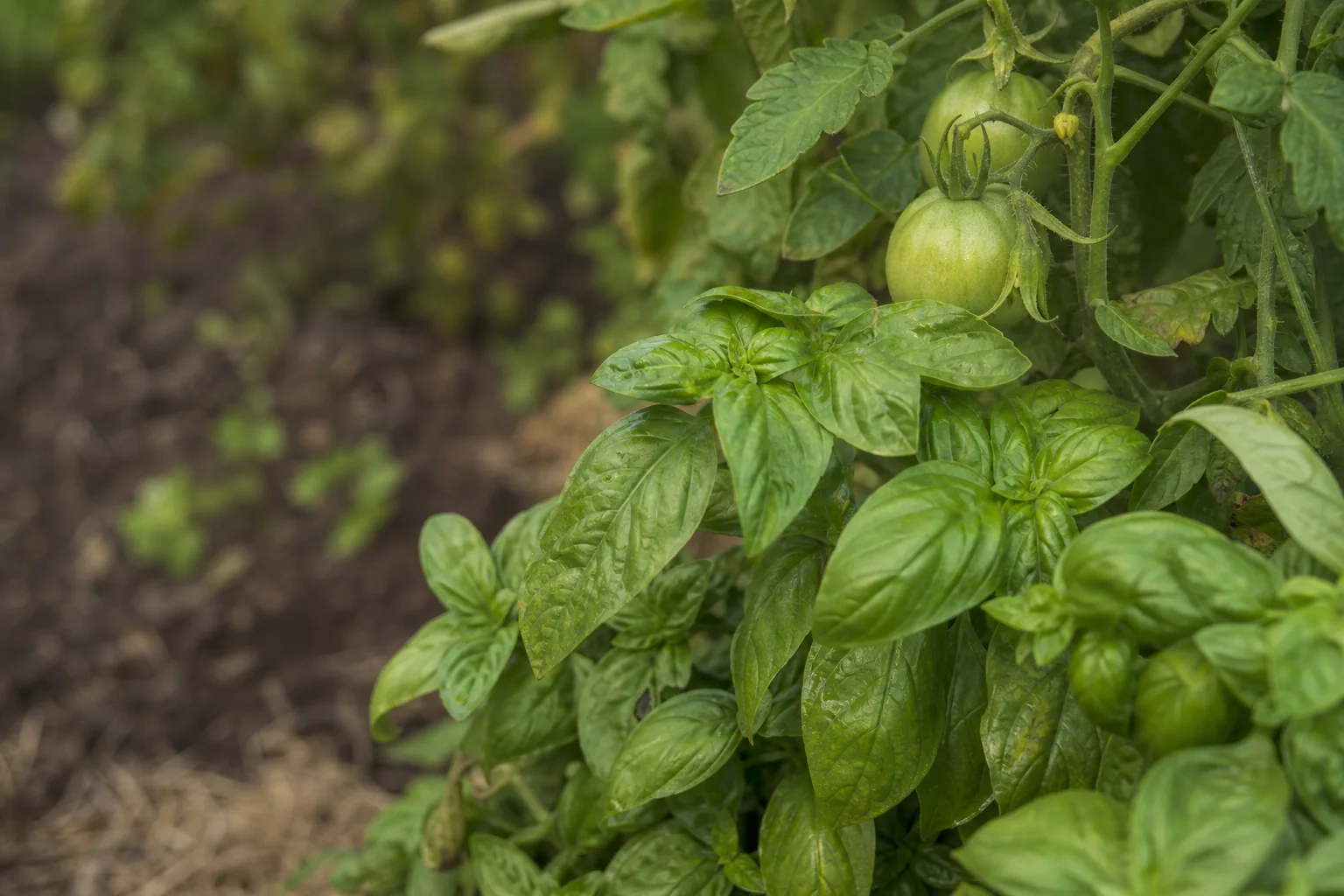
Basil is the tomato companion I would plant first because research supports better tomato vigor, root growth, fruit yield, and some pest reduction. Marigolds are more conditional: French types can suppress root-knot nematodes, but they usually need to be planted first and grown long enough in warm soil. Most other pairings are useful for space, pollinators, or specific pests, not magic.
Is basil really a good companion for tomatoes?
Basil is a genuinely worthwhile tomato companion because interplanting studies link it with stronger tomato growth, more root growth, higher fruit yield, and lower pressure from some pests. I would plant basil 8 to 12 inches from each tomato, close enough to share the root zone without creating a damp, crowded thicket.
The research summary also credits basil with repelling flies, mosquitoes, and tomato hornworms, and with improving tomato flavor. The flavor claim is the part I would treat as possible rather than guaranteed, but the growth and yield findings are strong enough for me to make basil the first choice. Research summarized by Homestead and Chill supports that position.
Plant basil after nights stay above 50 degrees Fahrenheit. In an Austin fall garden, that usually means basil is a warm-season leftover, not a fresh winter investment. Its downside is simple: basil hates a freeze, and crowded basil can hold moisture against tomato foliage.
Pick leaves often, water at the soil line, and leave 12 inches between basil plants if you want airflow. Sweet basil gives you more usable leaves, but it is finished by the first hard freeze. That is the trade.
Are marigolds worth planting beside tomatoes?
Marigolds can be useful beside tomatoes, but the benefit depends on the species, the soil problem, and the timing. French marigolds and other nematode-suppressing types can reduce root-knot nematodes, yet a marigold planted beside a tomato three weeks before harvest is mostly decoration with excellent manners.
For nematode suppression, plant the marigolds first and give them warm growing conditions and time to establish before tomatoes go in. In warm climates, I would start them 8 to 12 weeks ahead of the tomato planting, then work the decision around the soil rather than the flower color.
The root-knot claim is supported, but it is not a universal pest shield. Marigolds do not replace crop rotation, clean transplants, or checking tomato roots when a plant stays stunted despite water and sun. The Farmers' Almanac guide describes marigolds as useful companions while also separating stronger evidence from broad garden tradition.
French marigolds are compact enough for a tomato bed, but they still consume water and root space. African marigolds grow taller and can shade a young tomato. The tradeoff is that the right marigold may help below ground, while the wrong timing gives you flowers and very little nematode control.
Which tomato companions are worth planting this fall?
The most practical tomato companions are basil, onions, chives, parsley, lettuce, carrots, celery, borage, petunias, radishes, and thyme, but each earns its space for a different reason. Use them to fill open soil, attract beneficial insects, interrupt pest movement, or harvest more food from the same bed, not because every pairing increases tomato yield.
Onions and chives take little room and add an allium scent, but they can compete for water in a dry bed. Lettuce tolerates cooler fall weather and can use the tomato’s fading shade, though it bolts if warm days return. Carrots are slow and can be hard to pull from compacted clay without disturbing tomato roots.
Parsley is a good cool-season filler, but it is slow from seed. Celery needs steady moisture, which makes it a poor neighbor beside a tomato bed that you water sparingly. Borage attracts pollinators and may enhance flavor, but it gets large, reseeds, and can lean over the tomato like it owns the place.
Petunias may repel aphids, leafhoppers, asparagus beetles, and tomato worms, but they need their own water and can become another plant to deadhead. Radishes can draw flea beetles and spider mites away, while thyme may repel hornworms and whiteflies, but both are modest tools, not a substitute for looking under leaves twice a week. Gardenia’s companion guide lists those specific roles and their limits.
What should you plant with tomatoes if space is tight?
If space is tight, plant basil, chives, onions, lettuce, or parsley because they occupy different heights and mature at different speeds. I would place one basil plant 8 to 12 inches from a tomato, tuck chives or onions 6 inches away, and use lettuce 10 inches from the stem where it can be harvested before the tomato fills out.
Here is how I would rank the choices for a small fall bed:
| Companion | Best use beside tomatoes | Honest downside |
|---|---|---|
| Basil | Strongest evidence for tomato growth, roots, yield, and some pest reduction | Dies in a freeze and can crowd airflow |
| French marigold | Possible root-knot nematode suppression | Must be planted early, and the benefit depends on type and timing |
| Chives or onions | Compact harvest and allium scent | Compete for water in dry soil |
| Lettuce | Cool-season harvest under open tomato canopy | Bolts if temperatures rise |
| Radishes | Fast crop that may draw flea beetles and spider mites | Pest pressure can simply move around the bed |
| Borage | Pollinators and possible flavor benefit | Gets large and reseeds freely |
Everyone says to pack companions tightly because they are small. In practice, a tight bed stays wet after irrigation, airflow drops, and leaves touch. Give plants room to dry.
For a narrow bed, I would choose two basil plants, a row of chives, and lettuce between the tomatoes. That combination gives you food quickly and does not ask you to believe a marigold can solve every soil problem.
Which tomato companions should you avoid?
Keep brassicas, dill, corn, kohlrabi, potatoes, and walnut trees away from tomatoes. Brassicas compete for space, dill is listed as a poor neighbor, corn can attract tomato pests, kohlrabi can stunt tomato growth, potatoes may spread blight, and walnut trees can inhibit tomato growth through compounds in their roots and debris.
Brassicas include cabbage, broccoli, kale, and related crops, so do not treat the whole group as one harmless leafy filler. Their downside is not that they are bad plants. They simply are not the companions I would spend tomato-bed space on.
Corn is especially awkward in a small garden because it is tall, hungry, and identified as a plant that can attract tomato pests. Potatoes are worse for a different reason: the shared blight risk makes separation sensible. The West Coast Seeds companion guide lists both warnings along with the kohlrabi, dill, brassica, and walnut cautions.
Walnut trees deserve extra distance rather than a hopeful experiment. If a tomato bed is near one, move the tomatoes to a different part of the yard. A tree is difficult to relocate, and the tomato is cheaper.
Who is tomato companion planting for, and who should ignore it?
Tomato companion planting suits gardeners with an existing bed, open soil between young plants, mild pest pressure, and enough time to watch spacing and water. Ignore the folklore-heavy version if your bed has severe nematodes, compacted clay, poor sun, or an irrigation problem, because companions will not repair those foundations.
In Central Texas, I would fix drainage, sunlight, and irrigation before adding another plant. Black clay can stay wet after a storm and then split wide enough to swallow a hand, while caliche can stop a shovel 8 inches down. Basil cannot negotiate with either one.
If you are standing in the garden now in fall, ask yourself one plain question: do you need a harvest, pest help, or a soil test? If you need a harvest, plant lettuce, parsley, radishes, onions, or chives. If you want pest help, try basil, thyme, petunias, or a properly timed French marigold.
For plant selection by light, size, and season, use the plant database. It is more useful than buying six seed packets because a drawing looked cheerful.
How should you plant tomato companions in a fall garden?
Plant fall companions according to temperature and remaining tomato life, not according to a fixed spring diagram. In Central Texas, establish cool-season crops when daytime temperatures settle near 75 degrees Fahrenheit, keep basil only while nights remain above 50 degrees, and use drip irrigation because August and early September can dry a bed in days.
Start by clearing diseased tomato leaves and removing fallen fruit. Do not bury questionable tomato debris beside the next crop. Then loosen only the top 6 to 8 inches if the soil allows, because aggressive digging into wet black clay makes dense clods that stay dense.
Set lettuce and parsley 10 to 12 inches apart, radishes 3 to 4 inches apart, onions or chives 6 inches apart, and thyme 12 inches from a tomato stem. Keep the tomato’s main stem dry, and aim water at the soil rather than spraying the leaves.
For marigolds, the fall timing depends on the soil goal. If you are growing them for nematode suppression, plant French marigolds before the tomato crop and give them 8 to 12 weeks in warm soil. If you are adding them after tomatoes are already declining, treat them as flowers and a possible pest-distraction plant, not a guaranteed reset.
Do companion plants increase tomato yield every time?
No, companion plants do not increase tomato yield every time. Basil has the strongest case here, with research linking it to better tomato size, root growth, fruit yield, and vigor, while many ornamental or herb pairings remain anecdotal and may only add flowers, shade, habitat, or another harvest.
That distinction matters because a companion plant can be useful without improving the tomato. Lettuce gives you food before heat returns. Borage feeds pollinators. Chives use a narrow strip. Those are real benefits, even if your tomato produces exactly as it would alone.
The myth begins when every pleasant-looking combination gets described as a proven system. Garden Myths’ discussion is a useful reminder that some pairings are repeated more often than they are tested.
I plant companions for a job I can name. Better roots, a quick harvest, a pollinator source, or a specific pest target. If I cannot name the job, I leave the space open for airflow.
What are the best tomato companion plants for a beginner?
The best tomato companions for a beginner are basil, lettuce, chives, onions, parsley, and radishes because they are easy to place and give you a visible harvest or a clear garden purpose. French marigolds are worth trying only if you can plant them early enough for warm-season nematode suppression.
Basil is the first pick because its evidence is stronger than the usual garden rumor. Lettuce and radishes are useful fall fillers, but lettuce bolts in a warm spell and radishes can attract or concentrate pest activity instead of eliminating it.
Chives and onions are compact, though they still need water. Parsley handles cool weather better than basil, but it takes patience from seed. Every plant earns its place and charges rent.
What are the best tomato companion plants for a beginner?
The best tomato companions for a beginner are basil, lettuce, chives, onions, parsley, and radishes because they are easy to place and give you a visible harvest or a clear garden purpose. French marigolds are worth trying only if you can plant them early enough for warm-season nematode suppression.
Is basil or marigold better beside tomatoes?
Basil is the better general-purpose companion beside tomatoes because its benefits include stronger tomato growth, more root growth, higher fruit yield, and possible reduction of several pests. Marigold is better targeted to root-knot nematode concerns, but only the right type, planted early in warm soil, has a fair chance to deliver that benefit.
Should I plant marigolds before tomatoes?
Yes, plant French marigolds before tomatoes if your goal is root-knot nematode suppression. Give them about 8 to 12 weeks in warm soil before tomato planting, because a marigold added late beside an established tomato may provide flowers and some habitat but is unlikely to produce the same below-ground effect.
Can I plant tomatoes beside potatoes?
No, keep tomatoes and potatoes apart because potatoes may spread blight to tomatoes. Use a separate bed with good airflow and avoid carrying wet foliage or contaminated soil between the crops. The extra distance is cheaper than losing both crops to a disease problem.
What should I plant beside tomatoes in fall?
In fall, plant lettuce, parsley, radishes, onions, chives, and thyme beside tomatoes, adding basil only while nights remain above 50 degrees Fahrenheit. Space lettuce and parsley 10 to 12 inches apart, radishes 3 to 4 inches apart, and onions or chives about 6 inches apart so the bed does not become a damp knot.
Do tomato companion plants replace pest control?
No, tomato companion plants do not replace pest control, crop rotation, clean transplants, or regular inspection. Basil, thyme, petunias, radishes, and properly timed marigolds may help with particular pests or soil problems, but their effects vary, so check tomato leaves and stems twice a week and respond to what you actually find.
Want a plan for your own yard?
Tell us the space and we will put a planting plan together for it. Start at get my concept, or browse what actually grows where you are over on plants.
Frequently asked questions
What are the best tomato companion plants for a beginner?
The best tomato companions for a beginner are basil, lettuce, chives, onions, parsley, and radishes because they are easy to place and give you a visible harvest or a clear garden purpose. French marigolds are worth trying only if you can plant them early enough for warm-season nematode suppression.
Is basil or marigold better beside tomatoes?
Basil is the better general-purpose companion beside tomatoes because its benefits include stronger tomato growth, more root growth, higher fruit yield, and possible reduction of several pests. Marigold is better targeted to root-knot nematode concerns, but only the right type, planted early in warm soil, has a fair chance to deliver that benefit.
Should I plant marigolds before tomatoes?
Yes, plant French marigolds before tomatoes if your goal is root-knot nematode suppression. Give them about 8 to 12 weeks in warm soil before tomato planting, because a marigold added late beside an established tomato may provide flowers and some habitat but is unlikely to produce the same below-ground effect.
Can I plant tomatoes beside potatoes?
No, keep tomatoes and potatoes apart because potatoes may spread blight to tomatoes. Use a separate bed with good airflow and avoid carrying wet foliage or contaminated soil between the crops. The extra distance is cheaper than losing both crops to a disease problem.
What should I plant beside tomatoes in fall?
In fall, plant lettuce, parsley, radishes, onions, chives, and thyme beside tomatoes, adding basil only while nights remain above 50 degrees Fahrenheit. Space lettuce and parsley 10 to 12 inches apart, radishes 3 to 4 inches apart, and onions or chives about 6 inches apart so the bed does not become a damp knot.
Do tomato companion plants replace pest control?
No, tomato companion plants do not replace pest control, crop rotation, clean transplants, or regular inspection. Basil, thyme, petunias, radishes, and properly timed marigolds may help with particular pests or soil problems, but their effects vary, so check tomato leaves and stems twice a week and respond to what you actually find.
Free, no obligation
Ready to design your dream landscape? Start here.
Tell us where you are and we will start a free profile for you, with plants that actually survive your climate and a real sense of what the build would cost.