
Should You Prune Fruit Trees in Summer or Winter?
Winter pruning builds the tree and pushes new growth. Summer pruning slows the tree down, opens the canopy, and keeps dwarf and semi-dwarf fruit trees within reach.
October 3, 2026
By Diego Navarro
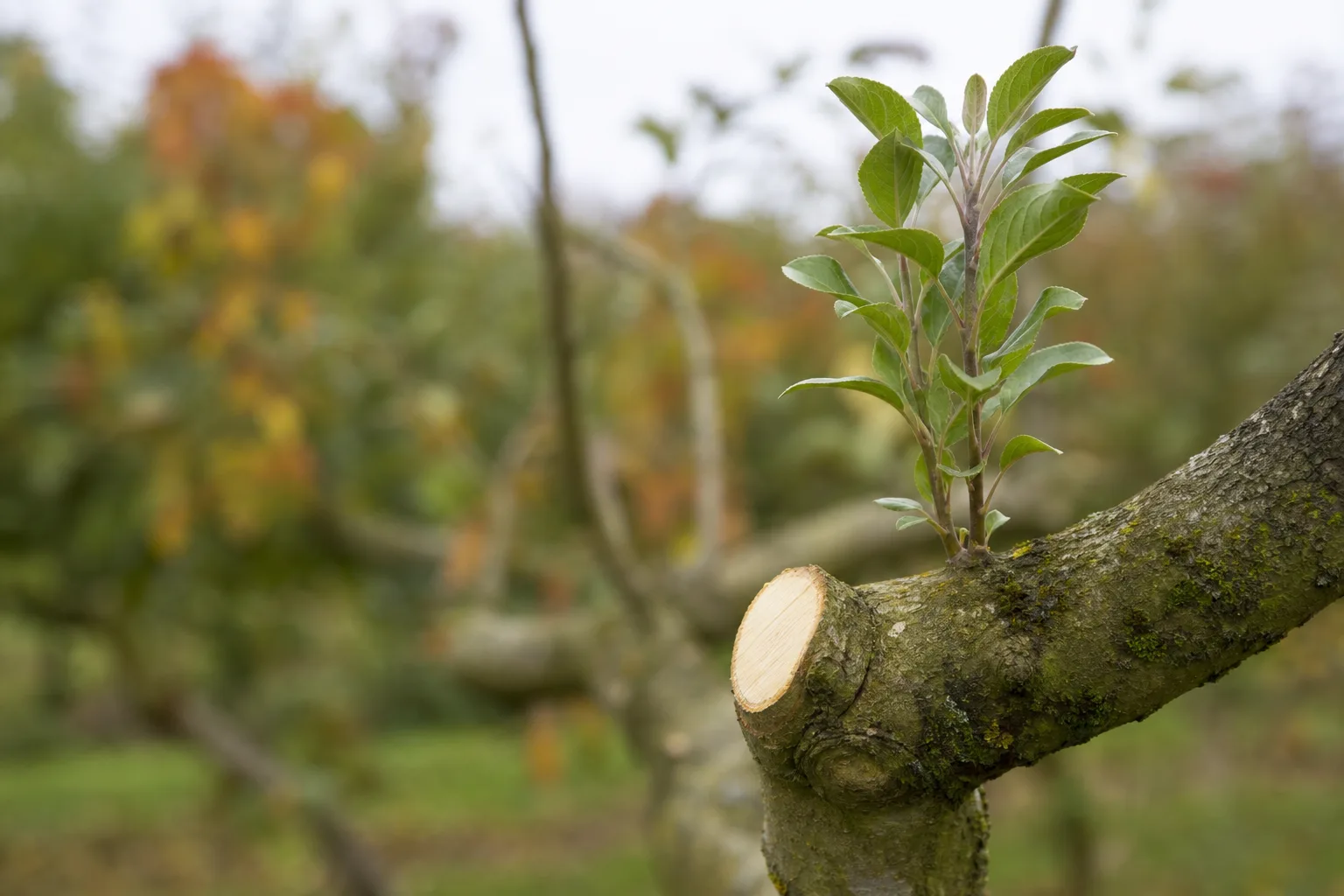
Winter pruning pushes fruit trees to grow; summer pruning restrains them. For a home orchard, do the structural work in late winter, then make light summer cuts from May through July or in August to control height, remove water sprouts, and open the canopy.
Should you prune fruit trees in summer or winter?
Winter pruning is the better season for shaping a fruit tree and encouraging vigorous new growth, while summer pruning is better for slowing excess growth and keeping the canopy compact. Using both seasons lightly gives you a stronger structure without asking one hard pruning session to solve every problem.
A dormant tree shows its framework clearly, so late winter or very early spring is the time to choose the main branches, remove crossings, and balance the root system with the branch system. Those cuts stimulate the growth left behind. Illinois Extension explains that pruning stimulates the above-ground portion that remains after a cut.
Summer work has a different job. Removing water sprouts, suckers, and selected leafy shoots reduces leaf area, improves light penetration, and helps hold a dwarf or semi-dwarf apple at a manageable height.
Everyone says winter pruning is simply cleanup. In practice, it is a growth decision. Cut a branch in late winter and the tree answers with more energy in the remaining shoots. Cut the same kind of excess growth in summer and the tree has less growing season left to replace it.
What should you do to a fruit tree this fall?
In fall, inspect and mark the branches you want to remove, but postpone major structural cuts until the tree is dormant. Remove only clearly dead, broken, or diseased wood if it poses an immediate problem, because fall is a poor time to start a heavy reshaping job that will push tender growth before winter.
Walk around the tree and identify three things: branches that cross, shoots growing straight upward from older limbs, and low branches that make mowing or harvesting difficult. Take photographs from four sides, then mark the planned cuts with removable tape. A photograph is cheaper than regret.
Do not strip the canopy now just because the tree looks crowded. The winter decision is easier after leaf drop, but the best timing depends on the tree entering dormancy, not on the first cool evening in October or November.
For Austin gardens, I would wait until late winter or very early spring, after the tree is dormant and before strong new growth begins. A mild January afternoon can look like permission, but a single warm day is not a pruning calendar.
If you are unsure whether a branch is dead, scratch a small spot of bark with a clean knife. Green tissue underneath suggests life, while dry brown tissue suggests dead wood, but do not turn that test into a reason to peel bark from every limb. The tree has enough problems already.
Why does winter pruning push fruit tree growth?
Winter pruning encourages vigorous new growth because the dormant tree has stored energy in its roots while losing part of its branch system. Once spring begins, that energy is directed into the shoots and buds that remain, so moderate dormant cuts are useful for building the tree’s framework and opening its center.
The point is not to remove as much wood as possible. Severe pruning on a young tree can delay fruit production, and a hard cut leaves fewer branches to carry fruit while sending strong shoots into the spaces you just created.
Use dormant pruning to select the permanent structure, not to chase every twig. Remove one branch that creates a bad crossing rather than shortening five nearby branches and hoping the tree understands your artistic vision.
A young apple needs a clear framework, but apple trees can respond with a thicket of vigorous shoots after aggressive winter cuts. The trade-off is straightforward: winter gives you control over shape, but too much of it produces more work and can delay bearing.
Peaches also benefit from dormant shaping, but their vigorous response means you should avoid turning a moderate correction into a bare skeleton. The trade-off is that a neat winter outline can become dense again by early summer if you leave every upright shoot in place.
Why does summer pruning restrain fruit tree size?
Summer pruning restrains fruit tree size by removing selected water sprouts, suckers, and excess foliage after the strongest spring growth has already happened. The smaller leaf area and shorter remaining growing season reduce the tree’s ability to replace those shoots, while the opened canopy receives more light and air.
The useful window is generally May through July, with some summer pruning also done in August. Illinois Extension specifically recommends removing water sprouts and suckers during May, June, and July, especially on apples and peaches.
Make summer cuts selectively. Remove a vigorous shoot that shoots straight through the center, shades fruit, or rises far above the intended height, but do not remove every leafy branch from the sunny side of the tree. Leaves are still the tree’s working parts.
Summer pruning is not a substitute for structure. The trade-off is that it can keep a dwarf or semi-dwarf apple within reach, but if you use it to compensate for a badly chosen main branch, you will be back with the saw next year.
For a tree that is already too tall, I would rather make several light summer corrections over two or three seasons than remove a third of the canopy in one afternoon. That is slower. It is also less likely to produce a forest of replacement shoots.
How much should you prune a fruit tree in winter?
Prune enough in late winter to establish a balanced framework, open the center, and remove dead, damaged, crossing, or badly placed wood, but avoid severe cuts that strip a young tree. For a home tree, make a short list of priority cuts and stop after the structure is clear instead of trying to perfect every branch in one session.
Start at the base and work upward. Remove suckers from the root area, then deal with damaged wood, crossing limbs, and shoots that grow inward through the canopy. After that, shorten only branches that are clearly outside the height or spread you can manage.
A practical order is three passes. First remove dead or broken wood, second correct the worst structural conflicts, and third make only the height and spread cuts you can explain in one sentence each.
The trade-off with moderate winter pruning is that the tree may still look a little untidy in February. That is acceptable. A fruit tree is not a chair, and the prettiest bare outline is not always the most productive one.
If the tree is young, be especially cautious about heavy cuts. The research from Illinois Extension notes that severe pruning of young trees can delay the start of fruit bearing. You are building a future tree, not making firewood with leaves.
What should you remove during summer pruning?
During summer pruning, remove water sprouts, suckers, and selected shoots that shade the interior, crowd fruiting branches, or push the tree beyond a practical height. Keep the work light and selective, because the goal is to reduce excess growth and improve air and light, not to expose every branch to the afternoon sun.
Water sprouts are the fast, upright shoots that often rise from older limbs after strong winter pruning. Suckers come from the base or root area. Both can clog the center and make the tree harder to manage, so removing them in May, June, or July is preferred by the Illinois guidance cited above.
On an apple, start with shoots growing straight up through the middle or above the chosen height. The benefit is a more compact tree and better light movement through the canopy. The trade-off is that every cut removes leaves, so repeated summer stripping can reduce the tree’s ability to feed itself.
On a peach, remove excess upright growth and branches that shade fruit, but leave enough healthy foliage to protect the tree and support ripening. Peaches respond quickly, so the trade-off is useful restraint now versus the risk of exposing too much wood if you become enthusiastic with the shears.
Do not treat every new shoot as a mistake. Some young shoots will become useful fruiting wood or fill a gap in the framework. I remove the ones with a job I can name, not the ones that merely look energetic.
Which pruning season suits your fruit tree and situation?
Winter pruning suits a young tree needing structure, an overgrown tree needing a clear framework, or a tree whose interior is too dense to understand with leaves on it. Summer pruning suits a dwarf or semi-dwarf apple that has reached its working height, or a peach and apple canopy producing too many upright shoots after spring growth.
Ignore a heavy summer pruning plan if the tree is drought-stressed, newly transplanted, or already sparse. Summer cuts remove leaves during the hottest part of the year, which is a poor bargain for a tree struggling to maintain its canopy.
Choose the approach below based on the problem you can name. The seasons work together, but they are not interchangeable.
| Pruning option | Best use | Honest downside |
|---|---|---|
| Late-winter pruning | Build structure, remove major conflicts, encourage new growth | Can produce vigorous replacement shoots and may delay fruiting if severe |
| Summer pruning | Restrain size, remove water sprouts, improve light and airflow | Removes leaf area and can stress a weak tree if overdone |
| Light winter pruning plus selective summer pruning | Maintain a manageable home apple or peach tree over time | Requires two inspections and discipline in both seasons |
For a typical Austin backyard apple, I would choose the third option. The ground may be caliche eight inches down or black clay that moves after a wet winter, but the tree still responds to the calendar above ground.
If you are laying out a new planting or trying to decide whether your tree can fit the space, use the plant database to check the mature habit before you start cutting. A pruning plan cannot make a naturally large tree behave like a dwarf one.
How do you keep pruning mistakes from multiplying?
Prevent pruning mistakes by making fewer cuts, checking the tree from all four sides, and separating structural work in late winter from size control in summer. The most expensive mistake is not one wrong cut; it is a cycle of severe winter pruning followed by a flush of water sprouts that demands another hard correction.
Stand ten feet back before each round of cuts. If you cannot see where the remaining branch will sit in the canopy, step back again. Close-up pruning makes every branch look urgent.
Use clean, sharp tools and cut just outside the branch collar rather than leaving a long stub or cutting flush into the trunk. A stub dies back slowly, while a flush cut removes the swelling that helps the tree respond to the wound. The trade-off is that precise cuts take longer than hacking through a branch, but the tree gets a better starting point.
Do not prune simply because the calendar says winter. Dormancy, tree condition, and the purpose of the cut matter more than a ritual date. In Central Texas, I have seen a January tree act like it was ready for spring, then watched a cold snap remind everybody who is in charge.
If the tree is too complicated to reach safely, sketch the structure and get a concept for your yard with get a concept for your yard before buying a taller ladder. Valeria draws it, I have to build it, and gravity remains undefeated.
What is the simple pruning plan for this fall?
This fall, inspect the tree, photograph its structure, and mark only the branches that clearly need attention; do not make heavy shaping cuts yet. In late winter, make moderate structural cuts, then inspect again from May through July or in August and remove only the summer shoots that make the canopy too tall, dense, or shaded.
Here is the sequence I would use:
- Fall: Walk the tree from four sides, identify dead wood, crossings, water sprouts, suckers, and the height you can harvest safely.
- Late winter or very early spring: Remove dead and damaged wood, correct the worst crossings, and shape the main framework with moderate cuts.
- May through July: Remove new water sprouts and suckers, then take out selected shoots that block light or push beyond the intended height.
- August: Make only light corrective cuts if the canopy still has excessive upright growth. Stop before you turn the tree into a collection of bare sticks.
- Next fall: Review the result and decide whether the tree needs another modest correction rather than a dramatic reset.
My father taught me plants in a twelve-foot strip of New Jersey clay along our driveway, where the question was whether a branch survived the first hard frost. In Austin, I ask whether the tree is still carrying a reasonable canopy after the fifth week over 100 degrees. Same family lesson. Different argument with the ground.
How long should I wait after fall before winter pruning fruit trees?
Wait until the fruit tree is dormant, then prune in late winter or very early spring before strong new growth begins. For an Austin garden, that often means watching the tree through December and January rather than choosing a fixed fall date, because a warm spell can arrive before the tree has fully settled into dormancy.
Does winter pruning make fruit trees grow faster?
Yes, winter pruning generally encourages stronger new growth from the branches and buds that remain. The tree has stored energy in its roots, and removing part of the branch system changes where that energy goes. The downside is that severe winter pruning can create a flush of water sprouts and may delay fruiting on young trees.
Can summer pruning keep a dwarf apple tree small?
Summer pruning can help keep a dwarf apple tree at a desired height by removing water sprouts, suckers, and excess shoots after spring growth. It will not change the tree’s rootstock or erase a poor planting choice, but selective work from May through July, with light correction in August, can restrain the canopy.
Should you remove water sprouts in winter or summer?
Remove water sprouts primarily during summer, especially in May, June, and July, when their removal helps reduce clutter and shade inside the canopy. Winter is still useful for major structural decisions, but cutting every water sprout during dormancy can encourage another vigorous flush of replacement growth.
Is summer pruning safe for a stressed fruit tree?
Summer pruning is not a good choice for a stressed fruit tree because each cut removes leaf area during the hottest growing period. Wait for the tree to recover, then make light, selective cuts rather than reducing the canopy heavily. A sparse or recently transplanted tree needs its remaining leaves more than it needs a tidy outline.
Should you prune apple and peach trees the same way?
Apple and peach trees can both receive light summer pruning, but you should not treat them as identical trees. Apples are often managed with summer cuts to hold dwarf and semi-dwarf trees at a desired size, while peaches can respond vigorously and need enough foliage left to support the tree and developing fruit.
Want a plan for your own yard?
Tell us the space and we will put a planting plan together for it. Start at get my concept, or browse what actually grows where you are over on plants.
Frequently asked questions
How long should I wait after fall before winter pruning fruit trees?
Wait until the fruit tree is dormant, then prune in late winter or very early spring before strong new growth begins. For an Austin garden, that often means watching the tree through December and January rather than choosing a fixed fall date, because a warm spell can arrive before the tree has fully settled into dormancy.
Does winter pruning make fruit trees grow faster?
Yes, winter pruning generally encourages stronger new growth from the branches and buds that remain. The tree has stored energy in its roots, and removing part of the branch system changes where that energy goes. The downside is that severe winter pruning can create a flush of water sprouts and may delay fruiting on young trees.
Can summer pruning keep a dwarf apple tree small?
Summer pruning can help keep a dwarf apple tree at a desired height by removing water sprouts, suckers, and excess shoots after spring growth. It will not change the tree’s rootstock or erase a poor planting choice, but selective work from May through July, with light correction in August, can restrain the canopy.
Should you remove water sprouts in winter or summer?
Remove water sprouts primarily during summer, especially in May, June, and July, when their removal helps reduce clutter and shade inside the canopy. Winter is still useful for major structural decisions, but cutting every water sprout during dormancy can encourage another vigorous flush of replacement growth.
Is summer pruning safe for a stressed fruit tree?
Summer pruning is not a good choice for a stressed fruit tree because each cut removes leaf area during the hottest growing period. Wait for the tree to recover, then make light, selective cuts rather than reducing the canopy heavily. A sparse or recently transplanted tree needs its remaining leaves more than it needs a tidy outline.
Should you prune apple and peach trees the same way?
Apple and peach trees can both receive light summer pruning, but you should not treat them as identical trees. Apples are often managed with summer cuts to hold dwarf and semi-dwarf trees at a desired size, while peaches can respond vigorously and need enough foliage left to support the tree and developing fruit.
Free, no obligation
Ready to design your dream landscape? Start here.
Tell us where you are and we will start a free profile for you, with plants that actually survive your climate and a real sense of what the build would cost.