
Should You Renovate Strawberries Right After the June Crop?
Mow, thin, feed, and water a June-bearing strawberry bed after harvest, then keep it clean through fall. Done at the right time, renovation can keep the same planting productive for another two to three seasons.
September 22, 2026
By Diego Navarro
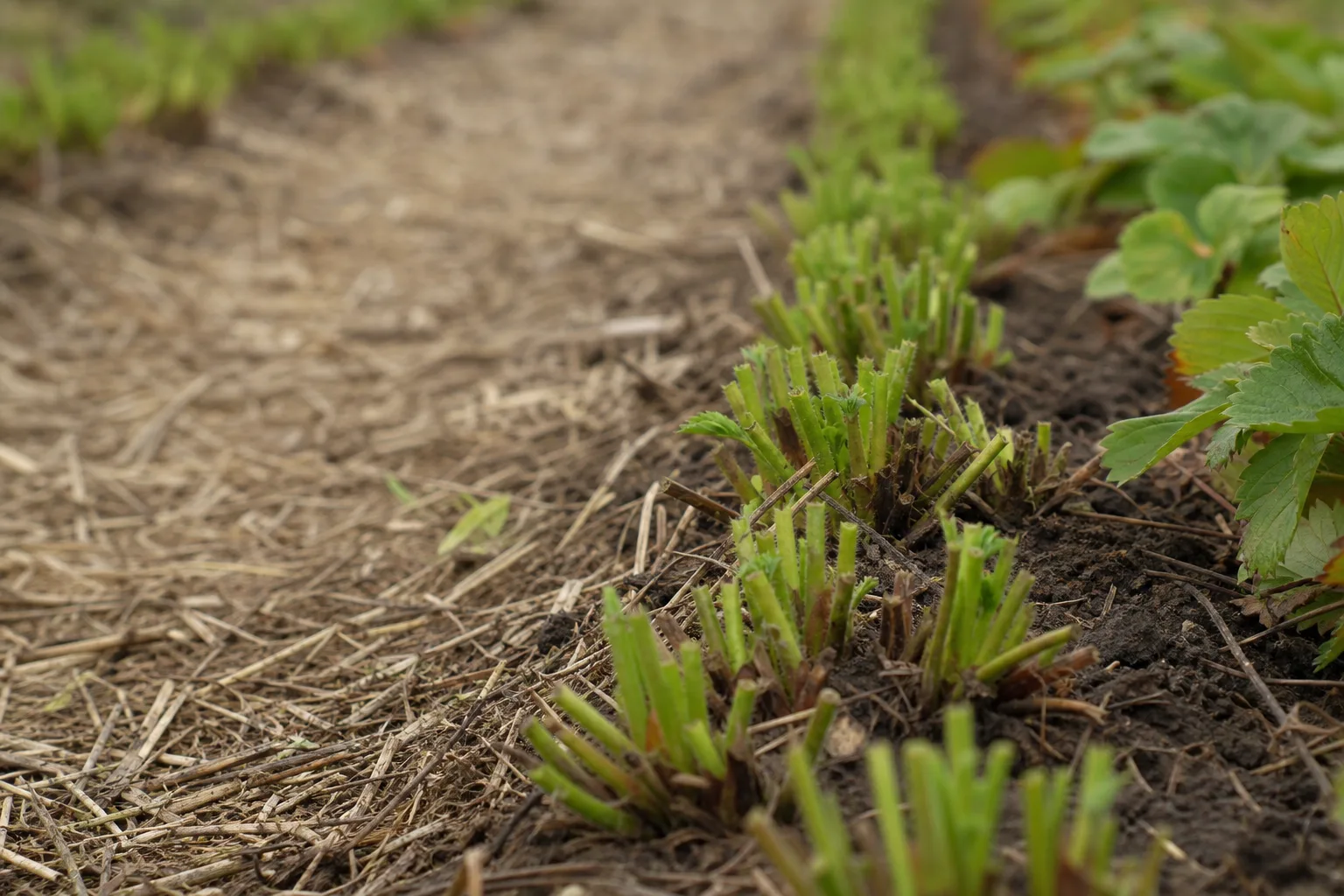
Should you renovate June-bearing strawberries right after harvest?
Yes, renovate June-bearing strawberries one to two weeks after the last fruit is picked, usually in late July or early August, because mowing removes exhausted leaves while the crowns still have time to regrow before fall dormancy. The job is simple: mow, rake, thin, feed, and water. If fall has already arrived, skip the late haircut and care for the living foliage.
A June-bearing bed fruits heavily for about four weeks, then the old leaves have done their first job. Oregon State Extension recommends renovation about one to two weeks after harvest, while Illinois Extension says to begin immediately after the harvest is complete. Oregon State Extension explains the timing and mowing height here.
I would not mow a bed in October because a calendar told me to. New leaves need time to grow, and a late cut can leave crowns trying to rebuild just as cold weather arrives. That is not renovation. That is making the plant fill out paperwork during an emergency.
If you are standing in the garden now and the bed has already made fresh leaves, pull weeds, remove dead runners, water during dry spells, and inspect the crowns. Mark the bed for a proper renovation next summer.
How short should you mow strawberry plants?
Mow June-bearing strawberry foliage to about 1 to 2 inches above the crowns, never level with the soil and never through the thick central crown. Set a mower high or use hand shears in a small bed, then rake every cut leaf away. The goal is fast new foliage, not a scalped strawberry patch.
The crown is the short, woody-looking center between the roots and leaves. New leaves emerge from it, so a blade that clips the crown can remove next season's plant instead of renewing it. Illinois Extension specifies about 1 inch above the crowns, while Oregon State Extension uses about 2 inches for June-bearing plants. Illinois Extension gives the one-inch mowing instruction.
For a narrow raised bed, I use hand shears because I can see every crown. A power mower is quicker on a broad matted row, but its honest downside is that one low setting can damage dozens of plants before you notice.
Do not mow if the bed is already well into fall regrowth. A healthy green leaf is earning winter reserves, even if it looks untidy. Cut only brown, dead leaves and remove them from the planting.
Rake the old foliage, weeds, and runners out of the bed. Diseased material should not go back into strawberry compost or mulch, because leaf diseases can travel right back into the planting.
How do you thin strawberry runners after mowing?
After mowing and raking, keep the strongest strawberry plants and thin the bed until plants stand about 12 inches apart. Remove weak crowns, crowded runners, and plants growing outside the intended row. Thinning gives each remaining plant room for leaves, roots, and next year's flower buds.
A matted row is not supposed to become a solid green carpet. That carpet holds moisture against leaves, hides weeds, and makes disease inspection nearly impossible. Oregon State Extension also recommends removing runners through fall in hill-system plantings, while matted-row beds need runners controlled so the row does not become congested.
Use a sharp hand trowel for plants you are removing, and lift the whole crown rather than snapping leaves off. The trowel is cheap and slow, but it lets you save a strong daughter plant or remove a weak one without tearing neighboring roots.
Everyone says more plants mean more berries. In practice, an overcrowded bed gives you smaller fruit and poorer air movement, because each crown competes for light and water. Twelve inches is a workable target, not a sacred measurement, but two inches apart is asking trouble.
If a runner has rooted in a good location and is vigorous, keep it. If it has rooted in the walkway, pull it. The plant does not know your edging plan.
What fertilizer should you use after strawberry renovation?
Apply a nitrogen-rich fertilizer after the old foliage is cleared and the remaining plants are thinned, using the product's label rate, then water thoroughly. A 10-10-10 fertilizer or balanced organic amendment supports new leaf and root growth, but too much nitrogen produces lush leaves, weak fruiting, and wasted money.
The research supports 10-10-10 or a balanced organic amendment after renovation. I would choose one, not stack both, because the label rate is based on the total nutrients going into the bed. Granular fertilizer is easy to measure, but its downside is that a heavy handful in one spot can burn roots.
Spread fertilizer evenly around the plants, not directly into the crowns. If the label calls for a certain amount per 100 square feet, measure the bed instead of guessing by handful. Garden math is less romantic, but it costs less than replacing a burned planting.
Water immediately after feeding until the soil is settled and the fertilizer has moved into the root zone. Do not turn the bed into soup. Strawberry crowns can rot if the soil stays saturated, particularly where compacted clay holds water after a storm.
In Austin, August irrigation needs a timer because the fifth week over 100 degrees does not care about your vacation schedule. That is a local reality, not a reason to fertilize every week.
Should you use straw mulch after strawberry renovation?
Use a thin layer of clean straw or mulch between strawberry rows if you need to conserve moisture and suppress weeds, but keep it off the crowns and do not return diseased leaf debris to the bed. Straw is useful insurance against drying soil, yet wet, dirty mulch can shelter pests and keep leaves damp.
The research allows clean straw or mulch between rows after renovation. I prefer a light layer that leaves the crowns visible and the soil surface accessible for inspection. A thick blanket is harder to weed through and can stay wet after rain.
Straw has a real trade-off: it is clean and airy when fresh, but it can contain weed seed or become a hiding place for slugs. Bagged mulch is more uniform, but it costs more and may hold moisture against the row if applied too thickly.
Keep the material between rows, not packed around each crown. If you cannot see where the crown begins, you have used too much. The bed should look orderly, not buried.
For help checking suitable strawberry varieties and other plants for your conditions, use the plant database, but match the plant to your actual sun, drainage, and winter exposure. A catalog picture cannot rescue a wet bed.
What should you do with a strawberry bed during fall?
During fall, keep renovated strawberries weed-free, water when the soil dries, and protect emerging shoots from an early frost with clean straw or a row cover if needed. Do not keep mowing, fertilizing, or removing healthy leaves. The fall job is steady care while the crowns prepare for dormancy.
Check the bed once a week through October in Central Texas, or more often after a dry, hot stretch. Pull weeds while they are small, remove dead leaves, and look for crowns buried under mulch. A row cover can protect tender growth during an early frost, but it must be secured so wind does not flatten the plants.
If you are in a colder region, leave protective straw in place until spring conditions allow growth to resume. Illinois Extension notes removing excess straw in spring after soil temperatures remain at 40 degrees Fahrenheit for three or four days, then moving that straw between rows. The exact winter protection depends on your climate.
Do not plant new strawberries in the same spot for at least one year if you are replacing the bed. Rotation reduces disease pressure, although it does not fix every soil problem. If the site is poorly drained, moving the same crop elsewhere only moves the appointment.
Are you tempted to keep every runner because it feels wasteful to pull a living plant? Keep the strongest plants at the right spacing. A crowded bed is expensive in July, when the berries are small and the picking is slow.
Who should renovate a strawberry bed, and who should skip this plan?
This plan suits gardeners with June-bearing strawberries in a matted row or small home bed who want another two to three productive seasons from an established planting. Skip renovation for an already weak, disease-filled bed, a planting you cannot irrigate through dry fall weather, or a bed that needs complete replacement with fresh disease-free stock.
If the crowns are green, the leaves are mostly healthy, and the bed produced a decent June crop, renovation is worth your afternoon. If half the plants are dead, fruit rotted repeatedly, or weeds have swallowed the rows, renovation may only polish a failing bed.
The method also suits someone who can return to the garden every week through fall. Strawberries need weed control and moisture after mowing, not a one-day rescue followed by six weeks of neglect. A timer helps, but it does not pull weeds or notice rot.
Here is how I choose between the real options:
| Option | Best use | Honest downside |
|---|---|---|
| Renovate the existing bed | Healthy June-bearing planting with good crowns | Requires mowing, thinning, and regular fall care |
| Lightly maintain without mowing | Fall has arrived and the bed already has fresh regrowth | You miss the ideal renovation window until next summer |
| Replace with disease-free plants | Weak, crowded, or disease-laden planting after about three fruiting seasons | Costs more and requires a clean or rotated planting site |
In my own work, I would renovate a bed that still has strong crowns rather than buy new plants because the existing root system has already adapted to the site. But I would not defend a tired bed just because it is familiar. Plants are not heirlooms if they are mostly disease.
How many years can a renovated strawberry bed produce?
A properly renovated June-bearing strawberry bed can produce a good crop for another two to three seasons, but many plantings decline after about three fruiting seasons because disease, weeds, weak crowns, and crowding accumulate. Replace the bed after three to four years, or sooner if plants become weak or disease-laden.
University of Nebraska Extension says diseases, weeds, and weak plants limit a planting to no more than three fruiting seasons, while University of Connecticut describes replacing original mother plants after about three years with disease-free stock. The Connecticut guidance covers the replacement cycle.
That does not mean every bed fails on the same birthday. A clean, well-spaced planting with good drainage may remain useful longer, while a wet, crowded bed can decline in one season. Count productive harvests, not the age written on the plant tag.
New Jersey taught me to watch the first hard frost and wait for spring recovery. Central Texas taught me to ask whether the bed is still alive in September after weeks above 100 degrees. The same plant has different arguments depending on the ground.
My father's tomatoes grew in a twelve-foot strip of clay along our New Jersey driveway, and I learned early that feeding a crowded root zone does not make it spacious. Strawberries are less forgiving when you cannot see the crowns.
What are the most common strawberry renovation questions?
The most common questions are about timing, mowing height, runners, fertilizer, mulch, and bed replacement. The direct answers are below, and each one depends on the same practical rule: renovate soon after the June crop, then stop disturbing the bed once healthy fall regrowth is established.
When should I renovate June-bearing strawberries?
When should I renovate June-bearing strawberries? Renovate them one to two weeks after the last fruit is picked, generally in late July or early August, by mowing, raking, thinning, feeding, and watering. If it is already fall and the plants have fresh green growth, do not mow them late. Keep the bed weed-free and plan to renovate next summer.
How high should I mow strawberry plants?
How high should I mow strawberry plants? Mow the foliage to about 1 to 2 inches above the crowns, taking care not to cut into the crowns themselves. A mower is efficient for a broad matted row, while hand shears are safer in a small bed. Rake all cut leaves away after mowing.
How far apart should strawberry plants be after thinning?
How far apart should strawberry plants be after thinning? Keep the strongest strawberry plants about 12 inches apart after renovation, removing weak crowns and excess runners. This spacing reduces crowding and improves air movement, although it means pulling living plants from the bed. More plants do not automatically mean more usable berries.
What fertilizer should I apply after renovating strawberries?
What fertilizer should I apply after renovating strawberries? Apply a nitrogen-rich fertilizer such as 10-10-10, or a balanced organic amendment, at the product's recommended rate after mowing and thinning. Water thoroughly afterward. Too much fertilizer can burn roots or produce excessive leaves, so do not combine products unless their labels specifically support that use.
Can I use straw mulch after strawberry renovation?
Can I use straw mulch after strawberry renovation? You can use a thin layer of clean straw between strawberry rows to conserve moisture and suppress weeds, but keep it off the crowns and do not return diseased leaves to the bed. Straw helps during dry weather, while thick or dirty mulch can hold moisture and shelter pests.
When should I replace an old strawberry bed?
When should I replace an old strawberry bed? Replace an old strawberry bed after about three to four fruiting seasons, or sooner when the plants become weak, crowded, or disease-laden. Use fresh disease-free stock and avoid planting strawberries in the same spot for at least one year. Replacement costs more, but a failing bed costs time every harvest.
If you want help laying out a replacement bed with rows, paths, and irrigation, you can get a concept for your yard before you buy plants. I would rather measure the bed once than move it twice.
Want a plan for your own yard?
Tell us the space and we will put a planting plan together for it. Start at get my concept, or browse what actually grows where you are over on plants.
Frequently asked questions
When should I renovate June-bearing strawberries?
When should I renovate June-bearing strawberries? Renovate them one to two weeks after the last fruit is picked, generally in late July or early August, by mowing, raking, thinning, feeding, and watering. If it is already fall and the plants have fresh green growth, do not mow them late. Keep the bed weed-free and plan to renovate next summer.
How high should I mow strawberry plants?
How high should I mow strawberry plants? Mow the foliage to about 1 to 2 inches above the crowns, taking care not to cut into the crowns themselves. A mower is efficient for a broad matted row, while hand shears are safer in a small bed. Rake all cut leaves away after mowing.
How far apart should strawberry plants be after thinning?
How far apart should strawberry plants be after thinning? Keep the strongest strawberry plants about 12 inches apart after renovation, removing weak crowns and excess runners. This spacing reduces crowding and improves air movement, although it means pulling living plants from the bed. More plants do not automatically mean more usable berries.
What fertilizer should I apply after renovating strawberries?
What fertilizer should I apply after renovating strawberries? Apply a nitrogen-rich fertilizer such as 10-10-10, or a balanced organic amendment, at the product's recommended rate after mowing and thinning. Water thoroughly afterward. Too much fertilizer can burn roots or produce excessive leaves, so do not combine products unless their labels specifically support that use.
Can I use straw mulch after strawberry renovation?
Can I use straw mulch after strawberry renovation? You can use a thin layer of clean straw between strawberry rows to conserve moisture and suppress weeds, but keep it off the crowns and do not return diseased leaves to the bed. Straw helps during dry weather, while thick or dirty mulch can hold moisture and shelter pests.
When should I replace an old strawberry bed?
When should I replace an old strawberry bed? Replace an old strawberry bed after about three to four fruiting seasons, or sooner when the plants become weak, crowded, or disease-laden. Use fresh disease-free stock and avoid planting strawberries in the same spot for at least one year. Replacement costs more, but a failing bed costs time every harvest.
Free, no obligation
Ready to design your dream landscape? Start here.
Tell us where you are and we will start a free profile for you, with plants that actually survive your climate and a real sense of what the build would cost.