
Should You Sterilize Pruning Tools Between Fruit Trees?
Fire blight and bacterial cankers can move from a diseased branch to a healthy tree on pruning blades. Here is when to disinfect, which method I would use, and how to handle fall pruning without turning a small cut into an orchard-wide problem.
September 25, 2026
By Diego Navarro
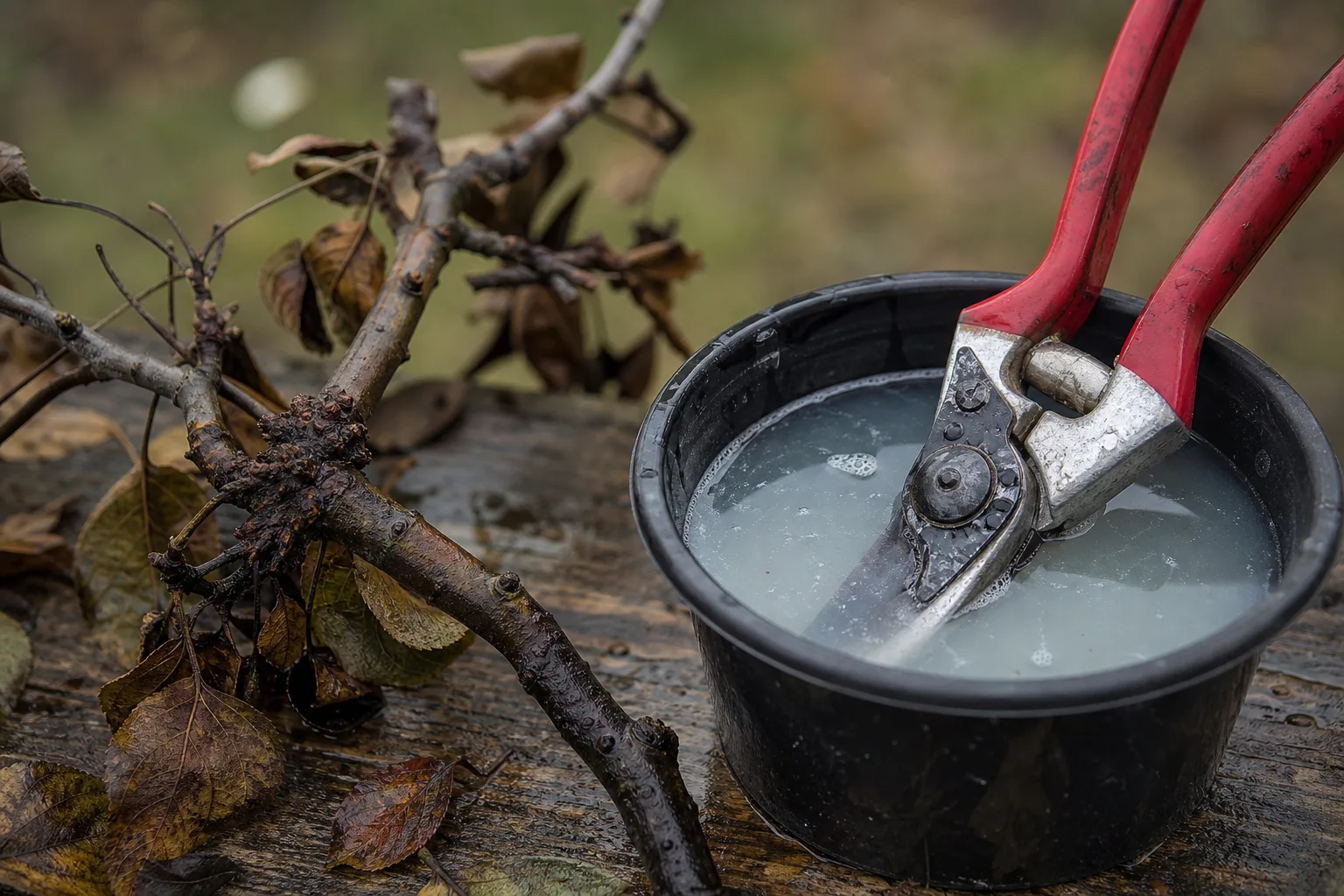
Yes, disinfect your pruning tools whenever you move from diseased or visibly damaged wood to healthy wood, especially between fruit trees that can carry fire blight or bacterial cankers. In fall, I would keep 70 percent isopropyl alcohol beside me for quick work, or use a one-to-three-minute soak of one part unscented bleach to four parts water when the job is larger.
When should you disinfect pruning tools between trees?
Disinfect pruning tools between trees whenever you have cut diseased, dead, split, or visibly damaged wood, and disinfect again before cutting healthy wood. This matters most with rosaceous fruit trees such as apple and pear because fire blight and bacterial cankers can ride on a blade into the next wound. The minute is worth it.
Bacteria enter through wounds, natural openings, insect feeding, and pruning cuts, then move between plants on soil, insects, splashing water, and tools, according to NC State Extension. A clean-looking blade is not proof that it is clean enough.
In practice, I sanitize after every suspect cut, not merely once at the end of the tree. If you cut a blackened spur on an apple, wipe or dip before the next cut, even if that next cut is only 8 inches away.
Everyone says, “Do the whole tree, then clean the shears.” That rule fails as soon as the blade touches infected tissue. Clean at the boundary between bad wood and good wood.
Can fire blight and canker really travel on pruning blades?
Yes, fire blight and bacterial cankers can travel on pruning blades because bacteria remain on a tool after it cuts infected tissue, and the next cut creates a fresh entry point. The risk is not theoretical housekeeping. It is a direct path from a diseased branch to a healthy wound, as NC State Extension explains.
Fire blight on an apple tree has a trade-off even before you prune it: aggressive removal can leave an ugly gap and reduce that season’s fruiting wood, but gentle trimming can leave active bacteria behind. I choose the hard cut when symptoms are active.
A pear tree can also carry fire blight, with the same trade-off of losing branches now to protect future structure. The fruit is not the only thing at stake. A neglected infection can keep finding new tissue through wounds and natural openings.
I learned the shape of this problem long before Central Texas, watching my father work tomatoes in a twelve-foot strip of New Jersey clay. The soil was the argument there. Here, the blade is sometimes the argument.
What is the best way to disinfect pruning shears in fall?
For most fall pruning, use 70 percent isopropyl alcohol for at least 30 seconds, or soak the blade for one to three minutes in one part unscented chlorine bleach mixed with four parts water. Dip or spray the cutting surfaces, let the treatment sit, rinse bleach-treated tools with clean water, and wipe them dry before the next cut.
Alcohol is my first choice for a small home orchard because it is quick and does not require carrying a bucket through the garden. Its trade-off is that a brief splash is not the same as the recommended 30-second contact time, so give the blade the full half minute.
Bleach is useful when several tools need treatment at once, and the one-to-four mixture is simple to measure. Its trade-off is the extra rinse and drying step. Leave the solution on the metal and you have made the tool part of the experiment.
A small spray bottle is convenient, but spray only if the blade stays wet for at least 30 seconds. A spray-and-immediate-cut routine looks busy and accomplishes very little.
Should you sanitize after every cut or only between trees?
Sanitize after every cut that involves a suspect area, then sanitize again before the next healthy cut. Between-tree cleaning is the minimum, not the complete rule, because one infected branch can contaminate the blade before you have finished working on the same tree. The closer the cut is to visible disease, the less room there is for shortcuts.
For a visibly infected branch, I keep the alcohol bottle in my pocket and the clean rag in the other pocket. Cut, treat for 30 seconds, wipe dry, then move on. It slows the work, but not by much.
With bleach, use the one-part bleach to four-parts water mixture and allow one to three minutes of soaking, then rinse with clean water and dry the blade. The trade-off is time, especially if you are moving through twenty small cuts.
Do not use the same dirty rag to wipe every tool and call the tools clean. The rag can move residue back onto the blade. A clean towel is a small thing that prevents a foolish loop.
How far below fire blight should you cut in spring?
In spring, cut active fire blight 10 to 12 inches below the visible symptom, remove the infected material from the orchard, and sanitize the shears frequently during the work. That deeper cut sacrifices more wood than ordinary pruning, but it gives you a better chance of removing infected tissue instead of merely trimming the symptom’s edge.
This is a spring rule, not a reason to start making large fire-blight cuts in every fall tree. Fall is the time to remove clearly dead, broken, or visibly diseased material carefully and to avoid carrying questionable clippings from tree to tree.
The 10-to-12-inch margin has a practical cost: you may lose a scaffold branch, a fruiting spur, or the shape you spent years building. The cheaper-looking cut can cost more if the infection remains and advances.
Put removed pieces away from the orchard rather than leaving them under the canopy. NC State Extension specifically recommends destroying fire-blight clippings or at least removing them from the site.
How much healthy wood should you remove around a canker?
During dormancy, remove the entire canker plus 4 to 6 inches of healthy wood, then clean the tool before cutting another tree. This wider removal costs living branch length and may change the tree’s form, but stopping at the discolored edge can leave infected tissue behind. Canker pruning is not a cosmetic haircut.
Look for the complete affected section, not only the darkest patch. A canker may be easier to see after leaves drop, which is one reason dormant pruning is useful for this job.
If a canker sits on a major limb, the trade-off becomes structural: removing it may create a large gap or require retraining the tree over several seasons. Leaving it untouched may preserve the shape today while protecting nothing tomorrow.
Do not drag cut branches through neighboring trees. A tool is not the only carrier in the garden, and NC State Extension lists soil, insects, splashing water, and pruning tools as possible routes for bacterial spread.
Which tool-cleaning method should you use between fruit trees?
Use alcohol for fast repeated cuts, diluted bleach for a timed soak, and flame sterilization only when you can control the heat safely and completely. I use alcohol most often because a home orchard needs a method you will repeat after each suspect cut, while bleach works better when you can stop and soak several tools without rushing.
| Method | Contact time and use | Honest downside |
|---|---|---|
| 70 percent isopropyl alcohol | Dip or spray, keep wet for at least 30 seconds | A quick mist followed by a cut is not enough time |
| One part unscented bleach to four parts water | Soak for one to three minutes, then rinse and dry | It adds a rinse and drying step after every treatment |
| Brief flame sterilization | Heat the blade briefly when the tool and surroundings allow it | It is harder to control in a dry garden and easy to rush |
The alcohol option loses if you are cleaning a large batch of tools and cannot keep track of wet contact time. The bleach option loses if you are working far from water. The flame option loses if you are treating it like a theatrical flourish instead of a controlled sanitation step.
The News ADEMS tool guidance makes the blunt point that blades can carry infection from one plant to another. I agree with the mechanism, but I would still follow the specific bleach and contact-time guidance above rather than improvising.
Who is this pruning-tool routine for, and who should ignore it?
This routine suits anyone pruning apple or pear trees, working with visible cankers, removing fire-blight symptoms, or moving between several fruit trees with one pair of shears. You can ignore the full between-cut routine for ordinary cuts on one healthy tree, but sanitize before leaving that tree if you have touched dead, split, or suspicious wood.
A homeowner with two backyard trees needs the same basic discipline as a larger orchard, only with fewer cuts. Keep a small alcohol bottle or bleach bucket nearby instead of trusting memory.
If your tree has no visible damage and you are making a few clean structural cuts during dormancy, disinfecting between every ordinary cut is usually unnecessary. The trade-off of over-cleaning is lost time and a more complicated job, not a healthier tree by itself.
If you are unsure whether a branch is diseased, treat it as suspect until you identify the problem. You can compare symptoms and mature plant traits in the plant database, but do not use a picture match as permission to drag questionable clippings across the yard.
What should you do with pruning tools and clippings after fall work?
After fall pruning, remove diseased clippings from the orchard, rinse bleach-treated blades with clean water, wipe all blades dry, and store the tools clean rather than leaving residue on the metal. The goal is to finish with fewer sources of spread and a tool ready for the next cut, not merely a pile of branches under the tree.
Sort the pile as you work. Clearly diseased sections should not sit beneath a neighboring fruit tree while you finish the job, because splashing water, insects, soil contact, and tools can all help move bacteria.
Inspect the blade edge after cleaning. A ragged cut is not a sanitation failure by itself, but rough wounds give the tree more damaged surface, and a dull tool makes you press harder. Sharpening has a trade-off too: it improves the cut, but it does not disinfect the blade.
Before you start, sketch the trees and mark which ones have symptoms. If you want help planning access, spacing, and the order of work, you can get a concept for your yard. Build the routine around the actual number of trees, not the fantasy that you will remember every suspect branch.
What questions do gardeners ask about sterilizing pruning tools?
Gardeners usually want to know whether cleaning is needed between every tree, whether bleach or alcohol is better, and how fall work differs from spring fire-blight removal. The short answer is to clean whenever a blade touches suspect tissue, use a full contact time, remove diseased wood from the orchard, and make deeper cuts during the proper seasonal operation.
Should I disinfect pruning tools between every fruit tree?
Yes, disinfect pruning tools between every fruit tree whenever you have cut diseased, dead, split, or visibly damaged wood. Fire blight and bacterial cankers can move on blades into the next pruning wound. If every tree is healthy and you are making a few ordinary dormant cuts, cleaning between every cut is unnecessary, but clean before moving after suspicious wood.
Is rubbing alcohol better than bleach for pruning shears?
For routine home pruning, 70 percent isopropyl alcohol is usually more convenient than bleach because you can keep it beside the tree and use a 30-second contact time. Bleach remains effective at one part unscented chlorine bleach to four parts water for one to three minutes, but it requires rinsing and drying afterward.
How long should pruning tools sit in disinfectant?
Keep 70 percent isopropyl alcohol on the blade for at least 30 seconds, or soak the blade for one to three minutes in one part unscented bleach mixed with four parts water. Wipe the blade dry before the next cut, and rinse bleach-treated tools with clean water first so residue does not remain on the metal.
Do I need to sterilize tools after cutting dead wood?
Yes, sanitize after cutting dead wood if the branch is visibly damaged, discolored, cankered, or connected to a diseased section. Dead wood alone is not proof of bacterial disease, but treating suspicious material as contaminated costs less than carrying bacteria into a healthy wound. Clean the tool before the next healthy cut, even on the same tree.
How far below fire blight should I prune?
In spring, prune fire blight 10 to 12 inches below the visible symptom, sanitize shears frequently, and remove the cut material from the orchard. That distance sacrifices healthy-looking wood, but cutting only the visible blackened section can leave infection behind. Fall cleanup should focus on clearly dead, broken, or suspicious material without pretending it replaces spring disease removal.
Should diseased pruning clippings go in the compost pile?
Diseased pruning clippings should be destroyed or at least removed from the orchard rather than left beneath the tree. Fire-blight material is especially worth removing because NC State Extension recommends destroying those clippings or taking them away from the site. The trade-off is carrying an extra bundle. Carry it.
Want a plan for your own yard?
Tell us the space and we will put a planting plan together for it. Start at get my concept, or browse what actually grows where you are over on plants.
Frequently asked questions
Should I disinfect pruning tools between every fruit tree?
Yes, disinfect pruning tools between every fruit tree whenever you have cut diseased, dead, split, or visibly damaged wood. Fire blight and bacterial cankers can move on blades into the next pruning wound. If every tree is healthy and you are making a few ordinary dormant cuts, cleaning between every cut is unnecessary, but clean before moving after suspicious wood.
Is rubbing alcohol better than bleach for pruning shears?
For routine home pruning, 70 percent isopropyl alcohol is usually more convenient than bleach because you can keep it beside the tree and use a 30-second contact time. Bleach remains effective at one part unscented chlorine bleach to four parts water for one to three minutes, but it requires rinsing and drying afterward.
How long should pruning tools sit in disinfectant?
Keep 70 percent isopropyl alcohol on the blade for at least 30 seconds, or soak the blade for one to three minutes in one part unscented bleach mixed with four parts water. Wipe the blade dry before the next cut, and rinse bleach-treated tools with clean water first so residue does not remain on the metal.
Do I need to sterilize tools after cutting dead wood?
Yes, sanitize after cutting dead wood if the branch is visibly damaged, discolored, cankered, or connected to a diseased section. Dead wood alone is not proof of bacterial disease, but treating suspicious material as contaminated costs less than carrying bacteria into a healthy wound. Clean the tool before the next healthy cut, even on the same tree.
How far below fire blight should I prune?
In spring, prune fire blight 10 to 12 inches below the visible symptom, sanitize shears frequently, and remove the cut material from the orchard. That distance sacrifices healthy-looking wood, but cutting only the visible blackened section can leave infection behind. Fall cleanup should focus on clearly dead, broken, or suspicious material without pretending it replaces spring disease removal.
Should diseased pruning clippings go in the compost pile?
Diseased pruning clippings should be destroyed or at least removed from the orchard rather than left beneath the tree. Fire-blight material is especially worth removing because [NC State Extension](https://content.ces.ncsu.edu/extension-gardener-handbook/5-diseases-and-disorders) recommends destroying those clippings or taking them away from the site. The trade-off is carrying an extra bundle. Carry it.
Free, no obligation
Ready to design your dream landscape? Start here.
Tell us where you are and we will start a free profile for you, with plants that actually survive your climate and a real sense of what the build would cost.