
Is Spinosad Safe for Bees? Apply It Only in the Evening
Spinosad can control armyworms and asparagus beetles, but it is not harmless to bees. Use it as an evening-only treatment, follow the product label, and keep bees away from treated plants for at least three hours after spraying.
October 1, 2026
By Diego Navarro
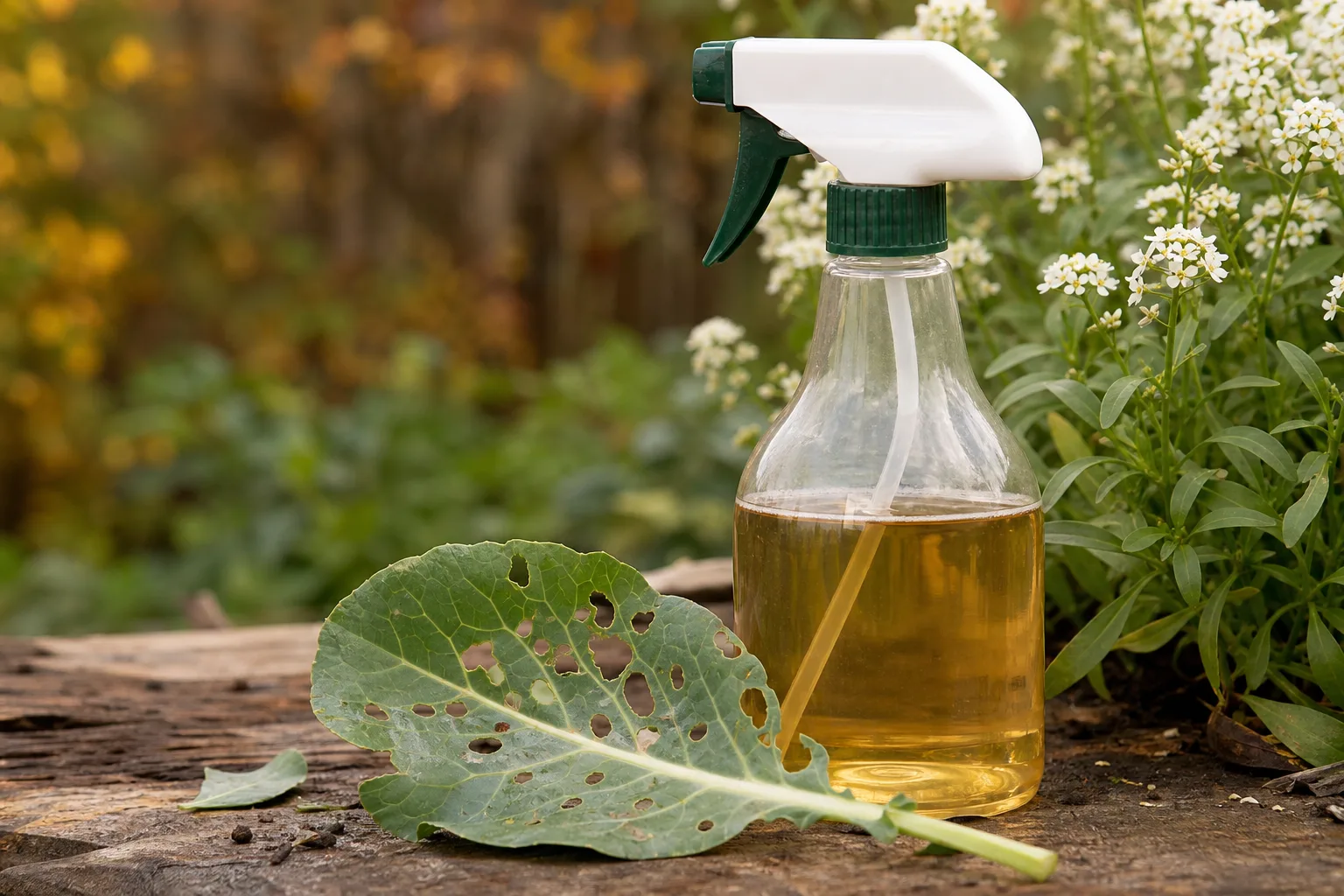
Spinosad is effective against armyworms and asparagus beetles, but it is not bee-safe during the first three hours after spraying. My position is simple: use it only in the evening, never spray open flowers, and treat only the plants that genuinely have a pest problem.
Is spinosad effective against garden pests?
Spinosad is effective against several chewing pests, including armyworms and asparagus beetles, and a garden product listed with 0.5 percent spinosad names both pests on its target list. That makes it a useful fall treatment when caterpillars or beetles are actively damaging leaves, not a routine spray for every garden bed. The product listing identifies the ingredient and target pests here.
The useful distinction is between damage you can see and insects you merely suspect. Armyworms chew leaves and can leave ragged edges or stripped patches. Asparagus beetles damage asparagus foliage and can be especially irritating after you have already done the work of getting the bed established.
Spinosad still has a cost beyond the price of the bottle. It can expose bees if you spray at the wrong hour, and it wastes time and product if the problem is actually chewing damage from something else or weather damage that looks like feeding.
Walk the bed before you spray. Look under leaves, check new growth, and decide whether the damage is increasing over two or three days. If you cannot find an active pest, do not spray just because the leaves look imperfect.
Why is spinosad risky for bees?
Spinosad is risky for bees because bees that encounter the treatment during the three hours after application can be harmed. The product information does not support treating spinosad as harmless simply because it is biological, so the safe practice is to keep bees away during that window and avoid spraying flowers altogether.
The word biological does not mean gentle to every insect. It describes where a control comes from, not a promise that pollinators, predators, and pests will all respond the same way.
A blooming plant is a bad target for a spray like this, even if the pest damage is real. Bees may visit flowers you did not notice, and a small backyard bed can contain more bee traffic than you see from the kitchen window.
I learned the soil lesson from my father's twelve foot strip of clay along the driveway, where every shovel full came with a little argument. Spinosad has a similar lesson: the label category is not the whole story. The timing is the story.
When should you apply spinosad in the fall?
Apply spinosad in the evening during fall, after bee activity has dropped, and do not spray while bees are visiting flowers. Start after sunset or as daylight is fading, then keep people and bees out of the treated area for at least three hours after application, according to the product safety information.
For a Central Texas garden, I would rather spray at 7:30 p.m. in October than at 10:00 a.m. when the bed is busy with insects. The exact clock time changes as the season moves, so use fading daylight and the label's instructions rather than copying a time from a calendar.
Do not spray right before a predicted rain if the label does not allow it. Rain can shorten the useful treatment period, wash product onto soil, and leave you thinking the pest survived when the application simply did not remain where it was needed.
Evening application is not permission to ignore wind. A breeze can carry droplets onto flowering plants, neighboring beds, or a flowering weed at the edge of the fence. If the leaves are moving steadily, wait.
How long should bees stay away after spraying?
Bees should stay away from the treated area for at least three hours after spinosad is applied because the product is toxic to bees exposed during that period. Treat three hours as a minimum safety window, not as a reason to spray at dusk and forget the garden, especially if flowers remain open overnight.
A practical schedule is to spray after sunset, close the garden gate if you have one, and leave the bed alone until the next morning. If you spray at 7:30 p.m., the three hour window ends at 10:30 p.m., but I would still avoid watering, harvesting, or disturbing the foliage until daylight.
You also need to consider the next morning. If the spray lands on open flowers, bees can return to those flowers after the three hours even though the plant was a poor target from the start. Remove or shield nothing casually. Better to skip the flower than create a timing puzzle.
If the garden contains flowering herbs, let the flowers finish or treat a nonflowering portion only if the product label permits it. You can check plant options and their growing details in our plant database, but no database replaces the pesticide label.
Can you spray spinosad on flowering plants?
You should not spray spinosad on flowering plants that bees can visit. The three hour restriction reduces risk after treatment, but it does not make a blooming plant a responsible target, because bees can encounter treated flowers and foliage during or after the application window.
This is where the popular rule of thumb fails. Everyone says evening spraying solves the bee problem. In practice, evening timing solves only the immediate exposure window, while open flowers can keep the risk in the bed longer.
If an asparagus bed has flowers or nearby flowering weeds, pull the weeds by hand if they are safe to remove and deal with the pest on the nonflowering crop only if the label allows it. Hand removal takes longer, but its downside is clear and limited: you may miss a few insects.
Do not spray a whole ornamental border because one plant has chewing damage. Isolate the affected plant, inspect it over the next 24 hours, and treat only what needs treatment. Broad coverage is how a small pest problem becomes a pollinator problem.
What pests does spinosad control in a fall garden?
Spinosad can control armyworms and asparagus beetles, which are specifically listed as target pests for a 0.5 percent spinosad garden spray. It is not a universal answer for every insect, and you should identify the pest before applying anything, because the wrong treatment adds risk without solving the damage.
Armyworms are a reasonable fall concern when you find active leaf-chewing caterpillars and fresh damage. Look closely instead of trusting the name on a social media post. A caterpillar, a beetle, and a disease spot do not ask for the same response.
Asparagus beetles belong in a separate decision because the crop and its growth stage matter. If the bed is not actively growing or the label does not cover your use, do not improvise with a leftover spray.
A separate commercial tender listing mentions spinosad at 44.03 percent SC, which shows that spinosad products can appear in very different concentrations and formulations; it does not prove that a concentrated product is appropriate for a home garden. That listing is here.
Read the active ingredient percentage, target pest list, crop list, and application directions on your own container. A bottle with the same active ingredient is not automatically interchangeable with another bottle.
Who should use spinosad, and who should skip it?
Spinosad suits a gardener who has identified active armyworms or asparagus beetles, has no flowers in the spray zone, can apply after bee activity drops, and can leave the area undisturbed for at least three hours. Skip it if the bed is blooming, the pest is uncertain, or you cannot control access and timing.
It also suits a fall vegetable bed where hand picking has not stopped active damage and the label specifically allows the crop and pest. The tradeoff is that you take on a timing job. If you cannot do that job, choose removal or accept some damage.
Skip spinosad for a cosmetic problem. Leaves with a few holes are not automatically a crisis, and fall gardens do not need to look like a showroom to feed you or provide habitat.
Skip it around a heavily flowering yard where bees are working from morning through afternoon and returning to the same plants at dusk. You can build a more precise plan with get a concept for your yard, especially if the spray zone is currently mixed with flowers, herbs, and vegetables.
You should also skip it when the label does not cover your intended plant or pest. The downside of guessing is not only wasted money. It is exposure without a clear reason.
What are the real options besides spinosad?
For a fall pest problem, I would first identify the insect and inspect the plant, then use hand removal or a labeled spinosad treatment depending on the amount of damage and whether bees are visiting. Spinosad is the stronger option for an active, identified chewing pest, but hand removal has the smallest pollinator risk.
| Option | Best use | Honest downside |
|---|---|---|
| Hand removal | A small number of visible caterpillars or beetles | Takes repeated checks and can miss insects hidden under leaves |
| Spinosad | Identified armyworms or asparagus beetles causing active damage | Toxic to bees exposed during the first three hours after treatment and requires careful timing |
| No treatment | Minor damage that is not increasing | The plant may lose more foliage if the pest population grows |
Hand removal works best when you inspect every day for several days, not once and then declare victory. Drop visible insects into soapy water only if you are comfortable identifying them and the container will not be accessible to children or pets. The downside is labor, plain and honest.
No treatment is a real option for a healthy plant with minor damage. Its tradeoff is uncertainty. You accept that the damage may continue, so check again in 24 to 48 hours rather than pretending the problem solved itself.
If you choose spinosad, do not make the application broader than the problem. A small, evening-only treatment on an approved plant is a different decision from spraying an entire mixed border.
How should you apply spinosad without harming bees?
Apply spinosad only according to the product label, in the evening, to the affected plant or crop, and never directly over open flowers that bees can visit. Confirm the product's concentration and approved uses, avoid windy conditions, and keep bees and people away from the treated area for at least three hours.
First, read the bottle before mixing or spraying. A garden spray listed at 0.5 percent spinosad is not the same thing as every product that contains spinosad, and a separate formulation may have different directions.
Second, inspect the weather and the bed. Do not spray when wind is carrying droplets, when rain is likely to remove the treatment, or when flowering weeds are directly below the crop canopy.
Third, use the smallest treatment area that can solve the problem. Spray the affected foliage as directed rather than soaking the soil, nearby flowers, fence line, and every plant that happens to be green.
Fourth, mark the time. If you finish at 8:00 p.m., keep the area closed until at least 11:00 p.m., and I would wait until morning before working among the leaves. Do not harvest early because dinner plans changed. The garden will survive one more night.
What mistakes make spinosad more dangerous?
The most dangerous mistakes are spraying during daylight bee activity, treating blooming plants, assuming biological means harmless, ignoring the three hour restriction, and using a product without checking its concentration and label directions. Those errors turn a targeted pest treatment into an unnecessary exposure across the garden.
Another mistake is spraying from a calendar instead of from evidence. October does not mean every caterpillar is an armyworm, and a damaged leaf does not prove that a spray is needed. Find the insect first.
People also forget the edges. A flowering clover patch, basil bloom, or volunteer plant under the crop can receive drift even when the main plant is not flowering. Walk the perimeter before you mix anything.
The final mistake is repeating the application automatically. Reinspect after 24 to 48 hours, follow the label's interval, and stop if the active pest is gone. More spray is not a personality trait. It is just more exposure.
What are the most common spinosad and bee questions?
Spinosad can be useful in a fall garden, but its safe use depends on identifying the pest, protecting flowers, and respecting the three hour bee exposure window. The questions below cover the practical decisions I would make before carrying the sprayer outside.
Is spinosad safe for bees?
Spinosad is not safe for bees that encounter the treatment during the first three hours after application. Apply it in the evening, keep bees away during that period, and do not spray open flowers that bees can visit. Biological does not mean harmless to pollinators.
When should I spray spinosad in the fall?
You should spray spinosad in the evening, after bee activity has dropped, while following the product label for your plant and pest. Leave at least three hours between application and bee exposure, and wait until morning before returning to the treated foliage for garden work.
How long do bees need to stay away after spinosad is applied?
Bees need to stay away from the treated area for at least three hours after spinosad is applied. That minimum window does not make open flowers a good spray target, so avoid blooming plants and prevent drift onto flowers nearby.
Can I use spinosad on flowering plants?
You should not use spinosad on flowering plants that bees can visit. Evening application limits immediate exposure, but treated flowers remain a poor target and can bring bees into contact with the product after the application window.
What pests does spinosad control?
Spinosad controls pests such as armyworms and asparagus beetles when the product label lists that pest and use. Identify the insect first, because spinosad is not a universal answer for every chewing mark, disease spot, or damaged leaf.
Is hand picking better than spinosad for bees?
Hand picking is better for minimizing bee exposure because it does not put a spray treatment on foliage or flowers. Its downside is time, and you may need to inspect the plants daily for several days while hidden caterpillars or beetles remain.
Want a plan for your own yard?
Tell us the space and we will put a planting plan together for it. Start at get my concept, or browse what actually grows where you are over on plants.
Frequently asked questions
Is spinosad safe for bees?
Spinosad is not safe for bees that encounter the treatment during the first three hours after application. Apply it in the evening, keep bees away during that period, and do not spray open flowers that bees can visit. Biological does not mean harmless to pollinators.
When should I spray spinosad in the fall?
You should spray spinosad in the evening, after bee activity has dropped, while following the product label for your plant and pest. Leave at least three hours between application and bee exposure, and wait until morning before returning to the treated foliage for garden work.
How long do bees need to stay away after spinosad is applied?
Bees need to stay away from the treated area for at least three hours after spinosad is applied. That minimum window does not make open flowers a good spray target, so avoid blooming plants and prevent drift onto flowers nearby.
Can I use spinosad on flowering plants?
You should not use spinosad on flowering plants that bees can visit. Evening application limits immediate exposure, but treated flowers remain a poor target and can bring bees into contact with the product after the application window.
What pests does spinosad control?
Spinosad controls pests such as armyworms and asparagus beetles when the product label lists that pest and use. Identify the insect first, because spinosad is not a universal answer for every chewing mark, disease spot, or damaged leaf.
Is hand picking better than spinosad for bees?
Hand picking is better for minimizing bee exposure because it does not put a spray treatment on foliage or flowers. Its downside is time, and you may need to inspect the plants daily for several days while hidden caterpillars or beetles remain.
Free, no obligation
Ready to design your dream landscape? Start here.
Tell us where you are and we will start a free profile for you, with plants that actually survive your climate and a real sense of what the build would cost.