
Can You Sheet Mulch Over Existing Lawn in Fall?
Sheet mulch over existing lawn this fall with wet cardboard, nitrogen-rich greens, carbon-rich browns, and patience. Here is the exact layer order, material math, Austin timing, and the mistakes that turn a promising lasagna bed into a soggy pile.
September 20, 2026
By Valeria Navarro
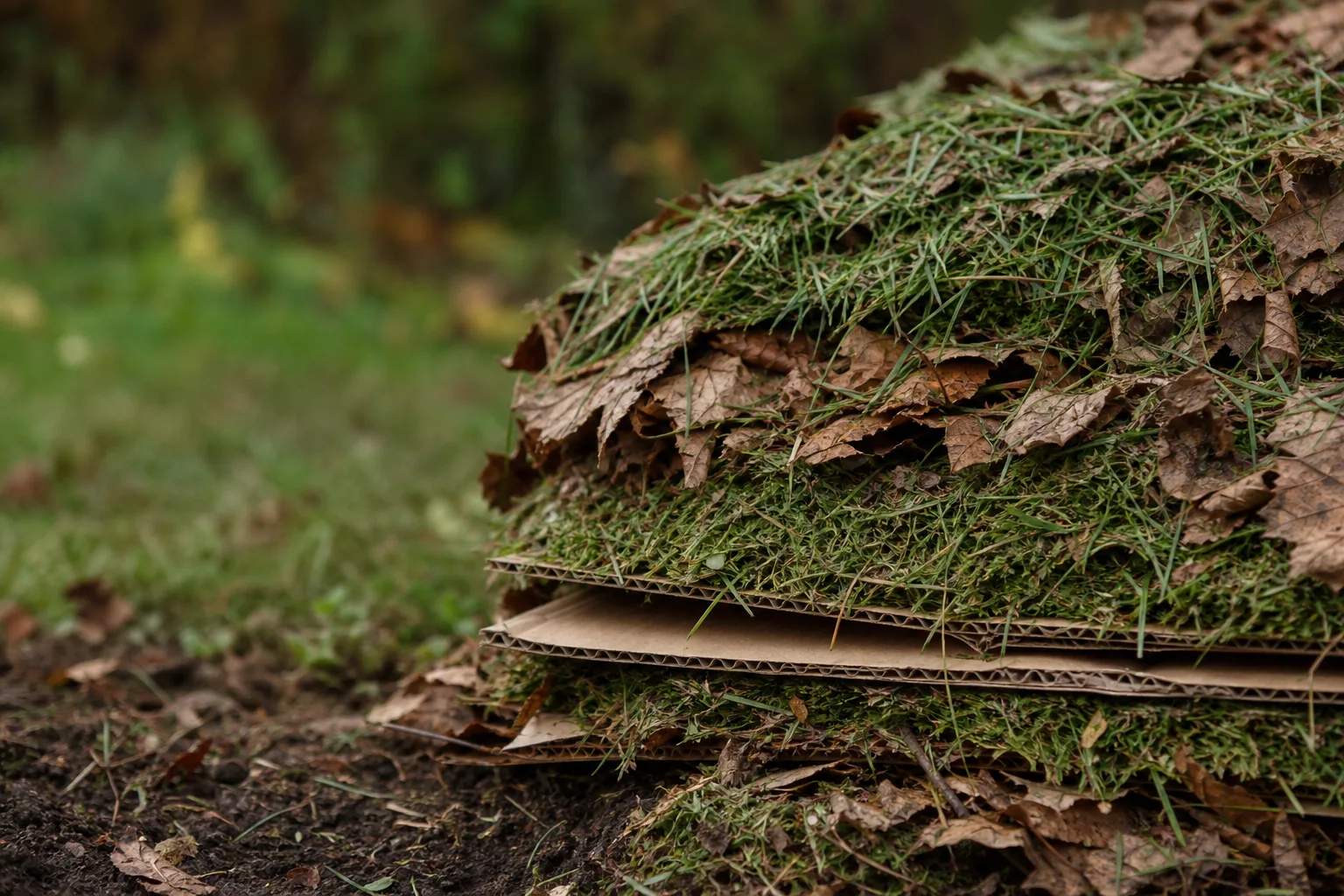
Cardboard, nitrogen, carbon, and patience are the winning recipe for turning existing lawn into a garden bed this fall. Lay wet, overlapping cardboard first, build alternating 2 to 3 inch green and brown layers to about 18 inches, and wait four to six months before planting. Do not rush the lasagna, mi gente.
Can you sheet mulch over existing lawn in fall?
Yes, fall is an excellent time to sheet mulch over existing lawn because the covered grass decomposes through winter while the organic layers settle into a planting medium. Use clean cardboard, wet every layer, alternate nitrogen-rich and carbon-rich materials, and leave the bed undisturbed for four to six months before spring planting.
That timing fits Austin beautifully. Our lawn can look tired in November, but the soil is still warm enough for decomposition to begin before the colder weeks arrive. By spring, the bed has had a head start instead of asking you to build soil and plant on the same Saturday.
Sheet mulching is also called sheet composting or lasagna gardening. Penn State Extension describes it as a way to create beds without removing current vegetation or digging up the soil, which is exactly why I prefer it over wrestling sod from thin soil above limestone.
I learned this lesson the slow way. In Miami, sandy fill drained before I finished watering a pot; here, Austin clay can hold water and then set like a brick. Sheet mulch helps, but it does not repeal February 2021, poor drainage, or your own impatience.
What should you put under a lasagna bed?
Put continuous sheets of clean, plain cardboard directly over the mown lawn, overlapping each piece by several inches so light cannot reach the grass. Remove tape, plastic labels, glossy coatings, and staples, then soak the cardboard thoroughly before adding a 2 to 3 inch nitrogen-rich layer on top.
Mow the lawn short first. You do not need to dig out the sod, and that is the whole point, but tall grass creates air pockets and makes the cardboard harder to keep flat. Mark the bed edge with a hose or a line of flour before you begin.
Overlap seams by at least 6 inches. Overlap more if the lawn is aggressive or the cardboard is thin. One little open seam can become a green invitation, especially along the sunny south edge of a bed.
The cardboard is a carbon-rich brown, but it is also the light barrier. Oregon State University Extension recommends a nitrogen-heavy first layer because the cardboard adds substantial carbon. Its trade-off is simple: cardboard is cheap and effective, but a dry sheet will repel water and leave grass alive underneath.
What layers belong in a sheet mulch bed?
Build the bed in alternating 2 to 3 inch layers of nitrogen-rich greens and carbon-rich browns, adding a few handfuls of garden soil between layers and watering lightly as you work. Continue until the pile reaches about 18 inches or more, then finish with a brown carbon layer that protects the bed surface.
Use well-rotted manure, fresh grass clippings, kitchen scraps, spent annuals, or coffee grounds as nitrogen-rich materials. Fresh grass clippings are free, but thick piles mat and turn slimy, so spread them thinly rather than dumping one giant green blanket.
Use shredded leaves, straw, wood chips, pine needles, or dry newspaper as carbon-rich materials. Shredded leaves are my first choice for fall because they are plentiful and easy to distribute, though a deep layer of whole leaves can pack together and shed rain.
Add only a few handfuls of ordinary garden soil between layers. Soil supplies microorganisms, but hauling a truckload of soil into the bed defeats the low-dig advantage. The overall target is roughly a 30:1 carbon-to-nitrogen ratio, while equal-thickness green and brown layers work well in practice, according to the Oregon State guidance above.
Every ingredient has a cost. Manure must be well rotted, coffee grounds are too dense in a thick layer, wood chips can temporarily tie up nitrogen near the planting zone, and pine needles are slower to break down than soft leaves. The bed is not a buffet where every free material gets equal billing.
How thick should each lasagna layer be?
Each green or brown layer should be about 2 to 3 inches thick, with the complete lasagna reaching roughly 18 inches or more before it settles. Keep the cardboard underneath as one continuous barrier, water each layer lightly, and use a brown layer on top to hold moisture and protect the pile from heavy rain.
A practical build looks like this:
- Mow the lawn short.
- Lay overlapping cardboard across the entire bed.
- Wet the cardboard until it bends and lies flat.
- Add 2 to 3 inches of nitrogen-rich material.
- Add 2 to 3 inches of carbon-rich material.
- Sprinkle a few handfuls of garden soil.
- Repeat until the bed is at least 18 inches tall.
- Cap it with 2 to 3 inches of brown material.
The pile will shrink. That is success, not failure. If you start with only 6 inches, winter decomposition may leave you with a thin layer that exposes cardboard and roots to drying.
Do not pack the materials down with your boots. A little air helps composting, while a compressed mat of wet grass can smell sour and stay cold. Water enough to moisten each layer, not enough to create a puddle in Austin clay.
Should you plant in a fresh sheet mulch bed?
No, not if you want the reliable version of this method. Let a newly built fall sheet mulch bed sit undisturbed for four to six months, then plant into the composted top layers in spring; fresh layers can settle, heat, dry unevenly, or leave roots sitting above unfinished material.
Everyone says no-dig means instant garden. In practice, no-dig means you skip sod removal, not that time stops mattering. Grow Perma explains that sheet mulch breaks down over weeks to months and can reach a total depth of 6 to 18 inches.
If you absolutely must plant now, use established seedlings with a root ball and place them into a generous pocket of finished compost in the upper layer. That is a compromise, not the plan I would choose for a new bed in October or November.
Wait for spring. Pull back the top brown layer, check that the cardboard has softened, and plant into the settled compost. If the bed has dropped below 12 inches, add finished compost rather than rebuilding the entire lasagna.
What materials should you avoid in a lasagna bed?
Avoid glossy cardboard, plastic-coated paper, fresh manure, thick mats of grass clippings, and any material you cannot identify. These choices can introduce unwanted debris, excess heat, bad smells, or compacted layers, while an unknown input may carry persistent herbicide residues that you cannot correct after the bed is built.
Clean corrugated cardboard is the safer choice. Strip off tape and labels. Glossy mailers and heavily printed packaging are not worth the question marks when plain shipping boxes are available.
Fresh manure sounds wonderfully productive, but it can be too strong for a bed you hope to plant soon. Use well-rotted manure, and accept that it still costs money or a reliable source. Free is not always free once a bed smells like a barnyard beside your kitchen window.
Kitchen scraps can be useful in thin layers, but do not create a pocket of food waste surrounded by dry leaves. That attracts pests and decomposes unevenly. Mix scraps into a broader nitrogen layer and cover them with carbon immediately.
Wood chips are excellent carbon, but they break down slowly. Their trade-off is space and time, so use them as an outer top layer or along paths rather than expecting a thick fresh-chip layer to become planting soil by spring.
Who is sheet mulching for, and who should skip it?
Sheet mulching suits homeowners converting lawn to vegetables, annual flowers, or other plants that like rich, fertile soil and can wait one season for preparation. Skip it for a bed needed immediately, a poorly drained site, a steep slope where layers may wash away, or a location where the finished height blocks paths and irrigation.
This is for the person with a fall lawn, a pile of leaves, cardboard, and a little patience. It is especially useful if digging is difficult or if your existing soil is compacted and unpleasant to work. The method reduces sod removal, but it does not eliminate measuring, hauling, or watering.
It is not my first choice for a permanent bed of plants that need lean, sharply drained soil. A rich 18 inch composting stack is better suited to vegetables and annuals than to every drought-adapted landscape plant. Central Texas has plenty of plants that resent being tucked into a wet, fertile pocket above clay.
It is also a poor fit beside a door if the bed will stay six inches above the walkway after settling. Plan the final grade now. Diego and I have disagreed about gravel more than once, but we both agree that a garden path should not become a surprise staircase.
What is the best fall schedule for building a lasagna bed?
Mow and lay cardboard in October or November, build the green and brown layers the same day, and water them lightly before covering the bed. Leave the finished pile alone through winter, inspect it in February or March, and plan spring planting after four to six months of decomposition rather than choosing a date by wishful thinking.
Here is the schedule I would use in Austin:
| Timing | Job | Honest downside |
|---|---|---|
| October to November | Mow, lay wet overlapping cardboard, and build the full 18 inch bed | Materials are bulky, and the new bed may look too tall at first |
| December to January | Leave the bed covered and lightly moist when rainfall is absent | Heavy rain can settle the pile unevenly |
| February to March | Check for softened cardboard, settled layers, and exposed seams | A late freeze can still damage any seedlings planted too early |
| March to April | Plant into the composted upper layers and add finished compost if needed | The bed may need topping up after winter shrinkage |
Do not build directly before a forecast of days of hard rain if the site drains poorly. Watering is part of the process, but saturated clay beneath cardboard has nowhere pleasant to send excess water.
A brown top layer matters during winter. It slows moisture loss, protects the softer greens from pounding rain, and keeps the surface from turning into a sticky invitation for every neighborhood cat.
How do you know the bed is ready to plant?
A sheet mulch bed is ready when the cardboard has softened or broken down, the layers have settled, the surface smells earthy rather than sour, and the upper material resembles crumbly compost instead of recognizable wet grass. After four to six months, plant into the top composted layer and add finished compost if the bed has shrunk too far.
Lift one corner at the edge rather than digging up the center. You should see fewer intact cardboard sheets and less recognizable kitchen or yard material. The bed may still contain leaf pieces, and that is fine; finished compost does not need to look like black cake to support a seedling.
Watch for dry pockets. A pile can receive rain on top while the cardboard underneath stays dry, especially beneath a broad eave or beside a fence. If the surface is dusty and the cardboard is still stiff, water slowly and give it another few weeks.
Plant seedlings into the upper compost layer, not into a dense pocket of half-rotted scraps. If you see thick wood chips or a matted grass layer where roots need to grow, move that material aside and add finished compost. The method is forgiving, but roots still need a breathable home.
What are the most common sheet mulching mistakes?
The most common mistakes are leaving cardboard seams open, using layers that are too thin, skipping water, planting immediately, and adding too much of one material. Each mistake either lets grass survive, slows decomposition, creates a wet mat, or leaves roots without enough finished growing medium when spring arrives.
Here are the fixes I use:
- Grass returns through seams: Re-cover the opening with wet cardboard and add brown material over it.
- The pile smells sour: Pull apart the matted green layer, mix in dry shredded leaves, and avoid adding more water until air returns.
- The bed collapses: Add finished compost in spring instead of panicking. Settling is normal.
- The cardboard stays dry: Lift the brown top layer and water slowly until the sheets are thoroughly damp.
- The surface is too hot or raw: Wait longer. Fresh organic matter is not finished planting soil.
- Runoff cuts a channel: Reduce the slope, contain the edges, and rebuild after heavy rain has passed.
Ask yourself one honest question: are you building a bed for spring, or are you trying to force a finished garden this weekend? If it is the second one, buy finished compost for a smaller temporary bed and let the big sheet mulch project mature properly.
You can compare suitable materials and site conditions in our plant database before choosing what the finished bed will grow. If you are still unsure about bed shape, reach and circulation, use the free tool to get a concept for your yard before you order a mountain of cardboard.
Can I sheet mulch directly over grass without removing the sod?
Yes, you can sheet mulch directly over grass without removing the sod, provided the cardboard is continuous, overlaps by at least 6 inches, and is thoroughly wet. Mow first, seal the seams, and build the organic layers on top. Removing sod is unnecessary for this no-dig method, but exposed edges can let grass return.
How long should a lasagna garden sit before planting?
A lasagna garden should sit for four to six months before planting. A fall bed can decompose through winter and be ready for spring, although the timing depends on moisture, material size, and temperature. Planting immediately costs you stability because fresh layers settle and may not yet provide a consistent root zone.
How deep should a sheet mulch bed be?
A sheet mulch bed should be about 18 inches deep or more when built, because the layers will settle as they decompose. Make individual green and brown layers 2 to 3 inches thick. Starting with only 6 inches often leaves too little finished material after winter, especially where leaves and grass collapse quickly.
What is the best carbon material for a fall lasagna bed?
Shredded leaves are usually the best fall carbon material because they are available, easy to spread, and appropriate for the season. Straw, dry newspaper, wood chips, pine needles, and shredded cardboard can also work. Whole leaves may mat, wood chips break down slowly, and newspaper needs moisture, so each option trades convenience for decomposition speed.
Do you need soil between sheet mulch layers?
Yes, sprinkle a few handfuls of garden soil between layers to provide microorganisms that help decomposition, but you do not need a thick soil layer. Adding too much soil increases hauling and can compact the bed. Use ordinary garden soil as a light inoculation, then let the greens, browns, moisture, and air do the work.
Can you plant vegetables in a fresh lasagna bed?
You can plant established vegetables into pockets of finished compost in a fresh lasagna bed, but I would not recommend it for a reliable garden. Wait four to six months whenever possible. Fresh layers settle and may contain unfinished material, so a fall build followed by spring planting gives roots a more stable growing medium.
Want a plan for your own yard?
Tell us the space and we will put a planting plan together for it. Start at get my concept, or browse what actually grows where you are over on plants.
Frequently asked questions
Can I sheet mulch directly over grass without removing the sod?
Yes, you can sheet mulch directly over grass without removing the sod, provided the cardboard is continuous, overlaps by at least 6 inches, and is thoroughly wet. Mow first, seal the seams, and build the organic layers on top. Removing sod is unnecessary for this no-dig method, but exposed edges can let grass return.
How long should a lasagna garden sit before planting?
A lasagna garden should sit for four to six months before planting. A fall bed can decompose through winter and be ready for spring, although the timing depends on moisture, material size, and temperature. Planting immediately costs you stability because fresh layers settle and may not yet provide a consistent root zone.
How deep should a sheet mulch bed be?
A sheet mulch bed should be about 18 inches deep or more when built, because the layers will settle as they decompose. Make individual green and brown layers 2 to 3 inches thick. Starting with only 6 inches often leaves too little finished material after winter, especially where leaves and grass collapse quickly.
What is the best carbon material for a fall lasagna bed?
Shredded leaves are usually the best fall carbon material because they are available, easy to spread, and appropriate for the season. Straw, dry newspaper, wood chips, pine needles, and shredded cardboard can also work. Whole leaves may mat, wood chips break down slowly, and newspaper needs moisture, so each option trades convenience for decomposition speed.
Do you need soil between sheet mulch layers?
Yes, sprinkle a few handfuls of garden soil between layers to provide microorganisms that help decomposition, but you do not need a thick soil layer. Adding too much soil increases hauling and can compact the bed. Use ordinary garden soil as a light inoculation, then let the greens, browns, moisture, and air do the work.
Can you plant vegetables in a fresh lasagna bed?
You can plant established vegetables into pockets of finished compost in a fresh lasagna bed, but I would not recommend it for a reliable garden. Wait four to six months whenever possible. Fresh layers settle and may contain unfinished material, so a fall build followed by spring planting gives roots a more stable growing medium.
Free, no obligation
Ready to design your dream landscape? Start here.
Tell us where you are and we will start a free profile for you, with plants that actually survive your climate and a real sense of what the build would cost.