
When Should You Take Semi-Hardwood and Hardwood Cuttings?
The month changes which kind of cutting you should take. Here is how to choose between semi-hardwood cuttings in late summer and hardwood cuttings through fall and winter.
September 19, 2026
By Diego Navarro
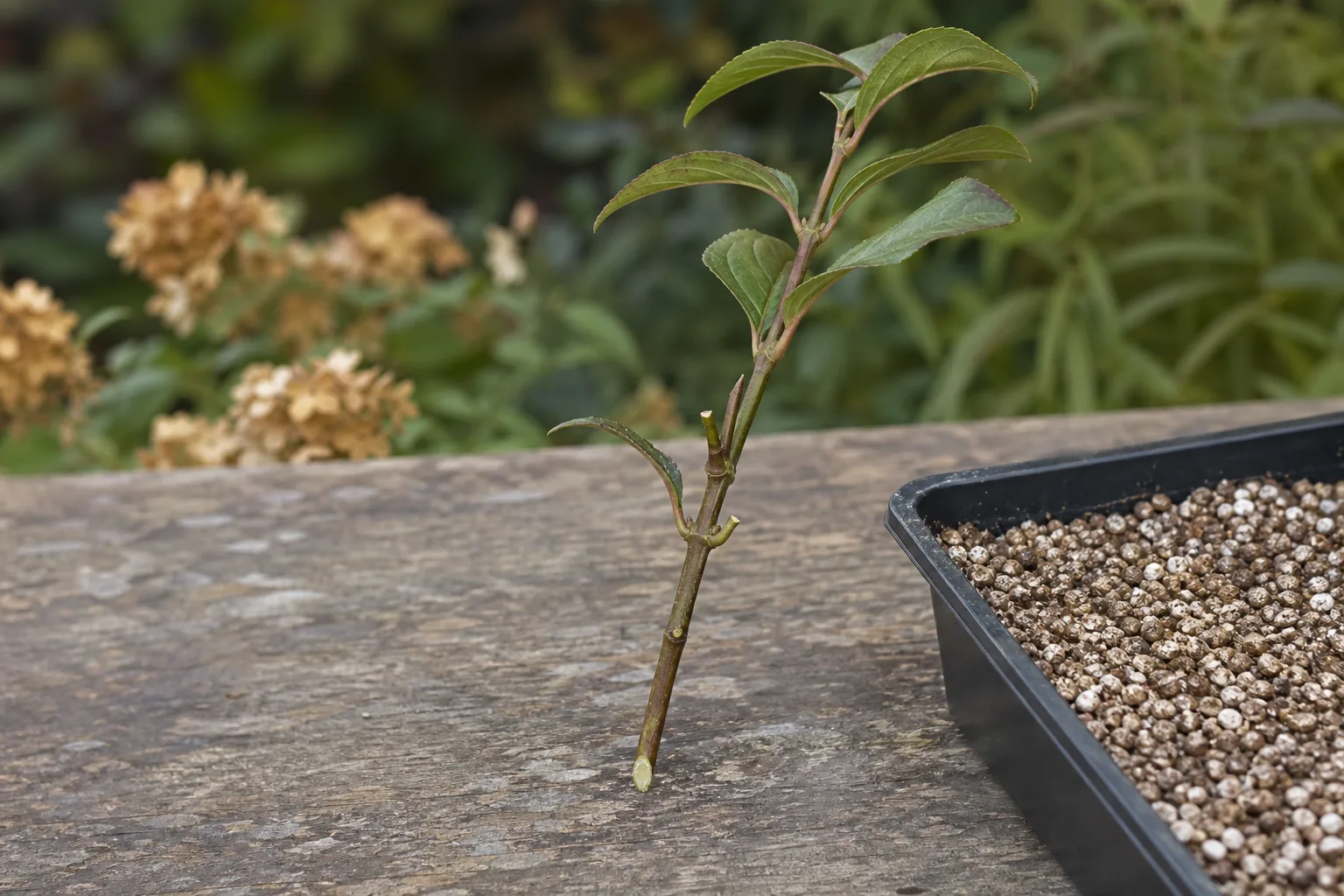
The same shrub roots differently depending on the month, so the calendar matters as much as the plant. In early fall, use semi-hardwood cuttings only while new shoots remain firm and bendable; once the stems are fully woody and dormant, switch to hardwood cuttings. That is the rule I would use in Austin.
Should you take semi-hardwood or hardwood cuttings this fall?
In fall, take semi-hardwood cuttings if the current season's shoots are firm but still flexible, and take hardwood cuttings after the shrub enters dormancy and the stems become fully woody. Semi-hardwood pieces are usually 4 to 6 inches and root in 3 to 6 weeks, while hardwood pieces are 6 to 12 inches and usually need 8 to 12 weeks.
The calendar is a useful guide, but the stem tells the truth. A semi-hardwood shoot bends without folding over like green grass, yet it is not brittle like an old branch.
In Central Texas, early September can still behave like August, with bright heat and dry wind. Protect semi-hardwood pieces from direct sun until the weather settles. If you are taking cuttings in late November, December, January, or February, hardwood is usually the better choice.
Everyone says fall is cutting season. In practice, early fall and late fall are different jobs because the stem changes as it matures.
What does a semi-hardwood cutting look like?
A semi-hardwood cutting is a 4 to 6 inch section of healthy, current-season growth that has begun to harden but still bends slightly before breaking. Make the lower cut just below a node, remove the lower leaves, and treat the base with rooting hormone before planting it in a light, draining medium. Bougainvillea cutting guidance uses the same basic measurements and cut placement.
Look at the color and feel of the stem rather than trying to identify a perfect shade of brown. The base should not be soft, hollow, bruised, or flowering heavily. A cutting with two or three nodes gives you useful planting depth and leaf space without wasting material.
The tradeoff is speed versus fragility. Semi-hardwood cuttings can root in 3 to 6 weeks, but their leaves lose water quickly, so one hot afternoon in direct sun can finish the experiment before roots form.
Use a clean, sharp knife or pruner. A dull blade crushes the stem, and a crushed base is a poor place for roots to begin, even if the cutting looks respectable from six feet away.
What does a hardwood cutting look like?
A hardwood cutting is a fully mature, dormant stem collected from late autumn through winter, usually November through February in temperate climates. Cut 6 to 12 inch lengths, remove every leaf, and bury the lower two-thirds in a coarse, moist medium, leaving the top one-third above the surface.
Hardwood cuttings are not green shoots that happen to be long. They are firm, woody pieces taken after leaf drop or dormancy has begun, when the stem has stored carbohydrates for the dormant season.
Their advantage is toughness. Without leaves, they lose less water and tolerate handling better than semi-hardwood pieces. Their drawback is patience, because root formation commonly takes 8 to 12 weeks before you can gradually acclimatize them and plant them out in early spring.
You can soak the basal ends in water for several hours before planting. I treat that as optional, not magic. If the medium stays soggy afterward, the extra water becomes a problem instead of a favor.
Why does the same shrub root differently in different months?
The same shrub roots differently because a cutting's stem maturity, leaf load, stored carbohydrates, and water loss change through the season. Midsummer through early September favors semi-hardwood pieces that are mature enough to root but still biologically active; late autumn through winter favors leafless hardwood pieces with fully lignified stems and stored reserves.
A leafy cutting is trying to keep leaves alive while it builds roots. That is why bright indirect light, shade from intense sun, protection from wind, and steady moisture matter so much for semi-hardwood pieces.
A dormant hardwood cutting has a different problem. It does not need to support leaves yet, but it needs time and moderate cold before spring growth begins. The research guidance places that storage range at 35 to 45 degrees Fahrenheit, or 2 to 7 degrees Celsius, for about 8 to 12 weeks.
I learned the general lesson from my father's tomatoes in a twelve foot strip of clay along the driveway in New Jersey. Up there, I watched for the first hard frost. Here in Austin, I watch whether a cutting survives the fifth week over 100 degrees. Same plant work, different argument.
How should you prepare semi-hardwood cuttings?
Prepare semi-hardwood cuttings by choosing healthy 4 to 6 inch shoots, making a clean cut just below a node, removing the lower leaves, and dipping the basal end in rooting hormone. Plant them in a well-draining peat and perlite mix or a light sand and soil blend, then keep them moist in bright indirect light or protected shade.
The tradeoff with rooting hormone is cost and handling. It can encourage root development, but it cannot rescue a wilted cutting, waterlogged medium, or stem taken from weak growth. Use a small amount on the cut end and do not turn the container into a chemistry project.
Set the lower node below the surface and keep remaining leaves above it. If a cutting has large leaves, removing one more leaf can reduce water loss, but taking every leaf defeats the point of a leafy semi-hardwood cutting.
A peat and perlite mix drains well and gives roots air, but peat can dry into a hard-to-wet pocket if you let it go bone dry. A sand and soil blend is simple, but heavy soil can hold too much water. Neither mix forgives inconsistent watering.
How should you prepare hardwood cuttings for winter?
Prepare hardwood cuttings after dormancy begins by taking 6 to 12 inch sections, stripping off all leaves, and planting the lower two-thirds in coarse, moist material. Store them in a cold frame or refrigerator at 35 to 45 degrees Fahrenheit for 8 to 12 weeks, then acclimatize them gradually before early spring planting.
A coarse medium can include a roughly 1 inch layer of shredded hardwood or coarse sand. Shredded hardwood drains and leaves air spaces, but a thick or packed layer can become impermeable, so keep it thin. NC State Extension discusses keeping shredded hardwood layers thin.
The refrigerator has one honest downside: it is easy to forget the cuttings, crowd them against wet food, or let them dry out. A cold frame gives you more room and natural seasonal cues, but it takes outdoor space and still needs protection from freezing extremes.
Label each bundle with the shrub, collection date, and planting direction. The upper end should remain upper. If you reverse the cutting, the plant has a harder job than necessary, and it already has enough work to do.
Can you still take semi-hardwood cuttings in early fall?
You can still take semi-hardwood cuttings in early fall if the stems are firm, flexible, and not fully woody, but the window is closing. In warmer regions, semi-hardwood collection may begin as early as May and continue into early September; after that, wait for dormancy and use hardwood cuttings instead.
This is where local weather matters more than a printed calendar. Austin can offer summer heat well into September, so a cutting taken on a 102 degree afternoon is under more stress than the same cutting taken on a cool, cloudy morning.
Take the pieces in the morning, keep them shaded, and plant them the same day. A plastic bag around the cut ends can slow drying during transport, but leaving foliage sealed and wet for days encourages decay.
You can check the plant database for the shrub's growth habit before choosing a cutting type, but do not let a plant label overrule the stem in your hand. The plant does not read the label either.
Which propagation option should you use through the season?
For a shrub you want to propagate now, I would use semi-hardwood cuttings only in the early-fall window, then switch to hardwood cuttings once the plant is dormant. Semi-hardwood is faster but needs close moisture and light control; hardwood is slower but sturdier, making it the better late-fall and winter option for most deciduous and semi-evergreen shrubs.
| Cutting option | Best timing | Typical size and rooting time | Honest downside |
|---|---|---|---|
| Semi-hardwood | June through early September, or early fall while shoots remain flexible | 4 to 6 inches, usually 3 to 6 weeks | Leaves wilt quickly and intense heat can kill the cutting |
| Hardwood | Late autumn through winter, usually November through February | 6 to 12 inches, usually 8 to 12 weeks | Slow to root and requires dormant storage or a protected cold frame |
Do not force semi-hardwood material in December because it feels more active. Do not take hardwood pieces in July just because the branches are long. The season determines what the stem can do.
If you want help laying out a propagation bench, shade area, and planting space, you can get a concept for your yard before you start digging. A plan is cheaper than rebuilding a crowded bed next spring.
Who are seasonal cuttings suited for, and who should skip them?
Seasonal cuttings suit homeowners who can check moisture every day during the first few weeks, provide bright shade, and protect containers from wind, heat, and waterlogging. They are a poor fit for a vacant weekend house, a sunny exposed patio, or anyone who cannot give hardwood cuttings a stable 35 to 45 degree winter rest.
Choose semi-hardwood propagation if you are home often in August and September and can respond when leaves wilt. It gives quicker feedback, but it punishes neglect quickly.
Choose hardwood propagation if you have room to label and store cuttings through winter. It asks less of the leaves because there are none, but it asks more of your patience.
Skip both methods for now if your only planting space is a shallow pot that dries twice daily or a bed that stays saturated after rain. Fix the conditions first. A cutting cannot negotiate with bad drainage.
What usually makes seasonal cuttings fail?
Seasonal cuttings usually fail because the stem is taken at the wrong maturity, the base is crushed, the medium stays waterlogged, or the cutting faces direct sun and drying wind. Semi-hardwood pieces also fail when too many leaves remain, while hardwood pieces fail when they are stored warm, allowed to dry, or planted upside down.
The popular rule is to keep cuttings wet. In practice, keep the medium evenly moist but airy, because saturated material removes oxygen from the rooting zone and invites decay.
Check semi-hardwood cuttings daily during hot weather and water when the surface begins to dry, without flooding the container. For hardwood cuttings, inspect weekly during storage and keep the material from drying completely.
Do not tug on a cutting every few days to check for roots. That breaks new roots. Wait for the stated rooting window, then test gently or look for fresh growth after gradual acclimatization.
What questions do gardeners ask about semi-hardwood and hardwood cuttings?
Gardeners usually ask which month is best, how long a cutting should be, whether rooting hormone is necessary, and how much light or water the pieces need. The short answer is that stem maturity controls the choice, while steady moisture, protection, and a clean cut control the outcome. Here are the practical answers I use in the garden.
Can I take semi-hardwood cuttings in October?
Can I take semi-hardwood cuttings in October? Sometimes, but only if the current-season stems are still firm and flexible rather than fully woody. In a warm climate, test a few pieces at 4 to 6 inches and protect them from heat, wind, and direct sun. If the stems are dormant and brittle, wait and take hardwood cuttings instead.
How long should a hardwood cutting be?
How long should a hardwood cutting be? A hardwood cutting should be 6 to 12 inches long, with all leaves removed and the lower two-thirds buried in a coarse, moist medium. Shorter pieces may have less stored material, while much longer pieces take more space and can dry before roots develop.
How long do semi-hardwood cuttings take to root?
How long do semi-hardwood cuttings take to root? Semi-hardwood cuttings usually root in 3 to 6 weeks when they are 4 to 6 inches long, kept moist without waterlogging, and protected from direct sun and wind. Some pieces will be slower, so do not pull them up early just to satisfy your curiosity.
Do hardwood cuttings need rooting hormone?
Do hardwood cuttings need rooting hormone? Hardwood cuttings can be planted without rooting hormone, while semi-hardwood cuttings are commonly treated with it to encourage root development. Hormone is optional support, not a substitute for a healthy dormant stem, a clean cut, a coarse medium, and stable moisture through the winter.
Should cuttings be kept in direct sunlight?
Should cuttings be kept in direct sunlight? No, cuttings should be protected from direct sun and drying wind while they form roots. Semi-hardwood pieces do best in bright indirect light or shaded outdoor conditions, while hardwood pieces need a cool protected setting around 35 to 45 degrees Fahrenheit during their winter rooting period.
When can hardwood cuttings go into the garden?
When can hardwood cuttings go into the garden? Hardwood cuttings can be gradually acclimatized and planted out in early spring after about 8 to 12 weeks of cool winter rooting. Move them from protected storage in stages, because a sudden change to outdoor sun, wind, and temperature can damage new roots and shoots.
Want a plan for your own yard?
Tell us the space and we will put a planting plan together for it. Start at get my concept, or browse what actually grows where you are over on plants.
Frequently asked questions
Can I take semi-hardwood cuttings in October?
Can I take semi-hardwood cuttings in October? Sometimes, but only if the current-season stems are still firm and flexible rather than fully woody. In a warm climate, test a few pieces at 4 to 6 inches and protect them from heat, wind, and direct sun. If the stems are dormant and brittle, wait and take hardwood cuttings instead.
How long should a hardwood cutting be?
How long should a hardwood cutting be? A hardwood cutting should be 6 to 12 inches long, with all leaves removed and the lower two-thirds buried in a coarse, moist medium. Shorter pieces may have less stored material, while much longer pieces take more space and can dry before roots develop.
How long do semi-hardwood cuttings take to root?
How long do semi-hardwood cuttings take to root? Semi-hardwood cuttings usually root in 3 to 6 weeks when they are 4 to 6 inches long, kept moist without waterlogging, and protected from direct sun and wind. Some pieces will be slower, so do not pull them up early just to satisfy your curiosity.
Do hardwood cuttings need rooting hormone?
Do hardwood cuttings need rooting hormone? Hardwood cuttings can be planted without rooting hormone, while semi-hardwood cuttings are commonly treated with it to encourage root development. Hormone is optional support, not a substitute for a healthy dormant stem, a clean cut, a coarse medium, and stable moisture through the winter.
Should cuttings be kept in direct sunlight?
Should cuttings be kept in direct sunlight? No, cuttings should be protected from direct sun and drying wind while they form roots. Semi-hardwood pieces do best in bright indirect light or shaded outdoor conditions, while hardwood pieces need a cool protected setting around 35 to 45 degrees Fahrenheit during their winter rooting period.
When can hardwood cuttings go into the garden?
When can hardwood cuttings go into the garden? Hardwood cuttings can be gradually acclimatized and planted out in early spring after about 8 to 12 weeks of cool winter rooting. Move them from protected storage in stages, because a sudden change to outdoor sun, wind, and temperature can damage new roots and shoots.
Free, no obligation
Ready to design your dream landscape? Start here.
Tell us where you are and we will start a free profile for you, with plants that actually survive your climate and a real sense of what the build would cost.