
Why Does Scale Spread So Quietly on Indoor Plants?
Scale insects hide in plain sight because their adult bodies stop moving and look like ordinary plant tissue. Learn how to spot the shells, isolate a suspect plant, remove the insects, and keep a fall infestation from quietly crossing your whole indoor collection.
September 28, 2026
By Valeria Navarro
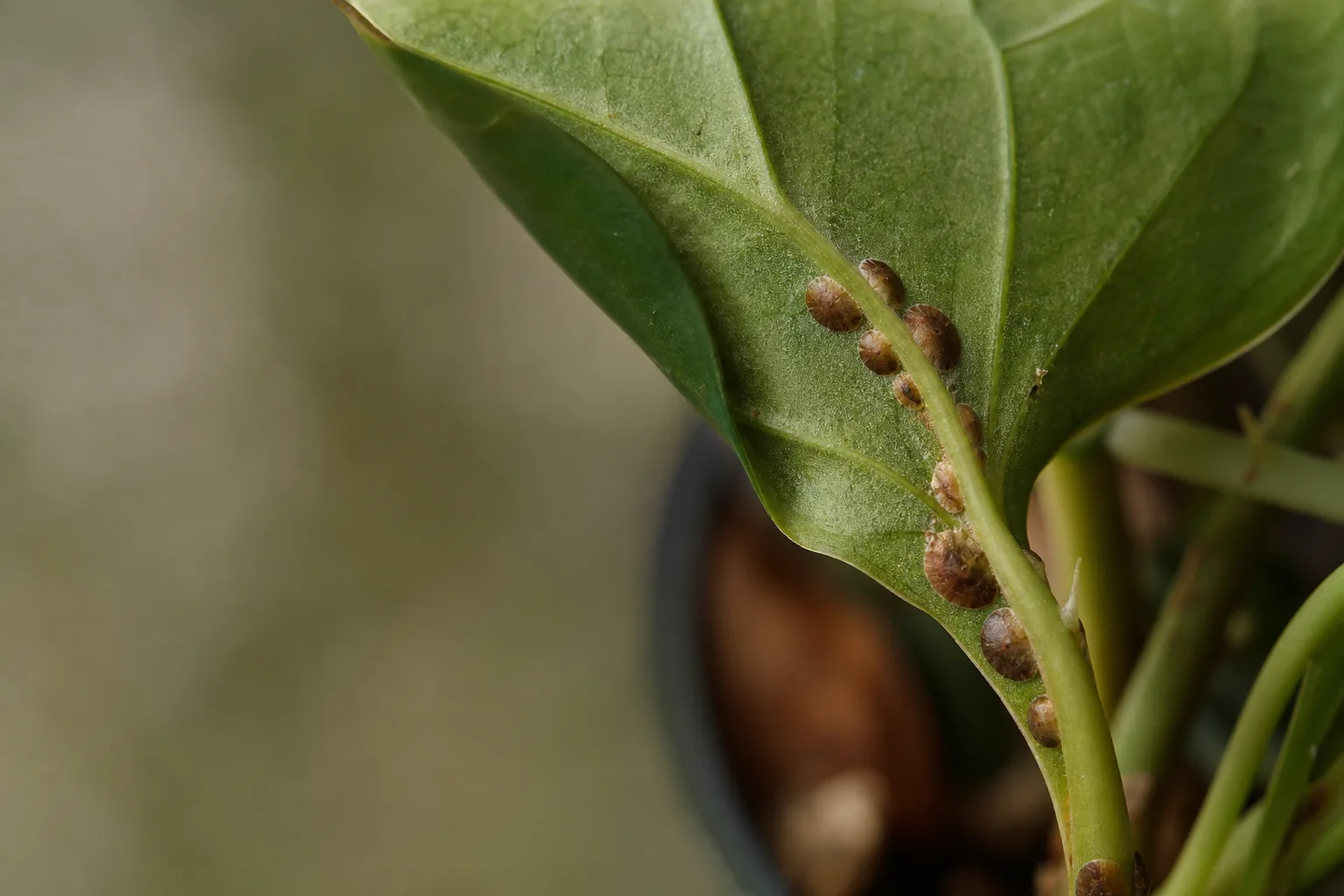
Scale spreads quietly because adult insects stop moving, cover themselves in wax, and resemble bumps, bark, or dried plant tissue. In fall, inspect leaf undersides, stems, and leaf axils, isolate any suspect plant for at least two weeks, remove visible scales with 70 percent isopropyl alcohol, and treat thoroughly during the dormant season with horticultural or neem oil.
Why does scale spread quietly on indoor plants?
Scale spreads quietly because mature insects are immobile, wax-covered, and shaped like ordinary bumps or bits of bark. They feed in place while newly hatched crawlers move to fresh stems and leaves. Indoors, still air and crowded shelves give those crawlers many chances to settle, so a plant can look fine until several areas are colonized. The houseplant scale guide describes this indoor advantage clearly.
That is the whole argument here. Do not wait for a moving bug. The adult is the camouflage.
I learned this the annoying way. I once brushed a brown bump off a stem because I thought it was dried plant tissue, then found more tucked into the leaf axils a week later. My abuela would have inspected the plant before putting it beside the others. She was right, of course. Abuelas usually are.
A dense plant shelf is a perfect quiet-spread machine. Leaves touch. Pots sit shoulder to shoulder. The air barely moves. In Austin, I already fight heat, clay, and water restrictions outdoors, so I do not need a tiny indoor pest making its own little apartment complex.
What does scale look like on a houseplant?
Scale usually looks like small, round or flattened shells attached to stems, leaves, branches, or leaf axils. The color can blend with the plant, from pale tan to brown, and the insects may resemble bark, dried sap, or a raised piece of leaf tissue. Their fixed position is the clue, not their size.
Do the thumbnail test gently. If a bump stays in exactly the same place and can be lifted or loosened from the surface, treat it as suspicious. Do not scrape hard enough to tear the stem or leaf.
Check the plant from several angles. Look along the main stem, the underside of every leaf, and the tight place where a leaf joins its petiole. A phone flashlight helps. So does turning the pot slowly instead of giving it one heroic glance from across the room.
Dust can hide scale, but cleaning leaves is not a cure. A damp cloth improves visibility, yet it takes time and can tear thin leaves if you rub aggressively. Use the plant database to check the normal texture and color of a plant before you decide that every bump is an insect.
Where should you look for scale first?
Start with leaf undersides, leaf axils, stems, and the branches or petioles where plant tissue meets. Those sheltered spots are easy to miss and give scale a protected feeding site. Inspect the pot rim and nearby plants too, especially if the suspect plant has sat on a crowded shelf with still air.
Begin at the newest growth, then work toward older stems. New growth can attract crawlers, while older, firmer stems provide places for adults to remain unnoticed. You are not trying to admire the plant. You are conducting an inspection.
Use a repeating route so you do not skip the same area every time. I like top leaf, underside, petiole, main stem, pot rim, then the plant beside it. Repeat that sequence on each plant.
Fall is a useful inspection season because indoor plants often come back into your attention as outdoor evenings cool. You bring pots closer together. You close windows. You add a grow light or move plants onto a brighter shelf. Those changes can also reduce distance between a crawler and its next feeding site.
Who should isolate a plant with scale, and who can ignore this advice?
Anyone with more than one indoor plant should isolate a suspect plant for at least two weeks, especially after bringing home a new plant or finding shells on a stem. A person with one plant can skip the neighbor-distance problem, but should still inspect weekly because hidden scale can multiply before the damage looks serious.
Isolation is for situations, not personalities. Use it when you have a crowded collection, recently added a plant, share tools, or see unexplained bumps on more than one stem. If your plants are in separate rooms, that helps, but it does not replace inspection.
Give the suspect plant its own surface. Keep leaves from touching neighboring plants. Wash your hands after handling it, and do not carry the same cloth or brush from that plant to the clean shelf without washing it first.
The downside is space. In a small apartment, two weeks can feel like exile for one pot. It is still cheaper than treating ten plants because the first one looked harmless.
How long should a plant with scale stay isolated?
Keep a plant with suspected scale isolated for at least two weeks while you inspect it repeatedly and remove visible insects. Two weeks gives you a practical observation window for finding missed shells and newly active crawlers, though one inspection is not enough because adults remain fixed and easy to overlook.
Put the isolation date on a piece of tape under the pot. Check on day one, day four, day seven, day ten, and day fourteen. Look at the same stem sections each time, then inspect the plant beside the isolation area.
Two weeks is a minimum, not a magic spell. If you keep finding fresh crawlers or new shells, extend isolation and continue treatment. Moving a plant back after one clean-looking day is how the pest gets a return ticket.
Keep tools separate during this period. Crawlers can travel on hands and tools, and they may also move through the air to nearby feeding sites. That is why I do not prune the infested plant beside the rest of the collection, even if the trimming itself feels quick.
How do you remove scale from an indoor plant by hand?
Remove visible scale by gently brushing or lifting it with a soft brush or a cotton swab dipped in 70 percent isopropyl alcohol. Work over a washable surface, test the alcohol on one small area first, and avoid soaking delicate foliage because alcohol can mark or burn some leaves.
The trade-off is patience. Hand removal is precise, but it is not fast on a plant with dozens of stems. You must reach the hidden side of each leaf and return several days later because one missed shell can keep the problem going.
Use a fresh swab for each small area. A dirty swab can drag residue across the plant. Wipe the swab on a paper towel as you work so you can see what you removed instead of guessing.
Prune heavily infested stems when removing the insects would take longer than saving that section. Pruning lowers the visible population, but it also removes healthy leaves and can stress a plant, so cut only the worst sections with clean tools and bag the debris rather than leaving it beside the pot.
Should you use horticultural oil or neem oil for scale?
Use a thorough coat of horticultural oil or neem oil during the dormant season, following the product label and testing a small area first. Oil can suffocate exposed crawlers, but it is not a one-swipe cure for hidden adults, and excessive application can leave residue or injure foliage.
I would not make oil the first move in fall if the plant is actively growing and you have not inspected it by hand. Remove visible shells now. Isolate the pot. Reserve a thorough dormant-season application for the timing and conditions allowed by the label.
Horticultural oil is practical, but coverage is the work. Every stem, leaf surface, underside, and sheltered joint needs attention. The downside is obvious: a rushed spray misses the exact places where scale hides.
Neem oil is another option named in the research, but it still needs careful coverage and label directions. It can smell strong and leave a film. If you are treating a large collection, that smell, cleanup, and repeated inspection become the real cost.
| Treatment option | Best use | Honest downside |
|---|---|---|
| Hand removal with 70 percent isopropyl alcohol | A few visible shells on accessible stems or leaves | Slow, and alcohol can damage sensitive foliage if you skip a small-area test |
| Pruning heavily infested stems | Stems covered with scale or too difficult to clean individually | You lose foliage and may stress the plant |
| Horticultural oil during dormancy | Thorough coverage when the plant and label timing allow it | Missed areas survive, and excessive application can injure leaves |
| Neem oil during dormancy | An oil-based treatment option for exposed crawlers | Residue, odor, and careful coverage make it a poor rushed fix |
Can crowded shelves make scale spread faster indoors?
Yes. Crowded shelves and still air give newly hatched scale crawlers more chances to reach nearby stems and leaves, while touching foliage makes the next feeding site close at hand. Spacing plants apart improves inspection and reduces easy contact, although it cannot replace isolation or removal of visible insects.
Give each pot enough room to turn without its leaves brushing the next plant. You do not need a museum display. You need a gap that lets you see the undersides and reach the stem.
Good air circulation helps, but do not point a harsh fan directly at tender leaves. The trade-off is noise, dust, and drying. Use circulation to prevent a stagnant shelf, not to blast the plant like it owes you money.
Clean dust from leaves so shells stand out. Leaf cleaning costs a few minutes and may annoy you, but a dusty plant gives camouflage another layer. Avoid overfertilizing during an infestation because excess fertilizer encourages new growth, which creates more fresh tissue for pests to colonize.
If you are rearranging the room this fall, sketch the shelf before moving pots. You can get a concept for your yard, but for indoor plants the same design rule applies: leave enough breathing room to inspect every plant without knocking over the one behind it.
Should you release beneficial insects against indoor scale?
Do not make beneficial insects your first indoor scale treatment. Beneficial predators can feed on scale outdoors, but indoor shelves lack the same pressure and can shelter crawlers in dense, still arrangements. For a home collection, inspection, isolation, hand removal, pruning, and properly timed oil treatment are more direct choices.
The Washington State University Extension guide notes that some beneficial insects prey on scale. That is useful context, not permission to turn your living room into a tiny predator release experiment.
The trade-off with beneficial insects is control. You may introduce something that does not solve the particular infestation, and you still need to inspect the plant. Indoors, I want fewer variables, especially when the adults already look like plant parts.
A better fall routine is plain. Isolate. Inspect. Remove. Record. Repeat. Scale is quiet, but your response does not have to be.
What is the best fall routine for preventing scale from spreading?
The best fall routine is a weekly inspection, two-week isolation for every new or suspect plant, careful hand removal of visible scale, and more space between pots. Avoid excessive fertilizer, clean dusty leaves, and save a thorough horticultural or neem oil treatment for the dormant season when the label allows it.
Choose one day each week. Sunday afternoon works well if that is when you already walk the yard, sing badly while watering, or check the weather before deciding what comes inside. Inspect stems and leaf axils first, then the undersides.
Keep a simple note with the plant name, date, number of visible shells, and treatment. You do not need a spreadsheet with seventeen colors. You need enough information to notice whether the count is rising.
Ask yourself, “Would I notice this bump if I were not looking for it?” If the answer is no, inspect it with a swab or soft brush. That one question catches the problem before the plant becomes a whole-room project.
Indoor scale is not dramatic at first. That is why it wins. The adult sits still, wears the color of the plant, and waits for you to call it texture. I say call it suspicious instead, then give the plant the careful attention it deserves.
Want a plan for your own yard?
Tell us the space and we will put a planting plan together for it. Start at get my concept, or browse what actually grows where you are over on plants.
Frequently asked questions
Why does scale spread quietly on indoor plants?
Scale spreads quietly because mature insects are immobile, wax-covered, and shaped like ordinary bumps or bits of bark. They feed in place while newly hatched crawlers move to fresh stems and leaves. Indoors, still air and crowded shelves give those crawlers many chances to settle, so a plant can look fine until several areas are colonized.
What does scale look like on a houseplant?
Scale usually looks like small, round or flattened shells attached to stems, leaves, branches, or leaf axils. The color can blend with the plant, from pale tan to brown, and the insects may resemble bark, dried sap, or a raised piece of leaf tissue. Their fixed position is the clue, not their size.
Who should isolate a plant with scale, and who can ignore this advice?
Anyone with more than one indoor plant should isolate a suspect plant for at least two weeks, especially after bringing home a new plant or finding shells on a stem. A person with one plant can skip the neighbor-distance problem, but should still inspect weekly because hidden scale can multiply before the damage looks serious.
How long should a plant with scale stay isolated?
Keep a plant with suspected scale isolated for at least two weeks while you inspect it repeatedly and remove visible insects. Two weeks gives you a practical observation window for finding missed shells and newly active crawlers, though one inspection is not enough because adults remain fixed and easy to overlook.
How do you remove scale from an indoor plant by hand?
Remove visible scale by gently brushing or lifting it with a soft brush or a cotton swab dipped in 70 percent isopropyl alcohol. Work over a washable surface, test the alcohol on one small area first, and avoid soaking delicate foliage because alcohol can mark or burn some leaves.
Should you use horticultural oil or neem oil for scale?
Use a thorough coat of horticultural oil or neem oil during the dormant season, following the product label and testing a small area first. Oil can suffocate exposed crawlers, but it is not a one-swipe cure for hidden adults, and excessive application can leave residue or injure foliage.
Can crowded shelves make scale spread faster indoors?
Yes. Crowded shelves and still air give newly hatched scale crawlers more chances to reach nearby stems and leaves, while touching foliage makes the next feeding site close at hand. Spacing plants apart improves inspection and reduces easy contact, although it cannot replace isolation or removal of visible insects.
Free, no obligation
Ready to design your dream landscape? Start here.
Tell us where you are and we will start a free profile for you, with plants that actually survive your climate and a real sense of what the build would cost.