
Salt Buildup in Raised Beds and Containers: Flush It Before You Fertilize Again
Salt buildup can burn roots, yellow leaves, and block nutrient uptake, especially in containers and raised beds fed with soluble fertilizer. Here is how to flush it this fall, how often to repeat the job, and why using chemical fertilizer at full label strength makes the problem compound.
September 27, 2026
By Diego Navarro
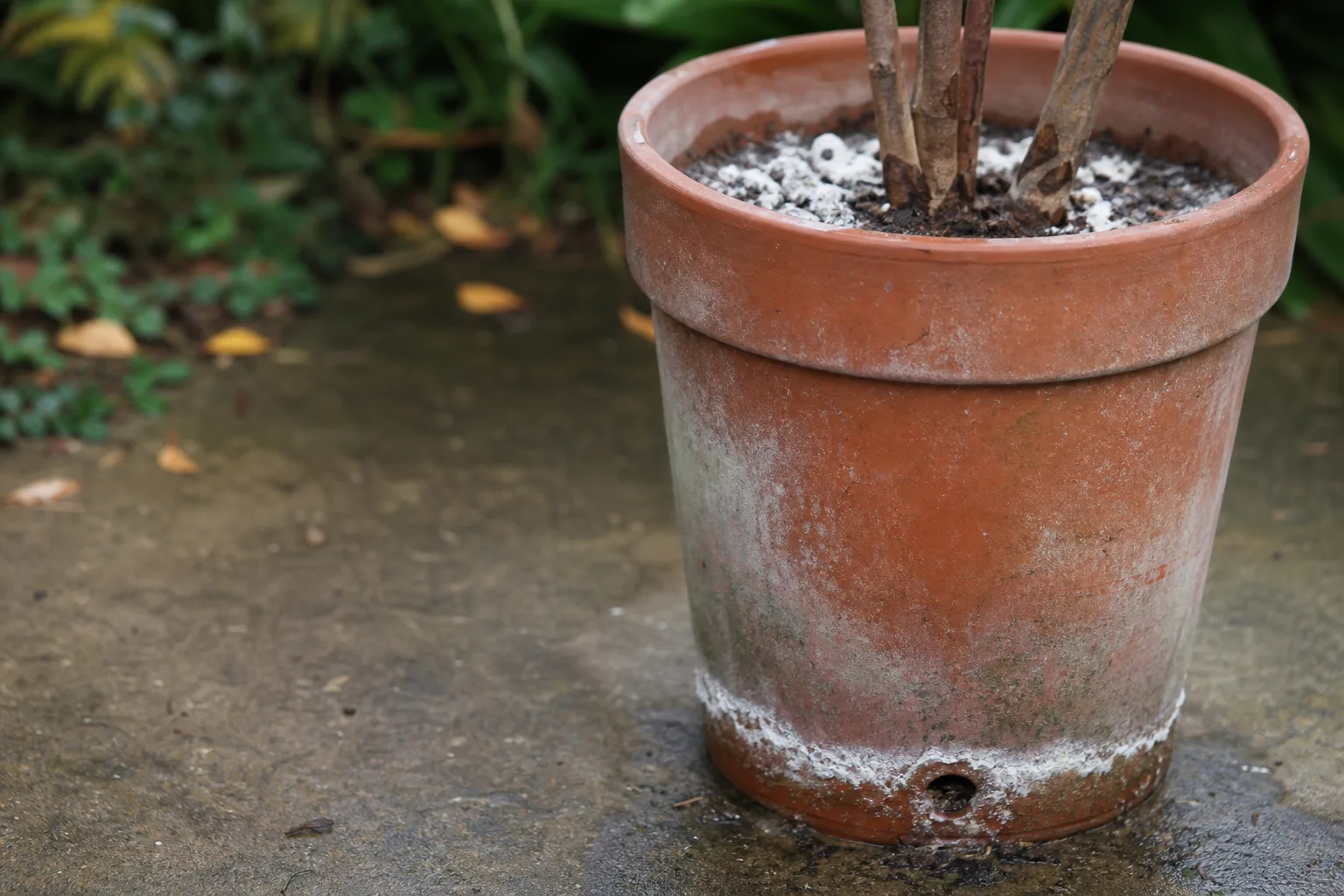
Salt buildup is best corrected with a thorough flush, not another application of fertilizer. Containers need water equal to two or three times their water holding capacity, while raised beds need deep, slow watering in several sessions so salts move below the root zone.
What does salt buildup do to container and raised bed soil?
Salt buildup happens when soluble fertilizer compounds remain in the soil after repeated applications, concentrating around roots and reducing nutrient uptake. Containers and raised beds reach that point faster than open ground because they hold less soil and have less buffering capacity, so root burn and yellow foliage can show up before the next feeding is due.
Synthetic fertilizers add soluble compounds such as ammonium nitrate, ammonium sulfate, potassium chloride, and urea blends with every application. That does not mean one careful feeding ruins a garden. It means the leftover salts compound across repeated feedings, especially where drainage is poor or watering is shallow. Dr. Mani's Magic explains the salt compounds behind synthetic fertilizer buildup.
The white crust is the part you can see, usually on the soil surface, pot rim, or drainage hole. The part you cannot see is the concentration around the root zone. A plant can look hungry while the soil contains plenty of nutrients, because excess salts interfere with uptake.
Everyone says yellow leaves mean the plant needs food. In practice, yellow leaves after several fertilizer applications can mean the soil needs water and restraint. More fertilizer can make that worse.
Should you flush containers now in fall?
Yes, flush containers now if they have received repeated fertilizer, show white residue, or have leaves turning yellow despite regular watering. Fall is a good time to remove accumulated salts before cooler weather slows growth, but skip flushing a pot that has blocked drainage or soil that stays saturated because water must leave the container freely.
Start by checking the drainage holes. If roots, compacted mix, or a saucer are blocking them, fix that first. Flushing a sealed pot only turns a salt problem into a wet root problem, which is a poor trade.
Set each container where the drainage water can run away from other pots. Water slowly until the entire root ball is wet, then continue watering until water runs freely from the drainage holes for at least one minute. The container should not sit in the runoff.
The practical schedule during active growth is every four to six weeks, according to this container fertilizer guidance. In late fall, plants may use less water, so do not keep a calendar blindly. Flush when the soil is draining well and the pot has a history of repeated feeding.
How much water does a container need for a salt flush?
Use two to three times the container's water holding capacity for a full flush, or keep watering until water flows freely from the drainage holes for at least one minute. The exact gallon amount varies with soil mix, pot size, and how dry the root ball is, so drainage time is the useful field test.
A dry root ball can repel water down the sides while the middle stays dry. Water the pot once, wait 10 minutes, then begin the longer flush. That pause lets the mix absorb water instead of sending the first gallon straight down the gap beside the pot.
A 5 gallon container may need roughly 2 to 3 gallons for a strong flush, but measure the runoff behavior rather than trusting the label on the pot. A 20 gallon container may need 8 to 12 gallons. Those are working estimates, not permission to flood a pot with blocked holes.
Do not flush by giving a small splash every day. Shallow watering leaves salts in the upper soil, and high temperatures can make frequent container watering necessary while also washing nutrients out. Central Texas Gardener describes both the salt burn risk and nutrient loss from frequent watering.
How do you flush salt from a raised bed?
Flush a raised bed with deep, slow watering in multiple sessions, allowing water to move through the root zone and drain before applying more. Start with a well-draining bed, water one section at a time, and avoid a fast spray that runs across the surface instead of carrying salts downward.
For a bed with 8 to 12 inches of soil, water slowly until the soil is wet through that depth, wait 20 to 30 minutes, and repeat once or twice. The goal is movement below the active root zone, not a muddy pond at the surface.
A raised bed over compacted clay or a sealed base may not leach well. In Central Texas, black clay can swell shut after wet weather, while shallow limestone or caliche can stop drainage a few inches down. If the water sits for more than 30 minutes, solve the drainage problem before adding more water.
Sodic soil is a special case. If testing identifies sodicity, apply gypsum before flushing because gypsum can improve leaching efficiency. Do not spread gypsum just because you saw white residue. Salt and sodic soil are not the same diagnosis, and gypsum is not a magic dusting for every bed.
Why does chemical fertilizer compound salt buildup in containers?
Chemical fertilizer compounds salt buildup in containers because each soluble application adds more dissolved material to a small soil volume, while the pot has less buffering capacity than garden soil. At full garden label strength, the same fertilizer rate can raise salt concentration quickly, so half rate is the safer container starting point.
Garden fertilizer is formulated for a larger soil volume than a pot provides. Using the full label rate in a container is a popular shortcut that loses because the roots occupy a small, enclosed space and repeated watering does not guarantee complete leaching.
Use half the label recommendation for regular garden fertilizer in containers, as advised by this container fertilizing source. The tradeoff is slower feeding and possibly more frequent observation, but that is cheaper than replacing a burned plant and the whole potting mix.
Organic or slow release sources can reduce the speed of salt accumulation, but neither should be treated as salt free. Their tradeoff is less immediate control, and a product can still add soluble nutrients if you keep applying it without checking growth and drainage.
I learned the basic version from my father's tomatoes in a twelve foot strip of New Jersey clay, where feeding a small patch felt harmless because the ground kept going. A container does not keep going. It has four walls and a drainage hole, and it remembers every shortcut.
Who should flush now, and who should wait?
Flush now if you have a container with repeated fertilizer applications, white residue, yellow foliage, reduced growth, or a history of shallow watering. Wait if drainage is blocked, the soil is already saturated, or the plant has just been transplanted and the root ball cannot yet tolerate a long wet cycle.
This advice suits a homeowner standing over patio pots, raised beds fed several times since spring, or containers watered daily through an Austin summer. It also suits anyone who is unsure whether the last feeding was yesterday or three weeks ago. The water test gives you a practical starting point.
Ignore the flush for the moment if water cannot exit. Clear the saucer, open the drainage holes, or replace badly compacted mix first. A flush through a blocked pot can leave roots wet for days.
You should also wait if the container is bone dry and water is bypassing the root ball. Rehydrate in two stages, then flush. The point is to move salts through the soil, not around it.
Which salt correction method should you use?
Use a full water flush for containers, deep staged watering for raised beds, and drainage repair before either method. Fertilizer reduction prevents the next buildup, while gypsum belongs only with confirmed sodic soil because each option solves a different part of the problem and carries a different downside.
| Option | Best use | How to do it | Honest downside |
|---|---|---|---|
| Container water flush | Pots with residue or repeated feeding | Apply two to three times the water holding capacity, or drain for at least one minute | It can wash nutrients out and fails if drainage is blocked |
| Deep staged bed watering | Raised beds with good drainage | Water slowly, wait 20 to 30 minutes, then repeat one or two times | It uses more water and can expose a drainage problem |
| Half rate fertilizer | Preventing repeat buildup in containers | Use half the garden label rate | Growth may be slower and feeding needs closer observation |
| Organic or slow release fertilizer | Reducing fast salt loading | Follow the product rate and do not stack applications | It is less immediately adjustable and is not salt free |
| Gypsum before flushing | Confirmed sodic soil | Apply before leaching to improve movement through soil | It is wasted money if the soil is not sodic |
For a pot, I would flush first and fertilize later. For a raised bed, I would test drainage with a slow soak before deciding how much water the bed can handle.
If you are redesigning a bed or trying to figure out whether a container belongs in full sun, use the plant database for the plant's growing conditions, then get a concept for your yard if the layout is part of the problem. A pot in the wrong place often gets watered badly, and the soil keeps the score.
How can you tell whether salt buildup is improving?
Salt buildup is improving when fresh white residue stops returning, water moves through the soil evenly, new growth stops yellowing, and the container drains without a long delay after flushing. Improvement is not instant because damaged roots need time to recover and excess salts must leave the active root zone.
Check the pot again after seven to fourteen days. Look for new leaves rather than expecting old yellow leaves to turn green. Old damage is a record of what happened, not a reliable progress report.
If the surface crust returns within a week, inspect irrigation water, fertilizer use, and drainage. Hard water can introduce mineral salts, and poor drainage can trap salts and other compounds, according to this soil flushing guide.
Do not fertilize immediately after a flush just because the runoff looked dirty. Wait until the plant resumes growth, then use half the container label rate. In fall, that may mean waiting several weeks or until active growth returns.
How often should you flush fertilizer salts from containers?
Flush fertilizer salts from containers every four to six weeks during active growth, watering until drainage runs freely for at least one minute. In fall, flush a container now if it has repeated fertilizer or visible residue, then reduce or pause feeding as growth slows rather than following a summer schedule.
The schedule is a guardrail, not a command. A heavily fed pot in full summer sun may need attention sooner, while a lightly fed container in cool fall weather may need no repeat flush until active growth begins again.
Can I use regular garden fertilizer in containers?
Yes, but use half the label rate because regular garden fertilizer is designed for the larger soil volume and buffering capacity of garden beds. Full strength in a container can cause rapid salt buildup, especially when applications repeat and the pot does not drain freely.
Measure the reduced rate instead of guessing with a handful. A small measuring spoon and a written date prevent the classic problem of forgetting the last feeding.
Should I flush a raised bed after fertilizing?
Flush a raised bed after repeated fertilizer applications or visible salt residue by watering deeply and slowly in multiple sessions, provided the bed drains well. Water until the root zone is wet, wait 20 to 30 minutes, and repeat once or twice so salts move below the active roots.
Do not flush a bed that holds standing water. Repair the drainage path first, because saturated soil can damage roots even while salts remain in place.
Does organic fertilizer prevent salt buildup?
Organic fertilizer can reduce rapid salt loading compared with soluble chemical fertilizer, but it does not make salt buildup impossible. Organic and slow release products still add nutrients, so repeated applications in a small container can accumulate material if you ignore the label rate, drainage, and watering pattern.
The tradeoff is slower, less precise feeding. That is usually a good trade in containers, where patience costs less than root burn.
Can gypsum fix salt buildup in a raised bed?
Gypsum can improve leaching efficiency when the soil is sodic, but it is not a general cure for ordinary salt buildup. Apply gypsum before flushing only when a soil test or known site condition points to sodicity; otherwise, improve drainage and use deep, slow watering without spending money on an unnecessary amendment.
White residue alone does not prove sodicity. Test first.
What should I do with a container that has white crust on the soil?
Remove loose surface residue, confirm the drainage holes are open, and flush the container with two to three times its water holding capacity or until water drains freely for at least one minute. Afterward, stop full strength fertilizer and use half the label rate when active growth resumes.
If the crust returns quickly, check hard irrigation water, shallow watering, and compacted mix before feeding again. The pot is giving you information. Listen to it.
Why are my container leaves yellow after fertilizing?
Container leaves may turn yellow after fertilizing because salt buildup can burn roots and reduce nutrient uptake, even though nutrients are present in the soil. Flush only after confirming the pot drains well, then watch new growth over the next seven to fourteen days instead of trying to correct old yellow leaves with another feeding.
Yellowing has more than one possible cause, but repeated fertilizer plus white residue is a strong reason to check salts first. More fertilizer is not the automatic answer.
Want a plan for your own yard?
Tell us the space and we will put a planting plan together for it. Start at get my concept, or browse what actually grows where you are over on plants.
Frequently asked questions
How often should you flush fertilizer salts from containers?
Flush fertilizer salts from containers every four to six weeks during active growth, watering until drainage runs freely for at least one minute. In fall, flush a container now if it has repeated fertilizer or visible residue, then reduce or pause feeding as growth slows rather than following a summer schedule.
Can I use regular garden fertilizer in containers?
Yes, but use half the label rate because regular garden fertilizer is designed for the larger soil volume and buffering capacity of garden beds. Full strength in a container can cause rapid salt buildup, especially when applications repeat and the pot does not drain freely.
Should I flush a raised bed after fertilizing?
Flush a raised bed after repeated fertilizer applications or visible salt residue by watering deeply and slowly in multiple sessions, provided the bed drains well. Water until the root zone is wet, wait 20 to 30 minutes, and repeat once or twice so salts move below the active roots.
Does organic fertilizer prevent salt buildup?
Organic fertilizer can reduce rapid salt loading compared with soluble chemical fertilizer, but it does not make salt buildup impossible. Organic and slow release products still add nutrients, so repeated applications in a small container can accumulate material if you ignore the label rate, drainage, and watering pattern.
Can gypsum fix salt buildup in a raised bed?
Gypsum can improve leaching efficiency when the soil is sodic, but it is not a general cure for ordinary salt buildup. Apply gypsum before flushing only when a soil test or known site condition points to sodicity; otherwise, improve drainage and use deep, slow watering without spending money on an unnecessary amendment.
What should I do with a container that has white crust on the soil?
Remove loose surface residue, confirm the drainage holes are open, and flush the container with two to three times its water holding capacity or until water drains freely for at least one minute. Afterward, stop full strength fertilizer and use half the label rate when active growth resumes.
Free, no obligation
Ready to design your dream landscape? Start here.
Tell us where you are and we will start a free profile for you, with plants that actually survive your climate and a real sense of what the build would cost.