
Repotting Houseplants in Fall: When to Repot and the Sizing Mistake That Causes Root Rot
Repotting is not a race to a larger container. Learn when to repot a houseplant, how to choose the next pot, what to do with damaged roots, and why a pot that is several sizes too large can keep soil wet long enough to cause root rot.
September 24, 2026
By Diego Navarro
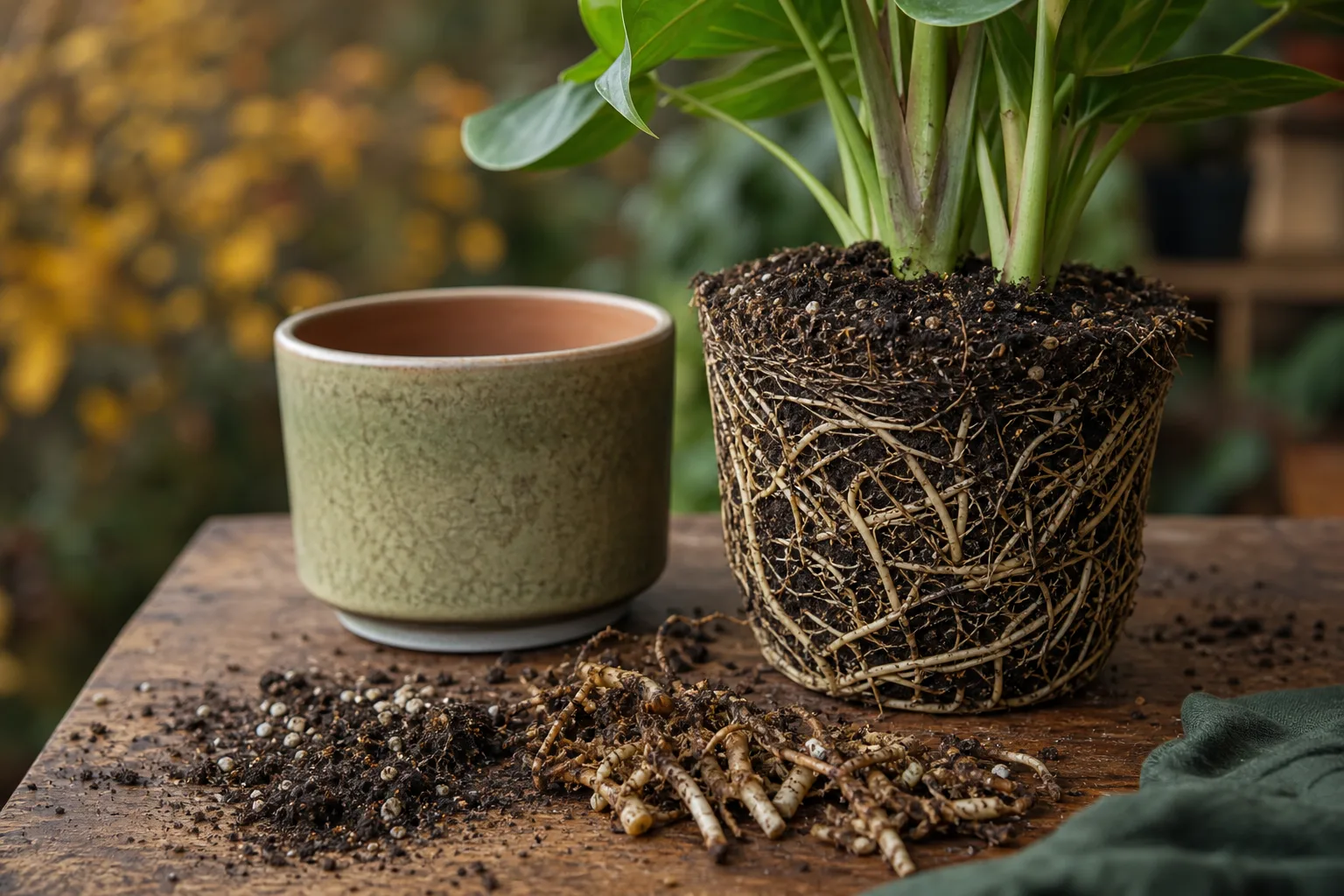
Should you repot a houseplant in fall?
You should usually wait until early spring, just before new growth begins, unless the roots are clearly outgrowing the container or the plant is already suffering from root trouble. In fall, repot only for a real problem, because fresh soil and a larger pot can stay wet longer while the plant is growing slowly.
That is the position I take in my own house. A calendar is useful, but roots get the final vote.
Look for roots circling tightly inside the pot, soil that dries much faster than it used to, or a plant that tips over as soon as you water it. Those are the signs that the current container has become too small, according to the supplied garden guidance.
If none of those things is happening, leave the plant alone through fall and winter. You can inspect the pot, buy supplies, and mark March on the calendar without disturbing roots that are doing perfectly well.
The exception is rot. Wilting, yellowing, foul-smelling soil, or roots that feel mushy instead of firm justify action now. Container root rot is tied to persistently wet conditions and poor oxygen around roots, a problem also discussed by UNH Extension.
How do you know a houseplant needs a larger pot?
A houseplant needs a larger pot when roots circle the container, water runs through unusually quickly because the root mass fills the soil, or the plant becomes top-heavy and falls over after watering. Those signs matter more than the plant’s height, the season, or the size of a decorative pot you happen to like.
Slide the plant out gently if you are unsure. Do not yank the stems. Press the sides of a flexible nursery pot, tip it sideways, and support the soil around the root ball with your other hand.
Roots that form a dense ring around the outside are a useful warning. A few visible roots are not a crisis. You are looking for a root mass that leaves little loose mix and has started behaving like a solid plug.
Fast drying needs context. A pot in a bright, warm window may dry faster than one across the room, and a small clay container loses moisture faster than a plastic one. Check the same spot over several waterings before deciding the pot is too small.
Toppling is more convincing because it affects the whole plant. If the container is too light or the upper growth has outgrown the root base, a modestly larger pot can help. A giant pot is not stability. It is a wet basement for roots.
How much larger should the next pot be?
The next pot should be only 1 to 2 inches wider in diameter than the current pot, or roughly 5 to 10 centimeters larger. That modest increase gives expanding roots fresh mix without surrounding the existing root ball with a large reservoir of soil that stays wet longer than the plant can use.
Measure the inside diameter near the top of the current container, then compare it with the inside diameter of the replacement. Do not choose by the label alone, because nursery pots and decorative covers are not measured consistently.
For example, a 6-inch pot should generally move to a 7- or 8-inch pot, not a 12-inch container. A 10-inch pot should move to about 11 or 12 inches if the roots truly need room. Bigger is not automatically kinder.
Everyone says a plant needs room to grow. In practice, the root ball needs a controlled amount of new soil, because the unused soil around it can remain saturated, limit oxygen, and encourage fungal pathogens associated with root rot.
A pot that is too small can restrict roots. A pot that is too large can keep the whole container wet. I would rather repot once more in two years than spend six months trying to rescue roots from a container chosen for its future fantasy.
Why does a pot that is too large cause root rot?
An oversized pot contains more moist soil than the current root system can absorb, so that soil stays wet longer and holds less air around the roots. Reduced oxygen creates stressful conditions and can encourage fungal pathogens linked with root rot, especially when watering continues before the soil has dried.
The mistake is easy to make. You see a small plant and think, “I will save myself a step.” Then you put it in a container three or four sizes larger, water the whole thing, and discover that the center is still wet a week later.
Roots do not drink every drop in a pot at once. The unused mix remains damp, particularly near the middle and bottom. That is why a large container can look perfectly respectable on the outside while the roots are quietly losing air below the surface.
Do not confuse drainage holes with a cure. A hole lets excess water leave, but it cannot make a giant volume of wet mix dry at the same rate as a small root ball. A layer of coarse gravel or broken pottery may be included beneath the mix, but it costs usable pot depth and does not excuse oversizing.
Orchid care offers the plain warning: saturated sphagnum can smother roots when watering is too frequent, as described by the Chestnut Hill Local. The material changes, but the bad idea is the same. Constantly wet roots are not pampered roots.
How do you repot a houseplant without damaging it?
To repot a houseplant, remove it gently, loosen a few circling roots, trim dead or mushy roots, place it in a clean pot 1 to 2 inches wider, and use fresh, well-draining mix. Set the plant at the same depth as before, firm the mix lightly, and water thoroughly so the new soil settles around the roots.
Prepare everything before the plant leaves its old pot. Set out the clean container, fresh mix, scissors, and a surface you can sweep. Root exposure should be a short job, not an afternoon of rearranging supplies.
Tease loose only the roots that are tightly circling. You do not need to scrub the root ball bare. Remove roots that are dead, blackened, or mushy, and keep firm roots in place. Wipe or clean your cutting tool before and after the work.
Put enough mix in the bottom so the old soil line sits at the same height as it did before. Burying the stem deeper can keep the base too wet, while leaving roots exposed can dry them out.
Backfill around the sides and press gently with your fingers. Do not pack the mix like a driveway. Water until the mix is settled, then let excess water drain completely rather than leaving the container in a saucer of standing water.
What potting mix should you use after repotting?
Use a fresh, well-draining potting mix that combines peat or coco coir with perlite or vermiculite and a small amount of compost. This blend provides moisture-holding material, air space, and some organic matter, but each ingredient has a trade-off, so the mix should not stay saturated after watering.
Peat can hold moisture well, but a peat-heavy mix can remain wet longer than you expect indoors. Coco coir is a useful alternative, though it still holds water and does not make an oversized pot safe by itself.
Perlite helps create air space and drainage, but it is light and can float to the surface when you water hard. Vermiculite holds more moisture than perlite, so adding too much can work against you in a slow-drying room.
Compost adds organic matter, but a large amount can make a container mix dense and wet. I use the supplied blend as a direction, not permission to pour half a compost pile into a houseplant pot.
Fresh mix also reduces the chance that you are carrying old, compacted material into the new container. If you are unsure which mix suits your plant, the plant database can help you compare growing needs before you buy a bag.
Should you use gravel in the bottom of a houseplant pot?
A coarse layer of gravel or broken pottery can be placed beneath the potting mix, following the supplied repotting guidance, but it is not a substitute for drainage holes or a correctly sized container. The downside is practical: the layer occupies space that could hold root mix and does not make an oversized pot dry quickly.
The hole matters more than the gravel. Choose a container with adequate drainage holes, because a sealed decorative pot gives excess water nowhere to go. If you use a cover pot, remove the inner pot for watering and let it drain before returning it.
Broken pottery has one other cost: sharp edges can catch roots during removal. Gravel is heavy and adds weight, which may help a tall plant stay upright, but it also makes the container harder to move.
I have dug through enough Central Texas caliche to respect the difference between a helpful layer and a magic trick. A rock bar can eventually make a hole, but it does not fix a bad location. The same is true here. Drainage starts with the pot and mix.
Who should repot now, and who should wait until spring?
Repot now if your houseplant has mushy or foul-smelling roots, soil that remains wet far too long, or roots tightly circling and forcing the plant out of its container. Wait until early spring if the plant is stable, the mix dries normally, and no roots are showing distress, because spring gives it the best chance to resume active growth.
This advice suits a reader standing in a garden center during fall with a healthy plant and a larger pot in the cart: put the pot back unless the plant has a clear problem. It also suits someone who has found rot and needs to remove damaged roots before it spreads through the root system.
It does not suit a plant that is already collapsing from severe neglect, a container with no drainage hole, or a root ball that has become a wet, foul-smelling mass. Those situations need inspection and correction, not a seasonal rule used as an excuse to wait.
In Austin, August teaches this lesson with heat, while fall teaches it with slower drying. In New Jersey, I grew up watching for the first hard frost and wondering what would return in April. Down here, the houseplant question is often simpler: is the soil still wet seven days later?
If you are designing a whole indoor plant corner rather than replacing one pot, you can get a concept for your yard for the surrounding space, but do not let a pretty arrangement dictate the pot size. Roots are not impressed by symmetry.
What should you do if a repotted houseplant already has root rot?
If a repotted houseplant has root rot, remove it from the container, cut away dead or mushy roots, discard the wet old mix, and place the plant in a clean, correctly sized pot with fresh, aerated mix. Water thoroughly once to settle it, then reduce watering while the remaining roots recover.
First, smell the root ball and inspect the roots. Healthy roots should not be foul-smelling or soft and collapsing. Wilting and yellowing can have several causes, but those symptoms paired with mushy roots point toward a serious moisture problem.
Do not move a rotting plant into another oversized container. That repeats the original mistake with clean hands. Use a pot only 1 to 2 inches wider than the remaining root mass or current container, whichever gives the plant a stable fit.
Trim until the remaining roots are firm. Fresh mix matters because the old material is part of the wet environment that caused trouble. Clean the container before reuse, and make sure its drainage holes are open.
After watering to settle the mix, wait for the upper inch to dry before watering again, as the supplied research recommends. The exact number of days will vary with light, temperature, pot material, and mix. Check the soil instead of obeying a weekly alarm.
How often should you repot a houseplant?
You should repot a houseplant when its roots outgrow the container or the soil and root condition demand it, not simply because a year has passed. In general, inspect in early spring and repot only when you see circling roots, unusually fast drying, instability, or root rot that requires fresh mix.
A date on the calendar cannot tell you what is happening below the soil. A plant in a bright window may fill a pot faster than one in a dim corner, while a cool fall room may dry slowly even if the plant looks thirsty on top.
Check the plant every few weeks during active growth, especially from March through August. In fall, inspect rather than disturb. That small change keeps you from turning a healthy root system into a wet rescue project.
Repotting is a tool, not a ceremony. Use the smallest useful step, keep the plant at its old depth, and let the roots earn the next container.
What is the safest pot size for a houseplant?
The safest pot size is one that is 1 to 2 inches wider than the current container, has adequate drainage holes, and holds fresh mix without leaving a large unused volume around the root ball. That size supports gradual root growth while reducing the risk of soil staying wet long enough to cause root rot.
| Repotting option | Best use | Honest downside |
|---|---|---|
| Pot 1 to 2 inches wider | Healthy plant with circling roots or a clearly crowded root ball | May require another repot in a year or two |
| Same-size clean pot with fresh mix | Root trimming, soil replacement, or minor rot when the root mass still fits | Gives little extra room and may not stabilize a top-heavy plant |
| Much larger pot | Rare case where the root system already fills a large container and the plant needs substantial support | Excess wet mix can reduce oxygen and encourage root rot |
The table is the practical choice I use on site: small increase first. Valeria can draw a beautiful grouping of containers, but I still have to lift them after watering. Heavy, oversized pots make every future correction harder.
One honest question for you: are you choosing a pot for the roots, or for the room? Choose for the roots. The room can wait.
Should you repot a houseplant in fall?
You should usually wait until early spring unless the roots are circling, the soil stays wet, the plant topples when watered, or root rot is present. Fall repotting is appropriate for a clear root problem, but a healthy, stable houseplant is safer left undisturbed until new growth is about to begin.
How much larger should the next pot be?
The next pot should be 1 to 2 inches wider than the current pot, or about 5 to 10 centimeters larger. That gives roots fresh mix without creating a deep reservoir of unused wet soil, which can reduce oxygen around the roots and increase the risk of root rot.
Can you repot a houseplant into a pot several sizes bigger?
You can, but you generally should not repot a houseplant into a pot several sizes bigger. The extra soil holds moisture longer than the existing roots can use, especially in fall or in a cool room, so the root zone can stay wet and encourage root rot.
What are the signs of root rot after repotting?
The signs of root rot after repotting include wilting, yellowing, foul-smelling soil, and roots that are mushy rather than firm. Remove the plant, trim affected roots, replace the wet mix, use a clean correctly sized container, and let the top inch of soil dry between waterings.
Should you put gravel in the bottom of a houseplant pot?
You can put coarse gravel or broken pottery in the bottom of a houseplant pot, but it does not replace drainage holes or correct pot sizing. The layer takes up usable space and will not make a very large volume of wet soil dry as quickly as a smaller, properly sized container.
How often should you repot a houseplant?
You should repot a houseplant when roots circle the container, the soil dries unusually fast, the plant becomes unstable, or root problems require fresh mix. Inspect in early spring and repot only when needed rather than following an annual schedule, because light, temperature, container material, and watering all change drying time.
Want a plan for your own yard?
Tell us the space and we will put a planting plan together for it. Start at get my concept, or browse what actually grows where you are over on plants.
Frequently asked questions
Should you repot a houseplant in fall?
You should usually wait until early spring unless the roots are circling, the soil stays wet, the plant topples when watered, or root rot is present. Fall repotting is appropriate for a clear root problem, but a healthy, stable houseplant is safer left undisturbed until new growth is about to begin.
How much larger should the next pot be?
The next pot should be 1 to 2 inches wider than the current pot, or about 5 to 10 centimeters larger. That gives roots fresh mix without creating a deep reservoir of unused wet soil, which can reduce oxygen around the roots and increase the risk of root rot.
Can you repot a houseplant into a pot several sizes bigger?
You can, but you generally should not repot a houseplant into a pot several sizes bigger. The extra soil holds moisture longer than the existing roots can use, especially in fall or in a cool room, so the root zone can stay wet and encourage root rot.
What are the signs of root rot after repotting?
The signs of root rot after repotting include wilting, yellowing, foul-smelling soil, and roots that are mushy rather than firm. Remove the plant, trim affected roots, replace the wet mix, use a clean correctly sized container, and let the top inch of soil dry between waterings.
Should you put gravel in the bottom of a houseplant pot?
You can put coarse gravel or broken pottery in the bottom of a houseplant pot, but it does not replace drainage holes or correct pot sizing. The layer takes up usable space and will not make a very large volume of wet soil dry as quickly as a smaller, properly sized container.
How often should you repot a houseplant?
You should repot a houseplant when roots circle the container, the soil dries unusually fast, the plant becomes unstable, or root problems require fresh mix. Inspect in early spring and repot only when needed rather than following an annual schedule, because light, temperature, container material, and watering all change drying time.
Free, no obligation
Ready to design your dream landscape? Start here.
Tell us where you are and we will start a free profile for you, with plants that actually survive your climate and a real sense of what the build would cost.